
Best 12V Car Female Socket with Fuse and Eyelet Terminal for Camper and RV Use
When powering auxiliary equipment in campers and RVs, a dependable 12V car female socket with fuse and eyelet terminal becomes indispensable. This heavy-duty battery-to-socket adapter enables direct power outlet connection from your vehicle's battery, delivering stable voltage to GPS devices, refrigerators, lighting systems, and communication equipment. Built with marine-grade materials and high-purity copper, quality adapters offer excellent moisture and corrosion resistance—critical attributes for mobile living environments where electrical reliability directly impacts comfort and safety. The integrated waterproof fuse holder and dust cap protect against short circuits and environmental damage, making these adapters ideal for demanding applications in recreational vehicles, boats, and off-road equipment.
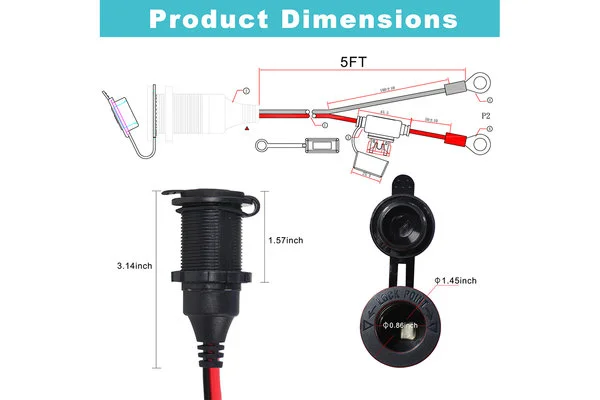
Understanding 12V Car Female Sockets with Fuse and Eyelet Terminal
Core Component Architecture
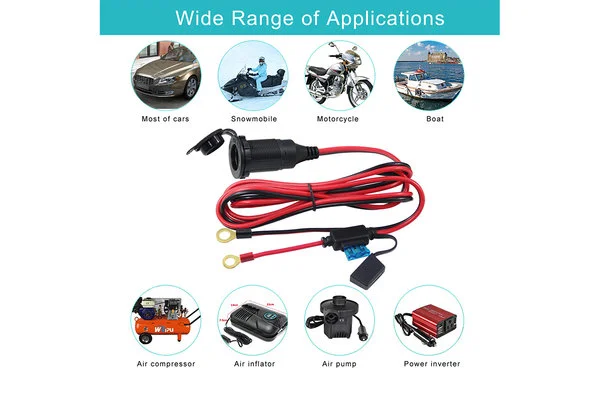
A 12V car female socket with fuse and eyelet terminal is made up of three parts that are all built in and work together. Standard 12V extension plugs can be used with the female cigarette lighter socket, making it easy for end users. Using M6 or M8 nuts, the eyelet terminal, which is also known as the ring terminal, makes a strong mechanical and electrical link to the battery posts. An inline blade fuse box with 10A, 15A, or 20A ATC or ATO fuses that can be changed is located between these connection places.
This design is very different from versions that aren't merged. Overcurrents caused by broken devices or shorts in the wires can cause too much heat, melt insulation, and possibly start fires in nearby flammable materials if there is no fuse protection. As a safety measure, the built-in fuse breaks the connection when the power goes over safe limits. For business-to-business clients who sell to RV makers or aftermarket installers, this safety feature is a must-have for avoiding responsibility and following the rules.
Material Composition and Conductivity
Copper wires that don't contain oxygen are used in premium adapters instead of copper-clad metal ones. Pure copper is a better electrical conductor (about 58 million siemens per meter), so there is less voltage drop along wire lengths. This standard is very important for RVs because the wire runs from the battery compartments to the living areas can be several feet long. Even a 0.5V drop in power can make it impossible for sensitive gadgets to work right or make it take longer for mobile devices to charge.
The upper jacket is usually made of heat-resistant PVC or thermoplastic rubber that can work continuously from -20°C to +105°C. These materials stay flexible in cold places and don't break down when exposed to engine heat, UV light, or hydrocarbons. Marine-grade models have extra moisture barriers and tin-plated connections to stop galvanic corrosion in seaside areas that are wet.
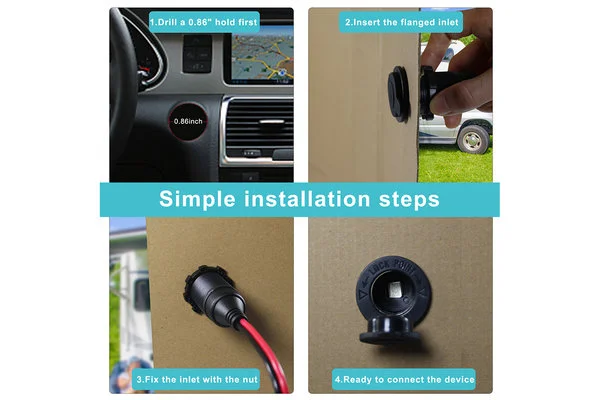

Key Considerations When Choosing a 12V Car Female Socket with Fuse for B2B Procurement
Fuse Type and Amperage Rating Selection
By matching fuse ratings to the needs of the downstream load, you can stop nuisance fails and keep security. A 10A 12V car female socket with fuse and eyelet terminal is good for basic uses like phone chargers and LED lights, which usually draw 2 to 5A together. Portable freezers and fans that cycle between 8A and 12A when the motor starts up can use mid-range 15A fuses. Heavy-duty 20A versions can handle air blowers, power inverters, and more than one load at the same time.
Teams in charge of buying things should check with providers to see if they offer inline blade fuse boxes or integrated fuse blocks. Integrated designs allow for smaller installs, while inline holders make it easier to change holders in the field without tools. The switch holder box should have waterproof caps that meet or exceed IP65 standards. This will keep water out, which can cause oxidation and connections to stop working.
Terminal Design and Connection Integrity
In mobile applications, 12V car female socket with fuse and eyelet terminal make links that work better than spade terminals. The round shape spreads the clamping force evenly around the bolt, which keeps it from coming loose from vibrations, which can happen when vehicles are driving on rough ground. The size of the terminals is important. M6 holes (6mm inner diameter) work with most car batteries and smaller powersports batteries, while M8 terminals are better for heavy-duty marine and industrial vehicle batteries.
Tin-plated brass or copper connections work much better than ones that are just metal. It keeps the electrical contact good and protects against rust with a tin covering. When looking at different providers, business-to-business buyers should ask about the terminal crimp pull-force specs. Professional-grade assemblies can handle 80 newtons or more of tension without the conductors coming apart, which means connections will last for years of changing temperatures and mechanical stress.
Wire Gauge and Conductor Quality
The American Wire Gauge standard tells us how much power a wire can carry. For example, 16AWG wire can handle steady 10A loads over short distances, 14AWG wire can handle 15A loads or long cable runs, and 12AWG wire can handle up to 20A. Lower AWG numbers mean the conductors are thicker. Thicker conductors lower resistance heating and voltage drop, but they make the wire heavier and more difficult to install.
If you choose stranded copper wire over solid core, you have the freedom you need to route the wires through the vehicle's frame and body panels. Fine-strand designs with 30 to 50 separate copper strands per conductor are used by high-quality makers. These designs are more flexible while keeping the ampacity scores the same. To make sure it works with car electrical systems, the conductor should meet automobile standards like SAE J1128 or foreign standards that are similar.
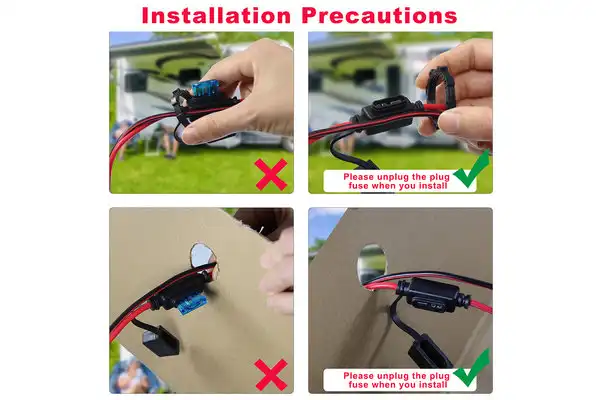
Best Practices for Wiring and Installation
Pre-Installation Planning and Safety Protocols
Technicians should disconnect the negative battery terminal before adding any 12V car female socket with fuse and eyelet terminal. This will keep them from getting shocked and avoid accidental short circuits during installation. Making a map of the installation route helps find places where the wire padding could come off when it hits sharp metal edges. Damage caused by movement can be avoided by putting protective grommets through wall holes and securing wires with the right clamps every 12 to 18 inches.
Correctly checking the orientation is still very important. The black wire always connects to negative ground and the red wire always connects to the positive battery post. Reversed polarity can destroy gadgets that are linked right away and could also hurt the car's electrical system. A simple way to avoid making mistakes that cost a lot of money is to use a voltmeter to check the voltage and polarity before putting in any devices.
Connection Techniques for Maximum Reliability
Technicians should use a wire brush to clean the contact areas of eyelet connections and battery posts before connecting them. This will get rid of oxidation and corrosion. Putting on a thin layer of dielectric grease after connecting things stops rust from happening again without affecting how electricity flows. For M6 terminals, the torque range is usually between 6 and 8 Nm, and for M8 terminals, it's between 8 and 10 Nm. This is enough to make gas-tight connections without crushing soft lead battery posts.
The fuse holder box should be put along the positive wire path as close to the battery as possible, usually between 12 and 18 inches. This placement protects the whole length of the wire instead of leaving a part that isn't protected open to short circuits. Keeping wires away from heat sources like exhaust pipes and sharp edges keeps the insulation in good shape and increases the service life.
Common Installation Pitfalls and Troubleshooting
Several mistakes during installation of a 12V car female socket with fuse and eyelet terminal hurt efficiency and safety. If you tighten the terminal screws too much, the battery posts or eyelet terminals can crack. This makes high-resistance links that heat up. When fuses are too small, they frequently fail for no reason, but when they are too big, they stop protecting against damage. Cables that go through moving suspension parts or sharp edges on body panels will always damage the insulation and cause short circuits.
When techs are trying to figure out what's wrong with power generation, they should check each connection point for damage, corrosion, and tightness. Checking the voltage at the plug while it is loaded shows that there is too much voltage drop because of bad connections or wires that are too small. Faults that happen every so often are usually caused by rusted fuse holder contacts or broken socket center pins, which are parts that need to be replaced instead of being fixed.
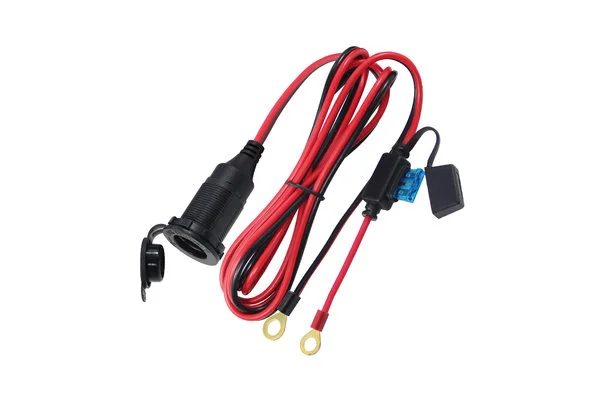
Top Rated 12V Car Female Sockets with Fuse and Eyelet Terminal for Camper and RV Use
Kuncan Electronics Heavy-Duty Battery Adapter
Our professional-grade 12V car female socket with fuse and eyelet terminal stands out in tough recreational vehicle uses thanks to thorough design validation and top-notch production. Before it is packaged, each adapter is put through its own set of electrical tests to make sure it works properly and has the right amount of conductivity, insulation, and fuse operation. The injection-molded body is made of heat-resistant materials that can work continuously from -20°C to +105°C. This means it can handle the big changes in temperature that happen in car engine bays and outdoor installs.
When fully sealed, the waterproof fuse holder with dust cap gets an IP65 rating. This means that these adapters can be used on boats, jet skis, and RVs that will be used near the coast, where salt spray speeds up corrosion. With lengths that can be changed from 1ft to 2ft and wire gauge choices like 16AWG, 14AWG, and 12AWG, buying teams can be very specific about what they need for a wide range of car types. Terminal choices come with M6 and M8 eyelets to fit different battery post sizes used in marine, powersports, and car uses.
Having served the automotive connectivity industry for 17 years, we implement rigorous quality control including terminal crimp pull-force testing exceeding 80 newtons for 16AWG assemblies, dielectric voltage withstand testing at 500V DC, and contact resistance analysis ensuring performance below 50 milliohms. For distributors and OEM integrators that work with the RV aftermarket, these validation methods provide professional dependability that lowers warranty claims and raises customer happiness.
Comparative Assessment of Market Solutions
In addition to what we sell, well-known names like Ancor and others like them make options that you might want to look into. Ancor's marine-grade products are made with tinned copper and UV-resistant jacketing to make them resistant to corrosion. This makes them good choices for seaside uses. Their products usually have similar fuse safety and terminal designs, but they might not be able to be changed to meet specific OEM needs.
Procurement pros should compare options by taking a number of factors into account along with the project's needs. Products that meet the SAE J1128 automobile wire standards are guaranteed to work with car electrical systems, and IP grades show how well they protect against the elements. A warranty that lasts between one and three years shows that the company that made it is confident in its durability. When choosing goods for large-scale production runs, where application help and failure analysis support are needed to keep projects on schedule, the availability of technical support becomes very important.
Procurement Guide: Where and How to Buy?
Sourcing Channels and Supplier Evaluation
There are several ways for B2B buying teams to get a 12V car female socket with fuse and eyelet terminal, and each has its own benefits. Working directly with manufacturers lets you make changes, get better prices on large orders, and get expert help during the whole product development process. Verified sellers on sites like Alibaba give openness through trade assurance programs and approvals from a third party. Regional wholesalers keep stock in their own areas so that they can quickly restock, but they usually charge more for serving smaller needs.
To figure out how reliable a provider is, you have to look at more than just the product specs. The ISO 9001 quality management certification shows that the process is controlled in a planned way, and the ISO 14001 environmental certification shows that the manufacturing process is environmentally friendly. Third-party safety standards, such as ETL, CE, and RoHS compliance, make sure that goods meet the rules for the North American and European markets. When suppliers give engineering help, sample evaluation programs, and fast development, they stop being transactional sellers and become strategic partners.
Negotiating Terms for Bulk Purchases
When you make a volume promise, you can get better prices and supply chain benefits. Setting up yearly buy deals with varying levels of volume discounts encourages consolidation with fewer suppliers, which makes managing quality and logistics easier. Payment terms usually range from a 30% deposit and the rest due before the order is shipped for first-time sales to net-30 or net-60 terms for long-term customers who have a past of paying on time.
Different manufacturers have very different minimum order amounts. Asian suppliers that make a lot of products may have minimum orders of 500 to 1000 pieces for normal setups, but only 100 pieces for special specs that make sense for investing in tools. When working with a new provider, negotiating safe terms like quality hold-back provisions—holding back 5–10% of payment until field performance validation—gives you more power. To keep project deadlines, warranty terms should clearly state failure rate thresholds, replacement processes, and reaction times for technical help.
Logistics and Quality Verification
When you buy something internationally, you have to think about wait time and quality checks. Standard production runs usually take 15 to 25 days, but this depends on the number of orders and how complicated the customizations are. For trans-Pacific shipping, ocean freight adds another 20 to 35 days. Air freight cuts travel time to 5–7 days, but it costs a lot more per unit. Demand forecasts and safety stock estimates that are in sync with sales cycles are needed to balance the costs of keeping goods against the risks of lead times.
By using incoming quality control, you can stop bad goods from getting into the distribution routes. Random sampling methods that check 10% of received units for accuracy in measurements, electrical performance, and mechanical integrity find production flaws before they affect customers. Third-party inspection services at supplier facilities provide independent verification of production quality and quantity before shipment, reducing risk in high-value orders. Documentation needs like test records, certificates of approval, and material safety data sheets help with following the rules and keeping track of everything in the supply chain.
Conclusion
Finding the best 12V car female socket with fuse and eyelet terminal for campers and RVs means weighing technical specs, provider skills, and the overall cost of ownership. Marine-grade materials, properly rated fuses, and strong wire connections are used in high-quality adapters that will last for years in tough mobile settings. When B2B procurement pros work with manufacturers that offer flexible customization options, thorough testing protocols, and quick technical support, they can turn component sourcing from a transactional buying process into a strategic benefit. Investing in high-quality communication solutions pays off in the form of fewer warranty claims, happier customers, and a better image in the market.
FAQ
What fuse value should I choose for normal uses of RV extra power?
With 10A or 15A fuses, most common RV accessory loads are safe to use. This includes LED lights, phone chargers, and portable gadgets. Portable fridges and fans with motors that compress air work better with 15A rates, which can handle sudden increases in current during starting. For use with power inverters, air compressors, or multiple high-draw devices at the same time, you need 20A breakers and at least 12AWG wire. Always figure out the total load that is linked and choose fuse values that are 20 to 25 percent higher than the maximum expected current draw.
Can non-fused battery sockets be upgraded to fused configurations?
When you upgrade, you have to replace the 12V car female socket with fuse and eyelet terminal completely instead of making changes to the way it works. To protect the whole wire, the built-in fuse holder needs to be put in the right place along the positive circuit path, close to where the battery connects. When you try to connect fuse holders into current adapters, you might damage them by not crimping them properly, which raises reliability concerns. For better safety compliance, it is best to specify fused connections during system updates or when installing the system for the first time.
How do I verify waterproof ratings meet outdoor RV requirements?
Products with an IP65 rating or higher can withstand water jets and dust getting in. They are good for installing RVs outside where they will be subject to rain and road spray. The rating only works if safety caps are put on sockets that aren't being used and fuse holders are properly sealed. Marine-grade goods are tested with salt water according to ASTM B117 guidelines. This proves that they will not rust in coastal areas over time. Ask providers for test approvals to make sure that their claims about environmental performance match the needs of the application.

Partner with Kuncan Electronics for Professional-Grade Power Solutions
Every 12V car female socket with fuse and eyelet terminal that Kuncan Electronics makes is the result of 17 years of experience making things. Our heavy-duty battery adapters are made from marine-grade materials and have oxygen-free copper wires and waterproof fuse boxes that work very well in RVs that are put through a lot. As a verified maker that works with global wholesalers and OEM customers, we can offer cable lengths that are tailored to your needs, a range of wire gauges, and flexible terminal setups with eyelet sizes M6, M8, and M10.
Professional reliability testing is done on every unit, making sure it is 100% electrically and waterproof. This lowers the number of guarantee claims and increases customer happiness. We help OEM partnerships grow by offering private labeling, custom packing, and fast prototyping services that shorten the time it takes to make a new product. You can talk to our technical team at rhea@szkuncan.net about your unique needs, ask for samples, or look into price for large orders. Our engineering support and agile supply chain give you a competitive edge that strengthens your market position, whether you need a reliable provider for ongoing production or a development partner for custom solutions.
References
Society of Automotive Engineers. (2016). SAE J1128: Low Voltage Primary Cable Standard. SAE International Technical Standards Board.
Recreational Vehicle Industry Association. (2019). Electrical Systems Design Guide for Towable and Motorized RVs. RVIA Technical Publications.
Marine Electrical Standards Committee. (2018). Corrosion Prevention in 12V Marine Electrical Systems. American Boat and Yacht Council Guidelines.
National Fire Protection Association. (2020). NFPA 1192: Standard on Recreational Vehicles - Electrical System Requirements. NFPA Code Standards.
International Electrotechnical Commission. (2017). IEC 60529: Degrees of Protection Provided by Enclosures (IP Code). IEC Technical Specifications.
Automotive Electronics Council. (2021). AEC-Q200: Stress Test Qualification for Passive Components in Automotive Applications. AEC Component Technical Committee.

USER EVALUATE
Here is the customer's evaluation of us