


Extension Cord Buying Guide: Types, Ratings, Lengths, and Applications
Choosing the right extension cord affects more than convenience — it directly impacts equipment performance, workplace safety, and procurement costs. Whether you manage a construction fleet, equip a medical facility, or source for retail distribution, understanding how power cables differ by type, gauge, jacket material, and certification helps you avoid costly mistakes. This guide walks through everything procurement professionals need to evaluate before placing a bulk order, with practical comparisons and a clear decision framework rooted in real-world applications.
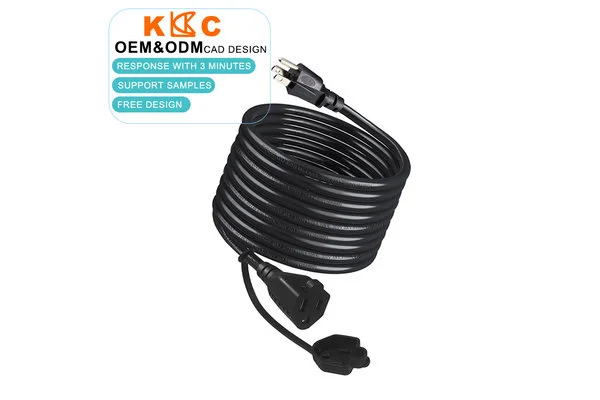
What Types of Extension Cords Actually Exist — and Which One Do You Need?
Indoor vs. Outdoor: The First Fork in the Road
Indoor power lines, which are usually covered in SJT or SVT, work well in dry, controlled places like hospitals, warehouses, and offices. Cords that are meant to be used outside have the labels SJTW or STW jacket, which means they can handle UV light, water, and wear and tear. Using an indoor-only cord outside speeds up the loss of insulation and increases the risk of a fire. Unless it says on the label that the cord is weatherproof, it should stay inside.
Heavy-Duty vs. Standard: Know the Difference Before You Order
Normal wires for the home can handle small loads like phone chargers and lamps. Heavy-duty power lines made with 10 AWG or 12 AWG bare stranded copper are used for connecting generators, air compressors, table saws, and RV shore power systems. How much current the cord can safely carry without getting too hot is based on the conductor cross-section. This difference is important for business buyers.
In addition to indoor/outdoor and gauge categories, specialty variants are made for certain environments. Retractable reel wires work well for manufacturing lines that need to reach different places. Cables that are waterproof and labeled IP67 or IP68 are used for smart building infrastructure and outdoor security systems. In low-light job sites, lighted-end lines with LED signs show that the circuit is working. This is an important feature that keeps operators from making mistakes in tough situations.
It's also helpful to know what an extension cord is not. Power strips take one outlet and turn it into many, but they don't add any voltage. Surge shields keep linked devices safe from short-term spikes. A heavy-duty power line, on the other hand, increases reach while maintaining amperage integrity. However, if you connect it wrongly to a power strip, you could end up with an overloaded circuit that doesn't show any clear signs.
How Do Wire Gauge, Ratings, and Length Affect Performance?
AWG Guide: Matching Gauge to Load
Lower numbers carry more power in the American Wire Gauge method, which works the other way around. For making purchases, here is a useful guide:
| Wire Gauge | Max Amperage | Typical Application |
|---|---|---|
| 10 AWG | 30A | Generators, RV power outlets, and big tools |
| 12 AWG | 20A | Shop tools and big appliances |
| 14 AWG | 15A | Common tools and outdoor lights |
| 16 AWG | 13A | Small appliances and office supplies |
Voltage Drop and Safe Cable Lengths
For every extra foot of wire, there is resistance. When a 10 AWG conductor is used at 100 feet, the voltage drop stays within acceptable limits for 30A loads. At the same distance, thinner extension cord gauges can't meet this performance standard. When length-to-gauge ratios are too high, heat builds up, equipment stops working, and insulation may fail. The 15A/125V/1875W NEMA 5-15P to NEMA 5-15R setup works with most business outlets in North America as long as it is properly matched to the load needs.
These claims about efficiency are backed up by certifications. UL and cUL entries show that the product is compliant in North America. Many code inspectors and distributors see the ETL and CSA marks as the same thing. IEC-aligned standards and RoHS compliance show that a product is environmentally friendly, which is becoming more and more important in the European and healthcare markets.
What Safety Practices Protect Your Operation and Your Equipment?
The U.S. Consumer Product Safety Commission says that overloading an extension cord is the main reason why electrical fires happen in businesses. Managers in charge of buying things should make sure that the amperage matches, that daisy-chaining multiple cords is not allowed, and that the cords are visually checked on a regular basis for cracks, discoloration, or exposed conductors.
Here are the most important safety rules that should be written into purchase specifications:
- Verify amperage ratings before use. High-wattage appliances need cords that can handle their full load without overheating. Always check that the cord's current value is higher than the device it's attached to.
- Use outdoor-rated jackets in harsh environments. It is important for construction sites, outdoor advertising installations, and EV charging infrastructure that SJTW and STW jacket materials don't break down when exposed to UV light, water, or wear and tear.
- Inspect before each deployment. If the insulation on a NEMA plug is damaged or the blades are bent, it can cause a shock. Accidents that cost a lot more than a new cord can be avoided with a quick 30-second visual check before use.
These actions lower both the risk of liability and the time that operations are shut down. IEC-certified wires with Class II insulation and leaking currents below 100µA are exactly what hospitals and clinics need for their strict standards. The jacket will last longer and be more durable if it is stored properly, coiled loosely and away from heat sources.
How Do You Select the Right Power Cable for Your Procurement Scenario?
A Criteria-Based Framework for B2B Buyers
Instead of looking through a catalog, organized review is better for making choices about what to buy. Before you ask for a price, use these four screening criteria:
| Criteria | Key Questions |
|---|---|
| Environment | inside or outside? Extremes of temperature? Exposure to chemicals? |
| Power Demand | What is the amperage draw of the connected equipment? |
| Required Length | How far does the line have to go before the power drops? |
| Compliance Needs | What kinds of certifications does your market or use need? |
Standard PVC jackets don't work well in factory machinery settings that are between -40°C and +85°C. TPE or rubber-feel compounds keep their flexibility and insulation integrity over that temperature range. This is one of the specifications that sets purpose-built industrial extension cords apart from generic goods.
Balancing Cost, Quality, and Supplier Credibility
Most of the time, the lowest unit price does not mean the lowest overall cost. Copper-clad aluminum (CCA) conductors don't work as well as real copper at the same gauge ratings. They cause problems with heat and voltage drop that hurt connected equipment over time. It's better to buy from verified sellers who promise 100% bare stranded copper wires and can back up their claim with RoHS/REACH compliance paperwork.
When placing large orders, it's best to go with providers who offer OEM flexibility, short sample wait times (3–7 business days is possible), and clear guarantee terms. Color sleeves, custom jacket colors like Safety Orange or Yellow, and logo printing make retail-ready packing more appealing to buyers. When numbers are right, this doesn't raise the cost per unit.
Who Are the Trusted Extension Cord Suppliers for Industrial B2B Buyers?
Manufacturers that have been around for a while, make products that are ISO-compliant, have multiple certifications, and have recorded quality control processes get long-term contracts from serious corporate buyers. Sustainability is becoming more important in 2024 procurement cycles; suppliers who use materials that are compliant with RoHS and REACH are in line with the ESG reporting requirements that many corporate buyers now require.
Kuncan Electronics has been making power cables and connectivity solutions for 17 years and has UL, cUL, ETL, and CSA certifications for all of its products. Its heavy-duty extension cords, which range from NEMA 5-15P to NEMA 5-15R, have 100% bare stranded copper conductors, SJTW/STW outdoor-rated covers, and can be fully customized from 6ft to 100ft. Before they are shipped, all of the units are electrically tested, and only materials that have been checked to be compatible are used in ISO-certified factories. These supply chain guaranties mean that wholesalers and stores who enter the North American market will have fewer returns and higher profit margins.
Conclusion
To choose a power cable, you have to match its technical specs to how it will be used: the gauge has to match the amperage, the jacket has to match the surroundings, and the approval has to match the market. In this group of procurement methods, the costs further down the line are excessive. This framework—type choice, gauge matching, safety compliance, and supplier verification—makes it possible to make secure choices about where to get things. The right extension cord standard is out there, whether you need a 10 AWG heavy-duty cord to connect a generator or a waterproof wire for an outdoor security system. It's important to know what questions to ask before you place your order.

FAQ
Can an outdoor-rated cord be used indoors?
Yes. Cords that are approved for outdoor use, like SJTW and STW, have stronger covers than are needed for dry indoor use, but they are safe to use in both. The opposite is not true; an extension cord that is only meant to be used inside should never be used outside.
What does the NEMA 5-15 designation mean?
The NEMA 5-15P plug has three prongs and is grounded. The NEMA 5-15R plug has the same number of prongs but is female. In the United States, most business and household outlets have this arrangement, which is the standard for 15A/125V circuits in North America.
Is it safe to plug high-wattage appliances into a standard power cord?
Check the cord's wattage number to make sure it can safely handle the load you're connecting it to without getting too hot. A 16 AWG cord that is rated for 13A can't safely power 20A-drawing equipment because it could cause fires or damage from the heat.
What is the difference between a polarized and non-polarized cord?
For extra safety, polarized wires have one bigger blade that makes sure the plug can only go in one way. Non-polarized wires have two similar blades that can be inserted either way. This design works well for devices where the polarity doesn't affect safety.
What certifications should B2B buyers require?
Listings with UL, cUL, ETL, and CSA are the main standards for distribution in North America. Compliance with CE, RoHS, and IEC standards can also help with international buying, depending on the market.
Partner with Kuncan Electronics for Your Next Power Cable Order
Kuncan Electronics is a reliable extension cord manufacturer serving wholesalers, stores, and businesses all over North America. Our strong NEMA 5-15 power cords have 100% bare copper conductors, are UL/cUL/ETL certified, and can be fully customized by the OEM, right down to the color of the jacket and the way they are packaged for retail. We can move at your speed. Samples are sent out in 3–7 business days, and bulk orders take 15–25 days. You can email our team at rhea@szkuncan.net or go to nema5-15.com to talk about your needs and get a price.
References
1. National Fire Protection Association (NFPA). NFPA 70: National Electrical Code. 2023.
2. Underwriters Laboratories (UL). UL 817: Standard for Cord Sets and Power-Supply Cords. 2022.
3. U.S. Consumer Product Safety Commission. Home Electrical Fire Statistics and Prevention Guidelines. 2022.
4. International Electrotechnical Commission. IEC 60227: Polyvinyl Chloride Insulated Cables of Rated Voltages up to and Including 450/750 V. 2023.
5. National Electrical Manufacturers Association (NEMA). NEMA Standards Publication WD 6: Wiring Devices — Dimensional Requirements. 2021.
6. Electrical Safety Foundation International (ESFI). Electrical Safety in the Workplace: Annual Report. 2023.

USER EVALUATE
Here is the customer's evaluation of us