


From Commercial Lighting to PDU: How L7-15P Locking Power Cords Help Reduce Heat Rise, Accidental Unplugging, and After-Sales Complaints
In Commercial and Industrial Power Applications, a Power Cord Is Not a Low-Priority Accessory
In commercial lighting, PDUs, UPS systems, industrial control equipment, and temporary power systems, power cords are often treated as standard accessories. In real applications, however, they play a critical role: delivering continuous power, maintaining connection stability, withstanding certain pulling force and vibration, and matching the electrical specifications of the target market.
For B2B buyers, OEM equipment manufacturers, and project contractors, incorrect power cord selection rarely results in a simple replacement issue. Accidental unplugging, loose connection, cable heat rise, receptacle mismatch, or inconsistent certification documents may lead to installation rework, equipment shutdown, after-sales complaints, and project delivery delays.
Dongguan (Shenzhen) Kuncan Electronics Co., Ltd. provides NEMA L7-15P Locking Power Cord solutions for North American commercial lighting, PDU/UPS, industrial equipment, and temporary power applications. The product uses a NEMA L7-15P twist-lock plug, commonly associated with 15A / 277V AC, 2-Pole 3-Wire Grounding, and can be customized by cable length, cable type, color, label, and packaging according to project needs.

Why Should Commercial Lighting Projects Focus on Heat Rise and Specification Matching?
Commercial lighting systems often operate for long periods. In shopping malls, warehouses, factories, parking areas, exhibition halls, and public buildings, lighting fixtures or power distribution equipment may need to run continuously for many hours. If the power cord uses an insufficient wire gauge, the cable is too long, or the current rating does not match the actual load, cable heat rise, voltage drop, and connector temperature issues may occur.
For 15A applications, buyers should usually prioritize evaluating 14AWG wire gauge while confirming cable length, load power, and certification requirements. Wire gauge is not merely a cost difference. It is a basic parameter that affects continuous-load performance. If a mismatched wire gauge is selected only to reduce purchasing cost, heat-related complaints, inspection questions, or end-user concerns about product safety may appear later.
In commercial lighting projects, the power cord is usually not sold alone. It is part of a complete equipment or project solution. Once heat rise or poor contact occurs on site, customers may associate the issue with the reliability of the entire system. Therefore, confirming 15A / 277V AC, wire gauge, cable length, and operating environment in advance is an important step in reducing after-sales risk.
In PDU and UPS Applications, Accidental Unplugging Can Increase Operation Risks
PDUs and UPS systems are commonly installed in racks, equipment rooms, or industrial control cabinets, where cables are densely arranged. During inspection, cable management, equipment replacement, or layout adjustment, maintenance personnel may unintentionally pull a power cord. A standard straight plug mainly relies on friction between the blades and the receptacle. Under vibration, cable tension, or accidental contact, it may loosen or disconnect.
For PDUs and UPS systems, power interruption may affect more than one device. It can influence downstream equipment supply, backup power logic, and system stability. In applications requiring continuous power, a single accidental unplugging event may cause equipment restart, service interruption, on-site troubleshooting, and customer complaints.
The NEMA L7-15P locking plug improves plug retention by rotating and locking after insertion. Compared with standard straight-plug structures, twist-lock design is more suitable for power applications involving vibration, movement, frequent maintenance, or anti-unplugging requirements. For buyers, the value of this structure is not that it “looks professional,” but that it directly responds to real operation and maintenance risks.
NEMA Model Confusion Is Common but Costly in OEM Sourcing
In the NEMA locking plug system, models such as L5, L6, L7, and L14 may all use round twist-lock appearances, but they correspond to different voltage ratings, current ratings, pole configurations, grounding structures, and blade orientations. If the sourcing request only says “locking plug power cord” or “twist-lock power cable,” specification misunderstanding may easily occur between buyer and supplier.
NEMA L7-15P is commonly associated with 15A / 277V AC / 2-Pole 3-Wire Grounding. If another NEMA locking plug is selected by mistake, the sample may not fit the site receptacle, equipment testing may fail, certification documents may become inconsistent, inventory may become unusable, and project delivery may be affected.
Therefore, OEM buyers should define the full model before purchasing instead of confirming only the “locking” function. A correct specification check should include NEMA model, current rating, voltage rating, pole and wire configuration, wire gauge, cable type, plug orientation, connector on the other end, and certification requirements. For North American projects, these parameters must be reviewed together, not separately.
Cable Jacket and Strain Relief Design Affect Long-Term After-Sales Performance
The L7-15P locking structure can reduce plug pull-out risk, but the long-term performance of the entire cord also depends on cable jacket, conductor construction, and strain relief design near the plug tail. In commercial lighting, PDU, UPS, and industrial equipment applications, cables may be bent, bundled, dragged, or used frequently. If tail protection is insufficient, the connection point may experience long-term stress, increasing the risk of poor contact, jacket wear, and intermittent power interruption.
Common cable options include SJT / SJTW / SJTOW. SJT is suitable for general indoor industrial equipment connection. SJTW is suitable for applications with certain moisture or outdoor requirements. SJTOW is more suitable for equipment projects involving oil exposure, abrasion, or complex environments.
The product shown in the image uses a molded plug and visible strain relief at the cable tail. This structure helps distribute bending and pulling stress. For B2B sourcing, these details should be included in the specification sheet rather than treated only as visual sample inspection items.
How Can OEM Specification Confirmation Reduce After-Sales Complaints?
Many after-sales issues are not caused by complete product failure, but by a mismatch between purchasing specifications and real application conditions. For example, the same L7-15P locking power cord may require different cable length, cable type, label, and certification settings when used for commercial lighting, PDU, UPS, generator adapters, or industrial control equipment.
OEM customers are advised to confirm the following before placing an order:
- Application scenario: commercial lighting, PDU, UPS, industrial equipment, or temporary power
- Plug model: confirm NEMA L7-15P and avoid confusion with L5, L6, or L14
- Electrical rating: confirm whether it matches 15A / 277V AC applications
- Grounding structure: confirm 2-Pole, 3-Wire Grounding configuration
- Wire gauge: 14AWG should be prioritized for 15A continuous-load applications
- Cable type: select SJT, SJTW, or SJTOW according to indoor, moisture-exposed, outdoor, or oily environments
- Structural details: confirm molded plug, reinforced strain relief, and customized cable end if needed
- Certification direction: North American projects should confirm UL/cUL, ETL/cETL, or CSA requirements
- Customization needs: cable length, color, label, packaging, and the connector on the other end should match project requirements
When buyers translate these details into a clear specification in advance, suppliers can support samples, testing, and mass production more accurately, helping reduce rework, misuse, and after-sales communication costs.
Conclusion: The Value of an L7-15P Locking Power Cord Is Earlier Risk Control
From commercial lighting to PDU, an L7-15P locking power cord solves more than plug connection problems. It is also related to heat-rise control under continuous load, accidental unplugging during maintenance, NEMA model matching, cable application boundaries, and OEM specification management.
Dongguan (Shenzhen) Kuncan Electronics Co., Ltd. provides OEM/ODM customization support for NEMA L7-15P Locking Power Cord, including cable length, cable type, color, label, packaging, and the connector configuration on the other end. For B2B customers serving North American commercial lighting, PDU/UPS, industrial control equipment, and temporary power markets, confirming the NEMA model, 15A/277V rating, 14AWG wire gauge, and operating environment in advance is an effective way to reduce heat rise, accidental power disconnection, and after-sales complaints.
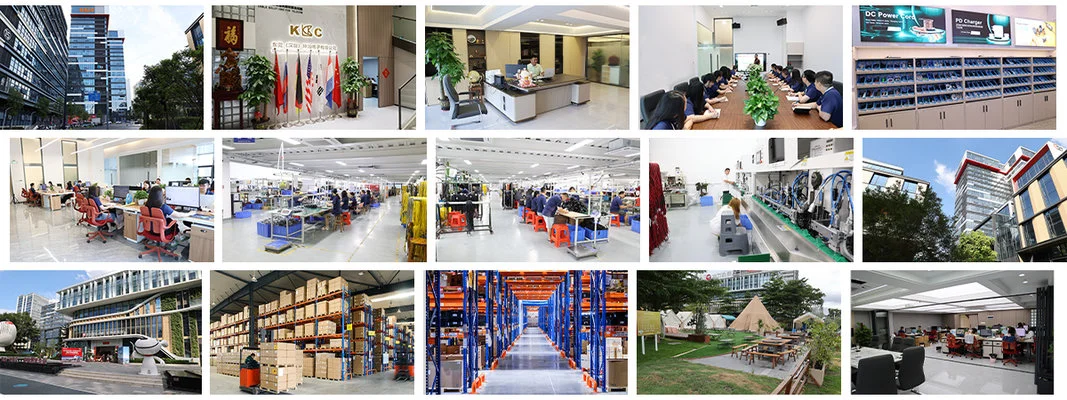

USER EVALUATE
Here is the customer's evaluation of us