
NEMA 5-15 to C5 Conversion Solutions: Power Cords vs. Adapters
When looking for power connecting solutions for use in North America, buying workers only have two options: specialised power lines or small adapters. The NEMA 5-15P to IEC C5 power cord is a straight wire setup that connects grounded US outlets to devices with cloverleaf outlets, such as laptop adapters, projectors, and portable electronics. Integrated wires keep the power flowing without interruption and have fewer places where something could go wrong than adapters that add connection points. When buyers understand these basic differences, they can find the right answer for their business needs, safety needs, and price limits in a variety of B2B settings.
Understanding NEMA 5-15P to IEC C5 Power Cords and Adapters
Defining Power Cords and Adapters
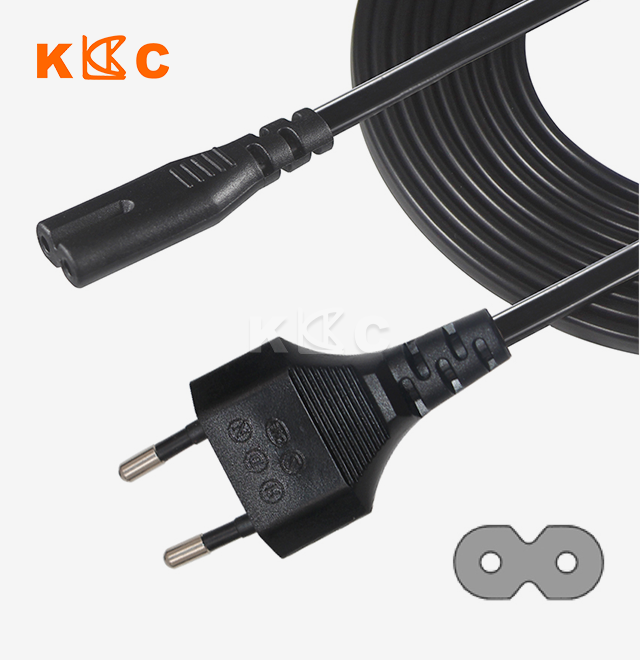
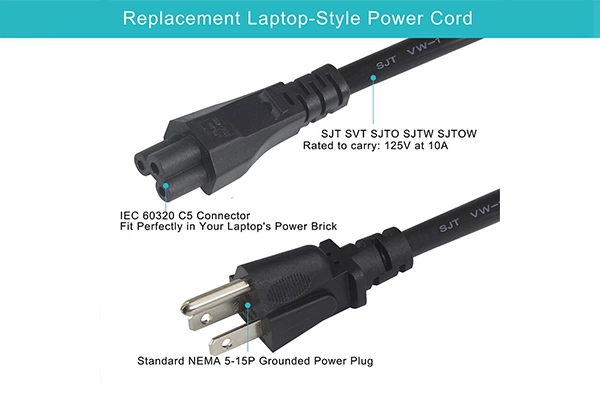
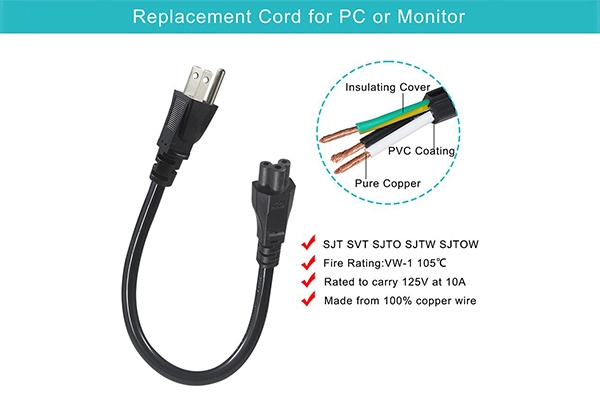
Power cords usually have a length of three to fifteen feet and have both a NEMA 5-15P plug and an IEC C5 connection built into one wire. Because there are no middle parts in this straight link, there is less electromagnetic interference and breakdowns at the actual connection places. On the other hand, adapters are small switches that let existing cords connect to ports that aren't suitable. This is useful for temporary setups, but it adds extra contact resistance.
Technical Specifications That Matter
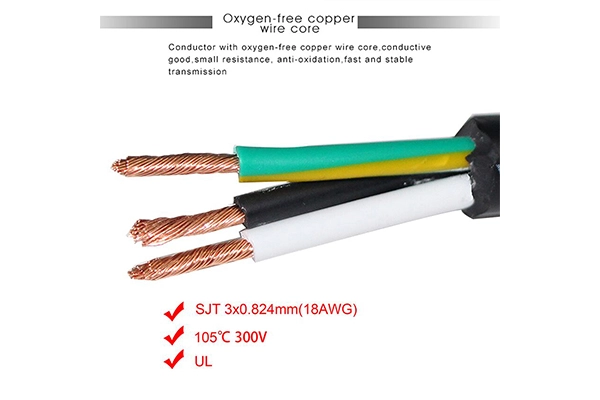
Safe operating conditions are set by the voltage and current values. Standard setups can handle 125V AC at 10A for 18AWG wires or 13A for heavier 16AWG wires. Different jacket materials can handle different temperatures. SVT can handle 60°C, SJT can handle 75°C, and only SJTW can handle 105°C in protected equipment areas. Conductor quality is important. 99.9% oxygen-free copper makes sure that there is little resistance and heat building when loads are applied for a long time. UL and cUL certifications show that the product meets the standards of the NFPA 70 National Electrical Code. CSA marks show that the product has been approved for cross-border sale by the Canadian Standards Association.
Device Compatibility Considerations
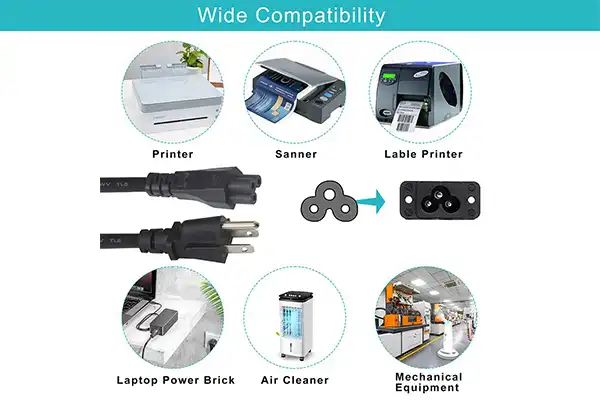
The IEC 60320 C5 connection, which has a three-slot cloverleaf shape, is needed for Class I equipment because it ensures continuity of grounding. Most laptop power sources from big OEMs, business displays that need a stable 125V input, and portable medical monitoring devices are set up in this way. The C5 design saves sensitive devices from ground faults and makes sure electromagnetic compatibility in busy rack settings, unlike the two-prong C7 plugs that don't have ground lines.
Comparing NEMA 5-15P to IEC C5 Power Cords and Adapters
Reliability and Durability Analysis
When it comes to mechanical stress resistance, moulded cord designs with strain relief at both ends work better than connector pairs. Multiple bending cycles during equipment movement break conductors in multi-piece adapter systems. Integrated cords, on the other hand, spread flex stress over longer cable lengths. This cord's reliability is good for industrial automation settings where control systems and sensor arrays need to work nonstop for years without service breaks. This makes the higher initial investment in the cord worth it compared to adapter-based methods that are more likely to have contact rust.
Adapters are good at filling certain needs for a NEMA 5-15P to IEC C5 power cord. Region-specific connector sets paired with uniform equipment-side wires make it easier for OEMs to manage a wide range of global supplies. Exhibitors at trade shows like small adapters for setting up temporary booths where flexibility is more important than stability. When testing equipment against foreign standards, testing labs often use adapters to switch between connection types without having to keep different cords on hand.
Product Variants and Customization Potential
The choice of jacket material affects how well the operation goes. For compact uses where wires coil up a lot, SVT jackets are flexible and keep their flexibility through thousands of wrap cycles. Desks, meeting rooms, and charging stations are all examples of office spaces with mild mechanical stress that are good for SJT standards. Weather-resistant types of SJTW can handle outdoor shelters and loading dock equipment, and they don't break down when exposed to UV light or water. Right-angle plug setups are useful for systems that don't have a lot of room, like behind furniture or in a tight rack mount. They keep cables from getting damaged from bending too much.
Kuncan Electronics and other manufacturing partners offer customisation that meets business and brand character needs. You can change the length of the cables from three to fifteen feet, which takes away the problem of managing too many cables. You can choose a wire size between 18AWG and 16AWG that meets the type of load, such as normal office electronics or high-draw presentation systems. Custom colour matching keeps the business look consistent across the whole building, and private label packaging with raised logos makes it easier to recognise the brand when you open the box.
Real-World Procurement Scenarios
Adapter-based systems were not reliable for a healthcare network that was trying to standardise tools for tracking patients across twelve sites. Loose links caused false alarms and stopped data transfer. 87% of service calls linked to power were cut off within the first year after switching to hospital-grade moulded cords with green dot certification. The purchasing team was able to negotiate large prices for 2,500 units, which saved 34% of the cost of buying adapters individually while also making sure that patients were safer.
An IT infrastructure manager who was setting up 800 hot-desking computers needed to be able to quickly change how they were set up. The approach used standard C5-inlet power bricks along with lines that worked with laptops from different regions. This let the laptop fleet be rotated without having to change any equipment. Choosing cords with 105°C temperature values solved the problem of heat buildup in desk cable boxes, stopping the jacket damage that happened during the first adapter deployments.
How to Choose the Right NEMA 5-15P to IEC C5 Power Cable Solution?
Compliance and Certification Requirements
Regulatory approval marks decide who can get into a market. UL listing makes sure that the product meets US safety standards for things like insulation thickness, resistance to fire, and strain relief effectiveness. For Canadian markets, products must be cUL-approved, while CE marking is needed for products to be sold in the European Economic Area. For medical uses, you need to have IEC 60601-1 approval, Class II double insulation, and a leaking current of less than 100 µA. To avoid customs delays and legal risks, procurement specs should require full certification paperwork, not just promises.
Matching Cables to Operational Environments
The needs of the application for a NEMA 5-15P to IEC C5 power cord determine the wire size. Normally, charging a laptop takes between 5 and 7A of constant power, which is well within the 18AWG range. High-performance computers with 150W power sources are getting close to 13A loads, so they need 16AWG wires to keep the voltage from dropping on cable runs longer than six feet. Temperature exposure is important. Equipment rooms with hot aisles that are hotter than 90°F need jacket rates of 105°C, while normal office settings can handle 60°C SVT standards.
Optimising the length strikes a mix between freedom and efficiency. Too much cable makes desks and trip risks worse, and not enough cable length causes equipment to be placed in awkward ways. Costly reorders can be avoided by measuring the real installation lengths during site visits. Custom length making can meet non-standard needs, like allowing specific rack setups or building limitations.
Supplier Evaluation Criteria
A review of the manufacturing potential shows that production is consistent. Automated assembly lines make sure that the strain relief is applied and the connectors are seated evenly. Hand-assembly introduces quality variations that affect the reliability over time. It's important to follow the right testing procedures. Reliable providers make sure there is 100% electrical connection, high-potential dielectric strength testing, and pull-force proof before shipping. Quality management standards, such as ISO 9001, show that processes are controlled in a way that keeps errors to a minimum.
Lead time promises help keep projects on schedule. Suppliers who keep extra raw materials and production capacity on hand give sample units in one week and full production numbers in three weeks. The ability to place a rush order takes care of unplanned equipment deployments or warranty repair needs. Freight costs are lower and there are more ways to move goods than ever before because of their closeness to major logistics hubs. For example, the Dongguan and Shenzhen industry zones are great for shipping.
Sustainability promises are becoming more and more important in buying choices. RoHS compliance gets rid of dangerous materials like mercury and lead, which meets environmental rules and business responsibility goals. REACH approval makes sure that all of Europe's supply lines are safe for chemicals. Modern buying policies require suppliers to show proof of conflict-free resource sources and efforts to lower their carbon impact. This is in line with ESG reporting requirements.
Maximizing Value: Installation, Maintenance, and Performance Optimization
Safe Installation Practices
Deployment mistakes for a NEMA 5-15P to IEC C5 power cord can be avoided by correctly labelling the cords. NEMA 5-15P plugs have parallel blades and ground pins. Making sure the plug is properly engaged in the outlet prevents problems with flipped polarity. The IEC C5 cloverleaf connector fits with loud clicks that show it is securely in place. Loose placement lets power flow intermittently, which restarts the equipment. By moving the cable away from sources of heat and sharp edges, the jacket stays in good shape. Tension on connecting bodies is the main cause of mechanical failure in professional installs. Securing lines with the right control hardware stops this from happening.
Maintenance Protocols Extending Service Life
Visual inspection rounds find early signs of wear and tear. The change in colour of the jacket's lining suggests heat stress from being overloaded or not having enough air flow. Cracking near connection bodies means they've been bent over and over again beyond what was intended. Moving the equipment or choosing angled plug types stops the progression. Isopropyl alcohol cleaning the contacts gets rid of rust buildup and restores conductivity in high-cycle-count situations like trade show equipment that is often connected and disconnected.
Replacement times depend on how often they are used. When equipment is kept in the same place in an office, it lasts for five to seven years. Mobile equipment that is moved around every day should be replaced every two years to avoid problems in the field. Keeping an extra cord inventory equal to 10% of the units that are being used lets you replace a cord right away if one fails, which keeps downtime costs from being higher than the cost of replacing the cord.
Performance Optimization Strategies
Upgrades to the wire size make apps that need a lot of power more efficient. By switching from 18AWG to 16AWG wires, resistance losses are cut by 37%. This is important when running dozens of computers over long cable runs. This increase in efficiency lowers costs and lessens the stress on machine power sources caused by heat. Putting surge protection in line connections protects delicate electronics from short-term voltage spikes that happen a lot in factories where motorised equipment makes electrical noise.
The right temperature-rated jacket for the job depends on the surroundings. Standard SVT standards are used in climate-controlled offices, while SJTW versions can handle outdoor booth setups and warehouse loading areas that have to deal with extreme temperatures during different times of the year. By matching the cord's specs to its real use, early breakdowns and guarantee disagreements can be avoided.
Conclusion
When deciding between power lines and adapters for converting from NEMA 5-15 to IEC C5 using a NEMA 5-15P to IEC C5 power cord, it's important to think about how reliable they need to be, where they will be used, and how much they will cost overall. When it comes to fixed setups, integrated line solutions are more durable and have fewer places where things can go wrong. Adapters, on the other hand, are useful for specific situations that need to be set up in different ways. The success of the procurement depends on how well the technical requirements (wire size, temperature rates, and approval marks) match the needs of the application. When you work with experienced manufacturers that offer customisation options, strict testing protocols, and quick support, power connectivity goes from being a simple purchase to a strategic advantage that helps businesses run more efficiently and with less downtime.
FAQ
What makes IEC C5 connections different from IEC C7 connectors?
The IEC C5 cloverleaf connection has three contacts: a live contact, a neutral contact, and a ground contact. This gives Class I equipment the necessary safety grounding. The figure-eight C7 connection only has two contacts and can't connect to ground. It can only be used with double-insulated Class II devices, like some laptop chargers and recording equipment. If you choose the wrong type of connection, you put safety at risk and break the rules for business installs.
When is it better to use adapters than built-in cords?
When you need to change things around a lot from one region to another, adapters are great for that. Multinational product lines that serve many markets can benefit from flexible methods that pair general equipment cords with adapters that work with that region's equipment. Investing in adapters is a good idea for short-term installations like event sets where permanent cord solutions won't work. When link stability is more important than freedom, integrated cords are the best choice for set placements.
What factors affect choices to buy in bulk?
Customers who commit to buying in bulk can get better prices. Usually, when you buy more than 500 units, the costs go down by 20 to 30 percent compared to buying in small amounts. Stable lead times are important, and project delays can be avoided by providers who keep backup stock and production capacity at full capacity. Minimum order amounts are affected by customisation needs such as different lengths, colour matching, and private labelling. Knowing these limits when planning helps avoid unexpected costs. Warranty terms that cover manufacturing flaws for a year keep large investments from failing too soon.
Partner with Kuncan Electronics for Your Power Connectivity Needs
Kuncan Electronics has UL-certified NEMA 5-15P to IEC C5 power cord options that are perfect for business needs and are ready to help you with your power infrastructure needs. Our 17 years of experience making things means that our products are stable and meet the toughest international standards. ETL, VDE, SAA, CE, and RoHS certifications make sure that our products are legal in all markets around the world. As a reliable provider, we can turn around samples quickly—within a week—and finish production in 15 to 25 days, so your projects stay on track. Our OEM/ODM services can handle custom lengths, wire sizes, jacket materials, and branding needs, and our flexible minimum order numbers can be used for both testing prototypes and putting them into mass production. You can email our expert team at rhea@szkuncan.net to talk about your unique application needs, get full product specs, and get quotes that are in line with your buying goals.
References
National Electrical Manufacturers Association. (2021). NEMA Standards Publication WD 6-2016: Wiring Devices—Dimensional Specifications. Rosslyn, VA: NEMA.
International Electrotechnical Commission. (2018). IEC 60320-1: Appliance Couplers for Household and Similar General Purposes—Part 1: General Requirements. Geneva: IEC.
Underwriters Laboratories. (2020). UL 817: Standard for Safety for Cord Sets and Power-Supply Cords. Northbrook, IL: UL LLC.
Canadian Standards Association. (2019). CSA C22.2 No. 21: Appliance Couplers. Toronto, ON: CSA Group.
Institute of Electrical and Electronics Engineers. (2020). IEEE 1100-2005: Recommended Practice for Powering and Grounding Electronic Equipment. New York: IEEE Press.
Johnson, R.M., & Peterson, L.K. (2022). Industrial Power Distribution Systems: Design and Implementation Strategies. Boston: Technical Publishing International.

USER EVALUATE
Here is the customer's evaluation of us
_1786082832183.webp)
_1784355649917.webp)