
AC Power Cord: Types, Principles, Application and Benefits
An AC power cord is the important link between electrical devices and alternating current power sources. It makes sure that energy is sent safely and efficiently between smartphones, medical equipment, cars, and factories. These AC power cord units have insulated conductors, a secure jacket, and standard plugs that are made to handle certain amounts of electricity and current. Knowing how AC power cord is made, what certifications are needed, and what features are unique to each application helps procurement professionals choose solutions that reduce downtime, support operational efficiency across a wide range of industries, and make sure compliance.
Understanding AC Power Cords: Principles and Key Features
AC power cord works on a simple but important principle: they carry alternating current from wall outlets to devices while keeping the electricity safe with the right insulation and grounding. The alternating current runs through copper or aluminum AC power cord conductors that are covered in materials that keep people from getting shocked by electricity and protect the environment.
How AC Power Cords Transmit Electrical Energy
Three important parts work together to make the main function possible. Electricity flows to and from the gadget through live and neutral lines. The grounding wire protects against fault currents. Insulation layers made of PVC, rubber, or thermoplastic keep people from touching live AC power cord conductors by mistake. Because the plug design affects how well it works with regional socket standards, it is very important to get the right specifications when buying things internationally.
Global Voltage Standards and Regional Considerations
It can be hard for procurement managers to find AC power cord for foreign businesses. Most markets in North America use 110V to 120V systems, while markets in Europe, Asia, and Australia use 220-240V systems. This difference in voltage has a direct effect on how the AC power cord is made. For higher voltage uses, the insulation needs to be thicker and the wire gauge needs to be the right size for the current load. We've seen that buying teams don't always take these regional differences into account, which causes problems with compatibility that push back product starts and raise costs.
Essential Safety Certifications for Industrial Use
Certification shows that a company cares about quality and reducing their risk, which is more than just following the rules. In North America, UL (Underwriters Laboratories) approval is the most common sign that an AC power cord has passed strict safety tests. For products to enter the European Union, they must have CE marking. VDE approval from Germany's electrical engineering group adds extra security that industrial buyers value. RoHS compliance makes sure that AC power cord parts don't have any dangerous materials in them, like lead or mercury, which is in line with environmental laws. For markets in the US and Canada, ETL certification is an additional accepted path. Verifying these certifications through official databases saves procurement teams from fake goods and possible liability risk when they are reviewing sellers.
Construction Components That Define Performance
There are many layers of careful engineering that can be seen in the structure of a good AC power cord. Stranded copper wire is used for freedom in conductor cores, while solid copper is used for fixed uses. Gauge sizes range from 18 AWG for light-duty uses to 10 AWG for industrial equipment. Insulation materials are different depending on where they will be used. For example, PVC is a cost-effective choice for consumer uses inside, while rubber compounds can handle tough industrial conditions like oil exposure and temperature changes. It protects against wear and tear, UV rays, and chemical touch with the outer jacket. Molded plug fittings make sure that AC power cord connections are safe and that there is enough pressure relief to keep connection points from failing too soon. Knowing these building details helps buyers match the exact specs of the AC power cord to the needs of the operation.
Types of AC Power Cords and Their Industrial Applications
Different types of AC power cord are available because different businesses and kinds of equipment have different needs. To choose the right design, plug standards, conductor grades, and environmental protection levels must be matched to the application.
Plug and Connector Standards: IEC and Regional Variations
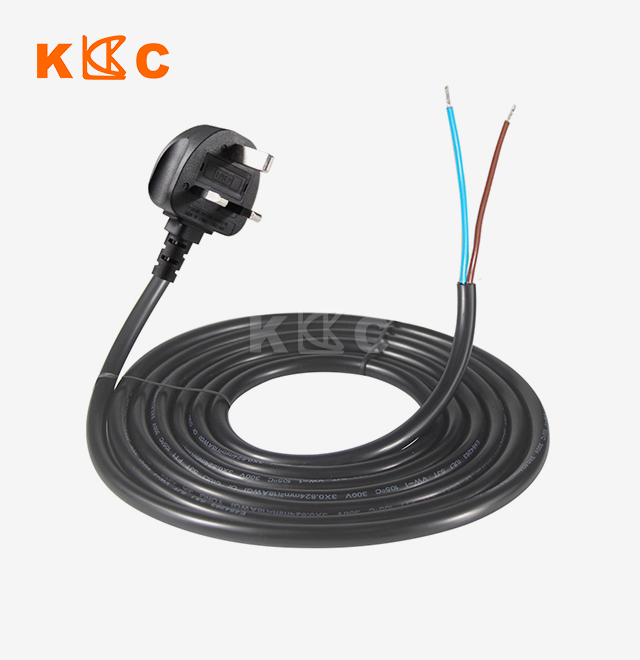
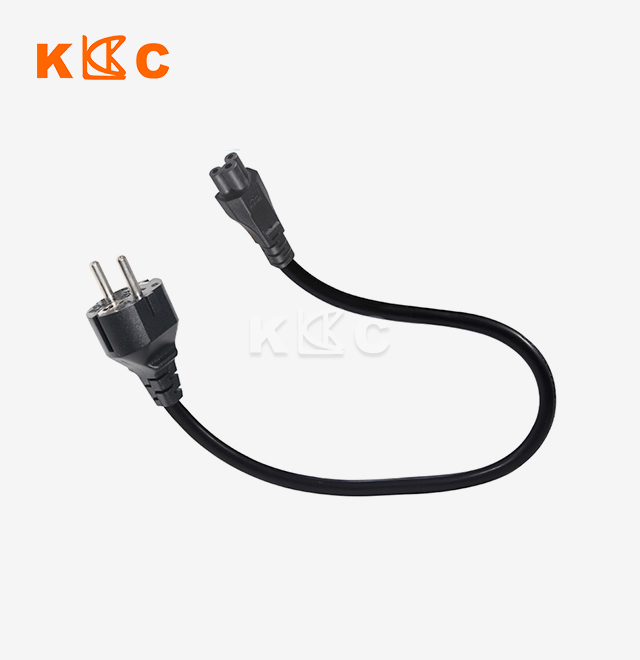
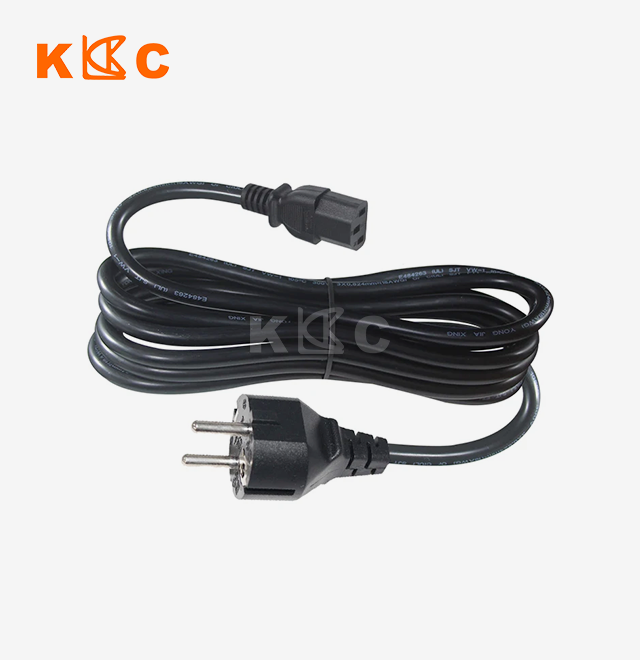
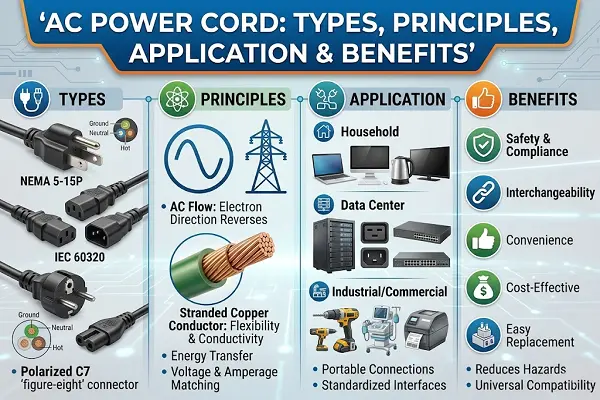
The International Electrotechnical Commission (IEC) sets global norms that make buying things from other countries easier. Most desktop computers, network gear, and audiovisual devices can use IEC C13 connections. This makes them the workhorses of IT infrastructure. When you pair IEC C14 inlets with C13 plugs, you get a standard way to link things. IEC C19/C20 configurations can handle higher current loads of up to 16 amps, which means they can power computers and industrial controls. In addition to IEC standards, different regional plug types are used in different areas. For example, NEMA 5-15 is used in North America, BS 1363 is used in the UK, CEE 7/7 (Schuko) is used in mainland Europe, and AS/NZS 3112 is used in Australia and New Zealand. There are different safety features built into each type of plug. For example, UK plugs have built-in switches, and grounded Schuko plugs have side grounding contacts.
Grounding Configurations: 2-Prong vs. 3-Prong Designs
Grounding is an important safety factor that has a direct effect on the safety of people and the life of tools. Two-prong AC power cord units that don't ground work with double-insulated Class II equipment because the internal design protects against shock well enough. Three-prong grounded AC power cord units connect the chassis of the equipment to earth ground. This quickly directs fault currents away from users and stops dangerous voltage buildup on metal casings. In industrial settings, grounded links are always needed, especially for machines with metal housings or that work in damp places. To meet leakage current requirements below 100µA, medical devices need grounded connections. This keeps patients safe from electrical dangers while they are being treated.
Heavy-Duty and Environmental Protection Options
AC power cord used in industrial settings need to be made to last in situations that would damage regular consumer-grade goods. Heavy-duty AC power cord units have conductor gauges that range from 14 AWG to 10 AWG, which means they can handle 15 to 30 amps of steady current without getting too hot. These AC power cord units have stronger strain relief at the plug links, and the jacket materials are thicker and more immune to wear, cuts, and crushing. Waterproof versions with IP67 or IP68 ratings let you put them outside and clean them in places like food processing and outdoor advertising. Chemical-resistant jackets keep workers safe from oil, acids, and industrial cleaners that are used in chemical plants and factories that make cars. Extreme temperature ranges from -40°C to +85°C don't affect the performance of temperature-rated AC power cord. This is important for industrial automation equipment that works in cold stores or hot production areas.
Specialty Applications Across Industries
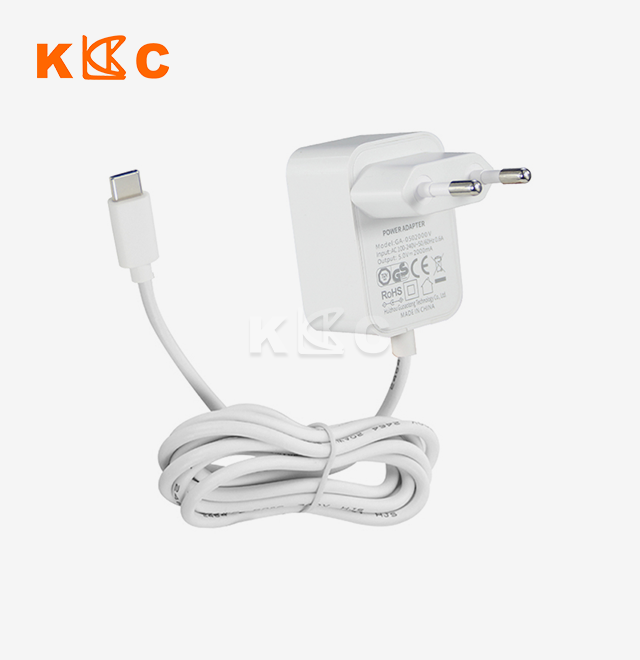
Customized AC power cord designs that solve specific operating problems are helpful in many fields. When making consumer goods, companies need large amounts of standard AC power cord that work with fast-charging protocols and USB-C PD. Field mistakes are avoided by making sure the quality is always the same. For industrial automation systems to work, the AC power cord needs to be ruggedized so that they stay connected even when there is shaking, dust, or changes in temperature that could stop the control messages. Specialized AC power cord is needed for new energy and car uses like EV charging stations, battery management systems, and power sharing in vehicles. The right size of the conductors and insulation keep voltage drop and thermal problems from happening. IEC 60601-1 approved medical-grade AC power cord with controlled leakage current and sterilization compatibility are needed in medical settings to keep patients safe and follow hospital safety rules. poe (Power over Ethernet) adapters are being used more and more in smart building setups. These adapters get rid of the need for separate AC power cord by sending both data and electricity through single cables. This makes it easier to install security cameras and access control systems.
AC Power Cord Procurement: Best Practices and Supplier Insights
Strategic sourcing requires reviewing seller capabilities beyond product specs to embrace quality systems, customization flexibility, and supply chain stability that support long-term business relationships. Reliable AC power cord providers show their dedication by having clear certifications, well-established quality management systems, and the desire to back up their claims with proof.
Identifying Trustworthy Suppliers and Verification Methods
Confirmation of ISO 9001 certification, which shows that quality control methods are organized, is the first step in verification. If you ask for pictures of the actual UL, CE, or VDE certificates for the AC power cord models you're interested in, you can tell if the sellers have real testing records or are just using certification logos without permission. Being an Alibaba Verified Supplier adds to your peace of mind by having a third party check your business's permits, production skills, and transaction records. When buyers or their agents do factory checks, they can see firsthand how AC power cord is made, how materials are inspected when they come in, and how they are tested at the end. We suggest that procurement teams keep files with current certificates, test results, and compliance declarations for each seller. This will show that they did their research during regulatory audits or liability investigations.
Customization Options for Specialized Applications
Off-the-shelf AC power cord specs meet basic needs, but to stand out in the market, companies often need custom solutions that fit their equipment designs and brand expectations. Custom length specs get rid of problems with managing extra AC power cord when installing equipment and stop setups from having to make do with too little reach. Special plug designs are needed for equipment that doesn't have standard plugs or for regional port differences that aren't covered by standard SKUs. Color-customized jackets help with branding a product, making it easier to keep track of supplies through visual coding, or meeting the needs for good looks in apps that people will see. OEM branding with printed names or heat-shrink sleeves strengthens brand recognition and stops fake substitute parts from being sold. Right-angle plug positions are useful when you don't have a lot of room behind furniture or inside equipment cases. Integrated strain relief boots that are made to fit particular equipment chassis holes keep AC power cord from getting damaged at key exit places. With these customization choices, ordinary AC power cord can become useful parts that help differentiate products and improve the customer experience.
Bulk Purchasing Benefits and Supply Chain Optimization
Volume purchasing has many benefits, not just lowering unit costs. It also improves business efficiency and supply chain security. When you buy a lot of AC power cord, the cost of making that one item goes down, which means that suppliers can lower their prices and make more money, which can help your product's margins or place you in the market. Shipping bigger orders all at once lowers the cost of logistics per unit and makes getting orders easier. When market instability or global unpredictability affects electronics supply lines, protecting inventory against supply disruptions or shortages of parts becomes very important. For return customers, established providers often don't require a minimum order quantity. This lets economic refill orders match real consumption trends. Relationship building leads to longer credit terms and more flexible payment terms that aren't possible with spot purchases. Predictable production scheduling is good for both buyers and sellers. For example, advance orders help with buying materials and allocating production capacity in a way that avoids rush fees and long wait times. From what we've seen, strategic buyers move away from buying based only on price and toward relationship models that stress supply chain resilience and working together to solve problems. This gives them competitive benefits that their rivals can't easily copy.
Manufacturer Spotlight: Quality Assurance and Support
Manufacturers that have been around for a while offer better engineering, stable quality, and all-around support that makes buying less risky. Belkin has a strong reputation for making high-quality devices for consumer gadgets that are also affordable enough for large OEM orders. IT infrastructure managers like Tripp Lite's heavy-duty construction and extended warranty support on their data center and industrial-grade AC power cord options. APC by Schneider Electric is the leader in UPS and power safety, and their AC power cord units are designed to work with all of their tools. Volex helps global OEMs launch products around the world by providing customizable AC power cord solutions and advice on how to meet regional compliance standards. Besides these well-known names, there are also specialized makers like Kuncan Electronics that have been making AC power cord solutions for 17 years and have approvals from ETL, VDE, CE, SAA, BS, and RoHS that allow them to sell their products all over the world. It is easy to tell which suppliers can be strategic partners instead of just component sellers when they have full certification portfolios, flexible customization options, and quick expert support.
Safety, Maintenance, and Replacement Guidelines
The safety of operations and the life of equipment rely on how the AC power cord is handled, how it is inspected, and how quickly it is replaced when damage or wear breaks the electrical integrity. For safe operation to start, the AC power cord must be installed correctly, with values that match the needs of the equipment and the conditions of the area.
Best Practices for Industrial Power Cord Use
Check that the ampacity of the AC power cord is higher than the equipment's nameplate values by the right amount of safety margins, which are usually 125% for continuous duty uses. AC power cord should be routed so that they don't get damaged by foot traffic, doors that pinch, sharp edges, or heat sources that break down insulation. Reduce the bend radius at plug connections, where repeated bending builds up mechanical force that breaks conductors. Instead of trying to weatherproof normal indoor AC power cord, protect setups that are outside or in wet places by using AC power cord that are rated for that kind of exposure. Don't get around grounding by using connections that don't have a grounding pin—this popular short-cut takes away important shock protection. Do not overload AC power cord by connecting devices that draw a total of power that is close to or higher than the AC power cord limit. Most AC power cord failures and the safety problems that come with them are avoidable with these basic steps. They happen because people try to save time by applying or installing things incorrectly.
Inspection Protocols and Hazard Recognition
Regular inspections find problems as they start to form, before they get so bad that they break and hurt people or damage equipment. A visual inspection should find any damage to the AC power cord jacket, such as cuts, scrapes, or thermal damage that means it got too hot. Check the housings of plugs and connectors for cracks, deformation, or darkening that could mean the inside is getting too hot from bad connections. If the strain release at the plug and equipment ends isn't working right, the AC power cord conductors could be bent over and over, which could cause the wire to break. Check that the plugs fit securely before plugging them in. Loose connections cause arcing and burning, which speeds up the breakdown process. During operation, a tactile check can find unusual heat at the plug joints that could mean there is too much resistance due to corrosion or mechanical looseness. Set check rates that are right for the job—every month for industrial equipment that works constantly in harsh conditions, and every three months for office equipment that works in controlled conditions. Keep a record of what the check found and take broken AC power cord units out of service right away because using them again would pose too many safety risks.
Replacement Procedures and Compatibility Verification
For safe replacement, make sure that the new AC power cord meet or go beyond the requirements of the original equipment by paying close attention to the specs. Find out the plug setup, conductor grade, AC power cord length, and any environmental protection requirements you need before you look for new AC power cord. Look at the nameplates on your equipment to find out about the voltage, current, and any AC power cord standards set by the maker. For example, in North America, the new AC power cord should be certified by UL or ETL. In Europe, it should be certified by VDE, and in Australia, it should be certified by SAA. Follow lockout-tagout methods in industrial areas and turn off the power and unplug any existing AC power cord before removing them. Before putting in new AC power cord, check the equipment's inlets for damage or dirt that needs to be cleaned. Route new AC power cord along the original paths, making sure to avoid adding new pinch points or long sections that could cause people to trip. After replacing equipment, test its operation by keeping an eye on it to make sure it works right and looking for signs of odd heating during the first use. Keep a supply of spare AC power cord units for important tools on hand to reduce downtime when things go wrong without warning.
Troubleshooting Common Power Cord Issues
Systematic fixing separates AC power cord problems from equipment faults, so replacements aren't needed and real problems that need to be fixed are found. Intermittent operation is often a sign of loose connections or wire breaks at flex points. Moving the AC power cord gently while the equipment is running may repeat the fault and help find the source of the problem. If you lose power completely even though the outlets work fine, this could mean that an internal AC power cord conductor has failed. This can be proven by checking for continuity with the equipment unplugged and the power turned off. If you connect certain pieces of equipment and trip switches or blow fuses, it could mean that there are short circuits in the AC power cord that need to be replaced right away. Too much heat at connections needs to be looked into right away—proper connections stay warm while they're working but never get too hot to touch. If you see damage to the AC power cord, like open wires, melted insulation, or broken plugs, you should take it out of service right away without trying to fix it. Many problems that look like broken AC power cord are actually caused by plug issues, equipment malfunctions, or circuit overloads. This is why it's important to do a full diagnosis before deciding to replace the AC power cord. When fixes seem like they could work, a professional inspection is needed to see if they meet safety standards or if replacement is a better, more reliable option.
Conclusion
To choose the right AC power cord, you need to weigh technical specs, safety certifications, environmental concerns, and the supplier's skills in order to get the best performance and dependability from your equipment. Understanding the basic rules of AC power cord building, global standards, and application-specific needs helps procurement professionals make smart choices that keep workers safe and keep the total cost of ownership as low as possible. Buying common goods can give you a competitive edge if you have strategic source relationships with makers that show full certifications, customization options, and quick support. The dependability of today's industrial, business, and healthcare processes depends on using the right installation methods, following systematic inspection standards, and replacing parts at the right time.
FAQ
What distinguishes AC power cords from DC power cords?
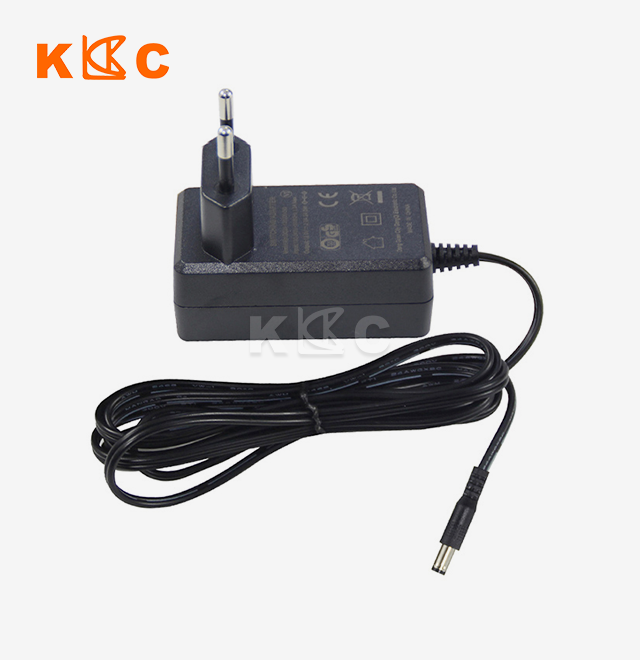
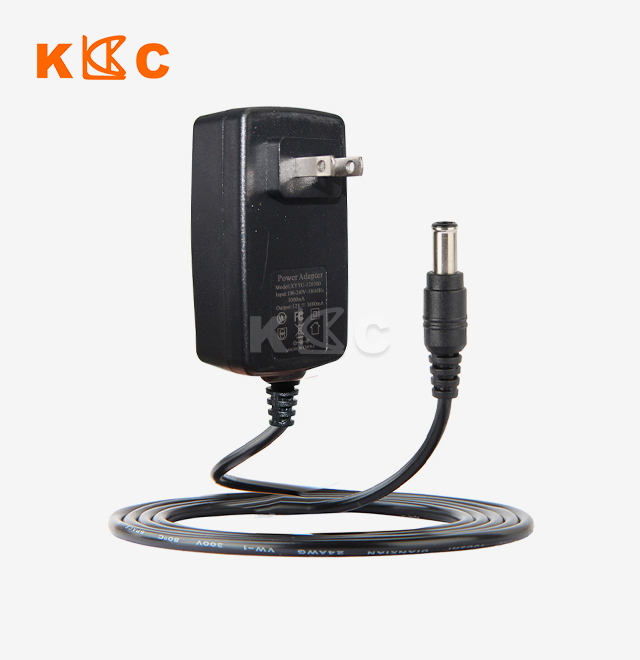
Using standard wall plugs to connect to utility power, AC power cord units send alternating current that changes direction every so often, usually at 50 or 60 Hz based on regional standards. DC power cord units carry direct current that flows in one way. They are often used in low-voltage situations, like with car accessories, battery-powered equipment, or devices that have external power sources that change AC power to DC power. The construction is very different. Insulation for AC power cord needs to be rated for higher voltages (120–240V) and they need to be grounded for safety. DC power cord, on the other hand, work at lower voltages (5–24V) and have different types of connectors, such as USB connections or barrel plugs. With the right identification, the right repair can be made without damaging the tools or putting people in danger.
How can I be sure that safety standards are real?
Verification of the certification keeps you safe from fake AC power cord goods that don't have real safety tests. Ask suppliers for pictures of the certificates that show particular model numbers, test dates, and the information of the lab that issued the certificates. Check certificate numbers against government databases. UL has a public online list of certifications, VDE offers verification services, and CE statements should include notified body identification numbers that can be checked against EU databases. Check the labels on the products you're interested in for certification logos that are paired with file numbers or control marks that show they were tested properly. Be wary of broad claims that don't come with any proof or sellers who won't give you the information you need to verify them.
What lengths work best for different types of installations?
Standard lengths of 3 to 15 feet work for most situations, and the choice depends on how far you need to reach and how hard it is to manage an extra AC power cord. Shorter AC power cord (3-6 feet) work best for devices that are close to plugs because they reduce trip risks and visual clutter in consumer settings. Standard 10-foot AC power cord make it easy to place office and light industrial tools in a variety of ways. Longer lengths (15+ feet) are needed to connect equipment that is far from outlets, but the right size AC power cord conductors are needed to keep the voltage from dropping. Custom AC power cord lengths get rid of fitting problems, which is especially helpful for OEM uses where the right AC power cord length improves the look of the product and the user experience.
Partner with a Trusted AC Power Cord Supplier
Kuncan Electronics has been providing reliable AC power cord options for 17 years, so they are ready to help you with your power communication needs. Our wide range of certifications, such as ETL, VDE, CE, SAA, BS, and RoHS approvals, make it easy for our products to be sold in North America, Europe, Asia-Pacific, and other places around the world. We offer open OEM/ODM customization, which includes custom lengths, plug setups, color matching, logo printing, and special AC power cord builds that meet the needs of each application. Our stable supply chain and one-year guarantee protect your investment, and sample delivery within 3–7 business days and production wait times of 15–25 days keep your project on track. Email our team at rhea@szkuncan.net to talk about your unique needs and get a quote that is based on your volume requirements and technology requirements.
References
National Electrical Manufacturers Association (NEMA). NEMA Wiring Devices: Dimensional Standards Publication. 2021 Edition.
International Electrotechnical Commission. IEC 60320 Series: Appliance Couplers for Household and Similar General Purposes. 2018.
Underwriters Laboratories. UL 817 Standard for Safety: Cord Sets and Power-Supply Cords. 2019 Revision.
European Committee for Electrotechnical Standardization. EN 50525 Series: Electric Cables - Low Voltage Energy Cables of Rated Voltages up to and including 450/750 V. 2020.
Institute of Electrical and Electronics Engineers. IEEE Color Books: Recommended Practice for Electrical Installations in Industrial and Commercial Facilities. 2017.
Occupational Safety and Health Administration. OSHA Standard 1926.405: Wiring Methods, Components, and Equipment for General Use in Construction. Federal Register Publication, 2022.

USER EVALUATE
Here is the customer's evaluation of us
_1778576596139.webp)