
Automotive Power Solutions Using Cigarette Lighter Connectors
The simple cigarette lighter male plug becomes an important part of your business's infrastructure when your fleet vehicles need reliable power transfer or emergency equipment needs instant connectivity. These cigarette lighter male plugs have changed over time from simple extra ports to complex systems that can do a wide range of tasks, from jump-starting other cars to connecting to a portable power station. Knowing how to choose, set up, and maintain these power delivery systems can have a big effect on how well your business runs, how safe it is, and how long your equipment lasts. The right connector design is very important, whether you're in charge of emergency response teams, industrial sites that are far away, or retail markets that need outdoor power solutions. It can mean the difference between reliable operation and costly downtime.
Understanding Cigarette Lighter Male Plugs in Automotive Applications
Core Design and Component Architecture
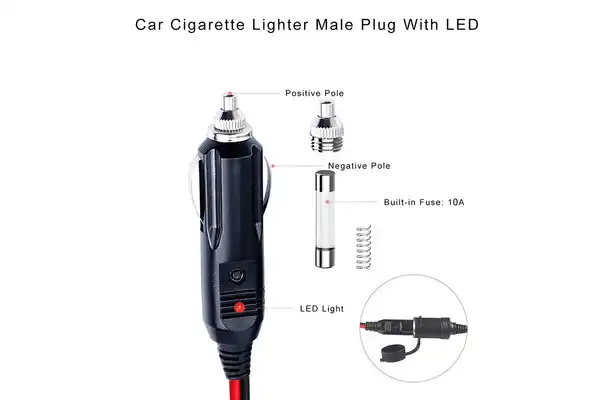
The modern cigarette lighter connector is made up of carefully designed parts that work together. The negative ground link is made by the outer barrel, and the positive energy is sent by the spring-loaded center pin. Nickel-plated brass contacts on high-quality units keep the resistance below 50 milliohms, so there isn't much voltage drop even when the load stays on for a long time. When we make things, we use high-quality Bakelite housing that has a UL94 V-0 flame retardancy grade. This keeps the structure strong at temperatures ranging from -40°C to +105°C. This choice of material keeps it from deforming in high-current situations, which happens a lot with cheaper options made from normal ABS plastic.
Pay close attention to the spring mechanism. Manganese steel double-sided springs keep the pressure on the socket walls constant, even when they are exposed to constant vibration. This design stops the loose connections that happen with most consumer-grade cigarette lighter male plugs. People who drive their cars on rough terrain, like on construction sites, farms, or emergency routes, will benefit a lot from this strong contact design that keeps the electricity flowing even when the contacts are stressed.
Electrical Operation in Vehicle Systems
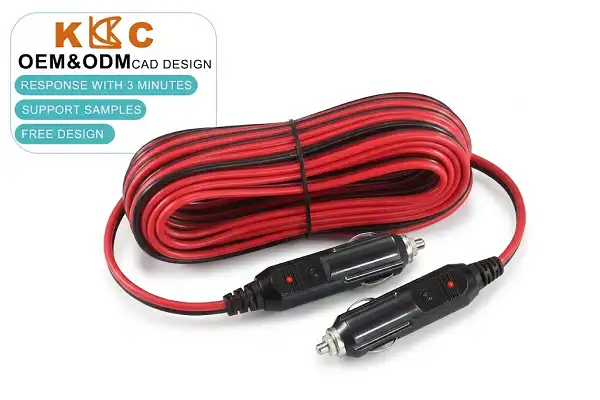
Most cars for regular people use 12V DC systems, while large trucks and buses use 24V systems. Careful material choice and thermal control allow high-quality connections to work with both voltage standards. Power handling ability is usually between 10A and 20A, but it depends on the wire gauge and the form of the contacts. Our heavy-duty male-to-male cables have extra-thick pure copper cores in 12-16AWG configurations. They can handle 15-20A of continuous current with very little heat production.
It is important to understand how the temperature changes things. When working at full capacity, the temperature of the contact points should stay no more than 40°C above room temperature. If you go over this limit, it means that either the contact pressure isn't high enough or the materials aren't good enough. Both of these things speed up oxidation and raise resistance over time. We do strict temperature rise tests that follow SAE J563 and ISO 4165 guidelines. We keep an eye on thermal performance under full load for long periods of time to make sure the design is correct before putting it into production.
Safety Integration and Fuse Protection Systems
At both ends of every professional-grade cable, there is a dual fuse protection built in. This backup protects both the power source and the devices that are connected to it from overcurrent events. Glass tube fuses that are rated for certain amperage loads reliably cut off the circuit without tripping because of short-term starting currents. To choose the right fuse rating, you have to match it to the highest draw of the connected gadget while still leaving enough safety margin.
Strain release design keeps cables from getting damaged in heavy-duty situations. The stronger tail keeps the wire connections safe from mechanical stress in situations where they are moved around a lot or are exposed to harsh environments. Tests with salt spray show that the material is resistant to corrosion for 48 hours, which proves that it works well in marine and coastal environments where salt and moisture build up and make materials less durable. When working with fleets that operate in a variety of climates and conditions, vehicle maintenance teams appreciate how long-lasting these parts are.
Comparing Types and Features of Cigarette Lighter Male Plugs for Optimal Selection
Male Versus Female Configuration Functions
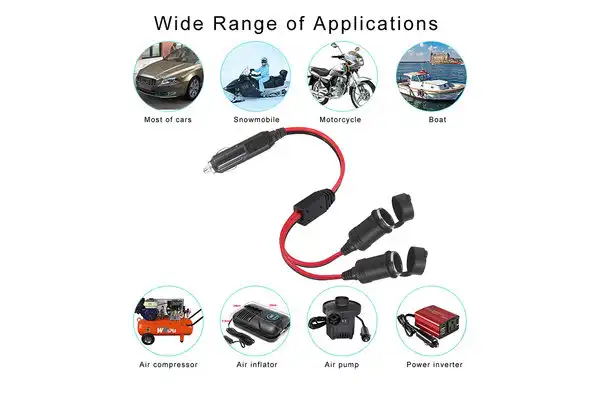
When planning power distribution systems, it's important to know what gender each connection is. Male plugs fit into jacks or outlets on cars and carry power from the source. Cigarette lighter male plugs fit into female sockets, which send power to devices that are plugged in. The male-to-male cable configuration lets power go directly from one vehicle to another without using any adapters in between. This makes emergency jump-starting and connecting to a portable power station easier.
Female splitter configurations are useful for situations where power needs to be sent to more than one device. These split a single source into multiple outlets, but users need to keep an eye on the total current to make sure it doesn't get too high. Both types are commonly used on emergency response vehicles: male-to-male splitters are used to connect two vehicles together, and female splitters are used to power multiple diagnostic tools or communication devices at the same time.
Multifunctional Designs Meeting Modern Demands
The addition of USB charging ports meets the needs of modern devices. These days, modern designs have both traditional 12V outputs and USB-A and USB-C PD ports, which work with smartphones, tablets, and fast-charging protocols like Quick Charge 3.0. Power warning lights show you which wires are live, which is helpful at night or when you're trying to figure out an electrical problem.
These improved designs work especially well in business groups where drivers need to charge their devices reliably without affecting the main power supply. Construction managers like unified solutions that keep power management simple while reducing the number of accessories that need to be kept in order. The most important thing to think about is making sure that adding a USB doesn't hurt the connector's main high-current ability, which is still needed to power industrial equipment.
Industrial-Grade Materials and Environmental Ratings
Standard wall plugs are made of basic plastics that break down when exposed to UV light and heat for a long time. For professional use, you need Bakelite or plastic that doesn't catch fire when it gets hot. These materials don't break or deform when they are exposed to full sunlight and hot engine room temperatures for a long time. Industrial-grade units have thicker copper or brass alloys used in their internal metal terminals. These alloys lower resistance and improve conductivity under sustained loads.
For outdoor and nautical uses, waterproof designs with IP67 or IP68 grades are a must. These ratings show that the product is completely resistant to dust and water for a short time. Operators of agricultural equipment, marine service providers, and outdoor advertising installations depend on these standards to keep the power going even when it rains, snows, or is being pressure-washed for upkeep. Before certification, testing protocols make sure that the construction is sealed by exposing it to water and dust in a chamber.

How to Choose and Procure the Best Cigarette Lighter Male Plug for Your Business Needs
Defining Your Operational Requirements
Clearly defining the application is the first step in making a procurement strategy. For jump-start operations, emergency services prioritise high-current capacity. This means that the construction needs to be strong enough to withstand frequent mechanical cycling. For continuous-duty applications in harsh environments, industrial operations value the ability to handle a wide range of temperatures and vibrations. Retail delivery companies are looking for low-cost options that mix quality with low prices so they can make a lot of sales.
For different types of vehicles to work together, you need to pay attention to both voltage standards and the size of the sockets. Standard sockets for passenger vehicles all have the same size, but heavy equipment sometimes uses its own unique configurations. Making sure that sockets work with each other before placing big orders helps avoid expensive returns and delays in deployment. Our engineering team offers free design review services. They will look at the needs of your specific application and suggest the best wire gauge, length, and material.
Critical Technical Specifications
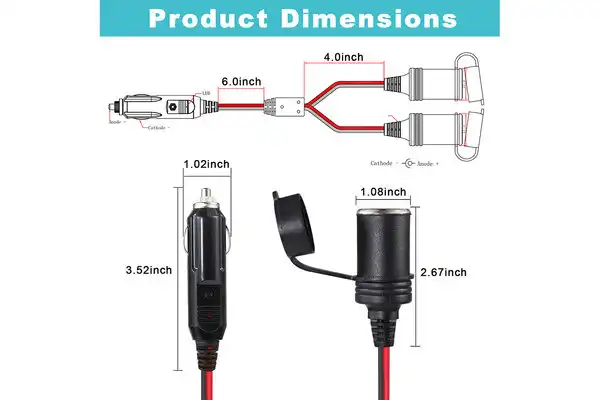
The current grade is the main factor used for choosing the best cigarette lighter male plug for your business. Find out how much current all the linked devices can handle at their highest level, and then choose connections that are rated at least 25% higher than that level to be safe. The wire gauge directly affects the amount of current it can carry. 12AWG can handle about 20A, 14AWG can handle 15A, and 16AWG is best for 10A uses. Too much heat is produced by wires that are too small, which speeds up the breakdown of insulation and creates fire hazards.
Voltage compatibility usually covers both 12V and 24V systems, but it's still a good idea to double-check. Specifications for contact resistance below 50 milliohms show a good design that reduces voltage drop and heat production. The temperature rating should be the same as or higher than the temperature at which the unit will be used. For example, standard consumer units can handle 85°C, but 105°C is needed for industrial applications. Insertion-extraction cycle ratings above 5,000 operations guarantee a long service life in apps that link often.
Evaluating Manufacturers and Supply Chains
Comprehensive certificates from well-known makers show their dedication. Products with the ETL (US/Canada), VDE (Europe), SAA (Australia/New Zealand), and CE marks have been tested by a third party and found to meet international safety standards. These certifications make it easier to get into the market by getting rid of the need for multiple tests in different areas.
Indicators of manufacturing skill include the customisation choices that are available. When suppliers offer OEM services that include different wire gauges, custom lengths, logo embossing, and material choice, they show that their production is flexible enough to meet changing needs. Manufacturers put a lot of faith in their warranties. For example, our normal one-year guarantee against manufacturing defects covers quick replacement or repair, which keeps operations running as smoothly as possible. Lead times are very important. Sample production can be finished in 3–7 days, and bulk orders can be filled in 15–25 days. This allows for flexible inventory management without having to pay too much to keep too much stock.
Optimizing Performance and Longevity of Cigarette Lighter Male Plugs in Automotive Power Systems
Common Performance Challenges
Contact oxidation is the most common way that things break down. Moisture and temperature changes cause oxide layers to form on metal surfaces, which raises resistance and lowers current capacity. Nickel-plated contacts slow this process down a lot more than bare brass or copper contacts, so they last longer between service times. Visual inspections done on a regular basis can help find early signs of oxidation, like discolouration or a rough texture on contact surfaces, so they can be replaced before they completely break.
Wear and tear from putting and taking out the cigarette lighter male plugs, and sockets over and over again gradually lowers the spring tension in both. This shows up as connections that don't fit tightly and move apart when the machine is running. Manganese steel springs in high-quality plugs keep the force for a much longer time than standard spring steel options. Users who are frequently losing their connections should check both the plug and the vehicle socket for worn parts and replace them as needed to get back to working properly.
Installation and Maintenance Best Practices
For a proper installation to start, orientation must be checked, and wires must be properly terminated. It is better for electrical and mechanical integrity to use solder connections instead of crimp connections, but good crimps made with the right tools will work just fine. Heat-shrink tubing keeps connections dry and free of damage from mechanical forces. Keep cables away from hot engine parts and sharp edges that could wear down the insulation over time.
Maintenance plans should include checking the state of the fuse, the cleaning of the contacts, and the strength of the insulation on a regular basis. When you replace fuses, only use ones with the same amperage rating. Using fuses with higher ratings disables overcurrent safety, while fuses with lower ratings cause annoying failures. When oxidation shows up, clean the contacts with the right electrical contact cleaner and fine abrasive pads. To get the most out of your insulation, keep your spare cables in cool places instead of hot compartments in your car. Following these simple steps will greatly increase the operating life while keeping safety margins.
Emerging Innovations Shaping Future Solutions
Smart connection technology builds troubleshooting features right into systems that deliver power. These high-tech units keep an eye on temperature, power, current draw, and more in real time. They can show problems early on their built-in screens or by connecting wirelessly to fleet management systems. Trending data shows that performance is slowly going down before it fails completely, which makes predictive maintenance possible.
Better waterproofing innovations use better seal designs and conformal coats that keep internal parts dry without limiting freedom or making fitting harder. Some manufacturers now offer IP69K ratings that are good for high-pressure washdown areas that are common in chemical and food processing plants. Modular designs let you change individual parts in the field, like worn contacts or broken wires, without having to throw away whole assemblies. This cuts down on trash and running costs over the lifetime of a product.

Conclusion
When choosing the right car power connectors, including a cigarette lighter male plug, you have to balance technical requirements with working needs and budgetary limits. Procurement experts can make choices that improve fleet efficiency while keeping lifetime costs low by understanding core design principles like material quality, fuse protection, current ratings, and environmental durability. Investing in industrial-grade parts pays off in a way that can be measured: less downtime, longer service intervals, and better safety compliance. As electrical systems in cars get more complex and power needs rise, it's important to work with seasoned makers whose engineering has been tested and whose customisation options are flexible. A good power delivery infrastructure is an important investment in making emergency services, industrial automation, and commercial fleet management work better.
FAQ
What voltage systems do standard cigarette lighter plugs support?
Good connectors can work with both 12V systems, like those in cars, and 24V systems, like those in commercial trucks and buses. Instead of voltage-specific parts, universal compatibility comes from the choice of materials and the way they handle heat. Before buying, make sure that the manufacturer's specifications confirm that the cigarette lighter male plug can work with both 120V and 240V. This will give you more options for a wide range of vehicle fleets.
How do I determine the correct current rating for my application?
Find out how much current all the devices that are being used at the same time use, and then choose plugs that are rated at least 25% higher than this number. The capacity is directly related to the wire gauge. 12AWG can handle about 20A, 14AWG can handle 15A, and 16AWG can handle 10A loads. Undersized ratings cause too much heat, which breaks down parts and poses a safety risk by melting insulation or starting a fire.
Are waterproof plugs necessary for all applications?
The environment determines the protection needs. Standard designs work fine for installations that are indoors or in protected areas. However, IP67 or IP68 grades are needed for installations that are outside, in the sea, or in pressure-wash settings. These requirements make sure that there is full security against dust and brief immersion. This stops corrosion and electrical failures caused by wetness that can happen in harsh conditions, which lowers reliability.
Partner with Kuncan Electronics for Reliable Automotive Power Solutions
Kuncan Electronics has been making specialised products for 17 years and offers reliable cigarette lighter male plug solutions to customers around the world. Our enterprise-grade heavy-duty cables with extra-thick pure copper cores, heat-resistant Bakelite construction, and two fuses give your operations the dependability they need. We offer full OEM customisation for wire gauges from 12AWG to 16AWG, custom lengths, and a range of materials such as PVC, TPE, rubber, and LSZH compounds. Following the standards set by SAE J563 and ISO 4165, every product goes through 100% electrical and thermal testing. This makes sure that it works the same way in all demanding situations.
As a trusted cigarette lighter male plug manufacturer, we keep all of our global certifications up to date, such as ETL, VDE, SAA, CE, and RoHS. This makes it easier for you to enter the market in many places. Our responsive supply chain gets samples to customers in 3–7 days and finishes bulk production in 15–25 days. This is made possible by open MOQ policies that allow for both large-scale operations and the purchase of extra parts. You can talk to our expert team at rhea@szkuncan.net about your specific needs, ask for product samples, or look into unique solutions that are made to fit your business's needs. Let us become your strategic partner in improving the power grid for your cars.
References
1. Society of Automotive Engineers. "SAE J563: 12 Volt Cigarette Lighter Standard." SAE International Standards, 2018.
2. International Organization for Standardization. "ISO 4165: Road Vehicles – Electrical Connections – Cigarette Lighter Receptacles." ISO Technical Standards, 2020.
3. Underwriters Laboratories. "UL 2089: Standard for Safety for Vehicle Battery Adapters." UL Certification Requirements, 2019.
4. National Fire Protection Association. "NFPA 70: National Electrical Code – Article 625: Electric Vehicle Charging Systems." NFPA Publications, 2021.
5. American National Standards Institute. "ANSI C18.2M Part 1: Portable Rechargeable Cells and Batteries – General and Specifications." ANSI Standards Catalog, 2020.
6. Institute of Electrical and Electronics Engineers. "IEEE 1725: Standard for Rechargeable Batteries for Multi-Cell Mobile Computing Devices." IEEE Standards Association, 2021.

USER EVALUATE
Here is the customer's evaluation of us
_1781165562395.webp)