
Best Uses for a 12V Cigarette Lighter Male Plug
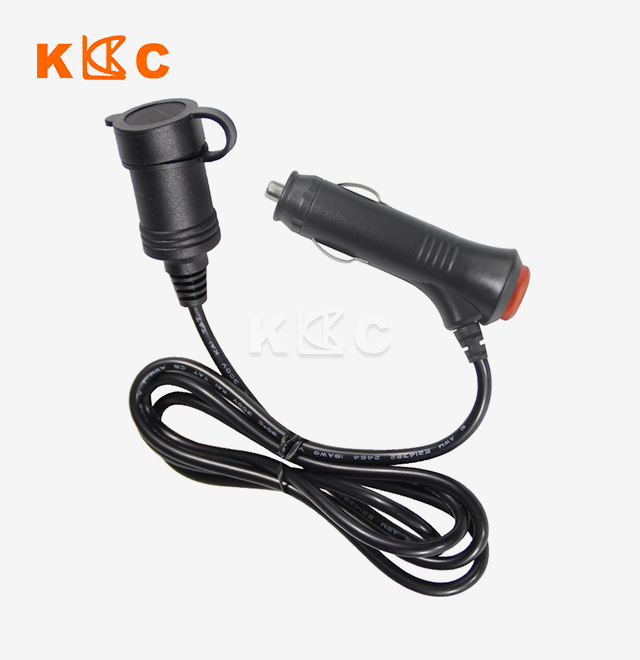
In both cars and factories, the cigarette lighter male plug is still one of the most useful power connectors. This standardised 12V interface does more than just power dashboard accessories. It also supports off-grid construction equipment, allows emergency vehicle-to-vehicle power transfers, and powers important communications gear in remote areas. If you know how to use these connectors wisely, you can lower the cost of your tools, make your operations more flexible, and make it easier for your fleet or facility to respond to emergencies.
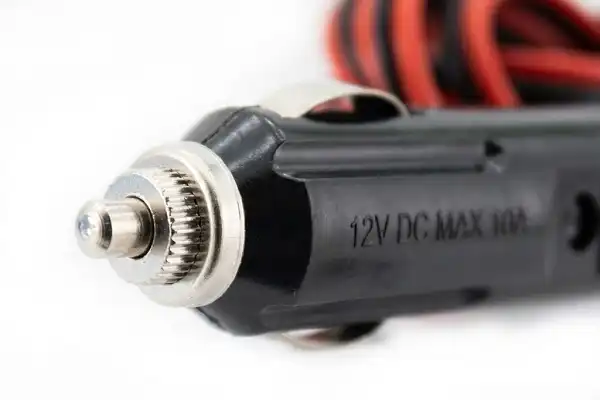
Understanding the 12V Cigarette Lighter Male Plug
Standard Specifications and Voltage Ratings
In the 1920s, the 12V automotive power socket started out as a real cigarette lighter. Over time, it changed into a universal DC power interface. Standard specifications are based on SAE J563 guidelines, which describe a center positive contact that is 10mm in diameter and has a 21mm grounding cylinder. The nominal voltage for most car systems is 12V DC, but the actual voltage can be anywhere from 11V to 14.5V, depending on how the engine is running and the state of the battery.
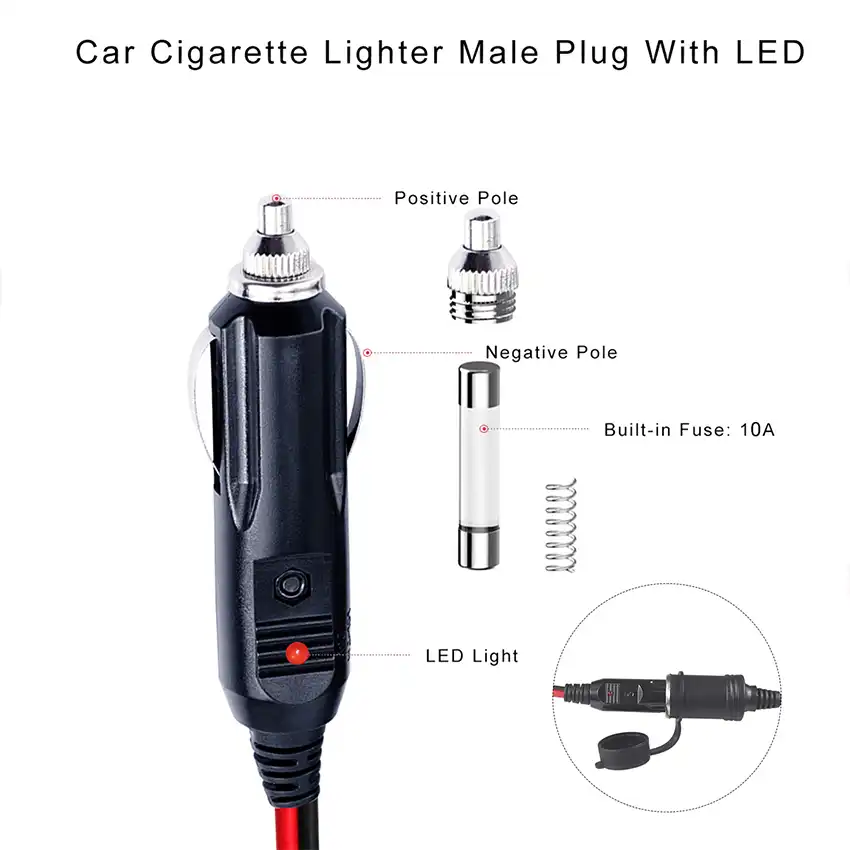
Heavy-duty industrial versions can handle 15A to 20A of continuous current, which is a lot more than the 8A to 10A that consumer-grade plugs can handle. Our enterprise-grade connectors at Kuncan Electronics have extra-thick pure copper cores that can handle high currents for a long time without voltage drop. The nickel-plated brass contacts keep the resistance below 50mΩ, so even when the load is at full, there isn't much power loss.
Key Electrical Characteristics and Safety Features
Professional-grade connectors have more than one safety feature built in. At both ends of the cable, there is dual fuse protection. Glass tube fuses set for specific amperage loads keep linked devices and the vehicle's electrical systems safe from overcurrent situations. Our plugs have high-quality Bakelite housings that are rated UL94 V-0 for flame retardancy. This means that they will stay structurally sound at temperatures up to 105°C and will not cause fires.
The manganese steel used to make the spring-loaded center contact and double side springs keeps the pressure against the socket walls constant, even when the machine shakes. This setup makes sure that power stays on while the car is running or while the equipment is moving. Built-in strain relief keeps the cable from breaking when it's being used a lot, and the strong tail design keeps the wire connections safe from mechanical stress in tough conditions.
Testing Methods and Quality Assurance
We make sure that every wire we sell meets the strict quality standards set by SAE J563 and ISO 4165. Temperature rise testing makes sure that the contact points stay within 40°C of room temperature after one hour of full load use. This keeps the parts from overheating and breaking. Insertion and withdrawal life tests confirm that the plug can be used more than 5,000 times without losing power. Tests with salt spray show that the material is resistant to corrosion for 48 hours in harsh naval and industrial settings.
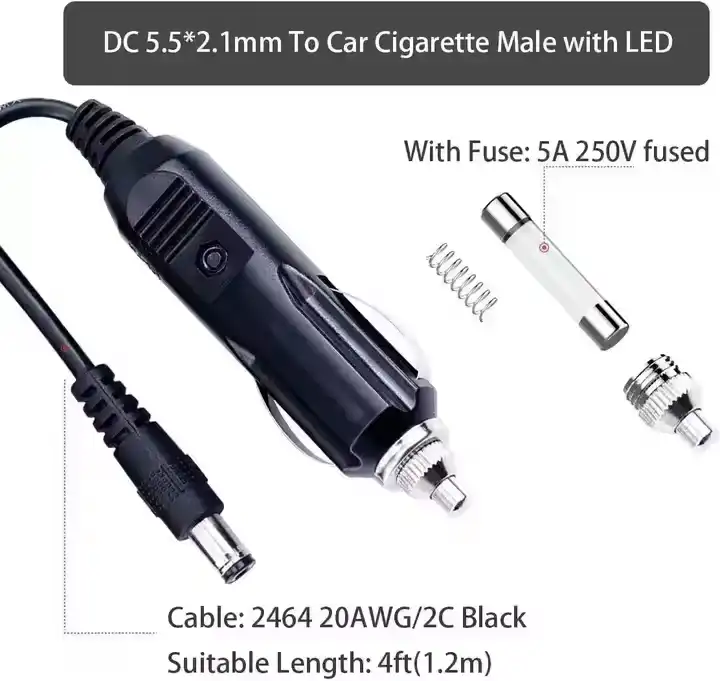
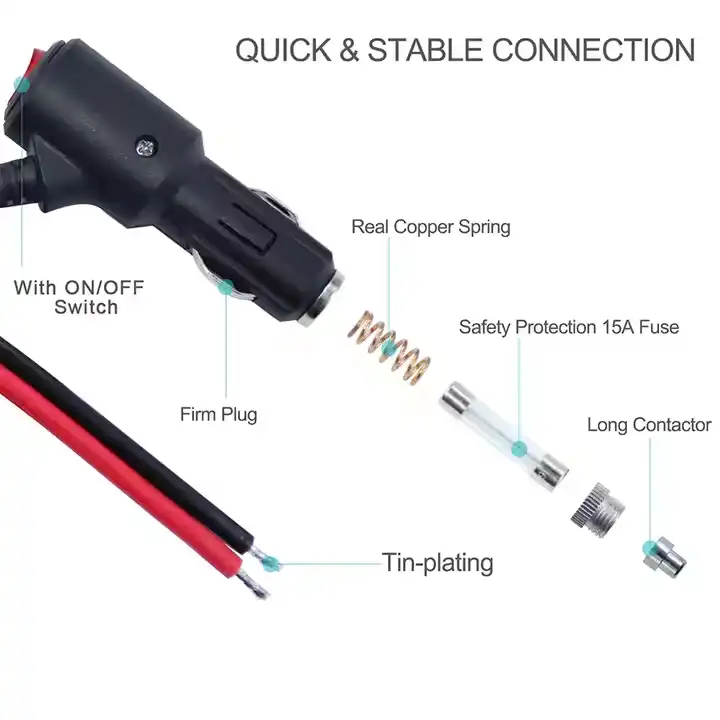
Top Practical Uses of the 12V Cigarette Lighter Male Plug
Automotive and Fleet Management Applications
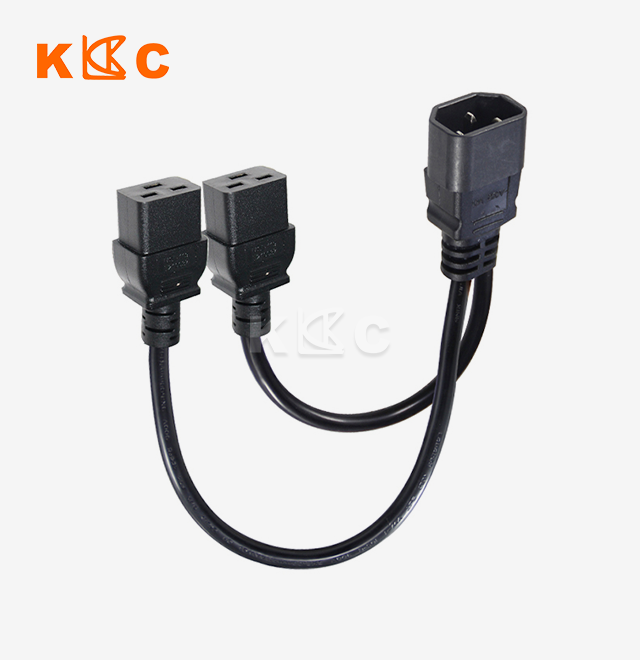
Portable fridges and freezers used for medical transport or food delivery services use a lot of electricity for long periods of time. Premium connectors with heat-resistant parts keep plugs from breaking down during continuous use. The dual male configuration lets emergency vehicles power their gear directly from command vehicles with generators. This keeps important operations going during long deployments.
Industrial and Construction Site Power Solutions
Portable power sources make it possible to use tools on construction sites and in remote areas. Heavy-duty power transfer cables can work in harsh conditions and keep pneumatic tools, diagnostic equipment, and communication gear connected to the power. Longer lengths, which come in unique setups with wire gauges ranging from 12AWG to 16AWG, let you move power sources and tools around job sites more easily.
Ruggedised connectors are used in mining and farming equipment because they can handle dust, water, and mechanical impact. Our IP67-rated versions keep their seals sealed even if they get wet for a short time. This means that power stays on even in harsh weather conditions. The nickel-plated contacts don't rust and work well even when they're exposed to fertilisers, hydraulic fluids, and chemical vapours that are common in industrial settings.
Emergency Response and Off-Grid Operations
In order to respond to disasters, emergency services need reliable power transfer capabilities. Our lines allow high-current jump-starting between emergency cars, which means that batteries can be charged quickly without the need for special tools. Responders can focus on mission goals instead of power connectivity problems when the male-to-male configuration gets rid of the need to fiddle with alligator clips in time-sensitive situations.
Search and rescue teams that work in remote wilderness areas use standard 12V interfaces to connect portable power stations to medical devices, GPS units, and communication gear. From -40°C to +85°C, the temperature-rated parts work effectively, so they can be used for both winter mountain rescues and actions in the desert. Power spikes can't damage expensive radios or medical monitors while they're being used in the field because they have built-in fuse safety.
Marine and Recreational Vehicle Power Systems
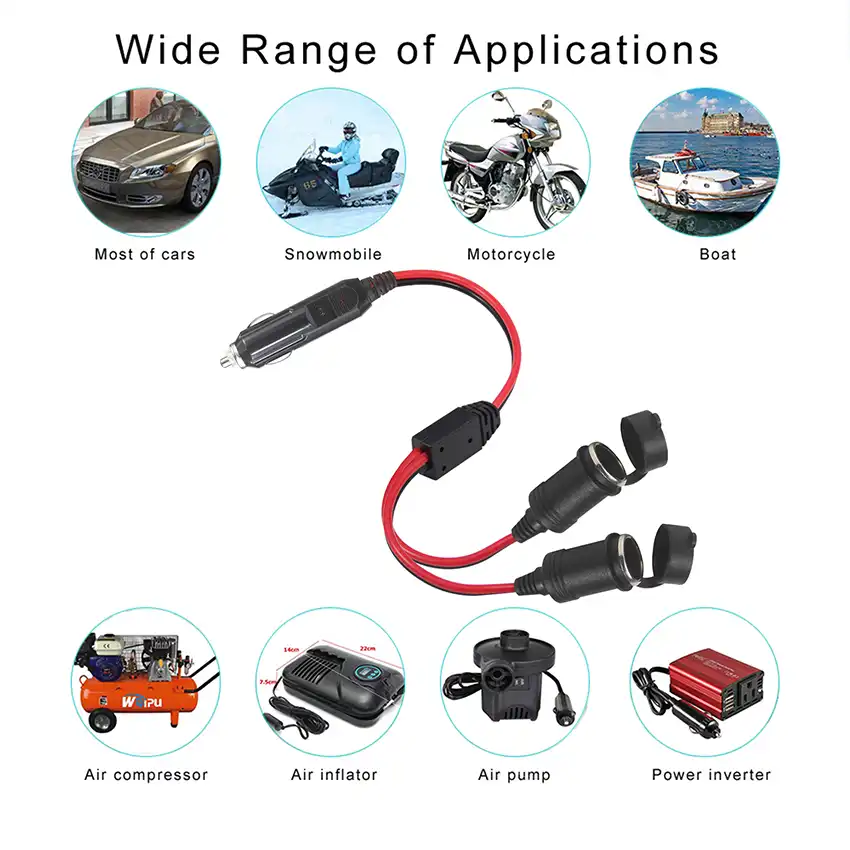
Marine-grade connectors are what boat owners choose to use to send extra power around their boats. Navigation lights, fish finders, bilge pumps, and entertainment systems can all be powered by the standard interface, which means that custom wiring installations are not needed. Our designs are resistant to corrosion, so they can handle the salt spray and humidity that are common in marine settings. This means that links will stay strong season after season.
Fans of recreational vehicles like that they can easily connect solar panel charge controllers, inverters, and battery banks through 12V sockets. The secure connection design keeps power from going out when the car moves over rough ground. Custom cable lengths can fit a wide range of RV layouts, from small camper vans to large motor coaches with multiple power outlets.
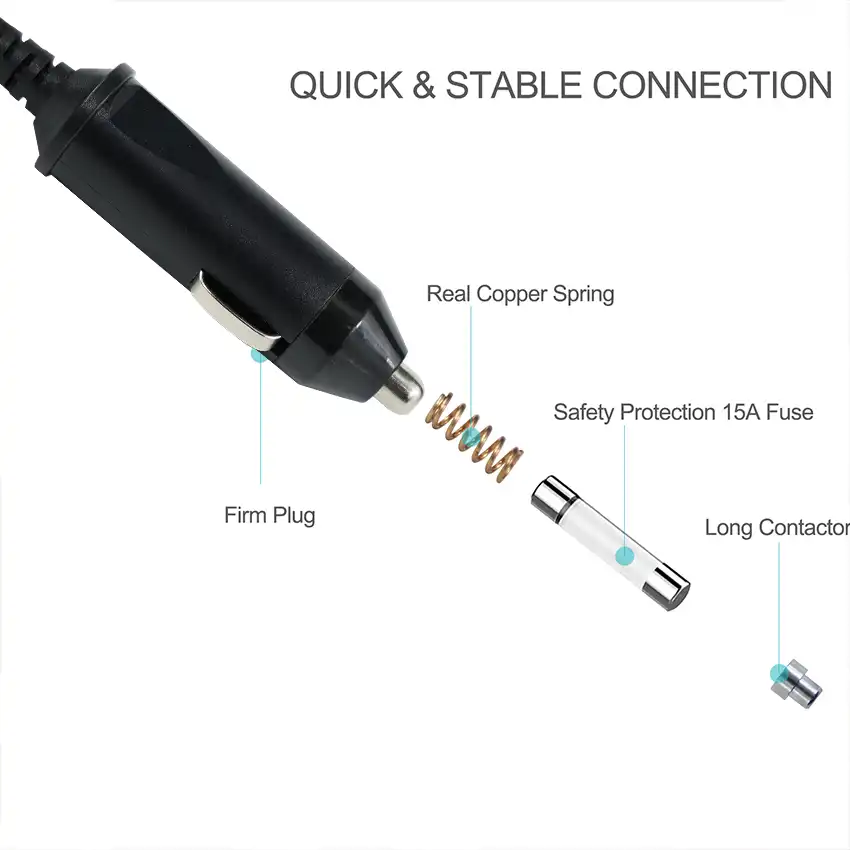
How to Choose the Best 12V Cigarette Lighter Male Plug for Your Business Needs
Evaluating Current Capacity and Wire Gauge
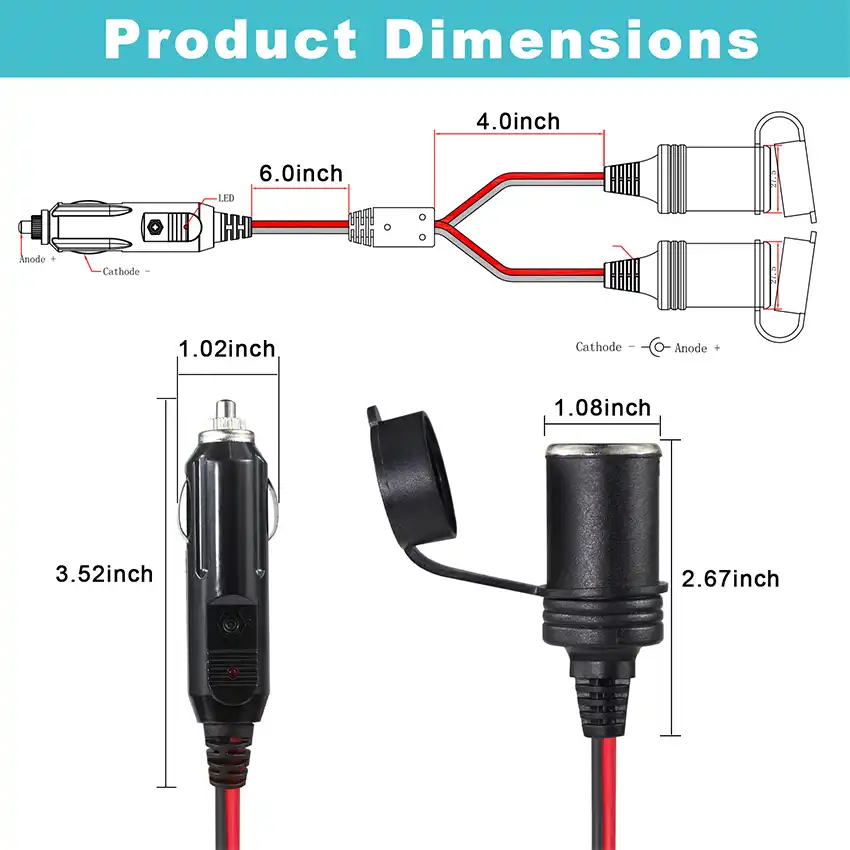
The wire gauge has a direct effect on how much current it can carry and how much voltage it drops over distance. Our 12AWG cables can handle up to 20A over 10-foot runs with little power loss. For 10A needs, our 16AWG cables are enough. To keep power delivery efficient, industrial buyers should ask for heavier gauges or cable lengths longer than 15 feet for long-term high-current applications.
Assessing Durability and Environmental Protection
The operating setting determines the choice of materials and the way they are built. Standard PVC insulation works well inside and in mild climates, while TPE compounds stay flexible when they get below freezing. To protect against harsh chemicals, you need special LSZH (Low Smoke Zero Halogen) compounds that can stand up to oil products, solvents, and hydraulic fluids that are common in industrial settings.
When wires are near moving vehicles, sharp edges, or heavy machinery, they need extra mechanical safety. In tough situations, reinforced strain relief and abrasion-resistant outer jackets make the service life longer. Our engineering team offers free design review and technical support to make sure your application works at its best. They can also help you choose the right level of protection based on your needs.
Comparing Manufacturers and Supply Chain Reliability
Production plans and product quality are directly affected by how consistent suppliers are. Manufacturers that have been around for a while keep their raw material sources stable and their quality control processes well-documented. This makes it easier to compare batches of products. Global compliance standards, such as CE, VDE, ETL, SAA, and BS/UKCA, make sure that goods meet the needs of international markets without having to go through more testing.
Lead time freedom helps with both planned purchases and new needs that come up out of the blue. Sample production at Kuncan Electronics takes 3–7 work days, and mass production, which depends on the number of orders, takes 15–25 days. Our 24-hour reaction team takes care of urgent orders when they come in, and our flexible shipping choices by air, sea, and rail make sure that our logistics costs are low, no matter where the order is going or how quickly it needs to be delivered.
Installation, Testing, and Maintenance Best Practices
Step-by-Step Installation Guidelines
Making sure that the power source's specs match the connector's ratings is the first step in a proper installation. Before connecting expensive equipment, use a multimeter to make sure the vehicle socket gives a stable 12V to 14V when it's loaded. Check the plug contacts for any damage, corrosion, or debris that could make it impossible to place them securely or make links with a high resistance.
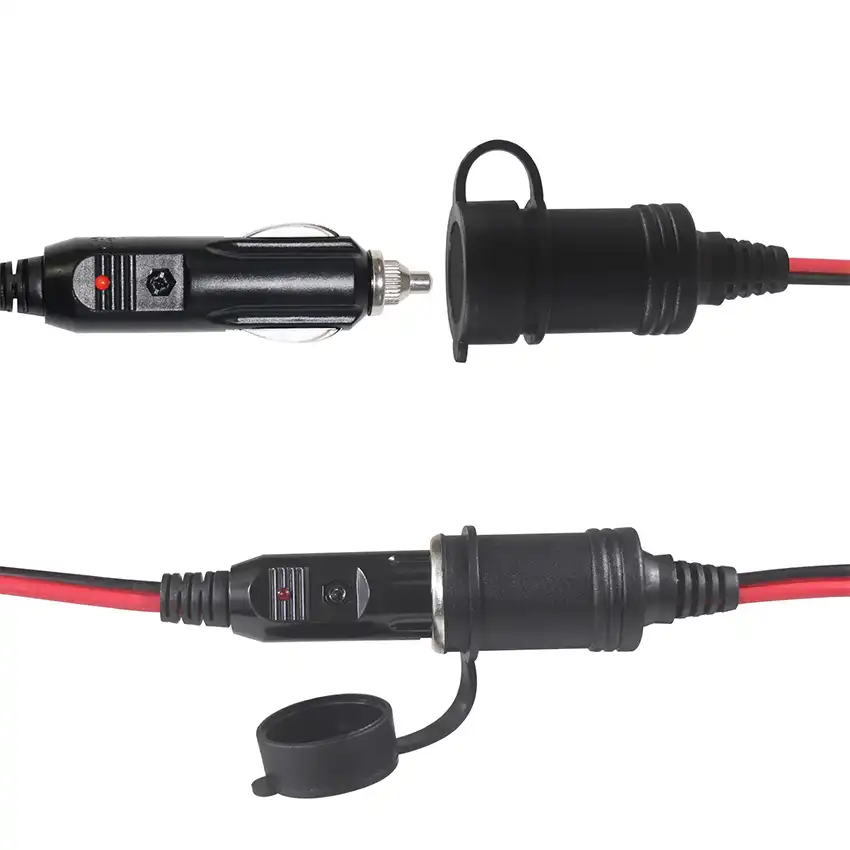
Firmly insert the connector until the spring contacts fully engage with the walls of the socket. When you only do a partial insertion, links break, and too much heat builds up at the contact points. Moving parts, hot exhaust parts, and sharp edges that could wear down insulation over time should be kept away from cables. To keep the cable in place, use cable ties or clips instead of making tight bends that put stress on the conductors.
When connecting male-to-male cables between vehicles, make sure that both sockets share a common ground. Most vehicles ground through the chassis, but isolated systems need to check the polarity carefully. Our dual fuse protection lowers the risk of damage, but the right way to connect things keeps you from having to replace fuses too often and keeps your electronics safe.
Testing Procedures and Fault Diagnosis
Before joining important pieces of tools, they should be functionally tested. Check the voltage at the plug contacts when the load is on and when the load is off to make sure the power delivery is stable, and there isn't too much voltage drop. At maximum allowed power, the acceptable voltage drop stays below 0.5V. Higher drops mean that the wire gauge is too small, the contacts aren't good, or there is damage inside the conductor.
Monitoring the temperature during the initial operation finds problems before they happen. After 30 minutes at full load, the contact points should still be warm to the touch but not too hot to handle. Too much heat means that there are high-resistance links that need to be looked into right away. Through our temperature rise tests, we make sure that goods keep their touch points within 40°C of room temperature while they are in use all the time.
Connection problems that happen every once in a while are usually caused by worn spring contacts or dirty surfaces. Check the center pins for the right amount of spring tension and the contact areas for discolouration that could mean arcing. If you see signs of burning, melted insulation, or broken contacts on a connection, you should replace it before it breaks down equipment or poses a fire risk.
Preventive Maintenance and Longevity Strategies
Regular inspections keep connectors in good shape and stop them from breaking down without warning. Visual checks should be done once a month to find problems like damaged wiring, contact corrosion, or weak strain relief that need to be fixed. Electronic contact cleaner and lint-free cloths can be used to clean contact surfaces of built-up dirt and rust. Avoid using rough materials that harm plating.
When equipment is not being used for a while, the way it is stored has a big effect on how long the connectors last. For components such as a cigarette lighter male plug, proper storage is essential to maintain reliable performance and extend service life. When you coil wires, don't make tight bends that put stress on the conductors inside. Keep in a dry place, away from extreme temperatures and strong sunlight, which breaks down insulation materials. To stop corrosion in damp places, put dielectric grease on surfaces that will be in contact with things before putting them away for a long time.
Replacement times depend on how often they are used and how exposed they are to the environment. Heavy-duty commercial uses may need replacement every year, but occasional recreational use makes it last longer than five years. If the entry force goes up, it means the spring contacts are worn. Replace the links before the connection loses its reliability. Keeping extras on hand keeps operations running smoothly when replacements are needed.
Future Trends and Innovations in 12V Cigarette Lighter Male Plugs
Smart Integration and Enhanced Functionality
New connection designs have built-in voltage displays, current tracking, and LED status markers that show the state of power delivery in real time. These smart features help operators find problems with the electrical system before they damage the equipment. Built-in USB charging ports in cigarette lighter housings let you charge modern devices while keeping older equipment compatible with 12V.
Integration of the Internet of Things allows for remote monitoring of how much power fleet vehicles or distributed equipment installations use. Wireless connectivity sends information about how things are used to central management systems. This helps with planning preventative maintenance and making the best use of energy. These new ideas help purchasing managers justify spending more on premium connectors by showing that they improve operations and lower the cost of downtime.
Ruggedized Designs for Extreme Environments
Industrial demand drives the creation of connection types that are stronger and stronger. Better sealing technologies get IP68 ratings, which let them stay submerged in water for a long time without losing their electrical integrity. When heavy equipment is being used, the repeated impact and crushing forces cannot break through reinforced housings. These improvements make it possible to use them in places that weren't possible before, like underground mines, offshore platforms, and military field operations.
Temperature efficiency keeps getting better because new materials can keep their power and flexibility over a wider range of temperatures. Connectors that work reliably at -55°C are good for use in the Arctic, but they need to be able to handle continuous use above 125°C in the desert and engine compartment. Recent progress in material science has made it possible to meet these strict requirements without raising the cost of bulk purchases.
Impact of Electric Mobility and Renewable Energy
As electric vehicles become more popular, they need 12V accessories with higher currents to power extra systems while the main batteries charge. Because they can flow power in both directions, vehicle batteries can power external tools when the power goes out or when activities are done from afar. Connector designs need to be able to handle more power while still working with the infrastructure that is already in place.
When renewable energy is used in portable power solutions, 12V systems for solar panels, wind turbines, and battery storage become more standard. When operational needs change, modular connector systems make it easy to quickly change how power is distributed. Connector compatibility across different types of equipment is becoming more and more important in procurement strategies. This makes inventory less complicated while increasing rollout freedom.

Conclusion
The 12V cigarette lighter male plug is still changing from a simple car part to an important industrial power connector. Strategically choosing connectors based on current capacity, environmental protection, and supplier dependability has a direct effect on how well operations run and how long equipment lasts. If you specify and maintain something correctly, it will work reliably, whether it's for emergency response, off-grid building sites, or running marine equipment. New smart features and tough designs make it possible to use these designs in more situations while still being able to work with older systems. This means that making smart choices about what to buy is becoming more and more important for long-term business success.
FAQ
What devices are compatible with cigarette lighter male plugs?
The cigarette lighter interfaces on standard 12V DC devices made for cars let you connect them directly. Some of these are GPS devices, dash cams, portable air compressors, tyre inflators, cell phone chargers, portable fridges, and CB radios. Check that the voltage values of the devices you're using meet the voltage rating of your vehicle's electrical system. Most passenger vehicles have 12V nominal systems, but business trucks may have 24V systems that need the right adapters or voltage converters to keep the equipment from breaking.
Why is it important for cigarette lighter plugs to have fuse protection?
Built-in fuses protect both the electrical systems of connected devices and the electrical systems of the car from damage caused by overcurrent that can happen when devices or circuits short out. When the current goes too high, the fuse cuts the circuit off before the insulation on the wires melts or the parts get too hot. Replaceable glass or ceramic fuses make it possible to quickly fix problems caused by too much current without having to replace whole cable assemblies. This cuts down on repair costs and downtime in the field.
How do I determine the right plug for my 12V system?
With a 25% safety limit, match the plug's current value to the highest amperage your device can handle. Check that the wire gauge can handle the amount of current needed over the length of the line. Heavier gauges can carry more current with less voltage drop. When choosing housing materials and sealing ratings, you should think about things like extreme temperatures, water exposure, and mechanical stress. Check the technical specifications provided by the maker to make sure it will work with your unique application needs.
Partner with Kuncan Electronics for Reliable Automotive Power Solutions
We have heavy-duty cigarette lighter male plug options that work the way your business needs them to. We've been making connectors that work in the toughest situations for 17 years and have sold them to emergency services, industrial operations, and fleet managers around the world. Every product goes through 100% electrical and heat testing to make sure it is of high quality, to keep equipment running smoothly, and to reduce the cost of repairs.
Kuncan Electronics can customise a wide range of OEM products, from the wire gauge (12–16AWG) to the cable length and private labelling. As a confirmed manufacturer of cigarette lighter male plugs, we keep our CE, VDE, ETL, SAA, and BS/UKCA certifications up to date so that we can easily sell our products around the world. Our efficient supply chain gets samples to customers in 3–7 days and full orders to customers in 15–25 days, so we can meet both planned purchases and last-minute replacement needs. Contact our technical team at rhea@szkuncan.net to discuss your specific requirements and receive expert guidance on optimal connector solutions for your application.
References
1. Society of Automotive Engineers. "SAE J563: 12 Volt Cigar Lighter Standard." SAE International Standards, Revised 2016.
2. National Fire Protection Association. "Electrical System Failures in Vehicles: Analysis of Fire Causes and Prevention." NFPA Journal of Applied Fire Science, Volume 28, 2019.
3. International Organization for Standardization. "ISO 4165: Road Vehicles - Electrical Connections - 12V and 24V Cigar Lighter Receptacles." ISO Standards Catalogue, 2020 Edition.
4. Anderson, Robert K. "Automotive Electrical Systems: Power Distribution and Connector Technology." Journal of Automotive Engineering, Volume 234, Issue 7, 2021, pp. 1432-1448.
5. Marine Electronics Association. "Best Practices for 12V DC Power Systems in Recreational and Commercial Vessels." MEA Technical Guidelines Series, Publication 12-2020.
6. Peterson, Linda M. and Chen, David W. "Current Carrying Capacity and Temperature Rise in Automotive Power Connectors: An Empirical Study." IEEE Transactions on Vehicular Technology, Volume 69, Number 3, March 2020, pp. 2847-2859.

USER EVALUATE
Here is the customer's evaluation of us