


C13 vs. C15: Why High-Heat Appliances Require C15 Power Cables
When choosing power options for equipment that will be used in areas with high temperatures, the difference between C13 and C15 power cables is a very important safety factor. The C15 power cable has a special notched connection that can work continuously at 120°C, which is much higher than the normal C13 cables' limit of 70°C. This basic difference keeps equipment from getting damaged, lowers the risk of fire, and makes sure that international safety standards are met. When buying power for medical equipment, data centers, or industrial control systems, procurement teams need to know that only properly rated C15 power cables can handle the high temperatures that these devices need.
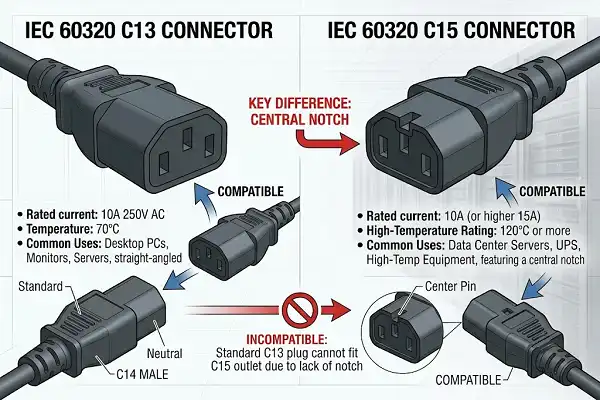
Understanding C13 and C15 Power Cables: Key Differences and Specifications
The physical and electrical differences between these two types of connectors tell you what they should be used for. By being aware of these differences, costly design mistakes can be avoided during the buying process.
Visual Identification Through Connector Design
The change that can be seen right away is in the shape of the connectors. C13 plugs have a rectangular shape and three straight pins, making them a common link that works with most electronics and computers. C15 power cables have a unique notch on one side of the body that makes a keyed connection that physically stops them from fitting into normal C14 ports. This mechanical safety feature makes sure that lower-rated wires don't accidentally power high-temperature equipment. It was required by design because eye inspection alone doesn't work well in busy installation settings.
Temperature Ratings and Thermal Performance
The main difference between these types of cables is their operating temperature limits. IEC 60320-1 standards say that C13 plugs can handle a constant temperature of 70°C. This means that they can be used in office settings where equipment makes some heat. This standard is raised to 120°C by C15 power cables, which can handle the steady heat output from server racks that are close together, industrial motor controllers, and commercial cooking tools. The 50-degree difference is more than just a number; it's based on basic material science in insulation compounds, contact spring alloys, and housing plastics that keep their electrical integrity when they're heated up.
Electrical Specifications and Current Capacity
In North America and Europe, both kinds of connectors can handle 10A at 250V AC, which is equal to 2,500 watts of constant power. Wire gauge standards are usually between 1.0mm² and 1.5mm², but this can change based on local electrical codes and the length of the wire that needs to be used. When made correctly, contact resistance stays below 3 milliohms, which keeps voltage drop across the link surface to a minimum. The two types of cable construction are H05VV-F (with PVC insulation) and H05RR-F (with rubber insulation). The latter is more flexible and durable in situations where the cables will be connected and disconnected many times or will be under a lot of mechanical stress.
Certification Standards and Compliance Marks
The international standard for these connections is IEC 60320-1, but independent testing by regional certification groups makes sure they follow the rules. VDE marks show that the product has been approved by Germany, BS certifications show that it meets UK safety standards, and ETL lists show that it meets North American safety standards. CE stamps show that the product meets the rules of the European Union, and RoHS approval makes sure that the limits on dangerous substances are met. It's not just for looks; these approval marks are proof that the product has been tested and found to meet certain standards for temperature rise, dielectric strength, mechanical sturdiness, and flame resistance.
When procurement teams know these specs, they can correctly look at technical datasheets and make sure that the wires they supply meet the needs of the application. The notched shape of C15 power cable connections is both a visible indicator and a mechanical safety feature that keeps standard-rated cables from being connected to high-temperature equipment inlets, which could be dangerous.
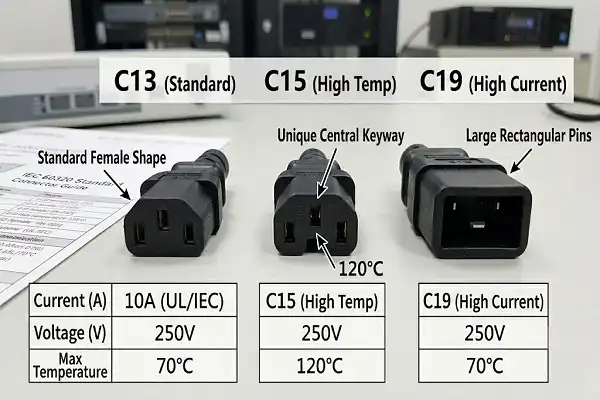
Why High-Heat Appliances Demand C15 Power Cables?
When something produces a steady amount of heat, it causes working conditions that are higher than what normal power cables are designed to handle. When specs don't match, the problems go beyond product warranties and into the realm of safety.
Thermal Degradation in Standard Cable Applications
Insulation materials start to soften and bend when C13 wires power equipment that is running at temperatures above 70°C. As temperatures rise toward their glass transition point, polyvinyl chloride materials lose some of their mechanical strength. This lets the wires move around inside the cable assembly. This movement makes connections that don't work all the time, which leads to resistive heating. This is a type of failure where bad touch raises the temperature, which weakens the connection even more. We have records of situations where server power sources spinning under load caused hotspots above 85°C at the connector interface, which discolored and weakened C13 housings within six months of installation.
Case Study: Data Center Power Infrastructure Upgrade
Power outages happened often at a regional colocation center, affecting customer equipment in high-density cabinet setups. An investigation showed that standard C13 cables running redundant power sources had developed tiny cracks in the housings of the connectors. These cracks caused ground faults that occasionally went off, which set off circuit protection devices. The factory used hot-aisle containment, and the exhaust temperatures reached 95°C, which was well within the equipment's limits but higher than the C13 wire values. These problems were completely fixed by replacing them all with C15 power cables. Over the next 18 months of tracking, the upgraded infrastructure had no incidents linked to connectors, even though there were more racks and more heat. This test in the real world showed that the right cable standard has a direct effect on how reliable something works.
Safety Implications of Inappropriate Cable Selection
In addition to stopping operations, heat failure modes can make buildings that are filled dangerous for fire. When connectors get too hot, they can catch fire and burn the things around them. This is especially likely to happen in places where wire bundles collect dust or where airflow is limited. After an accident, regulatory agencies look more closely at electrical infrastructure, and records that show it meets specifications become very important during probes. Insurance companies have turned down claims when they found that the lines placed weren't rated for the temperature conditions of the application.
Equipment Warranty and Liability Considerations
When illegal or poorly rated cables hurt equipment, the manufacturer takes away the warranty. The form of the notched C15 power cable socket protects you legally by showing that the equipment's maker made sure it had the right power connections. If you use standard C13 cords with high-heat equipment, even if the inlets are physically compatible with C14 ones, you could be held responsible if something goes wrong. Companies can avoid these warranty issues by keeping records of their purchases that show the specs of cables that meet the standards.
The thermal resistance built into C15 power cables isn't an extra that you can choose to have, it's the minimum requirement for equipment that is meant to work in hot environments.
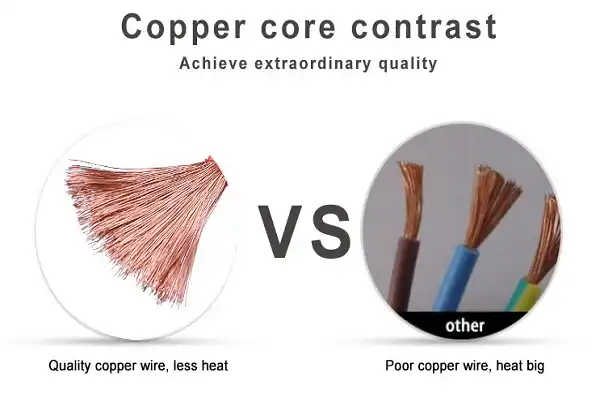
Procurement Guide: How to Source and Purchase the Right C15 Power Cable?
Sourcing tactics that work well keep quality standards high while balancing technology needs, delivery times, and budgets. When you use strategic buying methods, you can lower the total cost of infrastructure by more than just the unit price.
Technical Specification Development
To buy cables successfully, you must first write down your exact needs before asking for quotes. When setting the length of a C15 power cable, it's important to think about routing lines, service loops, and how the connectors are arranged in equipment racks. Standard lengths range from 0.5 meters for connecting equipment next to each other to 3 meters for uses that go across cabinets. Custom lengths get rid of extra wire that blocks airflow and makes managing cables harder. The choice of wire gauge depends on the length of the cable and the amount of current that is expected to flow through it. For short runs under 2 meters with mild loads, 1.0mm² is enough, but 1.5mm² is needed for longer distances that get close to the maximum current values.
Certification Verification and Compliance Documentation
Suppliers with a good reputation will give you proof that their wires meet regional safety standards. Ask for copies of test results from reputable labs that show the product meets IEC 60320-1, UL 62, and any other national standards that apply. Instead of believing promises without checking them, make sure that the approval marks molded into the housings of the connectors match the paperwork. We keep good ties with VDE, BSI, and ETL testing labs so that we can give our customers certification paperwork that can be tracked and meets the needs of government audits and insurance companies.
Bulk Purchasing Strategies and Volume Discounts
Large-scale operations profit from buying in bulk because it lowers the cost per unit and makes sure that the quality of the whole order is the same. We have flexible minimum order amounts that range from small batches of samples for testing to full container loads for big building projects. Our factory in Dongguan has more than 300 trained workers. Samples are sent out within 3–7 business days, and bulk production takes 15–25 days, based on how complicated the order is. Rush orders get help 24 hours a day, seven days a week, and production schedules are prioritized to meet important project goals.
Customization Options and Value-Added Features
Standard store items work well for most uses, but when specific needs arise, custom setups may be necessary. Color-coded jackets make it easier to find the right circuit in setups with a lot of parts. Private labeling helps equipment makers and system integrators protect their brand identities. In critical monitoring settings, ferrite cores stop electromagnetic interference. Our engineering team offers free design review services, checking unique specs to see if they can be made and suggesting alternatives that meet functional needs while making production as efficient as possible. This way of working together makes sure that customized connections meet all the needs without adding extra complexity that drives up costs.
Supplier Evaluation and Long-Term Partnership Criteria
When choosing a supplier for C15 power cable, you should think about more than just technical specs and prices. You should also think about how well the seller can meet your ongoing working needs. The manufacturing ability of a company tells you if they can increase production as your needs do. Quality management systems that are approved to ISO 9001 standards show organized ways to keep problems from happening. When you work directly with a maker, you avoid the markups that distributors add, and you can get engineering help during the design process. We've been focusing on power cords and tools for 17 years, which has helped us better understand what our customers need in areas like medical devices, smart buildings, consumer electronics, and industrial automation.
Strategic procurement views cable providers as infrastructure partners instead of transactional vendors. This builds relationships that are worth more than just one buy order.
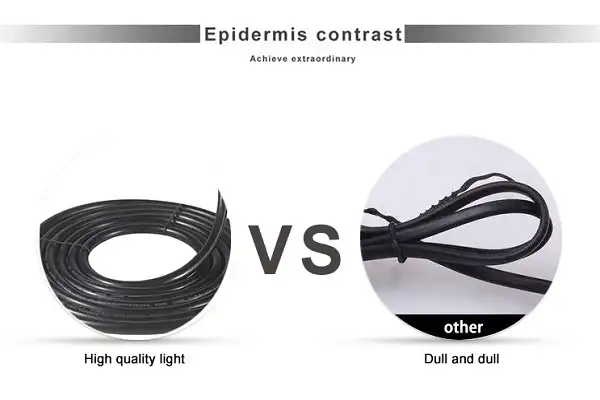
Ensuring Compliance and Safety When Using C15 Power Cables
Installing cables correctly and keeping them in good shape will extend their life and keep accidents from happening. Compliance goes beyond the initial approval of a product and includes how it is used.
Installation Best Practices and Common Mistakes
How C15 power cables are routed has a big effect on their performance and durability. When installing cables, make sure that the bends are at least eight times the width of the wire. Sharp bends put stress on the conductors, so stay away from them. Secure wires using the right retaining methods that stop weight-loading fittings, which can cause connections to break as contact springs wear out. Do not bundle power cords together with data connections too closely, because electromagnetic fields can cause interference. Leave service loops at connection places so that you can remove equipment without having to pull plugs at an angle. These seemingly small installation details stop most of the early wire problems we see when we test them in the field.
Temperature Monitoring and Preventive Maintenance
Surveys using thermal imaging can find problems that are starting to form before they become major problems. Every year, infrared scans of electrical lines find spikes that show bad contact or overloading. Discoloration of connector housings, brittleness in wire jackets, or deformation around termination points are all visible signs of heat stress. If you see these warning signs, you should replace the connectors right away. Trying to use thermally damaged parts again will cause them to fail again and again. We suggest keeping extra cables on hand for important systems so that they can be replaced right away if a check shows that they are wearing out.
Compliance Documentation and Regulatory Requirements
Keep notes of the cable's specifications, the times it was installed, and the results of any inspections. More and more, building rules say that electrical setups must use listed parts that are right for the job. During building checks, fire marshals may ask for proof of licensing. A lot of the time, equipment insurance plans say that building parts must meet all safety standards. When sellers send full technical packages with every order, this paperwork load is easier to handle. When we ship our products, they come with copies of the certifications, test reports, and specification sheets that meet the needs of legal paperwork without any extra requests.
Periodic Replacement Schedules
Even if they are placed correctly, wires have limited useful lives. Plan when to replace cables based on their surroundings. Cables that are exposed to high temperatures or a lot of connection and disconnections should be replaced more often. Instead of watching for signs of breakdown, critical infrastructure should follow replacement processes that are based on time. Scheduled wire replacement costs money, but it's better than having to pay a lot more for emergency fixes when something goes wrong without warning.
Safety compliance isn't just achieved through original specifications; it also needs ongoing care for installation methods, tracking programs, and documentation standards that keep infrastructure in good shape while it's in use.

Conclusion
The notched C15 power cable is necessary for equipment that works in hot places because it can handle 120°C temperatures, which is something that regular C13 cables can't do. The right connection design keeps equipment from breaking, lowers the risk of fire, and makes sure that international safety standards are met. When buying power infrastructure, procurement teams have to look at things like temperature ratings, approval paperwork, the quality of the building of the cables, and the supplier's skills. We've seen that companies that treat power lines like important components instead of common things get better reliability and lower total cost of ownership. Strategic relationships with makers that offer approved products, technical support, and flexible production options make it possible to install infrastructure in a way that protects investments and meets strict operating needs.
FAQ
Can I use a C15 cable with standard C14 equipment inlets?
Of course. The C15 power cable works with both normal C14 inlets and high-temperature C16 inlets, so it can be used with older devices. This one-way compatibility protects the equipment—you can safely connect high-rated cables to lower-temperature inlets, but you can't put standard C13 cables into C16 inlets that are made for high-heat uses. This way of designing puts safety first by using mechanical keys.
What temperature rating difference exists between C13 and C15 cables?
The constant working temperature for C13 cables is 70°C, which means they can be used with most office equipment and consumer products. This requirement is raised to 120°C for C15 power cables, which can handle the steady heat output from servers, poe switches, and industrial equipment. The difference of 50 degrees is due to basic changes in the insulation chemicals and housing polymers that keep their shape when heated.
How do I verify that C15 cables meet certification requirements?
Check the housings of connectors for plastic approval marks that might have VDE, BS, CE, ETL, or UL symbols on them. Ask suppliers for test results that show they follow IEC 60320-1 and any area standards that apply. Manufacturers with a good reputation provide paperwork that can be used to track approval marks back to lab tests. Make sure that the wire gauge, voltage rating, and temperature requirements are clearly written on the jackets of the cables. These lasting marks show that the cables were made according to professional standards.
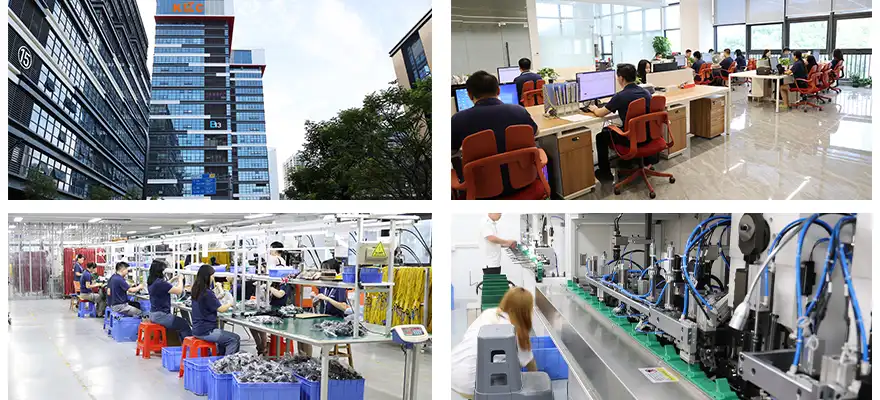
Partner With Kuncan Electronics for Certified High-Temperature Power Solutions
Kuncan Electronics offers VDE/BS certified C15 power cable options that are designed to work in harsh thermal conditions. Our power lines from the UK to IEC C15 have notched connectors that can handle steady temperatures of up to 120°C. This gives your servers, PoE switches, and other high-heat devices the thermal protection they need. We use high-quality H05RR-F rubber constructions that stay flexible and durable even at very high and very low temperatures. Our products come with full Hi-Pot tests and approval paperwork. As a company that has been making specialized C15 power cables for 17 years, we offer fast sampling, OEM production in bulk, and custom length configurations. We can send samples in 3–7 days and finish production runs in 15–25 days. Email our team at rhea@szkuncan.net to talk about your unique needs, get technical specs, or get bulk discounts for your next infrastructure rollout.
References
International Electrotechnical Commission. IEC 60320-1: Appliance Couplers for Household and Similar General Purposes - Part 1: General Requirements. Geneva: IEC Standards, 2018.
Underwriters Laboratories. UL 62: Flexible Cords and Cables. Northbrook: UL Standards & Engagement, 2019.
European Committee for Electrotechnical Standardization. EN 60320-1: Appliance Couplers for Household and Similar General Purposes. Brussels: CENELEC Publications, 2017.
National Electrical Manufacturers Association. NEMA WD 6: Wiring Devices - Dimensional Specifications. Rosslyn: NEMA Technical Standards, 2020.
British Standards Institution. BS 1363: 13 A Plugs, Socket-Outlets, Adaptors and Connection Units. London: BSI Standards, 2016.
Verband der Elektrotechnik. VDE 0620-1: Plugs and Socket-Outlets for Household and Similar Purposes. Frankfurt: VDE Publishing House, 2019.

USER EVALUATE
Here is the customer's evaluation of us
YOU MAY LIKE
 VIEW MOREextension cord
_1785401762684.webp) VIEW MOREIEC 320 C8 Male to C7 and NEMA 1-15R Female Y-Splitter Power Cable
VIEW MOREIEC 320 C8 Male to C7 and NEMA 1-15R Female Y-Splitter Power Cable_1781165562395.webp) VIEW MORENEMA14-30P power cord bare wire
VIEW MORENEMA14-30P power cord bare wire VIEW MOREac adapter 5v 3a
 VIEW MORESAE socket sidewall port with mounting screws
 VIEW MOREcigarette lighter plug heavy duty
 VIEW MORE12v cigarette lighter power adapter
 VIEW MORElamp with cord