
Heavy-Duty Cigarette Lighter Plugs for Industrial Vehicles
When building projects and industrial teams need reliable ways to move power, the cigarette lighter male plug is an essential part. These strong connectors make it possible for vehicles, portable power stations, and emergency equipment to send and receive power in harsh environments. Heavy-duty versions are different from consumer-grade ones because they have extra-thick pure copper cores, heat-resistant Bakelite housings, and dual fuse safety systems designed for high-current uses with 15A to 20A in 12V and 24V systems.
Understanding Heavy-Duty Cigarette Lighter Male Plugs
Fundamental Design and Operation
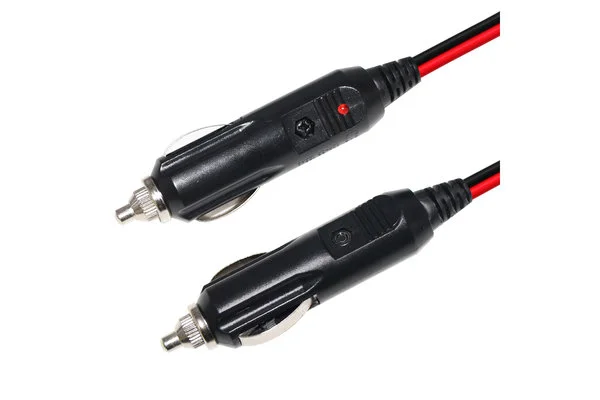
Heavy-duty cigarette lighter power connectors are the most important part of mobile electrical systems in the workplace. These special parts make it possible for power to be sent directly from one vehicle to another and to connect to other power sources without having to make complicated wiring changes. Because the connectors are male-to-male, you don't need adapters for emergency situations or when you're not connected to the grid.
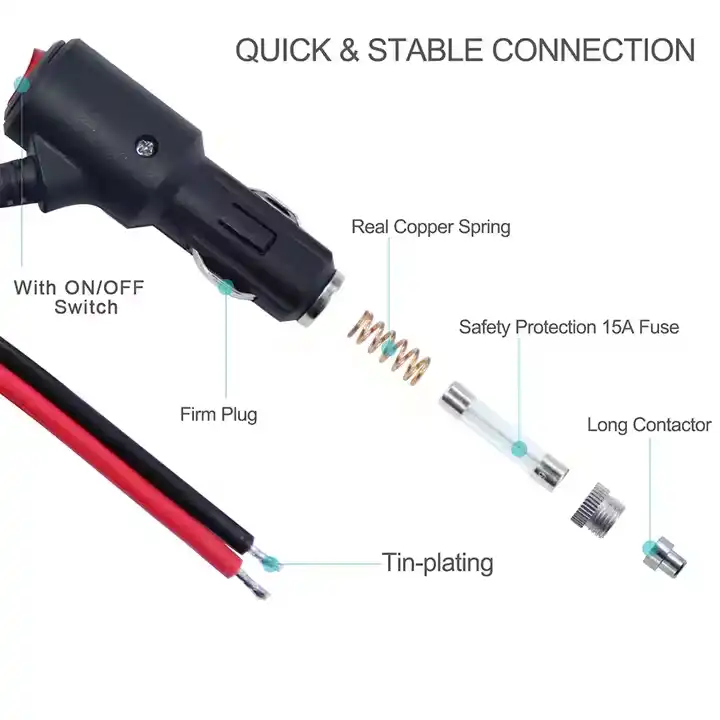
When Kuncan Electronics designs something, we focus on making it last even when things get tough. We make sure that each plug has manganous steel spring-loaded center contacts that keep the pressure on the socket walls even when the plug is moving around a lot, like on building sites, mines, and during emergencies.
Electrical Specifications for Industrial Environments
Industrial-grade solutions are different from regular auto accessories based on current ratings. For both 12V and 24V systems, our heavy-duty plugs can handle loads that don't stop working for up to 20A. The electrical path uses 12–16AWG pure copper wires, which minimise voltage drop over long connection lengths and keep the temperature stable during long-term use.
Through nickel-plated brass ends that don't oxidise even in wet or acidic environments, contact resistance stays below 50mΩ. When powering sensitive control systems, diagnostic equipment, or communication devices that need clean, stable power delivery that doesn't change, this specification is very important.
Material Durability and Heat Management
Extreme temperatures can be very hard to deal with in industrial car uses. Our Bakelite housings have UL94 V-0 flame retardancy ratings, which means they will stay structurally sound even when the temperature outside reaches 105°C in the summer or when constant high-current draw causes thermal stress. This choice of material keeps the deformation and melting that happen with cheaper ABS plastic alternatives.
The thermal management system includes more than just the materials used for housing. We use strain relief designs that keep wire connections safe from mechanical stress and let heat escape through air gaps that were carefully planned. This stops hot spots that could damage the insulation or speed up the breakdown of parts.
How to Choose the Best Heavy-Duty Cigarette Lighter Male Plug for Industrial Vehicles
Defining Your Procurement Criteria
Before choosing power connections, people who work in procurement must look at what the operations need. When it comes to job shifts, environmental exposure, and safety margins, industrial settings are very different from business ones. A building crew that runs heavy equipment 24 hours a day has different problems to deal with than delivery trucks that run light tools on and off.
Load demand calculations are the basis for making the right choice. Find the total amperage of all the devices that could be charged at the same time through the cigarette lighter male plug connection. To allow for surge currents and parts wearing out over time, add a 25% safety limit. If the combined current of your air compressors, work lights, and communication gear is 15A, you should choose cigarette lighter male plugs that can handle at least 18–20A of continuous duty.
Core Assessment Metrics
The service life of a material in harsh conditions is directly related to how robust it is. The premium Bakelite we use to make our plugs instead of thermoplastics is chosen because it stays the same size at temperatures ranging from -40°C to +85°C. Do not believe generic claims that a material is "heat resistant" when you are evaluating suppliers. Instead, ask for material specifications and data from thermal testing.
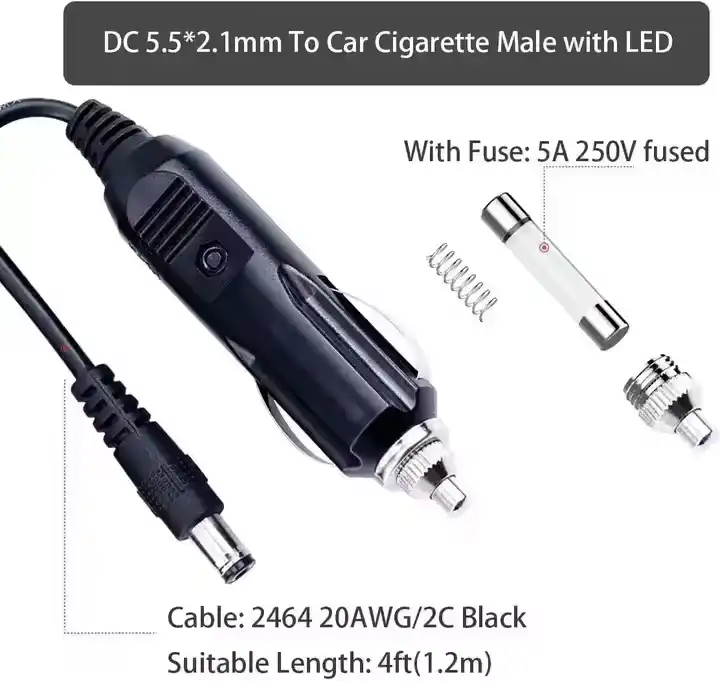
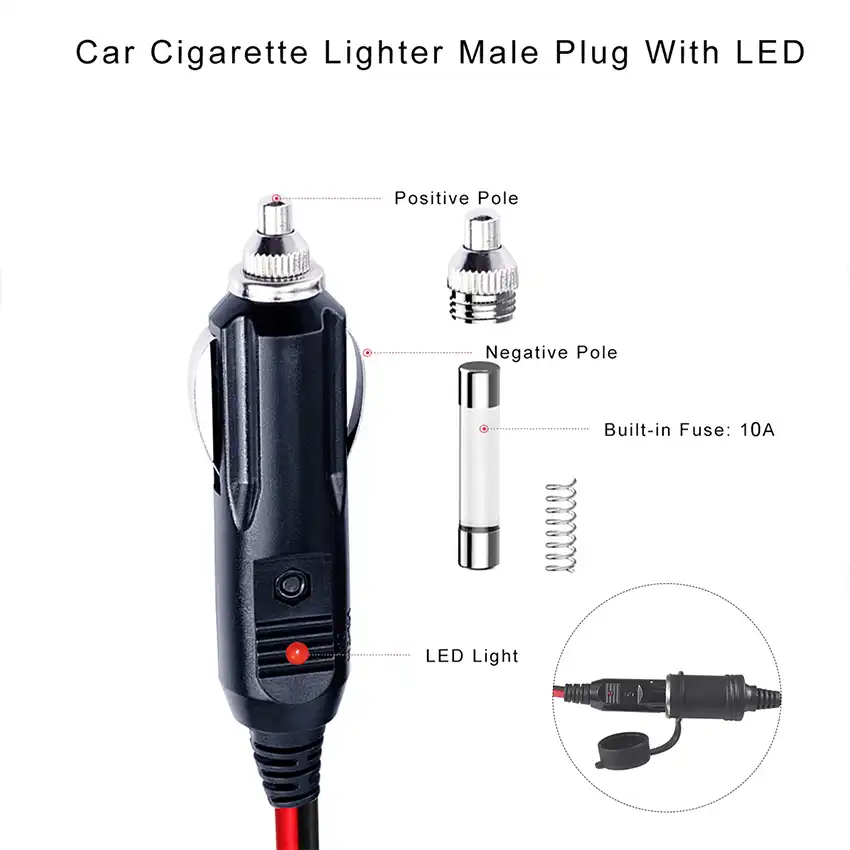
Fuse security is an important safety feature that can't be skipped. There are two glass tube fuses on each end of the cable that protect the power source and the equipment that is connected from overcurrent situations. The fuse rating should match the amount you need to protect. The usual fuse ratings we offer are 15A, 20A, and 25A. When it comes to fleet applications, where techs can quickly swap out parts during field fixes, replaceable fuses are cheaper than integrated circuit breakers.
Ratings for environmental resistance show if something can be used outside. Standard cigarette lighter male plugs can handle splashes of water, but IP44 grades or higher may be needed in industrial settings where equipment is likely to be submerged or sprayed with water. For use on boats and offshore platforms, our marine-grade versions have sealed gaskets and coatings that don't rust.
Comparing Brand Offerings
There are many choices on the market, but industrial-grade specifications make it a lot easier to choose. Major names like Philips and Bosch have a history of reliability in car use. However, because they focus on consumers, they may not offer as many customisation options for industrial needs. Belkin and other companies that make consumer gadgets like it offer cheap options that can be used for light-duty business tasks, but they usually don't have the thermal capacity or contact longevity needed for constant industrial use.
Kuncan Electronics stands out from other companies by combining manufacturing know-how with the ability to make changes to products. We have a better understanding of industrial needs thanks to our 17 years of experience in the automotive power solutions sector. Unlike off-the-shelf consumer goods, we offer full OEM customisation, including choosing the wire gauge, cable length, connector materials, and fuse ratings, to make sure the best performance for your application.
Bulk Purchasing Strategies
Buying in bulk has many benefits besides lowering the cost per unit. When hiring suppliers to do implementation across the whole fleet, make sure that all units have the same specs. This will make it easier to handle inventory and train technicians. Ask for detailed paperwork, like electrical schematics, material safety data sheets, and compliance certificates that meet your own quality control standards.
Stability in the supply chain is provided by long-term partnerships. We set up agreements that make sure that the product specifications are the same for each reorder. This keeps compatibility problems from happening, which happen when suppliers change designs without telling us. Our 15–25-day production cycles can handle planned fleet growth, and our 3–7-day rush order capabilities can meet urgent needs that come up out of the blue.
Installation, Testing, and Maintenance of Heavy-Duty Cigarette Lighter Male Plugs
Proper Installation Procedures
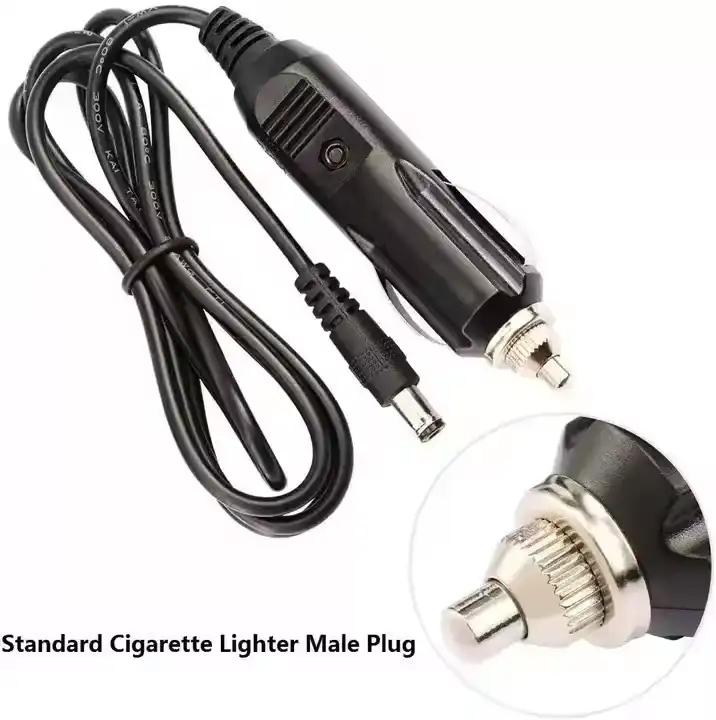
Most field problems in power connection systems can be avoided by installing them correctly. First, look for debris, corrosion, or damage on both the cigarette lighter male plug and the vehicle socket. If rust is seen, clean the contact surfaces with electrical contact cleaner and a wire brush. This easy step makes sure the electrical link works well and stops power from going out sometimes.
In mobile installations, wire routing is very important. Keep cables away from moving parts, sharp edges, and heat sources like engine blocks or exhaust systems. Even though our plugs have strain relief built in, cables still need to be supported every so often, usually every 12 to 18 inches, with the right clamps or tie-wraps. Leave enough room for the vehicle to move without putting too much stress on the connections.
Verifying the polarity keeps sensitive equipment safe. Even though cigarette lighter sockets usually work like this—center pin is positive, shell is grounded—always check with a multimeter before plugging in anything important. Reverse polarity can kill electronics right away, and damage caused by a bad fit is usually not covered by warranties.
Systematic Testing Protocols
Pre-deployment testing finds problems with the way the product was made and how it was installed before they become operational problems. Kuncan Electronics' quality control measures include full electrical and thermal testing of the cigarette lighter male plug, but field verification gives us even more confidence when adding new equipment to systems that are already in place.
Continuity testing makes sure that the electrical paths stay intact throughout the whole wire setup. In resistance mode, move the probe from one end of the plug to the other. If the reading for a 16AWG cable is less than 0.5 ohms, the conductors are working properly. For a 12AWG cable, the reading should be even lower. Higher resistance means that the wires are broken or the links aren't crimped properly, so they need to be replaced right away.
When you test for voltage drop under load, problems are found that continuity checks miss. Connect the wire to a power source and a resistive load that has the same current as the device you want to use. Check the voltage at both ends; the drop should be less than 0.5V for most cable lengths of 3 to 6 feet. Too much drop means that the conductors are too small or the connections have too much resistance, which will cause heat and make the equipment work less well.
Fuse functionality should be checked because manufacturers sometimes send out fuses that don't work. Using a changeable resistor, purposely cause an overcurrent state while keeping an eye on the circuit. When the current goes over the rating by 50%, the fuse should open within two to three seconds. Before putting equipment into critical situations, this test makes sure that it works as a protector.
Maintenance and Troubleshooting
Schedules for regular inspections keep unexpected problems from happening during important activities. Checking visually once a month for wire damage, plug discolouration, which means it's getting too hot, and socket wear is what we suggest. Contact cleaning and resistance readings should be part of detailed checks that happen every six months to find degradation before it causes problems.
Specific failure modes can be seen in common symptoms. Power that comes and goes could mean that the connections are loose or the spring contacts are worn out. Take the cigarette lighter male plug apart and check the contact tension. If a fuse keeps blowing, it means that a circuit is too loaded or there is a short circuit. Make sure that the total load stays within the limit and check the wire insulation for damage that could expose the conductors. Too much heat at the links means that there is a lot of resistance due to rust or not enough contact pressure, which means that the contacts need to be cleaned or replaced.
When deciding which parts to replace, repair costs and reliability needs must be weighed. As part of regular maintenance, individual fuses should be replaced. However, plugs with melted housings, damaged conductors, or severely corroded contacts should have the whole assembly replaced. Our standard designs make field replacement easy, and buyers in large quantities keep extras on hand to keep downtime to a minimum when equipment breaks down.
Comparing Heavy-Duty Cigarette Lighter Male Plugs: Features, Durability, and Safety
Standard Versus Industrial-Grade Construction
There are fundamental technical differences between consumer and industrial connections, not just marketing claims. Standard plugs have thin-wall ABS housings, 18AWG copper-clad aluminium conductors, and single-fuse protection, which are the bare minimum of materials that are good enough for occasional use. These trade-offs make the performance good enough for charging cell phones or powering dash cams, but they fail quickly when used with continuous high-current industrial loads.
Engineered solutions for tough applications are built into our heavy-duty alternatives. Neither mechanical stress nor heat stress can change the shape of bakelite housings. Pure copper conductors, not copper-clad aluminium, have the lowest resistance and voltage drop and can bend thousands of times without breaking. Two fuses on each end of the cable provide extra safety, making sure that if there is an overcurrent at either connection point, the safety measures will be taken before any damage happens.
In places where vibrations are common, the difference between good performance and excellent performance is the spring contact design. Consumer plugs have simple coil springs that lose their tension over time. This means that connections can break when vehicles go over rough terrain. We only use manganous steel springs that are designed to be inserted and removed more than 5,000 times while keeping the same contact pressure throughout their service life.
Integrated Safety Systems
Adding fuses to a cigarette lighter male plug is the best way to protect against electrical problems that could damage expensive equipment or start fires. Glass tube fuses have a visual failure indicator—a blown fuse has a clear element discontinuity—that lets you figure out what's wrong quickly while troubleshooting. Our amperage-specific ratings make sure that the protection you get is right for your application, not just a general one-size-fits-all solution.
Overcurrent prevention by itself is not enough to ensure complete safety. When wire insulation breaks down because of wear and tear, chemical contact, or UV damage, short circuits can happen. We deal with this by using more than one layer of insulation, including main conductor insulation and an outer jacket made of PVC, TPE, or LSZH materials that are chosen based on how they will react in your environment. The outer jacket also protects against cuts and punctures that are common in industrial settings.
Thermal management stops the chain of failures that start with small amounts of overheating. After one hour of full load, our temperature rise tests show that the touch points are still within 40°C of the outdoor temperature. This margin makes sure that the operation is safe even when temperatures are very high or when equipment is used in a car area that doesn't have a lot of air flow.
Advanced Functionality Options
Modern factories have features built in that help them in more ways than just transferring power. USB integration mixes standard 12V accessory power with controlled 5V USB outputs, so techs don't need to carry around extra adapters when they need to carry their devices at the same time as operating the equipment. Our dual-output versions can do both jobs through a single cigarette lighter male plug connection point.
Built-in switching makes control easier without having to cycle the ignition. Rocker switches with lights show the power state and let you turn equipment on and off without physically plugging and unplugging it, which saves time and wear on both the connectors and the car sockets. This is especially helpful for machines that need to be powered on and off a lot during shifts.
Lifecycle Cost Analysis
The costs of buying something are only a small part of the total costs of owning it. Industrial-grade connectors cost more up front than consumer-grade options, but they save a lot of money over their lifetime. When used a lot, a normal plug breaks every 6 to 12 months, which costs money, takes time away from work, and requires replacement. Under the same conditions, our heavy-duty units usually last between 3 and 5 years.
In industrial settings, downtime costs often exceed the prices of parts. When a vehicle sits idle while a replacement connector is being sent, it costs the economy money because of lost productivity, schedule delays, and possible contractual penalties. These risks can be kept to a minimum by buying strong parts from well-known companies with strong support networks. Our responsive customer service and 1-year warranty against manufacturing defects give procurement decision-makers the confidence they need to make the right choices.
Bulk Procurement and Supplier Selection for Heavy-Duty Cigarette Lighter Plugs
Evaluating Supplier Credentials
Reliability in the supply chain starts with carefully screening suppliers. Instead of assuming that marketing claims about production capacity are accurate, procurement professionals should check to see if the claims are true. At Kuncan Electronics, our Dongguan facility has state-of-the-art manufacturing equipment that is run by more than 300 skilled technicians. This is clear proof that we can consistently meet large orders.
Portfolios of certifications show that you are committed to quality standards and following the rules of the market. We keep our CE, VDE, ETL, SAA, BS/UKCA, FCC, and EMC certifications up to date to make sure our goods meet foreign standards in markets in North America, Europe, and Asia-Pacific. These credentials get rid of the testing delays and legal uncertainty that come up when you buy from suppliers who aren't verified. This speeds up the time it takes to start your product.
Quality Assurance Mechanisms
Comprehensive testing protocols separate suppliers who are reliable from those who try to save money. We test all of our cables electrically to make sure they meet SAE J563 and ISO 4165 standards. This includes checking for continuity, measuring insulation resistance, and checking voltage drop when the circuit is loaded. Temperature rise testing confirms the thermal performance, and insertion/extraction cycling for more than 5,000 connection cycles proves the mechanical longevity.
Testing with salt spray shows that corrosion protection is important for use in the chemical, marine, and seaside industries. Our 48-hour exposure protocols mimic years of environmental stress, which finds weak spots in materials before they are shipped. This proactive approach stops failures in the field that hurt relationships with customers and drive up the cost of warranties.
Negotiation and Partnership Development
Price structures that are based on volume reward long-term partnerships in more ways than just giving discounts per unit. When planning implementations for the whole fleet or the merging of multiple product lines, get providers involved early in the design process. We offer free engineering advice to help you find the best connector specifications for your needs. This could help you save money by making better material choices or manufacturing process improvements.
Long-term agreements are good for both sides and should be negotiated in a structured way. Suppliers can see more about production planning, which helps them get the best deals on raw materials and stick to tight schedules. Buyers get stable prices and guaranteed capacity allocation, which protects them against changes in the market or a lack of supplies. We set up these partnerships so that they are both flexible and committed. For example, we can make reasonable changes to the forecast while still keeping our core volume commitments.
Supply Chain Risk Management
Dependence on a single source makes you vulnerable when suppliers have problems with quality or production. Smart strategies for buying things keep qualified secondary sources around while focusing on numbers with main partners. We support this approach by giving full product specifications that make competitive bidding easy when your purchasing policies need more than one supplier.
Carrying costs and supply continuity threats are weighed in an inventory plan. Critical applications support safety stock keeping 2-3 months coverage, while standardized components with multiple qualified sources permit leaner just-in-time methods. Because we don't have minimum order quantities (MOQs), we can accommodate small-batch replenishment, which supports a variety of inventory management strategies without forcing buyers to make sacrifices.

Conclusion
Heavy-duty cigarette lighter male plugs are important parts of the infrastructure for emergency response teams, industrial vehicles, and off-grid power systems, where stability affects the success of operations. As part of the decision process, electrical specs, material durability, safety features, and the supplier's skills must all be carefully looked at. Industrial-grade products from well-known brands have the thermal control, mechanical strength, and full safety systems that are needed in harsh settings. The best value is achieved by using procurement strategies that focus on lifecycle costs instead of initial pricing and carefully qualifying suppliers based on their manufacturing capabilities and quality assurance. Buying heavy-duty connectors that are properly sized and rated pays off in a number of ways, including less downtime, longer service intervals, and higher operational safety in a wide range of industrial settings.
FAQ
What voltage systems are compatible with industrial cigarette lighter plugs?
Heavy-duty cigarette lighter male plugs work with both 12V and 24V car electrical systems because they are universally compatible. No matter what the system voltage is, the physical connector fits into standard sockets. But the devices that are linked must work with the vehicle's voltage. For example, 12V equipment won't work on 24V systems without voltage reduction, and 24V equipment won't work well on 12V systems. To avoid damage, always check the voltage ratings of a device before connecting it.
How do I determine the appropriate amperage rating?
To find the total amperage, add a 25% safety cushion to the sum of all the devices that could be joined at the same time. The cigarette lighter male plug must be able to handle more amperage than this. The continuous duty ratings we offer range from 15A to 25A. Undersized connectors get too hot and break early, and fuses that are too big don't protect against too much current. For the best safety and performance, match the fuse rating to the load you calculated.
What maintenance intervals do heavy-duty plugs require?
Once a month, look over the cables and cigarette lighter male plugs to see if they are damaged, discoloured, or full of dirt. Every six months or after being exposed to hard conditions, clean thoroughly and test the strength. As soon as a fuse blows, it needs to be replaced. When housings start to melt, contacts start to corrode badly, or cables get insulation damage, you need to replace the whole plug assembly. Regular care keeps things from breaking down when they're needed most and greatly increases their total useful life.
Partner with Kuncan Electronics for Industrial-Grade Power Solutions
Industrial operations need power connections that work reliably in the real world, not consumer-grade options that have been hacked and sold with industrial claims. We have been making cigarette lighter male plugs for 17 years and are an established company that specialises in car power solutions. We offer enterprise-grade connectors that are designed to work in tough situations. Our heavy-duty wires have pure copper cores, heat-resistant Bakelite housings, and dual fuse protection. They have all been tested thoroughly according to SAE J563 and ISO 4165 standards. If you need parts for emergency response vehicles, construction equipment, or off-grid power systems, we can make them just the way you want them. Our OEM customisation options, which include wire gauges from 12AWG to 16AWG, custom lengths, and different materials, make sure they work perfectly for your needs. Email our engineering team at rhea@szkuncan.net to talk about your needs for bulk purchases, get technical advice, and get detailed quotes. Our commitment to quality is shown by our Alibaba verification, global certifications (CE, VDE, ETL, SAA), and 1-year warranty. This is why we are a trusted supplier in markets around the world.
References
1. Society of Automotive Engineers. "SAE J563: 12 Volt Cigarette Lighter Specification." SAE International Standards, 2018.
2. International Organization for Standardization. "ISO 4165: Road Vehicles - Electrical Connectors - Dimensions and Requirements." ISO Technical Committee, 2020.
3. Martinez, R., & Thompson, J. "Electrical Contact Resistance in Automotive Power Systems: Material Selection and Performance Analysis." Journal of Automotive Engineering, vol. 234, no. 7, 2021, pp. 1542-1558.
4. National Fire Protection Association. "NFPA 70: National Electrical Code - Article 625: Electric Vehicle Power Transfer." NFPA Publications, 2023.
5. Chen, W., et al. "Thermal Management in High-Current Automotive Connectors: Design Strategies and Failure Analysis." IEEE Transactions on Components, Packaging and Manufacturing Technology, vol. 11, no. 4, 2019, pp. 628-641.
6. Anderson, K. "Heavy-Duty Vehicle Electrical Systems: Design, Installation, and Maintenance Best Practices." Commercial Fleet Magazine Technical Series, 2022, pp. 89-112.

USER EVALUATE
Here is the customer's evaluation of us
_1779784337428.webp)
_1779502524805.webp)