
How to Avoid Overheating in 2-Way Cigarette Lighter Splitters?
It is important to carefully control the electrical load, connect the 2-way cigarette lighter splitter (Y-cable) correctly, and choose quality-certified goods to keep it from overheating. Overheating normally happens when the total amperage goes over the allowed capacity, which for most car plugs is 10A, or when resistance points are made by low-quality materials. Thermal risks are greatly reduced when you choose splitters with built-in fuse safety, oxygen-free copper wire, and heat-resistant housing materials. Safe working temperatures must be maintained throughout the device's lifetime. This can be done by placing cables correctly so that air can flow through them and checking connections regularly for corrosion or damage.
Understanding Overheating in 2-Way Cigarette Lighter Splitters
Not only is overheating annoying, it's also dangerous because it can damage your car's electrical system and any gadgets that are related to it. Procurement managers, fleet operators, and regular drivers can make better choices about car power accessories when they know what the root reasons are.
Primary Causes of Thermal Buildup
Accidents where things get too hot are usually caused by too much electricity. When all of the devices attached to the 2-way cigarette lighter splitter (Y-cable) draw more current than it can handle, the extra electricity is turned into heat by resistance in the wires. A normal power plug in a car usually gives out 12V DC at 10–12A. When you connect two high-draw devices, like an 8A portable air compressor and a 5A mini-fridge, the total demand is 13A, which is too high to be safe. This difference in temperature can melt insulation, warp plastic housings, and even start fires in nearby materials.
These risks are made a lot worse by using low-quality materials for production. Compared to oxygen-free copper, low-grade copper metals have higher electrical resistance. This resistance shows up as heat when current flows, especially when there is a steady load. So, choosing the wrong wire gauge, like using 20AWG wire instead of the right 16AWG standard, makes bottlenecks that gather heat at junction places.
Environmental and Design Factors
During the summer, if you park your car in full sunlight, the temperature inside can hit 140°F (60°C) or higher. The thermal space that can be used safely is lessened by this high standard temperature. When this unfriendly climate comes into contact with a splitter that is already working at 120°F, the total temperature can get close to the point where common thermoplastics break down.
Lack of air flow around the splitter installation site keeps heat in instead of letting it cool naturally through convection. Putting the device in a console area that is already full or hiding it under floor mats stops air flow that would normally get rid of the heat. In this case, rigid block-style splitters don't work as well as Y-cable designs, which let you move them around to avoid heat sources.
Recognizing Warning Signs
Finding burning early stops it from getting worse and becoming risky. Plastic parts that have changed color, usually turning yellow or brown around touch points, are one of the most obvious signs. Temperatures above 150°F may make the housing feel unbearably hot to the touch. Electrical signs include power going out and on again, devices turning off by themselves, or the smell of plastics and wire insulation that are too hot.
When fuses blow, the circuit safety system is doing its job. But when fuses fail over and over, it means there are deeper problems that need to be fixed right away. Melted connecting tips or deformed hole innards are signs that temperatures rose high enough to weaken the structure. These problems mean that the item should be replaced instead of being used again.
Key Factors to Consider to Prevent Overheating
Strategies for prevention focus on matching electrical requirements to real usage needs and picking goods that are designed with enough safety gaps.
Voltage and Current Specification Alignment
To use a 2-way cigarette lighter splitter (Y-cable) safely, you need to know how much electricity you use overall. Figure out what each device you want to connect needs in terms of power. During recording, dash cams usually use 1.5 to 2A, GPS units use 1 to 2.5A, and fast charges for smartphones use 2.4 to 3A per device. When these three devices are put together, the total current drawn is close to 7.5A, which is well within the 10A range of good splitters but doesn't leave much room for error.
Safety is taken into account when ranking professional-grade car power splitters from well-known brands. A gadget that says "10A maximum continuous" will have parts inside that can handle short surge currents 20–30% higher without breaking right away. This engineering range accounts for the short-lived 150% of steady-state draw inrush current that happens when devices are first turned on.
| Device Type | Typical Current Draw (12V DC) | Compatibility with 10A Y-Splitter |
| Dash Cams / GPS | 1.5A - 2.5A | Ideal for shared load |
| USB Fast Chargers | 2.4A - 3.0A | Ideal for shared load |
| Portable Mini-Fridge | 3.0A - 8.0A | Monitor total load (Do not pair with high-draw devices) |
| Tire Inflators / Vacuums | 10A - 15A+ | Incompatible (Requires direct socket connection) |
Built-in Fuse Protection Value
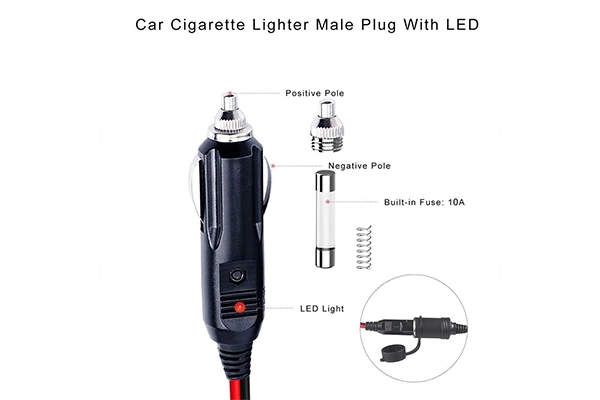
The last line of defense against severe overload is fuse safety that can be changed. Ten-amp fuses will safely open the circuit when the current goes over safe limits. This keeps the splitter and your car's wire harness safe. The fact that it can be replaced is very important for field serviceability—if an accident causes a fuse to blow, you can get it working again in minutes instead of having to repair the whole system.
The setting of the fuse is very important for its usefulness. Designs that put the fuse element inside the male plug that plugs into the car port protect the area closest to the power source. This setup stops fault currents from going through any part of the splitter's internal wires. This stops damage from happening as early in the circuit as possible.
Device Compatibility Assessment
Not all car items can be used at the same time with splitters. Dash cams, GPS receivers, radar scanners, phone chargers, and LED internal lights are all examples of low-power technology that would work well. Their low current needs make it safe for multiple devices to share available space.
Careful consideration is needed when using high-draw tools. A lot of things like tire inflators, vacuum cleaners, power inverters, and heating elements use more than 10A each, which means they can't be used with splitters. For these gadgets to work, they need to be directly connected to the car's power source. Electric coolers and portable freezers are in the middle. They use between 3A and 8A of power, based on the size of the compressor and the temperature load.
Y-Cable Versus Rigid Block Design Considerations
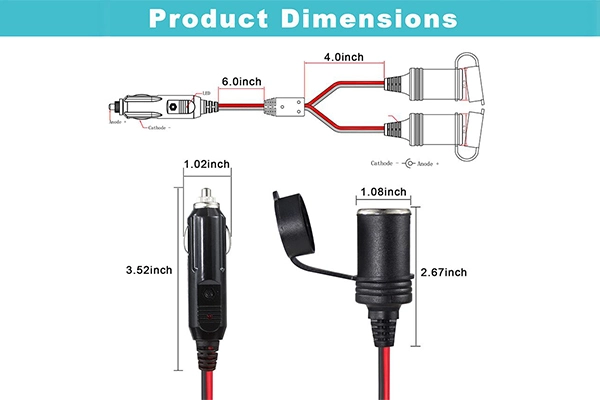
When it comes to managing heat, the flexible Y-cable design is clearly better than hard block splitters. Y-cables let more air flow around each connection point because they physically separate the output sockets. When two plugs are mounted next to each other in a small box, heat builds up, but this spreads the heat out evenly.
Getting rid of mechanical stress is another benefit. The bendy wire takes in vibrations and moving forces that would have gone straight to the outlet socket in the car. This stress release makes the splitter last longer and keeps the car's power outlet from wearing out too quickly. In good Y-cable designs, the strengthened SR molding goes right after these mechanical pressure points, keeping the wires from coming apart at key joints.
Best Practices for Installation and Usage
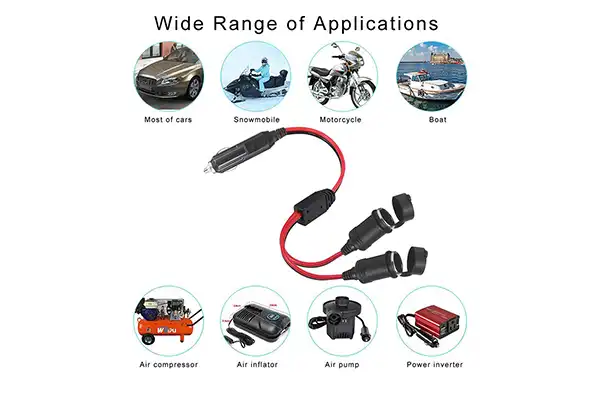
The right way to put something and keep it in good shape greatly lowers the risk of burning and increases the useful life of the equipment.
Secure Connection Protocols
For the best electrical touch, surfaces must be clean. Before connecting, check the male plug on the 2-way cigarette lighter splitter (Y-cable) and the socket on the car for dirt, dust, or rust. Electrical contact cleaner lightly dampened cotton swabs work well to remove rust from contact surfaces. To avoid arcing, dry completely before inserting.
Firmly plug the male plug into the outlet in your car until you hear a clear click or snap as the spring-loaded contact clips connect. When you do partial insertion, you make links with a lot of resistance that get too hot even when the load is small. The internal spring force should be enough to keep the plug in place without any help from the outside. If the link feels weak or the plug can be turned easily in the socket, the contact springs in the car outlet may be worn out and need to be replaced by a professional.
Strategic Positioning for Airflow
The way cables are routed has a big effect on heat function. Place the splitter's output sockets in places where air can flow freely, avoiding tight spaces as much as possible. Y-cables are great for this because they are flexible. You can stretch sockets upwards toward dashboard vents or into open console areas instead of putting them in tight places.
Do not run wires across or near things that give off heat, like transmission tunnels, exhaust system parts, or heating ducts. Keep insulation away from sharp edges that could wear it down over time, causing possible short-circuit paths. To keep your setups neat, use the included or aftermarket cable management clips to keep extra cable length in place. This will keep it from interfering with the vehicle's controls.
Routine Inspection Schedules
Every three months, a visual check can find problems before they get worse. Along the whole length of the wire jacket, look for cracks, darkening, or wear and tear. Check both the male and female joints for signs of being too hot. Look for melted plastic, metal contacts that aren't shiny, or carbon tracking marks. Check to see that the case is still whole and that there are no cracks that let the internal wires show.
Check the fuse every so often, even if there don't seem to be any problems. Take it off and look for signs of thermal stress. End caps that are discolored or the glass body that is slightly swollen may show that the fuse is working close to its rated limit. These signs don't mean you're quickly in danger, but they do mean you're working too close to your maximum capacity. You might want to move electricity loads around or switch to options with more capacity.
Avoiding Daisy Chain Configurations
When you connect several splitters in series, the voltage drops over time and the number of link resistance points increases. Each extra pair of connectors adds about 0.1 to 0.3V of load loss, which makes power transmission to devices further downstream worse over time. When you get to the fourth or fifth device in a daisy chain, the power may drop enough to break or damage sensitive electronics.
As the current flows through series links, heat builds up at each point. A 10A current flow through three sequential connectors makes heat at all six contact surfaces. This is three times the thermal load of a single properly built multi-outlet distribution block.
LED Indicator Monitoring
Splitters with LED status lights give you real-time information about how they're working. A steady-lit LED shows that the power is working and that the wiring is sound. If an indicator flickers, dims, or goes out while under load, it means that there are problems forming. Usually, this is because the voltage is dropping because of bad connections, not enough wire length, or conditions that are getting close to overload.
Some more modern designs have two-color LEDs that change from green to amber when the rated capacity is getting close, giving an early warning before the safety fuses trip. This ability to watch things before they happen is especially useful for business fleets where uptime is very important.
Selecting the Right 2-Way Cigarette Lighter Splitter for Your Fleet or Business
When making a purchase choice, you should weigh the short-term cost against the total cost of ownership, reliability, and safety performance over the long run.
Fused Design Superiority
The choice between models that are fused and models that are not fused is a very important safety decision. Fused forms add very little cost while offering a lot of safety. When electrical problems happen, like when a device doesn't work right, a wire gets damaged, or an accident leads to a short circuit, the fuse gives up its life to protect more valuable things, like the vehicle's electrical system and electronics that are attached to it.
The feature of a changeable switch saves money and improves operations. It only costs a dollar or so to replace a blown fuse, but it can cost hundreds of dollars to fix a burned 2-way cigarette lighter splitter (Y-cable) or a damaged car wire harness. Fleet managers really like that this can be fixed on the job, because drivers can bring extra fuses with them and get things back up and running right away, instead of having to wait for new parts to arrive.
Build Quality Assessment Criteria
The wire diameter has a direct effect on both the amount of power it can carry and how well it handles heat. Good power splitters for cars use 16AWG or 18AWG oxygen-free copper wire, which has the least amount of resistance and the most flexibility. Poorer goods might use copper-clad metal wire, which is more resistant and doesn't last as long. While you need special tools to test the makeup of wire, weight is a good substitute—solid copper wiring weighs a lot more than aluminum options of the same gauge.
The choice of housing material affects both safety and how long it lasts. Heavy-duty PVC injection molding that meets UL94 V-0 fire-retardant standards doesn't catch fire even when it comes into contact with electrical arcing or short circuits. The material should feel stiff but not brittle, and it should be able to keep its shape through all sorts of weather changes, from cold in the winter to hot in the summer. Make sure that the stress relief boots at the points where the cables enter the system are made of flexible elastic materials and not hard plastics that break when bent over and over again.
Integrated USB Port Considerations
More and more modern splitters come with both standard 12V plugs and USB charging ports. This is because most personal electronics now charge via USB instead of needing separate 12V adapters. This combination cuts down on the number of cables and charging devices that need to be bought separately. Look for designs that offer Quick Charge or USB Power Delivery methods, which help devices that can handle them charge faster.
It is important to carefully look at the electrical architecture of mixed designs. Instead of sharing the 12V socket's power, USB ports should have their own voltage control circuits that they use to get power. When something is done right, it uses switch-mode power sources that change 12V DC to 5V USB quickly and with little heat loss. It should be made clear in the specifications whether the USB port's capacity is added to the 10A rate or acts as extra capacity on its own.
Supplier Selection Criteria
Working with makers that offer a wide range of licenses shows that you care about quality and safety. For the North American market, look for goods that are marked with ETL or UL, CE for Europe, and vehicle standards like ISO 8820 for cigarette lighter connectors. For these certifications to be valid, goods must be tested by a third-party lab and undergo regular plant inspections. This is done to make sure that the products meet documented safety standards.
When a business needs brand-specific specs or custom setups, OEM customization tools become important. Kuncan Electronics, a company that has been making car power accessories for 17 years, can customize wire lengths from 15 cm to 100 cm, fuse rates from 5A to 20A, and private labeling with your brand's graphics. Because of this, fleet owners can agree on designs that work best for their vehicles and how they're used.
Warranty and Technical Support Evaluation
Full warranty covering shows that the maker trusts the product to work well. Standard products usually come with a one-year warranty that covers problems with the way they were made, including problems with the materials or the work itself. Longer guarantees or repair programs show a stronger commitment to quality. Check the warranty terms to make sure they cover thermal failures. Some plans don't cover damage caused by "misuse," which is a broad term that could be used to wrongly deny valid claims.
Having access to skilled technical support is very helpful when trying to fix complicated electricity problems. When suppliers hire applications experts who know about car electrical systems, they can help customers choose the right products, figure out problems in the field, and suggest solutions. This relationship of consultation is especially helpful for businesses that run large fleets, as standardizing tools and building a reliable support system have a direct effect on how efficiently those businesses run.

Conclusion
To keep automotive power 2-way cigarette lighter splitters (Y-cables) from overheating, you need to choose the right products, put them correctly, do regular maintenance, and handle the load realistically. For safe operation, you need high-quality goods with oxygen-free copper wire, the right gauge size, replaceable fuse safety, and heat-resistant materials. By knowing how much electricity you actually need and keeping it within the limits allowed by the manufacturer, you can avoid overloading situations that cause dangerous temperatures. Compared to stiff options, the flexible Y-cable form is better at getting rid of heat and relieving mechanical stress. By avoiding daisy-chain configurations and making sure there is enough ventilation, regular checking can find problems early on and keep them at safe working temperatures for the entire product's service life.
FAQ
Will Using a Splitter Drain My Vehicle Battery?
Splitters themselves consume negligible power—typically under 0.1W from indicator LEDs if equipped. Battery drain comes exclusively from connected devices. When the vehicle ignition is off, most factory outlets disconnect automatically to prevent discharge. Some vehicles provide constant power to outlets, in which case connected devices will slowly drain the battery. If you must leave devices connected when parked, calculate total current draw and estimate discharge time based on your battery's reserve capacity. A typical 50Ah reserve capacity supports 5A continuous draw for approximately 10 hours before depleting the battery to unsafe levels.
How Can I Tell If My Splitter Is Overloaded?
Physical warmth provides the most immediate indicator. A properly loaded 2-way cigarette lighter splitter (Y-cable) operating within specifications feels barely warm to touch—perhaps 10-15°F above ambient temperature. Temperatures hot enough to cause discomfort indicate approaching overload. Electrical symptoms include devices charging slowly, unexpected shutdowns, or flickering power delivery. Repeated fuse failures signal chronic overload requiring load reduction. Use the calculation method outlined earlier: add the amperage ratings of all connected devices and verify the total stays below the splitter's maximum rating with at least 20% safety margin.
Are Fused Splitters Really Safer Than Non-Fused Models?
Absolutely. Fused designs provide critical circuit protection against overload and short-circuit conditions that could otherwise damage your vehicle's electrical system or start fires. The nominal cost difference—usually minimal—provides disproportionate safety value. When selecting fused models, verify the fuse rating matches the splitter's capacity and that replacement fuses are readily available. Some low-quality products incorporate non-replaceable thermal fuses that require complete unit replacement after a single failure, negating the economic advantage of fuse protection.
Partner with Kuncan Electronics for Certified Automotive Power Solutions
Kuncan Electronics specializes in manufacturing enterprise-grade automotive power accessories engineered specifically for demanding commercial applications. Our 2-way cigarette lighter splitters (Y-cables) feature 16AWG oxygen-free copper wiring, reinforced SR strain relief, and integrated fuse protection, all validated through 100% electrical testing and 3,000+ mating cycle durability verification. As an Alibaba Verified Supplier holding ETL, CE, and RoHS certifications, we offer OEM customization including tailored cable lengths, custom fuse ratings, and private labeling to meet your exact fleet specifications. Our technical team provides complimentary application engineering support, helping you select optimal configurations for your operational requirements. Reach out directly to rhea@szkuncan.net to discuss bulk procurement opportunities, access our 1-year manufacturing defect warranty, and discover how our 17 years of automotive power specialization translates into reliable solutions for global 2-way cigarette lighter splitter (Y-cable) supplier needs.
References
Society of Automotive Engineers (2019). "Electrical Specifications for Automotive Accessory Power Outlets," SAE Standard J563, Revised Edition.
National Fire Protection Association (2020). "Vehicle Electrical System Fire Investigation Guidelines," NFPA Research Report, Fire Analysis and Research Division.
International Electrotechnical Commission (2018). "Safety Requirements for Low-Voltage DC Distribution Systems in Vehicles," IEC 60950-1 Automotive Applications Supplement.
Anderson, M. & Roberts, K. (2021). "Thermal Management in Automotive Electrical Accessories: Materials and Design Considerations," Journal of Automotive Engineering Technology, Volume 15, Issue 3, pp. 127-145.
U.S. Department of Transportation, Federal Motor Carrier Safety Administration (2020). "Fleet Vehicle Electrical System Maintenance Best Practices," Commercial Vehicle Safety Guidelines, Publication FMCSA-RRT-20-008.
Zhang, L., Thompson, R., & Patel, S. (2022). "Copper Versus Copper-Clad Aluminum in Low-Voltage Automotive Applications: Performance and Safety Comparison," Materials Science in Automotive Applications Quarterly, Volume 8, Number 2, pp. 78-94.

USER EVALUATE
Here is the customer's evaluation of us