
Ultimate Guide to Sourcing High Quality Europe Power Cords for Your Business Needs
Procuring compliant European power cords is critical for minimizing equipment downtime and ensuring strict regulatory adherence across the EU market. Whether managing data center PDU deployments or industrial automation assemblies, selecting the right Schuko (CEE 7/7) or Europlug cables directly impacts operational safety and TCO (Total Cost of Ownership). How you choose and analyse high-quality European power solutions has a direct effect on equipment downtime, safety responsibility, and market access across the EU, no matter if you're in charge of data centers, industrial automation lines, or retail supply chains. This blog tells procurement professionals about technical requirements, compliance requirements, supplier evaluation criteria, and strategic sourcing practices. It gives you the information you need to make choices that balance performance, safety, and budget while still meeting the high standards that European markets demand.
Understanding Europe Power Cords: Types, Specifications, and Standards
To get around in the world of European electrical connection, it's important to know what a useful and legal power option is. A Europe power cord is more than just a wire. It's an approved unit that was made to meet CENELEC standards and is the same in all EU member states to make sure safety and performance are the same.
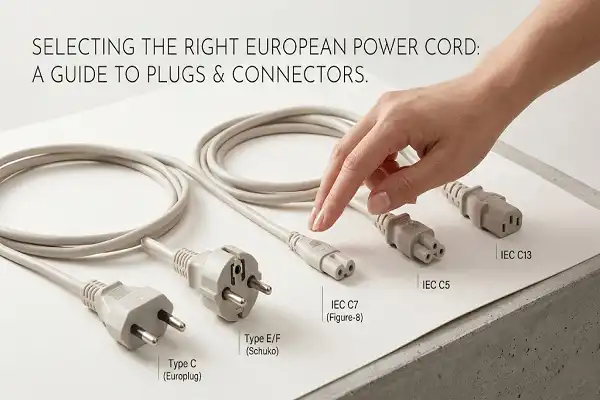
Common Plug Configurations and Their Applications
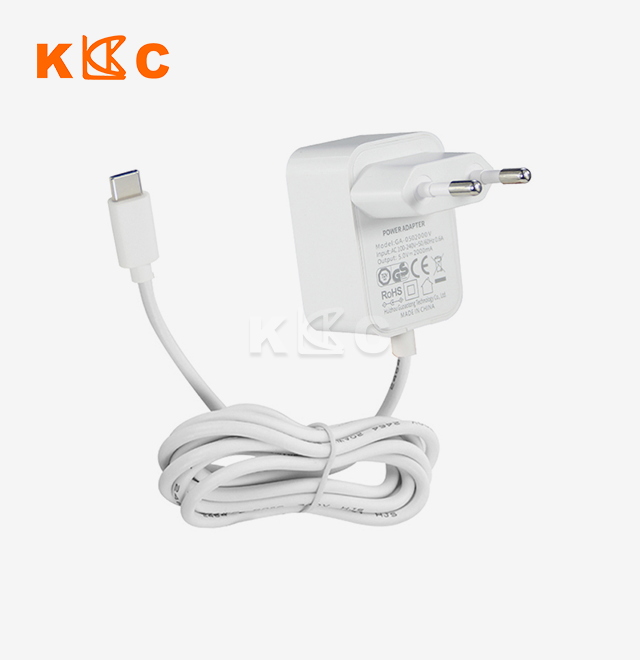
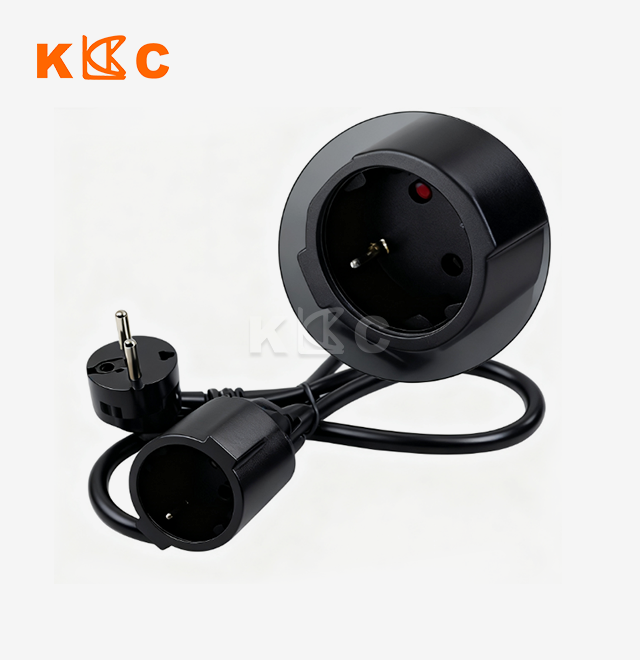
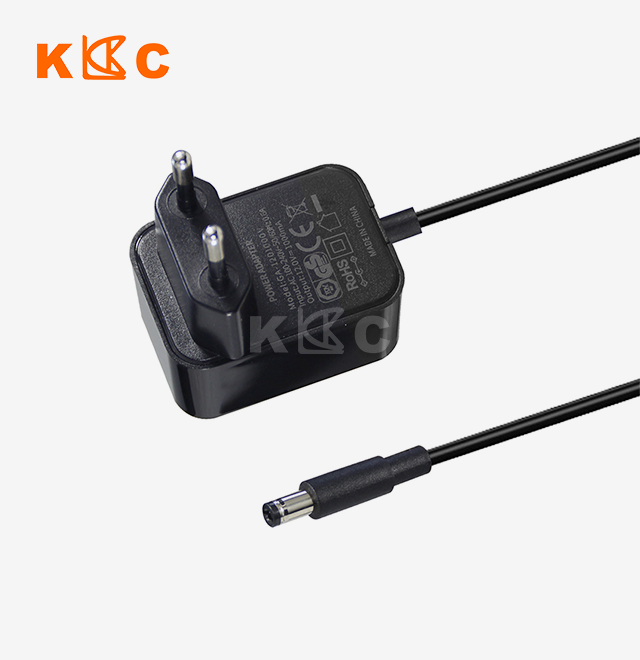
European power lines mostly use CEE 7 standard sockets. For business-to-business uses, the CEE 7/7 Schuko plug is the most flexible choice. Type F (German/Austrian) sockets with side grounding clips and Type E (French/Belgian) sockets with earth pins can both be used with this mix design. The Schuko setup can handle 16A at 250V, which means it can be used for computer racks, office equipment, and light industrial machines. This type of plug, the CEE 7/16 Europlug, can handle low-power devices like chargers and small gadgets. Knowing these differences helps buying teams choose the right plug type based on the load needs and where the plugs will be used.
Voltage, Amperage, and Wire Specifications
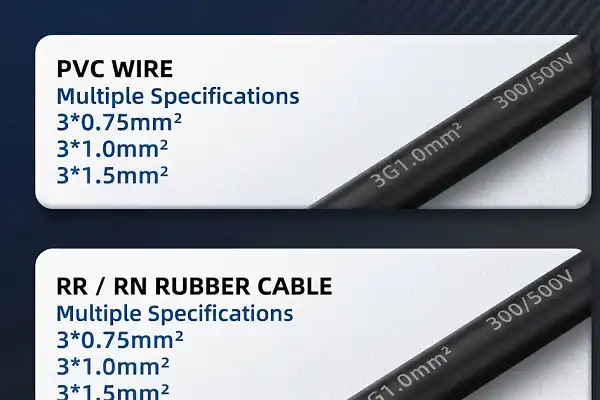
Europe uses 230V/50Hz electricity systems, which is very different from North America's 120V systems. Professional extension cords usually have H05VV-F wire design for indoor use, which includes a PVC jacket and insulation, as well as bendable copper lines rated for 300/500V. 'H' stands for harmonised European standard, '05' for voltage rating, 'V' for PVC materials, and 'F' for flexible wire design. H07RN-F rubber cable design is needed for outdoor and industrial uses. It stays flexible in temperatures from -40°C to +85°C and doesn't get damaged by oils, scratches, or UV light. The wire diameter (3G1.0mm² or 3G1.5mm²) controls how much power it can carry and how much voltage drops over distance.
| Cable Designation | Jacket/Insulation | Voltage Rating | Temp. Range | Target B2B Applications |
| H05VV-F | PVC / PVC | 300/500V | 0°C to +70°C | IT Racks, Office Equipment, Commercial Appliances |
| H07RN-F | Rubber (Neoprene) | 450/750V | -40°C to +85°C | Industrial Machinery, Construction Sites, Outdoor Heavy-Duty |
Certification Requirements and Compliance Framework
The CE mark is needed to get into the European market because it shows that the product meets the requirements of the Low Voltage Directive (LVD) 2014/35/EU and the Electromagnetic Compatibility Directive (EMC Directive). When a product gets VDE approval from Germany's Association for Electrical, Electronic, and Information Technologies, it goes through strict mechanical stress tests, dielectric strength checks, and thermal endurance checks. This gives customers more peace of mind. GS (Geprüfte Sicherheit) marks add extra proof that safety measures are working from a third party. RoHS rules limit dangerous chemicals like lead and mercury, and REACH registration takes care of chemical safety all the way through the supply chain. These licenses aren't just paperwork; they're risk-reduction tools that keep your business safe from product responsibility, delays at customs, and rejection by the market.
How to Choose the Best Europe Power Cord for Your Business Needs?
To choose the best power options, you need to carefully look at them from the point of view of scientific, practical, and legal aspects. The goal is to make sure that the product specs fit your individual application setting and business needs.
Evaluating Cable Length and Physical Characteristics
When choosing a length for a Europe power cord, you have to weigh the ease of use against safety standards and electricity performance. Standard lengths range from 2 meters to 20 meters. For longer runs, it's important to carefully calculate the power drop to keep the tools working. A 16A load on 20 meters of 1.5mm² wire causes a voltage drop of about 3%. This is fine for most uses but could be a problem for electronics that are sensitive. In high-traffic places, the thickness and flexibility of the jacket affect how long it will last. In industrial settings, thick-jacketed designs prevent wear, and in offices, more flexible designs make it easier to handle cables. When designing for movable equipment vs. set installs, where bend radius and wire handling are the most important factors, you should think about the coiling properties.
Material Selection for Environmental Conditions
Standard PVC construction works well in most indoor settings, but for some uses, it needs to be upgraded. LSZH (Low Smoke Zero Halogen) wires are necessary in places like data centers and hospitals that are closed off, because fire safety rules say that materials that don't give off harmful fumes when they burn are needed. Thermoplastic Elastomer (TPE) is better at being flexible in cold places, like cold buildings and outdoor winter uses. Rubber building can handle being exposed to chemicals, ozone, and changing temperatures very quickly in factories. When you think about how often the material needs to be replaced and how to avoid safety incidents, the choice of material has a direct effect on the total cost of ownership.
Matching Amperage Ratings to Equipment Requirements
Power lines that are too small can catch fire and wear out insulation faster. Consumer gadgets and business equipment usually use 2A to 5A, which is more than enough power for normal 16A lines. It's possible for industrial equipment, high-wattage tools, and power distribution units to draw close to or more than 10A of constant load. This means that both the cable size and connection standards need to be checked to make sure they can handle peak demand while also taking into account outdoor temperature and wrapping. Always check the equipment's nameplates to see how much current it can handle, and choose cords with a 25–30% capacity cushion to account for sudden currents and insulation wearing down over time.
Sourcing and Procurement Strategies for Europe Power Cords
Strategic sourcing turns buying power cords from a one-time thing to something that creates value by lowering costs, making the supply chain more resilient, and making sure the quality of the cords.
Identifying Qualified Suppliers and Manufacturers
Check the manufacturing licenses of potential suppliers to start the evaluation process. For example, ISO 9001 for quality management systems and ISO 14001 for environmental standards show that the business is operationally mature. Instead of random selection, look for companies that use 100% electrical testing methods. This gets rid of any faulty units before they are shipped. Kuncan Electronics has been using this method for 17 years and has done thorough inspections of arriving materials, tests while the product is being made, and final product proof. Location changes wait times and the freedom of operations. Suppliers based in big industrial hubs like Dongguan and Shenzhen can help you find parts, get in touch with technical experts, and use better shipping systems. Being able to produce samples in 3–7 days and finish large production in 15–25 days shows that your business is operationally efficient, which saves your project deadlines.
Customization Capabilities and Value-Added Services
Standard goods for a Europe power cord can be used for many things, but customisation makes them stand out from the competition and improves operations. Colour coding—high-visibility orange for use outside or in building sites vs. business black for office settings—improves both safety and appearance. Custom cable lengths get rid of the need to twist cables too much, which can cause failure spots. Using barcode stickers makes it easier to keep track of goods in stores and on a large scale. Private label packing and logo stamping help your business be consistent across all of your products. These changes shouldn't make delivery times less reliable. Partners who accept orders of different lengths and keep their minimum order numbers open can work with your inventory strategy instead of making you carry too much stock or give in on your specs.
Cost Management and Long-Term Partnership Development
Price review looks at more than just the cost per unit. It also looks at the total landing cost, which includes freight, taxes, quality-related returns, and lost opportunities due to stockouts. Pricing rates based on volume award loyalty while keeping budgets stable. Negotiating yearly contracts with shipping schedules every three months strikes a mix between managing cash flow and taking advantage of big discounts. Warranty terms show how confident the maker is in their products. For example, our normal one-year coverage against manufacturing flaws shows how good the products are and protects your budget at the same time. Support after the sale, including expert help and reaction times 24 hours a day, seven days a week, keeps small problems from becoming big enough to stop production. Having partnerships with makers who take the time to understand what your business needs adds value to the connection beyond just buying goods.
Ensuring Compliance and Safety in Europe Power Cord Usage
Regulatory compliance and operating safety are two important things that go hand in hand to protect your employees, assets, and legal standing in European markets.
Key European Safety Standards and Regulations
The Low Voltage Directive sets important safety standards for equipment that works with 50V to 1000V AC. It requires security against electric shock, high temperatures, and mechanical dangers. EN 60799 talks about cord sets and connecting cords, while EN 50075 talks about standards for flat two-pole plugs that can't be rewired. IEC 60320 rules guide device couplers, which include the C13/C14 plugs that are common in IT gear and the C5/C6 "Mickey Mouse" plugs that are common in computers and projectors. These rules say what the contact resistance, holding force, temperature rise limits are, and how long they last through more than 10,000 insertion rounds. Test results showing insulation resistance above 5MΩ, dielectric strength above 2000V AC for one minute, and earth continuity below 0.1Ω resistance should be included in compliance paperwork.
Installation Best Practices and Common Troubleshooting
The first step in a proper fitting is to look for damage to the insulation, pins that aren't straight, and loose strain relief. As you enter the plug, make sure that the grounding contacts connect before the power contacts. This is a safety feature built into the Schuko design. Do not connect multiple extension cords in a daisy chain, as this increases power drop and heat buildup. At meeting spots in an industrial setting, use cable boxes, conduit, or floor cord covers to keep wires from getting damaged by moving parts. During testing, thermal imaging finds hot spots that could mean that connections are loose or that circuits are overloaded. When fixing broken equipment, check the voltage at the load end while it's working. A big drop in voltage means the wires are too thin or the connections aren't tight enough. Intermittent function is often caused by broken wires that have been bent or crushed over and over again.
Maintenance Protocols for Extended Service Life
Schedules for regular inspections of a Europe power cord stop major breakdowns and increase the life of assets. Visual checks every three months find insulation cracks, plug displacement, and strain relief decline early, before they become shock dangers. Portable appliance testing (PAT) technology is used to check earth continuity and insulation resistance once a year. Environmental factors speed up the ageing process. For example, UV light breaks down PVC jacketing, so outdoor installations need to be replaced more often. Chemicals used in factories can damage insulating materials, so rubber building is necessary even though it costs more at first. Temperature fluctuation wears out conductors and makes shielding harder. Keeping track of service records and failure modes helps with replacement specs and finds systemic problems that need design changes or provider changes.
Top Europe Power Cord Brands and Manufacturers for Business Procurement
Choosing makers with a history of success lowers the risk of buying things and makes sure that key connection equipment has a reliable supply chain.
Evaluating Manufacturer Credentials and Capabilities
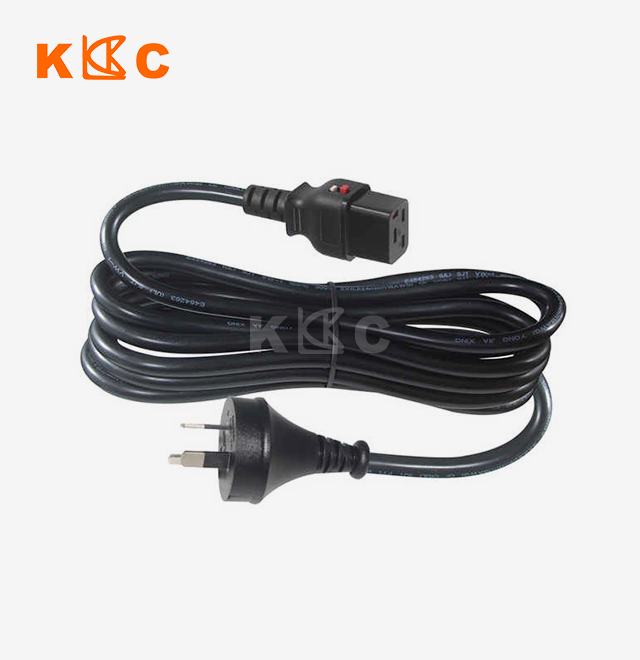
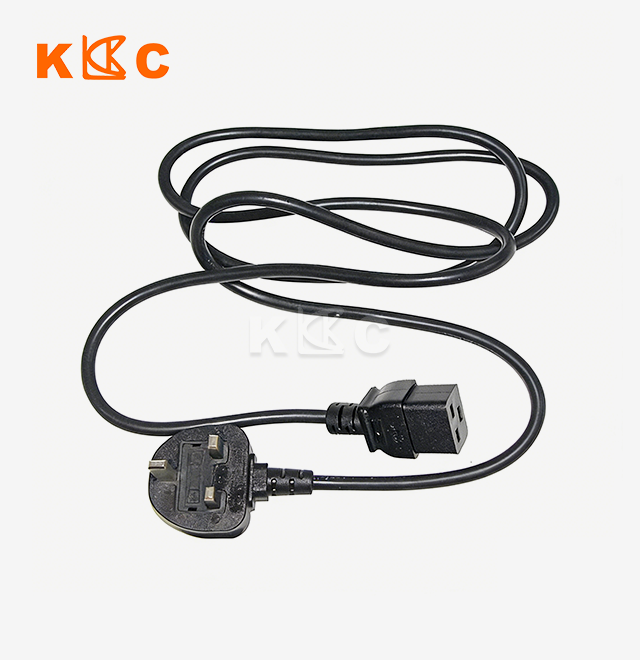
Leading makers set themselves apart by having extensive approval files that cover a wide range of areas. In addition to the basic CE marking, you should also look for ETL listing for compliance in North America, BS/UKCA listing for entry to the UK market, SAA approval for Australia and New Zealand, and FCC registration for interaction with electromagnetic fields. This method to global licensing shows that industry is getting smarter and that companies are listening to the market. It doesn't matter how much you can make or how advanced your technology is; modern facilities with automatic testing tools, quality control systems, and vertically linked supply lines always make high-quality products. Kuncan Electronics upholds this standard by following strict ISO guidelines, having a complete testing infrastructure, and getting raw materials from a variety of sources so that there aren't any single points in the supply chain that fail. Being able to meet OEM and ODM needs from development to mass production shows that the engineering is deep and that the company values working together.
Case Study: Streamlining Retail Supply Chains
A big European DIY store had a hard time keeping track of hundreds of store locations' dozens of cord lengths and specs. Working with a maker that was open let us focus on core SKUs and quickly restock specialised versions. Receiving and selling items were made easier with retail-ready packages that had barcodes built in. The ability to buy items of different lengths let distribution centers make the best use of shipping cubes while keeping store-level variety. The result was a 30% drop in inventory, better stock availability, and happier customers because the standard of the products was always the same. This result shows that choosing a key provider adds value to operations beyond the cost of the product.
Service and Support Infrastructure
Support after the sale is what sets transactional sellers apart from strategic partners. Technical advice helps people find the best answers for their specific needs, which keeps them from buying goods that don't meet their needs, which can be very expensive. Quick sample availability—ideally within a week—speeds up project timelines and lets people test the product physically before committing to it. Surge order support lets you handle sudden increases in demand without charging more or taking longer to deliver. When faults happen, downtime is kept to a minimum by having clear guarantee processes and simple repair procedures. These parts of the service create overall cost benefits that make up for small price increases compared to the cheapest options that don't have support systems.
Conclusion
To find good Europe power cord options, you have to balance technical requirements, legal compliance, provider skills, and the overall cost of ownership. To be successful, you need to know about the plug setups, material qualities, licensing standards, and external factors that are unique to your uses. Focusing on qualified sellers, customisation options, and building long-term partnerships are some of the strategic procurement practices that can turn buying commodities into competitive benefits by improving reliability, lowering downtime, and making better use of inventory management. Spending time and money on choosing the right specifications and suppliers will pay off in the long run by making your European business safer, more trustworthy to regulators, and more efficient.
FAQ
What kinds of approvals does a Europe power cord that is used in industry need to have?
Industrial-grade wires need VDE or GS approval that shows they are more durable and good at handling heat than just CE marks. For outdoor setups, look for H07RN-F rubber cable construction that can work in temperatures ranging from -40°C to +85°C, IP44 or higher entry protection, and proof that the cable is resistant to oils, chemicals, and damage in the area you live in.
How can I be sure that the VDE approval I'm getting from foreign providers is real?
Ask for the VDE test report number and check it directly in the online database of the VDE testing center. Real certificates have full test results, the name of the maker, and particular model numbers. Suppliers shouldn't be afraid to give certificates when asked. Be wary of general certificates that don't have specific information about the product or a way to track the test results.
Can standard power lines for offices handle light industrial equipment?
Standard 16A rated H05VV-F lines usually work with equipment that draws less than 10A of constant power and is used in an office setting. No matter the amperage, the H07RN-F rubber construction needs to be improved in industrial settings with high temperatures, chemical exposure, mechanical stress, or installation outside. To keep things from breaking down too soon, always make sure that the environmental scores fit the real working conditions.
Partner with Kuncan Electronics for Reliable Europe Power Cord Solutions
Kuncan Electronics has the quality, compliance, and service your business needs when it needs approved European power options backed by excellent production. Our VDE-certified extension cords are made with professional-grade H05VV-F and H07RN-F materials, go through strict testing procedures, and can be customised in a number of ways. They come from a reliable Europe power cord provider with 17 years of experience in the field. We offer fast sampling in 3–7 days, the ability to buy different lengths without minimums, and solutions that are ready for sale with barcode integration. Global approvals like CE, VDE, ETL, SAA, and BS/UKCA are on every product, making it easy to get into markets and giving regulators trust. Get in touch with our team at rhea@szkuncan.net to talk about your unique needs, ask for samples, or look into large purchasing choices that will improve the performance of your supply chain and lower your total cost of ownership.
References
European Committee for Electrotechnical Standardization (CENELEC), "Harmonized Standards for Low Voltage Electrical Equipment: Technical Requirements and Certification Protocols," 2022.
International Electrotechnical Commission, "IEC 60320-1: Appliance Couplers for Household and Similar General Purposes - Part 1: General Requirements," 2021 Edition.
Verband der Elektrotechnik Elektronik Informationstechnik (VDE), "Testing and Certification Standards for Power Cord Assemblies in Industrial and Commercial Applications," 2023.
European Union, "Low Voltage Directive 2014/35/EU: Compliance Requirements for Electrical Equipment Operating Between 50V and 1000V," Official Journal of the European Union, 2014.
Institute of Electrical and Electronics Engineers (IEEE), "Best Practices for Power Distribution in Industrial Environments: Cable Selection, Installation, and Maintenance," IEEE Industry Applications Magazine, 2022.
International Organization for Standardization, "ISO 9001:2015 Quality Management Systems: Application in Power Cord Manufacturing and Supply Chain Operations," 2021 Implementation Guide.

USER EVALUATE
Here is the customer's evaluation of us
_1781502912074.webp)