
How to Choose the Right SAE Splitter Cable for Battery Charging
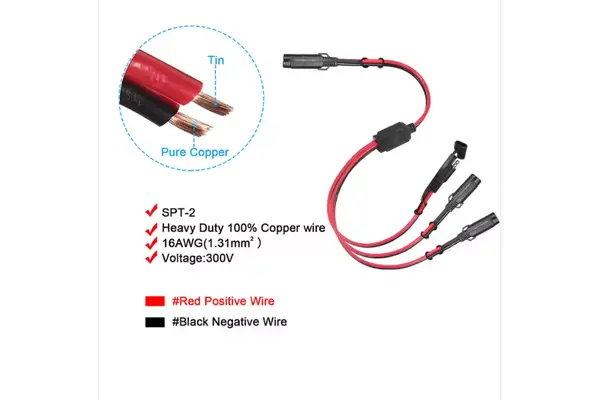
Choosing the right SAE splitter cable begins with evaluating your system's voltage, current capacity, and the number of devices you need to power simultaneously. A 1 to 3 SAE Splitter Cable transforms one battery terminal into three independent outlets, ideal for powering heated gear, GPS units, and battery tenders without terminal overcrowding. Prioritize cables with high-purity copper conductors (16AWG or thicker), waterproof connectors rated IP65 or higher, and adequate current ratings (typically 15A-20A) to prevent overheating and voltage drops. Temperature tolerance, durable PVC jacketing, and proper certifications ensure reliable performance across automotive, solar, and industrial applications.
Understanding SAE Splitter Cables and Their Applications
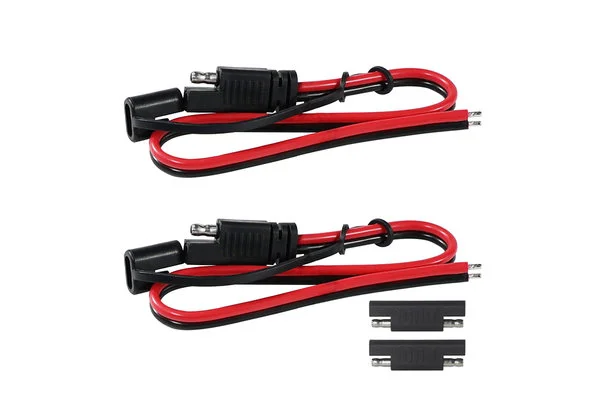
SAE splitter cables act as power distribution hubs, turning a single battery connection into multiple outlets so that multiple devices can be used at the same time. SAE connectors are different from common Y-splitters found in consumer electronics because they are based on standards created by the Society of Automotive Engineers. This makes them perfect for charging high-current batteries and distributing power in harsh environments.
What Distinguishes SAE Splitters from Standard Power Dividers
Quality building sets professional-grade SAE splitters apart from cheaper options. Real SAE connectors have polarised housings that stop connections with the wrong polarity. This is an important safety feature when working with battery systems. With an audible click, the male and female terminals lock securely together. This makes weatherproof seals that stay in place even when rain, dust, and road debris are present. Simple wire joints or tape-wrapped Y-connections, on the other hand, break when they are vibrated or heated and cooled.
We've seen a huge number of field failures caused by poor splitting quality. During the winter, weaker wires crack and break, letting water get into the circuits. Our heavy-duty SAE multi-outlet cables deal with these problems by having stronger strain relief at the joint points and a UV-resistant PVC jacketing that can handle temperatures from -40°C to 105°C.
Common Applications Across Industries
SAE power distribution cords, including 1 to 3 SAE Splitter Cables, are used for a lot more than just cars. They are also widely applied in many business settings where reliable multi-device power connections are required. In solar installations, 1 to 3 SAE Splitter Cables are used to connect multiple panels in parallel, increasing the total current delivered to charge controllers while maintaining stable power distribution. RV users depend on durable 1 to 3 SAE Splitter Cables to send power from battery banks to refrigeration units, lighting systems, communication equipment, and other accessories at the same time.
Using 1 to 3 SAE Splitter Cables to maintain multiple vehicles from a single battery tender has helped motorcycle shops, automotive service centers, and repair facilities reduce operating costs. The compact design of 1 to 3 SAE Splitter Cables makes them easy to store under seats or behind fairings without taking up too much space. Temperature-resistant and waterproof 1 to 3 SAE Splitter Cables are especially valuable for off-grid locations and remote areas where reliable energy distribution is essential. If equipment fails in these environments, extended periods without power can create serious operational problems.
Fleet maintenance operations benefit particularly from industrial-grade SAE distribution systems. With high-quality 1 to 3 SAE Splitter Cables, a single charging station can support three vehicles at once, reducing equipment investment costs while ensuring that each battery receives stable and appropriate charging current. These reliable 1 to 3 SAE Splitter Cables provide flexible power expansion, improved installation efficiency, and dependable performance for automotive fleets, solar applications, RV systems, and industrial battery management solutions.
Essential Criteria for Choosing the Right SAE Splitter Cable
To choose the right SAE splitter, you need to carefully consider how you want to distribute power. When you make this choice too quickly, cables often break early, voltages don't stay stable, or safety issues arise that put your whole charging infrastructure at risk.
Assessing Your Power Distribution Requirements
Make a list of all the devices you want to join first. To find the total current draw, add up the amperage ratings of each device. For example, a heated jacket might draw 4A, a GPS unit 2A, and a battery tender 1.5A, for a total of 7.5A. This combined load must be too much for your splitter cable to handle. We suggest choosing cables with ratings that are at least 25% higher than your calculated maximum draw. This is to account for surges during startup and for future growth.
Voltage stability is just as important. Most SAE uses 12V systems, which are popular in cars and powersports gear. However, some marine and industrial installations use 24V systems. Make sure that the splitter you choose clearly supports your operating voltage to avoid insulation failure and possible fire hazards.
Critical Specifications That Determine Performance
The gauge of the wire has a direct effect on how much current it can carry and how much voltage it drops. Numbers in the American Wire Gauge (AWG) system are written backwards: smaller numbers mean thicker wire with more capacity. Our 1 to 3 SAE Splitter Cable has 16AWG or 14AWG main strands that step down to 18AWG branch wires. This strikes the best mix between flexibility and current capacity for a maximum load of 20A.
Connector quality is what sets expert gear apart from cheaper options. Brass connections that have been nickel-plated prevent corrosion much better than copper or steel ones that aren't coated. They keep their best conductivity for years of use. The moulded connection housings should have stronger strain relief that keeps the wires from separating under mechanical stress. This is a common point of failure in cheaper cables, where the conductors pull away from the ends after being bent over and over again.
In difficult working conditions, the durability of the material becomes very important. Weatherproof PVC jacketing needs to be able to handle being exposed to oil, fuel, and chemicals that are common around machinery and cars. UV stabilisers keep outdoor solar installations from breaking down from being exposed to sunlight. Our cables are put through a lot of tests to make sure they will last for a long time, such as being submerged in oil, being resistant to wear and tear, and ageing quickly in UV light.
Safety Features: Fused Versus Non-Fused Configurations
Whether you choose fused or non-fused extension wires depends on how much risk you are willing to take and what your needs are. Fused cables have built-in safety features that stop the flow of current if loads go over safe limits. This keeps the wires from getting too hot and starting fires. This built-in safety feature is very helpful for keeping you safe when connecting a lot of unknown devices or working in installations where you won't be watching.
Non-fused cables are easier to build and have a slightly lower resistance, but they need extra safety from the circuitry outside the connection. A lot of battery service systems and solar charge controllers have built-in overcurrent safety, so you don't need extra fuses in line. When industrial users put cables into systems with centralised protection schemes that watch whole circuits instead of individual branches, they often choose cables that aren't fused.
Cable length is important for more than just getting to your gadgets. As the run lengthens, the resistance and voltage drop get worse. A voltage drop tool shows that a 10-foot run of 18AWG wire holding 10A loses about 0.5V, which could be a problem for electronics that are sensitive. If the distance between each branch is more than three feet, you should choose thicker wires or move your splitter closer to the devices that are linked.
Comparing Popular SAE Splitter Cable Types and Manufacturers
There are a lot of different SAE splitter options on the market, from cheap imports to high-end industrial cables. Knowing the difference between "adequate" and "exceptional" helps buying pros make choices that meet practical needs and stay within budget.
SAE Versus Alternative Connector Systems
Anderson Powerpole connectors are the main alternative to SAE systems. They are very popular in amateur radio and uses that need to handle more power. Anderson connectors are designed to work with both male and female devices and can handle higher currents (15A, 30A, or 45A, depending on the housing size). But SAE connectors are still the most popular choice in powersports, solar, and portable power applications because they are easy to use, don't take up much space, and are already compatible with a lot of equipment.
Trying to use different types of connectors in the same system makes it more complicated than it needs to be and could lead to problems. Each adapter or transfer wire makes the system less strong by adding resistance and weak spots. Using the same family of connectors for all of your power distribution equipment makes servicing easier, cuts down on the number of parts you need to keep on hand, and gets rid of any confusion about compatibility.
Evaluating Manufacturer Capabilities and Quality Indicators
Reputation of a brand gives you some clues, but it doesn't tell you the whole story when selecting products like 1 to 3 SAE power strips. Renogy is well known in the solar market, while CTEK and Battery Tender are leaders in battery maintenance tools. Both Eco-Worthy and ALLPOWERS focus on budget-conscious customers, but in order to stay competitive, some low-cost options may sacrifice durability, connector quality, or long-term performance. For buyers looking for reliable 1 to 3 SAE Splitter Cables, evaluating manufacturing standards, material quality, and testing procedures is essential.
With 17 years of experience making industrial-grade power interface solutions, Kuncan Electronics provides dependable products such as 1 to 3 SAE Splitter Cables for automotive, solar, RV, and battery charging applications. Before shipment, all of our cables are tested for electrical continuity, insulation resistance, waterproof performance, and mechanical pull strength. Instead of relying only on statistical sampling, each 1 to 3 SAE Splitter Cables connector is inspected individually. This strict quality control approach helps prevent defective units from reaching customers and ensures stable performance in demanding environments.
Marks of certification show that safety standards have been met in different markets for products including 1 to 3 SAE Splitter Cables. ETL and UL listings demonstrate compliance with North American safety requirements, while VDE and CE marks indicate that products meet European safety standards. 1 to 3 SAE Splitter Cables with multiple certifications reflect stronger design validation, better manufacturing process controls, and improved reliability compared with uncertified alternatives. By choosing certified SAE splitter cable solutions, buyers can achieve safer power distribution, longer service life, and better value for automotive accessories, solar systems, and industrial applications.
Specialized Variants for Niche Applications
Solar systems often benefit from splitters with longer branch lengths. For example, a main lead with three 3-foot branches lets you move the panels around while keeping the cables neat. When cables are installed on a rooftop or in the ground and are constantly exposed to the sun, they need UV-resistant jacketing.
For motorcycles and other powersports, small forms that fit through tight areas without any problems are needed. When there isn't much room behind fairings or under seats, right-angle connections make the wire profile smaller. Tinned copper wires in marine-grade splitters are better at resisting rust in saltwater than regular oxygen-free copper.
RV and tent uses have to balance the amount of power they can handle with their weight. Longer cable runs are needed for these kinds of setups so that the power doesn't drop too much over the 15 to 20 feet that separate the battery compartments from the living areas. It's important that temperature ratings take into account both summer heat inside closed compartments and winter cold in storage that isn't heated.
How to Connect Multiple Devices Using SAE Splitter Cables
Installing a system correctly has a direct effect on how safe and reliable it is. Even high-end wires can break if they are placed wrong or are put through environmental stresses that are too high for them to handle.
Step-by-Step Installation Procedures
To avoid shock and short-circuit risks during installation, start by removing the negative wire of your battery. Find the positive SAE connector on your power source. This is usually a male connector that comes out of a battery tender pigtail or solar charge controller. Connect the input lead of your splitter cable to this source. Make sure the connector seats all the way in, and you can hear a click to confirm that it is properly engaged.
Avoid making sharp turns that put stress on the wires and insulators as you route the three output branches to their respective devices. Keep the bend radius at least six times the width of the cable. For example, curves for a half-inch wire need to be three inches in radius. Use the right fasteners that won't damage the insulation to keep the wires in place along their paths. Metal zip ties can cut through the jacketing over time because vibrations cause chafing.
Connect each device to its own branch output and make sure the connections are secure again. To keep the weatherproof structure, put dust caps on any links that aren't being used. Reconnect the negative end of the battery and make sure all the devices that are attached are working properly. During the first few hours of use, keep an eye on the installation and look for excessive heat buildup at the connections, which could mean that there is poor contact or overloading.
Minimizing Voltage Drop and Electromagnetic Interference
When the voltage drops, your electronics lose power and connections get hot. This is because of Ohm's law, which says that voltage loss equals current times resistance. Cutting down on cable length and increasing circuit cross-section (making the wire larger) lowers resistance and the losses that come with it.
Electromagnetic interference can mess up sensitive electronics when several splitters are close to each other. When you twist positive and negative wires together, their electromagnetic fields cancel each other out in part. This lowers the interference that is sent out into space. When power cables are routed perpendicular to signal cables instead of parallel, inductive coupling is less likely to happen. GPS, radio, and telemetry systems won't be affected by interference if there is at least six inches of space between high-current power distribution and data lines.
Environmental Protection and Troubleshooting
Even connectors that are weatherproof need to be kept safe from direct water spray and submersion. Route links to places where water naturally goes off, so it doesn't pool around seals. Before mating, put dielectric grease on the inside of the connectors. This keeps moisture out and stops corrosion on the terminal surfaces.
Systematic separation is the first step in troubleshooting. If all three outputs stop working at the same time, check the main cable and the input connection for damage. If one outlet doesn't work but the others do, check the wiring and connection on that branch. Failures that happen every once in a while are usually a sign of rusted connections or loose crimps that need to be replaced. Check for continuity and record the real voltages at each connecting point when the load is on them using a voltmeter.
Procurement Tips for B2B SAE Splitter Cable Sourcing
When industrial buyers try to balance instant technical needs with long-term operating needs and budget limits, it can be hard. A strategic approach to procurement goes beyond simple unit pricing to optimise the total cost of ownership.
Bulk Ordering and Customization Advantages
By committing to large amounts, you can get big discounts on the cost per unit and make changes that aren't possible for small orders. When your business needs splitter cables for various locations or product lines, buying from a single maker makes logistics easier and makes sure the quality is always the same. Kuncan Electronics has a flexible minimum order quantity that starts at 100 units for standard configurations. For orders over 500 pieces, custom specifications are available.
Customisation goes beyond just changing the look of something; it also includes changing how it works to meet the needs of a specific application. Change the length of the branches to fit the plan of your equipment. For example, 12-inch leads might work for small motorcycle setups while 36-inch branches would work for RV battery compartments. Give different types of connectors, such as ones with right-angle housings or locking collars. For installed systems or retail packaging, add customised heat-shrink sleeves with your company name to make it look more professional and set your products apart.
Our engineering team does free design reviews where they compare your specifications to the needs of the application to find any problems that might arise before production starts. This way of working together saves money on redesigns and makes sure that the products delivered exactly meet operational needs.
Evaluating Supplier Reliability and Support Infrastructure
Problems in the supply chain can stop production lines or leave field service teams without important parts for repairs. Not just the lead times they give you should be used to judge possible sources. Ask for references from current customers who work in related fields, and check to see how well they've done at meeting deadlines over long periods of time.
Support services after the sale are what set strategic partners apart from retail providers. Technical support helps answer questions about installation and fix problems in the field quickly. When you contact us, our support team answers within four business hours and gives you detailed advice based on their 17 years of experience using our products in the automotive, solar, and industrial sectors.
The terms of the warranty show that the manufacturer trusts the product to work well. We offer a one-year guarantee against problems with the way the product was made, and our repair processes are quick and easy, so there is little downtime. Carefully look over the guarantee terms—some companies don't cover damage caused by "misuse" that is defined so widely that valid claims get turned down. Warranty terms that are easy for customers to understand show that you stand behind the quality of your products.
Balancing Cost Considerations with Quality Requirements
When making a purchase choice, you have to weigh the original cost against the total cost of ownership. Even though it costs 40% more at first, a splitter cable that works well for three years is a better deal than one that breaks after six months. When considering options, you should add up the costs of repair, such as labour, shipping, and any downtime that might happen.
To get bulk deals, you need to know how suppliers set their prices. Prices for raw materials like copper, PVC resins, and connector mouldings make up a big part of manufacturing prices. Larger orders make better use of materials and lower setup costs per unit, which is real savings that suppliers can share. Instead of expecting faster production, which drives up costs, set realistic release dates that allow for better planning of production.
When you build long-term ties with suppliers, you both gain in ways that go beyond the transactions themselves. Suppliers can manage their inventory and production schedules more efficiently when they have consistent order patterns. Preferred customers get first choice when materials are scarce and faster service when they need it right away.
Conclusion
To choose the right SAE splitter cable, you need to carefully look at its electrical specifications, the environment, and quality indicators that show it will work well for a long time. When procurement pros know about current needs, conductor size, connection quality, and approval standards, they can choose cables that meet their operating needs. Kuncan Electronics' 1 to 3 SAE Splitter Cable is designed to handle heavy loads and is backed by strict testing, global approvals, and the ability to be customised to fit a wide range of application needs. When choosing a strategic provider, you should think about both the current cost and the total value of ownership. You should focus on shipping reliability, expert support, and warranty assurance to keep operations running smoothly and get the most out of your infrastructure.
FAQ
Can SAE splitter cables handle high current loads safely?
When they are the right size, high-quality SAE splitter wires with a maximum capacity of 15A to 20A can safely handle powersports and solar uses. The conductor diameter determines how much current it can carry. According to NEC guidelines, 16AWG can handle 13A constant, 14AWG can handle 18A, and 12AWG can handle 23A with the right derating for temperature and bundling. Always make sure that the total load tied to the splitter stays below its rated capacity, leaving enough room for startup spikes.
Are three-way SAE power cables suitable for outdoor environments?
When installed correctly, professional-grade SAE splitters with IP65 or IP67 weatherproof ratings can handle dust, rain, and changes in temperature. Our wires work effectively from -40°C to 105°C, and their UV-resistant PVC jacketing keeps them from breaking down when they're in direct sunlight. For the best longevity, put dust caps on connectors that aren't being used and move connections to sheltered places where water can drain away instead of gathering around seals for optimal longevity.
What distinguishes fused from non-fused SAE splitter configurations?
Fused cables have inner circuit safety that stops the flow of current when loads go over safe limits. This keeps the cables from overheating and starting fires. Non-fused versions are easier to build and have a little less resistance, but they need extra protection against overcurrent from the outside. For installations that need to be done without anyone being there or when connecting devices whose current draw is unknown, choose fused cables. For systems with centralised protection schemes, choose non-fused options.
Partner with Kuncan Electronics for Industrial-Grade SAE Splitter Cable Solutions
Kuncan Electronics makes high-quality power distribution lines for demanding uses in solar, automobile, and industrial settings. As a supplier of certified 1 to 3 SAE Splitter Cables with 17 years of experience, we offer custom solutions with high-purity copper conductors, waterproof connectors, and all the necessary global certifications (ETL, VDE, CE, RoHS). Our engineering team works together on OEM specs, which include making connectors, covers, and lengths that are exactly what you need. Every cable is tested electrically and mechanically to make sure it is professional quality. Contact rhea@szkuncan.net right away to talk about buying in bulk, get technical specs, or get detailed quotes with fast help and short wait times.

References
1. Miller, J.R. (2021). Automotive Electrical Systems and Power Distribution. Technical Publishing International.
2. Patterson, D.K. & Thompson, S.L. (2020). Solar Power Installation Standards and Best Practices. Renewable Energy Press.
3. Society of Automotive Engineers. (2019). SAE J1239: Standard for Low Voltage Battery Charging Connectors. SAE International Standards.
4. National Electrical Code. (2020). Article 310: Conductors for General Wiring – Ampacity Tables. National Fire Protection Association.
5. Wilson, A.T. (2022). Industrial Cable Selection and Specification Guide. Engineering Materials Review, 34(2), 145-167.
6. Chen, M.H. & Rodriguez, P. (2021). Weatherproof Connector Technologies for Harsh Environments. Journal of Electrical Components and Materials, 18(4), 289-304.

USER EVALUATE
Here is the customer's evaluation of us
_1786082832183.webp)
_1781165562395.webp)