
How to Install a 12V Car Female Socket with Fuse and Eyelet Terminal Safely?
To safely install a 12V car female socket with fuse and eyelet terminal, you need to know about polarity, make sure the terminals are connected properly, and choose the right fuse to avoid electrical dangers. This heavy-duty battery adapter plugs straight into your car's battery and gives other gadgets a reliable way to get power. The built-in fuse protects your electrical system from overcurrent situations, and the eyelet leads make links that won't break, even on bikes, boats, ATVs, and other off-road vehicles.
Understanding the Basics of a 12V Car Female Socket with Fuse and Eyelet Terminal
What Makes This Component Essential for Automotive Power Systems?
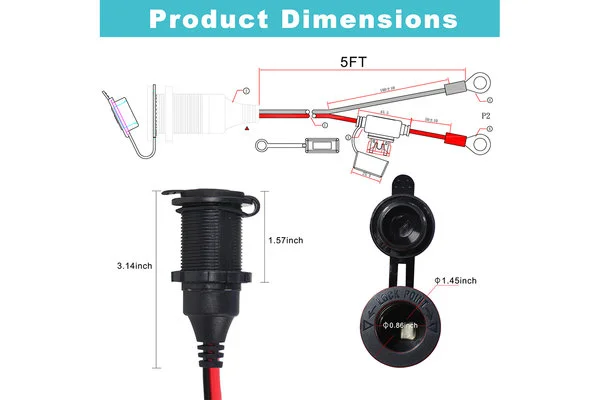
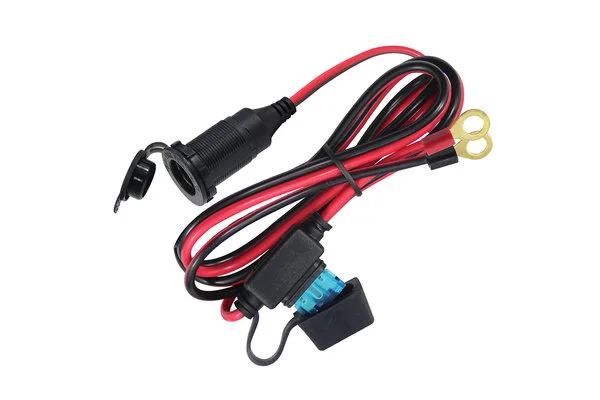
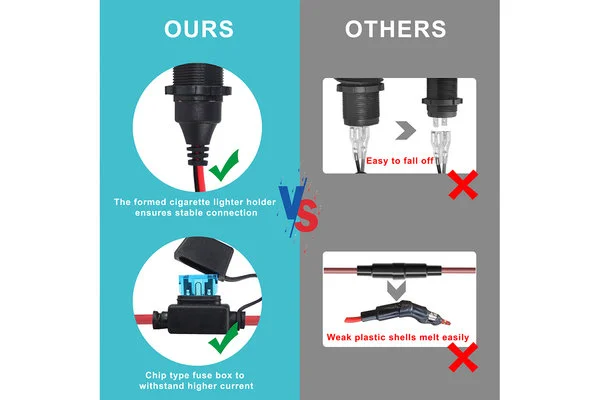
An important part of connecting your car's power source to extra gear is a 12V car female socket with fuse and eyelet terminal. The device has three main parts that all work together: the female cigarette lighter socket provides a standard power interface; the inline fuse holder prevents electrical overloads; and the eyelet terminals make mechanical links to battery posts that are safe. Unlike quick-disconnect options, eyelet terminals don't come loose when they are vibrated, which is a regular problem in mobile apps.
The switch is like a safety valve for your household electricity. When the current goes over the maximum capacity, the fusible element melts and the circuit is broken before the wires get too hot or the parts get damaged. Standard blade fuses (ATC/ATO type) with 10A, 15A, or 20A ratings can handle a range of power needs, from small generators to LED lights.
Material Quality and Its Impact on Performance
Marine-grade design makes things more reliable in tough conditions. High-purity copper wires keep the voltage from dropping too much, so your GPS unit or warm gear always gets stable power, even when it's being used for a long time. Tin-plated connectors don't rust, which is what breaks down links over time, especially in seaside or humid places. The injection-molded body can handle temperatures ranging from -20°C to +105°C, so it stays strong in both hot and cold weather.
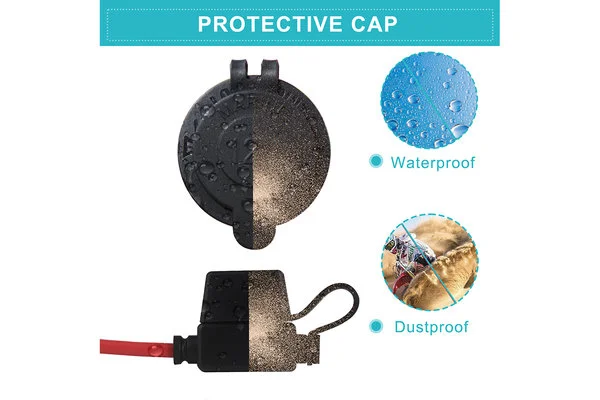
When properly sealed, waterproof fuse boxes with dust caps get IP65 ratings. This keeps wetness out, which can cause corrosion and occasional failures. This standard is very important for marine uses where salt spray speeds up the breakdown of parts.
Step-by-Step Installation Process of a 12V Car Female Socket with Fuse and Eyelet Terminal
Pre-Installation Preparation and Safety Measures
Before you touch any tools, you should be safe. To avoid getting shocked and to avoid accidental short circuits during installation, disconnect the negative wire of your battery. Get the tools you'll need, like wrenches that fit the size of your battery posts (10mm for cars and 8mm for bikes), wire strippers in case you need to make changes, and a tester for testing to make sure everything is working right.
Check the 12V car female socket with fuse and eyelet terminal out before you put it. Check the insulation on the wires for cuts or scrapes, make sure the fuse holder has the right amperage rating for the load you want to connect, and make sure the eyelet connections are the right size for the battery post. Most bikes and small pieces of equipment can use M6 terminals, while bigger car batteries can use M8 and M10 sizes.
Routing wires ahead of time keeps problems from happening. The path of the wire should stay away from things that give off heat, like exhaust parts, moving parts, like suspension links, and rough edges that wear down insulation over time. Find out how far the battery is from where you want to put it, and make sure the wire length gives you enough reach without being too loose.
Connecting Eyelet Terminals to Battery Posts
Pay close attention to the orientation when connecting the battery post for a 12V car female socket with fuse and eyelet terminal. The positive post, which is usually marked with a "+" sign or a red cap, is connected to the red wire with an eyelet end. There is a black line that goes to the negative terminal, which is marked "-" or wrapped in black. Reversing these links can hurt electronics and even start a fire.
Take off just enough of the battery post nut so that you can slide the eyelet connection onto the threaded post. Place the end flat on the post's surface. Gaps lower the contact area and raise the resistance. If the post is shared by more than one link, put the adapter's terminal right up against the post before adding any other clamps or ring terminals. Tighten the nut all the way down, using just enough force to stop it from turning but not so much that you crack the battery posts or strip the threads.
Securing the Socket and Fuse Holder
Place the female socket somewhere easy to get to that keeps it safe from direct water splashes and physical pressure. A lot of people use zip ties, adhesive-backed mounts, or mechanical clips to attach the socket to frame tubes, dashboard edges, or special accessory panels. When possible, the socket cover should be set up so that the hole faces downward. This will keep dust and moisture from building up.
Place the inline fuse box somewhere you can get to it without tools, but not so close that you could accidentally touch it and pull out the fuse. Some workers put holders next to the plug to make fixing easier, while others put them close to the battery for easier control of the electricity. Use fasteners every 6 to 8 inches to hold the extra cable length in place and keep it from moving against sharp objects.
Long-term dependability is directly affected by these installation methods. The right way to fix something lowers the stress on the connections, and the right place to put it makes upkeep easier and keeps damage from happening from the environment or mechanical interference.
Testing and Verification Procedures
Before connecting important items, verification makes sure that the action is safe. Turn on the DC voltage mode on your voltmeter and check the center contact (positive) and outer shell (negative) of the socket. The reading should match the voltage of your battery. For a fully charged lead-acid battery, the voltage should be between 12.6V and 12.8V. Readings below 12V mean there is resistance in the link or the battery is dead. Readings above 14V mean the engine is running and the charger is charging.
Check the safety with a fuse by seeing if there is continuity across the fuse box. Check that your voltmeter reads "infinite resistance" (open circuit) after taking out the fuse. Put the fuse back in place and make sure there is almost no resistance, which means the contact is good. This easy check finds fuse contacts that are rusted or fuse retention that is loose before they cause power loss that comes and goes.
Plug in a test load that doesn't use much power, like an LED light or phone charger. Make sure the light works steadily and doesn't flash, and after a few minutes, make sure the plug and wire are still cool to the touch. Too much heat means that the wire is too small or there are bad connections that make the resistance higher.
Key Benefits of Using a 12V Car Female Socket with Fuse and Eyelet Terminal
Enhanced Electrical Safety Through Integrated Protection
Adding a fuse to a simple power extension makes it a safety part of the system. When devices break or wires cut through insulation, unprotected wiring can start a fire. The fusible element reacts in milliseconds to overcurrent situations, protecting the replacement fuse from damage instead of your expensive electronics or car wire harness.
This level of security is especially helpful for business users who are adding power accessories to fleet cars or other equipment. The modular fuse design lets you change them in the field without having to solder or crimp on new wires. This cuts down on downtime during maintenance. Standardized blade fuses make it easy to stock multiple sites, which helps with quick fixes that keep operations going.
Durability in Demanding Operational Environments
In mobile settings, 12V car female socket with fuse and eyelet terminal last longer than push-on connections and alligator clips. The mechanical bolt link stops vibrations that loosen friction-fit wires. This keeps power from cutting out, which can damage sensitive electronics. Marine workers depend on this durability because constant motion and wet conditions make less durable connection methods useless.
Quality materials make things last a lot longer. Copper wires that don't contain oxygen keep their low resistance even after thousands of connection cycles. Tin-plated ends stop the buildup of oxide, which raises contact resistance. When temperatures change, weaker materials thicken and crack, but heat-resistant insulation keeps its shape and flexibility. Professional standards for mechanical strength are met by testing methods such as crimp pull-force proof (more than 80N for 16AWG wire).
Versatile Power Solutions for Diverse Applications
The standard female socket link works with any 12V extension plug, so you don't have to wire each device separately. Motorcyclists use the same system to power warm grips, GPS units, and phone chargers on their bikes. Mariners can connect fish finders, bilge pumps, and guiding lights without changing the boat's electrical systems forever. Off-grid solar systems use these adapters to connect battery banks to standard car lighter plugs.
This versatility makes it easier for fleet managers and equipment workers to keep track of supplies. A single adapter style works with a variety of car types and accessory pairs, which makes it easier to buy and keep up. Customization choices for OEMs, such as cable lengths, terminal sizes, and private marking, let them add the product to branded equipment sets or plans for upgrading vehicles.
Choosing the Right 12V Car Female Socket with Fuse and Eyelet Terminal for Your Procurement Needs
Critical Specifications for Application Matching
The safe current capacity is directly related to the wire diameter choice. A 16AWG wire can handle up to 10A of steady current, making it good for small electronics, phone chargers, and LED lights. 14AWG wire is needed for 15A applications, while 12AWG wire is needed for high-draw devices like generators and compressors. Wiring that is too small creates too much heat, which damages insulation and increases the risk of fire. Calculating the voltage drop is important for longer cable runs because thicker wire keeps the voltage where smaller lines would make equipment not work.
The size of the terminals must exactly match the size of the battery posts. When vibrations happen, loose leads turn, making connections that don't last and arcing that harms the contact surfaces. Oversized ends won't fit, so changes have to be made in the field that weaken the link. M6 terminals (6mm bolt) work with most motorbike batteries, M8 terminals work with car batteries, and M10 terminals work with heavy equipment and boat batteries.
Environmental fitness is determined by waterproof grades. IP65 security can handle rain and spray, but not water. Marine uses gain from IP67 sealing, while IP68 grades allow full submersion, which is important for boats, jet skis, and other equipment that can go both on land and water. These grades only work when the covers and caps are securely in place.
Comparing Fused Versus Non-Fused Options
Direct battery links that aren't fused offer big risks. A single failure in the insulation or a short circuit in a device can draw as much current as needed until the wire burns or the battery's internal protections kick in, which usually happens after a lot of damage has been done. Fused adapters stop faults at the point where they are supposed to happen, which protects expensive equipment and keeps vehicles from catching fire.
There isn't much of a price difference between fused and non-fused forms, and any loses are much bigger. Professional fitters and users who care about safety always choose fused connections to protect themselves from responsibility and reduce risk. Fleet managers write down fuse specs as proof of their care in case something goes wrong.
Evaluating Manufacturers and Quality Indicators
Verifying the supplier of a 12V car female socket with fuse and eyelet terminal cuts down on buying risk by a large amount. Products made by well-known companies come with certifications showing that they meet international safety standards, such as ETL, CE, RoHS, and VDE compliance. For buyers who buy in bulk, production skills are important. Manufacturers with dedicated car wiring facilities offer stability that general electronics assemblers can't match.
Protocols for testing show a dedication to quality. Terminal clip pull-force testing, dielectric voltage withstand proof (500V DC), contact resistance analysis (below 50 milliohms), salt spray exposure (ASTM B117), and thermal cycling are all part of full programs. Individual electrical testing of each unit before it is packed gets rid of flaws that are missed by batch sampling.
Customization tools help meet the needs of unique applications. Manufacturers that give different wire lengths, multiple terminal sizes, custom fuse rates, and private labels can make their products stand out and fit in with other brands' products without any problems. More value is added than just providing components when engineers help with design review and standard improvement.
Common Issues and Troubleshooting Tips for 12V Car Female Sockets with Fuse and Eyelet Terminal
Diagnosing Power Loss and Intermittent Operation
When fuses blow, it's usually because of too much power, which can be caused by broken devices or wires. Before you replace the fuse, you should carefully check the wires and equipment that is linked. If a fuse keeps blowing, it means there are deeper problems that need to be fixed instead of just putting higher-rated fuses, which doesn't provide the same level of safety.
Power that comes and goes could mean that links are loose or contacts are damaged. Take off the eyelet leads and look at the battery posts for white or green layers that look like oxide buildup. Put baking soda and a wire brush together to clean the posts. Then, rinse them and let them dry completely. Check that the lead bolts are still tight enough. Connections gradually become loose over time due to pressure and changes in temperature.
Socket contact wear makes plugs fit less tightly, which leads to links that don't always work. Over time, the center pin spring force decreases, especially when the plug is put in and taken out a lot. Good sockets use strong spring materials that keep the strain even after thousands of cycles, while bad designs break too soon.
Testing Procedures Using Standard Diagnostic Tools
Using a multimeter to measure voltage makes it easy to find problems with connections. Check the voltage first at the posts of the battery and then at the plug while a load is connected. If the voltage drop is more than 0.5V, it means that there is too much resistance because of bad connections, wire that is too small, or rust inside the fuse holder. When you compare readings taken with and without load, you can see that resistance problems are only noticeable when current runs.
Open wires and bad connections are found by continuity tests. Check the resistance from the positive battery post to the socket center pin while the power is off. The results should be close to zero ohms. In the same way, make sure that the line from the negative port to the socket shell is continuous. Readings of infinite resistance show where wires are broken or where crimps have failed.
Preventive Maintenance for Extended Service Life
Regular checkup plans keep things from breaking down without warning. Damage to the insulation, loose mountings, and final corrosion can be found visually once a month, before they become operating problems. Cleaning the terminals once a year gets rid of the metal buildup that keeps the links low-resistance. Regularly checking the dust cap on waterproof parts is a good way to make sure that the seals stay solid and flexible.
Protecting the environment makes parts last a lot longer. Putting dielectric grease on the connections before putting them together keeps moisture out and stops rusting. By running wires through secure tubing or loom, damage from scratches and UV light can be avoided. Keeping cars inside or using covers stops exposure that wears down materials too quickly.
Documentation helps with plans for upkeep. Trend analysis is possible by keeping track of installation dates, fuse values, and loads that are linked. Keeping track of service intervals and problems helps make preventative repair plans, which keeps things from breaking down during important operations.

Conclusion
To safely install a 12V car female socket with fuse and eyelet terminal, you need to pay attention to the right voltage, make sure the mechanical connections are tight, and choose the right fuse. High-quality marine-grade parts with tin-plated terminals, high-purity copper wires, and strong insulation make sure they work reliably in tough car, marine, and off-grid situations. The built-in fuse protection is very important for safety against overcurrent situations, and the eyelet ends make links that don't move around as much as temporary options. By following organized installation steps, checking everything thoroughly, and doing regular upkeep, you can extend the life of expensive equipment and keep it safe from electrical dangers.
FAQ
What fuse rating should I use for standard 12V automotive applications?
Which fuse to use depends on how much power your linked load needs. For example, 10A fuses are needed for LED lights and phone chargers, while 15A fuses are needed for heated items and small transformers. Divide the device's power by 12 volts to get the total amperage. For example, a 120W item uses 10A. Always choose the next standard fuse grade up from what you think you need, but never go too big. If you use a 20A fuse on a 5A load, the safety benefits are lost. When they are available, device instructions list the suggested fuse ratings.
Can I replace plastic sockets with stainless steel versions without rewiring?
Replacement depends on how the terminals are mounted and whether they are compatible. Both types of sockets are about the same size as a cigarette lighter and have the same electrical connections, so they can be switched out without any problems. Make sure that the eyelet connections on the new socket are the same size as the battery posts on your old one (M6, M8, or M10). Stainless steel housings last longer and don't rust, but different weights and bracket shapes may mean that you need different mounting tools.
Are eyelet terminals safer than quick-disconnect connectors for permanent installations?
For fixed systems, eyelet connections are more reliable. The mechanical link that is bolted together doesn't shake like push-on quick-disconnects do, so there is no power loss or damage from arcing. Eyelet terminal protection is especially useful in marine settings and mobile apps. Quick-disconnects are good for short connections that need to be taken off often, but bolt-secured eyelet terminals are the only way to make a strong connection for permanent installs. Professional setups always use eyelet terminals for safety-critical uses.
Partner With Kuncan Electronics for Professional-Grade Power Solutions
Kuncan Electronics is ready to meet your needs for automotive power connectivity with properly designed solutions backed by 17 years of manufacturing success. As a trusted 12V car female socket with fuse and eyelet terminals supplier, we combine marine-grade materials with rigorous testing protocols—every unit undergoes 100% electrical and waterproof verification before shipment. Our OEM customization capabilities accommodate specific cable lengths, terminal configurations (M6/M8/M10), wire gauges, and private labeling to match your exact specifications. Contact our technical team at rhea@szkuncan.net to discuss bulk procurement options, receive engineering support, and access globally certified components (ETL, CE, RoHS, VDE) that meet stringent safety standards for your operations.
References
Automotive Electrical Systems: Design, Testing and Safety Standards, Society of Automotive Engineers International, 2021.
Marine Electrical Installation Guide: Best Practices for Boat Wiring and Power Systems, American Boat and Yacht Council, 2020.
Wire Gauge Selection and Current Capacity Standards for Mobile Applications, National Electrical Manufacturers Association Technical Document, 2022.
Fuse Protection in Automotive Auxiliary Circuits: Analysis and Safety Requirements, International Organization for Standardization Technical Report, 2019.
Corrosion Prevention in Vehicular Electrical Connections: Materials and Treatment Methods, ASM International Handbook of Automotive Materials, 2020.
Terminal Crimp Quality and Connection Reliability in Vibration Environments, IEEE Standards Association Electrical Connections Working Group, 2021.

USER EVALUATE
Here is the customer's evaluation of us
_1784355495257.webp)