


Light Bulb Holder with Cord Enables Flexible Lighting Installation
When you need adaptable illumination for evolving workspace demands, a light bulb holder with cord offers immediate deployment without structural modifications. Unlike fixed ceiling fixtures requiring electrician intervention, corded socket assemblies provide portable lighting that relocates across production floors, trade show booths, or temporary installation sites within minutes. This flexibility addresses dynamic operational needs in warehouses adjusting inventory zones, retail spaces refreshing seasonal displays, or industrial facilities expanding production lines. The plug-and-play convenience eliminates downtime while maintaining compliance with safety standards across commercial environments. Procurement managers increasingly recognize these assemblies as cost-effective alternatives to permanent wiring infrastructure, delivering both capital expenditure savings and operational agility.

Understanding Light Bulb Holders with Cords: Components, Types, and Working Principles
Electrical connections between power sources and lighting devices must be solid for professional lighting systems to work. Light bulb holder with cord systems work as portable connectors and combine three important factors that affect safety and efficiency.
Core Components and Design Architecture
The socket base is what holds the socket together mechanically and electrically. It can accept normal bulb shapes through threaded or bayonet engagement methods. Candelabra-style lamps are popular in decorative settings and can fit into E14 sockets. E27 bases, on the other hand, can hold general-use bulbs up to 60 watts in domestic settings and higher grades for commercial use. Picking the right material is very important. Heat-resistant ceramics that can withstand temperatures up to 105°C keep their shape when high-wattage lamps put long-term thermal stress on them. On the other hand, thermoplastic housings made from PBT or PPS compounds are lighter and have UL94 V-0 flame retardancy for LED applications that don't produce much heat.
The way an electrical cord is made has a direct effect on how safe and long-lasting it is. Our European assemblies that are VDE-certified use wires with the designation H03VVH2-F. These wires are 0.75 mm² and have two conductors. The insulation is PVC and is rated for continuous operation at 70°C. This gauge can safely handle 2.5A at 250V, which is enough for most industrial lighting loads. The wire jacket can handle being scratched and exposed to the elements, and the insulation stays intact even after thousands of bending cycles during repositioning.
Inline switching makes it easy to control things locally without having to go to wall plugs. The 303 rocker switch built into our assemblies can handle 2.5A at 250V and gives you both tactile and audible confirmation as it works. Putting the switch along the length of the cord, about 30 to 50 cm from the plug, makes it easier to reach and keeps high-voltage connections away from areas where people will touch them.
Pendant, Switch-Enabled, and Specialized Configurations
Pendant-style assemblies hang lamps from mounting points above, casting focused light over workbench or task areas. Cords that can be adjusted in length from 1.5m to 1.8m can be used with ceilings of different heights, and stainless steel butterfly clips make them easy to connect to beams or cable trays. This set-up works well for quality control stations in manufacturing that need focused lighting without having to deal with floor-based lamp stands taking up space.
Switch-enabled models build control mechanisms right into the cord path, so you don't have to rely on wall switches in places where getting to the circuit is hard to reach. This design is helpful for warehouses that are adding mezzanine storage because it lets workers turn on lights at shelf level instead of having to go to faraway switch boxes.
Specialized industrial versions are made to handle rough working conditions. Housings with an IP54 rating keep dust and water out in gardens and outdoor canopy uses, and high-temperature ceramics can handle the heat from halogen work lamps in auto refinishing rooms.
Socket Standards and Global Compatibility
Understanding regional electricity standards can help you avoid making mistakes that cost a lot of money when you buy things from other countries. In Europe, CEE 7/16 Europlugs are usually used with E14 or E27 sockets and work with 220-240V. Plugs with NEMA 1-15P contacts and E26 medium-base sockets at 120V are used in North American installations. The E39 and E40 Mogul bases are used for high-bay industrial lighting that uses more than 100 watts of power. They have bigger thread sizes to safely handle high current loads.
Even though LED bulbs use less power, they need to be compatible with temperature control. Fixtures that are enclosed trap the heat that is made by the driver electronics, so plugs need to have good airflow. Our notched E14 designs encourage convective cooling around bulb bases, which makes lamps last longer in continuous-duty situations.
How reliable a connection is depends on socket contact engineering, and for light bulb holder with cord, phosphor bronze or beryllium copper spring contacts keep the same pressure even when the voltage changes and the temperature rises and falls, and this stops connections from breaking, which would otherwise cause flickering, and nickel plating doesn't rust when exposed to humidity, so it keeps the contact resistance low for years. Phosphor bronze or beryllium copper spring contacts keep the same pressure even when the voltage changes and the temperature rises and falls. This stops connections from breaking, which would otherwise cause flickering. Nickel plating doesn't rust when exposed to humidity, so it keeps the contact resistance low for years. These mechanical details set professional-grade parts apart from consumer goods that are likely to break down quickly under business duty cycles.
How to Install and Wire a Light Bulb Holder with Cord: A Step-by-Step Guide
Safe installation procedures make sure that electrical codes are followed and protect people and devices. Due to higher voltage levels and stricter documentation rules, proper procedures for businesses are different from those for homes. A light bulb holder with cord must be handled with appropriate safety gear.
Required Tools and Safety Precautions
Before you start working, make sure you have the following tools: insulated screwdrivers with a minimum 300V rating, wire strippers that are set to avoid damaging the conductors, electrical tape that meets UL510 standards for flammability, and a digital voltmeter to check the voltage. Non-contact voltage testers add an extra layer of safety to circuit checks done before installation.
Instead of only using wall switches, which may only be able to control one wire in older systems, de-energize circuits at breaker boxes. Use multimeters to make sure there is no voltage at both plug ends and along the cord path. Test line-to-ground and line-to-neutral. Using locked hasps to lock out electrical panels during installation keeps people who aren't supposed to be there from accidentally turning them back on.
Wiring Instructions for European and North American Standards
European kits that use CEE 7/16 plugs have two-pin setups that are not polarized. This is because 220-240V systems can handle phase reversal without putting resistive loads at risk. To connect the brown wire (phase) and the blue wire (neutral) to the socket terminals, use the torque values given by the manufacturer, which are usually between 0.5 and 0.8 Nm for brass screw terminals. Make sure that there are no bare conductors that go past the terminal blocks. If there are, they could form short-circuit routes.
In North America, NEMA systems need polarized links that keep the hot-neutral relationships stable. The thin blade, which is the hot conductor, connects to the center contact on the socket base made of brass. The wide blade, which is the neutral conductor, connects to the threaded shell's silver terminal. This orientation keeps the socket shells at a neutral voltage, which lowers the risk of shock when changing the bulb.
Grounding issues depend on how the cord is made. Two-wire assemblies don't have equipment ground conductors, so they should only be used with Class II equipment that is double-insulated. Three-wire cords have green or green-yellow ground conductors that connect to socket grounding screws. This is necessary for metal housings or damp places where fault currents need to be released right away.
Common Installation Errors and Troubleshooting
When you over-strip wire insulation, you expose too much conductor length, which can cause an arc flash if the ends come free. Only remove 8 to 10 mm of insulation, making sure that no bare copper can be seen past the entry points for the terminals. When terminal screws aren't tight enough, they make high-resistance links that heat up in specific areas. This is the main reason why electrical fires happen in business settings. Tighten the screws until the wire can't be pulled free with light hand pressure. Then turn the screws one more quarter turn.
If you don't have the right strain relief, the mechanical stress on the lines can go straight to the terminal connections. This can cause contacts to become loose over time from vibrations or accidental pulls. You can either use the cable glands that came with the product or buy strain relief bushings that are made aftermarket and clamp the jacket material instead of the wires. This design keeps the connection strong over the service life by keeping the terminals from being affected by outside forces.
Insulation breaks down when the voltage ratings of the cord and the supply voltage don't match up. When a 120V-rated unit is connected to 240V circuits, the electric field stress doubles, which breaks down insulating materials quickly and increases the chance of a catastrophic failure. Before turning on equipment, you should always make sure that the nameplate ratings match the supply voltages.
Preventive Maintenance for Operational Longevity
Inspections every three months find wear and tear before they become problems, and for light bulb holder with cord, check the jackets of the cords for cuts, scrapes, or heat coloring that could mean they are overloaded, and check for cracks in the insulation near plug and socket terminations, where frequent bending puts a lot of mechanical stress on the lines, and if an assembly shows signs of damage, it should be replaced, and repairs made with electrical tape don't offer enough protection for commercial duty cycles. Check the jackets of the cords for cuts, scrapes, or heat coloring that could mean they are overloaded. Check for cracks in the insulation near plug and socket terminations, where frequent bending puts a lot of mechanical stress on the lines. If an assembly shows signs of damage, it should be replaced. Repairs made with electrical tape don't offer enough protection for commercial duty cycles.
Every year, use micro-ohmmeters to check the resistance of the contacts and compare the results to the baseline values found in the installation instructions. If the resistance goes up by more than 20%, it means that the signal contact is oxidizing or the spring is relaxing, and the socket needs to be replaced before the arcing starts. This proactive method stops unexpected downtime from happening when production is most needed.
Using lint-free cloths wet with isopropyl alcohol to clean the plug threads and contacts will get rid of the dust that builds up and stops heat from escaping. Avoid using chemicals that are based on petroleum, as they can damage thermoplastic housings and make them weak and crack when put under mechanical stress.
Choosing the Best Light Bulb Holder with Cord for Your Business Needs
Strategic procurement weighs up-front costs against performance, reliability, and regulatory compliance over the product's entire life. Choosing the right light bulb holder with cord for different operational environments determines how much maintenance is needed and how often parts need to be replaced over the course of a deployment.
Environmental Demands and Durability Requirements
Moving goods, airborne particles from packaging materials, and temperature changes between loading docks and conditioned rooms are all things that can damage equipment used in shipping and warehousing. In these conditions, strong construction is needed. Reinforced plastics housings can take accidental hits without breaking, and IP54-rated seals keep dust out of electrical contacts. When the temperature changes from -20°C in the winter to +40°C near HVAC units on the roof, cable covers made of TPE materials stay flexible. This is in contrast to standard PVC, which gets stiff and cracks when the temperature changes.
When offices are retrofitted, both functionality and looks are given top priority. Slimmer cord profiles and color-matched finishes match building finishes, and small plug housings keep things from getting in the way in open-plan offices. Dimmer-compatible models work well in meeting rooms where the amount of light needed for talks needs to be able to be changed, as long as the lamp choices include dimmable drivers for LED sources.
Outdoor installation places, like building zones, parking lots, and event settings, need to have ratings of IP67 or IP68 to protect against rain and water immersion while cleaning is being done. Jackets that are resistant to UV light don't break down in direct sunlight, so they keep their technical strength over multiple seasons of use. Our parts have UV stabilizers that meet the ASTM G154 rapid weathering methods. This means that they can be used outside for five years without any problems.
Certification Compliance and Risk Mitigation
Regulatory approvals remove the risk of liability in the event of an accident at work. VDE certification proves that a product meets the safety requirements of the European Low Voltage Directive 2014/35/EU. This is done by testing the product independently against EN 60598 luminaire standards. The CE mark shows that the conformity assessment was completed, which is needed for legal distribution in all EU member states. In North America, products must have a UL or ETL listing, which shows that they meet the requirements of the NFPA 70 National Electrical Code and the ANSI/UL 2238 socket standards.
RoHS compliance deals with rules about the environment that limit the use of dangerous materials in electronics. Lead-free solder joints and cadmium-free contact platings meet the requirements of Directive 2011/65/EU. This lets them get into the market and supports companies' efforts to be more environmentally friendly. This certification is especially useful for multinational companies that want to make sure that all of their regional subsidiaries follow the same global procurement guidelines.
Product marks are not the only thing that needs to be documented. Teams in charge of buying things should ask for Declaration of Conformity certificates, test records from approved labs, and technical building files that show proof of design. These records are needed for internal quality checks and regulatory inspections. This is especially true in fields like food processing or medicines where electrical equipment is closely inspected.
Bulk Procurement Strategies and OEM Customization
Buying in bulk takes advantage of economies of scale and keeps the supply chain running smoothly. When you work directly with manufacturers, you cut out the middleman, which lowers the cost per unit for sales over 5,000 pieces. Kuncan Electronics doesn't have a minimum order quantity for small batches of restocking, which lets them use just-in-time inventory practices that keep working capital from being locked up in warehouse stock.
Customization turns common parts into solutions with your own name. Our original equipment manufacturer (OEM) services include custom cord lengths that fit specific installation needs, private-label packaging with client logos and product information, and specialized wire materials, such as silicone rubber for extreme temperature flexibility and LSZH compounds for enclosed spaces that need low smoke toxicity during fires. Custom production takes between 15 and 25 days, depending on how complicated the order is. Prototype samples can be sent within a week for testing before full production runs are committed to.
Talking about guarantee terms guards against problems with the way the product was made. Standard coverage for one year should cover replacing units that break down and paying for the cost of labor for setups in the field that need to be redone. Extended warranty choices are good for mission-critical settings where lighting problems could affect safety or production, shifting the financial risk from the buyer to the seller.
Top Trends and Innovations in Light Bulb Holders with Cords for 2024
As lighting infrastructure connects to building management systems and environmental rules change the requirements for materials, technological unity drives product evolution. Adapting procurement strategies to these light bulb holders with cords helps businesses stay competitive and protects installations from becoming obsolete in the future.
Smart Lighting Integration and IoT Connectivity
Wireless socket kits have Zigbee or Bluetooth Low Energy modules built in. These modules talk to central computers to control lighting based on occupancy and keep an eye on energy use. By turning off zones that have been empty for a long time, these systems cut storage power use by up to 40%. Installing corded smart plugs is easier than installing hardwired controls because they don't require pipe runs or control wires. They can be set up in minutes through smartphone apps.
Edge computing processes sensor data locally, which makes the system less reliant on the cloud and speeds up reaction times. Motion recognition algorithms change the amount of light based on patterns of behavior learned over time. This makes the lighting more comfortable to look at while keeping costs low. After the product is installed, it can be updated with new firmware that adds new features, such as the ability to work with windows to collect daylight or integrate schedules with shift calendars.
Data analytics changes how repair is done, and for light bulb holder with cord, predictive algorithms keep an eye on things like operating hours, thermal stress, and voltage changes to see when parts will break down before they do, and facilities managers are alerted when repairs need to be scheduled ahead of time, so they don't have to wait for unexpected outages to happen and stop activities. Predictive algorithms keep an eye on things like operating hours, thermal stress, and voltage changes to see when parts will break down before they do. Facilities managers are alerted when repairs need to be scheduled ahead of time, so they don't have to wait for unexpected outages to happen and stop activities.
Sustainable Materials and Circular Economy Design
Environmental forces are speeding up the use of recycled materials and building materials that can be remade. Socket housings that use 30 to 50 percent post-consumer thermoplastics keep their mechanical performance while using less new oil. Separating electrical parts from structural parts in modular designs makes it easier to take them apart at the end of their useful life so that the materials can be reused or thrown away in a dump.
Biodegradable insulation materials made from renewable resources are competing with PVC, which has been used for a long time. Bio-polyethylene compounds made from sugarcane have the same dielectric strength and flame retardancy as regular polyethylene compounds. They are carbon-neutral, which means they can be used in buying plans that care about the environment. Certification according to ASTM D6866 checks the biobased content using radiocarbon analysis. This gives numbers to back up claims of sustainability.
Extended producer responsibility rules put the cost of removal on makers, which encourages long-lasting building and architecture that is easy to fix. Take-back programs pick up old equipment so that it can be fixed up or recycled in a responsible way. This closes the loop on materials and shows stakeholders that the company cares about the environment.
Enhanced Safety Standards and Performance Metrics
Voltage surge protection built into cord assemblies keeps sensitive LED drivers safe from short-term voltage spikes. Overvoltage events are stopped by metal-oxide varistors in less than 1 microsecond, which keeps insulation from breaking down and lamps from failing too soon. This protection is useful in factories where inductive machinery makes electrical noise. It can increase the life of equipment by up to 50% compared to setups that aren't secured.
Arc-fault detection circuits watch current patterns and find high-frequency fingerprints that are typical of connections that aren't tight or insulation that is breaking down. Integrated circuit breakers cut power within 0.1 seconds of spotting a fault, which stops a fire from starting. These safety features take care of the main reasons why electrical fires happen, which are the most common cause of property damage in businesses.
Photometric standardization makes it easier to meet purchase specifications. The IES LM-79 testing procedures measure the total luminous flux, color rendering index, and associated color temperature in normal settings. This lets you compare makers in an objective way. Setting a minimum CRI value above 80 makes sure that colors can be told apart well enough for quality control checks, and 4000K color temperatures are a good mix between being alert and being able to see clearly at work.
Procurement Guide: Where and How to Buy Light Bulb Holders with Cords?
The total cost of ownership is affected by strategic buying choices in more ways than just the initial purchase price. Buying light bulb holders with cords requires a long-term analysis of the supplier's skills, transportation infrastructure, and support services.
Direct Manufacturer Engagement Versus Distribution Channels
When you buy directly from manufacturers, you can save money and make changes that fit your needs. Kuncan Electronics keeps its Alibaba Verified Supplier status, which shows that the company's operations, production capacity, and quality management systems have been checked by a third party. Direct involvement gives you access to engineering teams for technical advice, which speeds up the process of creating specifications and fixing problems during the launch phase.
Distribution networks serve projects that need a wide range of products from several makers, all of which can be bought with a single order. Distributors keep local stock on hand, which cuts down on wait times. However, the price per unit includes profit premiums that are usually between 15% and 30% higher than factory direct quotes. Combining stocking widely used configurations through distributors and special buying custom versions directly from makers is a good way to find a balance between ease and cost savings.
Digital buying tools make it easier to find and compare suppliers, and for light bulb holder with cord, B2B platforms, such as Alibaba and GlobalSources, collect catalogs from different manufacturers and let you look for them based on certifications, minimum order amounts, and wait times, and transaction defenses like escrow payment services and inspection procedures lower the risks of working with sellers you don't know, but for long-term partnerships, it's still best to build direct relationships. B2B platforms, such as Alibaba and GlobalSources, collect catalogs from different manufacturers and let you look for them based on certifications, minimum order amounts, and wait times. Transaction defenses like escrow payment services and inspection procedures lower the risks of working with sellers you don't know, but for long-term partnerships, it's still best to build direct relationships.
Supplier Vetting and Quality Assurance Verification
Check the ability to make things by doing building checks that look at how advanced the equipment is, how well the process is controlled, and how well the workers are trained. ISO 9001 certification shows that a company has a quality management system in place, and IATF 16949 certification shows that a company has automotive-grade process rigor that can handle tough jobs. Ask for recommendations from customers in similar industries to make sure you can deliver on time and be prompt while problems are being solved.
Before committing to large orders, product validation should include testing samples in real-world settings. Thermal cycling, mechanical stress, and electrical overload tests should be done on samples, and the results should be compared to the specs. Third-party lab testing at approved facilities offers objective confirmation, so you don't have to rely on data from the provider that might be biased in a positive way.
Supply chain transparency shows the dangers that come from relying on different parts to be sourced. When manufacturers depend on just one provider for important products, they could be affected by shortages. Manufacturers with a diverse supply base, on the other hand, can keep operations running smoothly. Ask for supplier mapping information that lists lower-level suppliers of copper, plastics, and electrical parts, and look at the risks of regional concentration.
Pricing Dynamics and Contract Negotiation Strategies
The prices of raw materials like copper wires, thermoplastic resins, and metal terminals change with the prices of other goods, which makes prices less stable. When you negotiate price adjustment terms that are tied to public metal indices, you protect both sides from high volatility while still being fair. On the other hand, 12-month fixed-price contracts give budget stability, though prices may include risk premiums that pay sellers for market exposure.
By making production planning more efficient, volume commitments secure good prices. Annual blanket purchase orders with quarterly releases help producers get the best deals on raw materials and schedule production, which lowers the costs that customers have to pay. Flexibility clauses that let you change the amount by up to 15% allow for changes in demand that happen without having to renegotiate the contract.
Payment terms affect how much working capital you need. Standard net-60 terms in business-to-business deals make it hard for manufacturers to manage their cash flow, which shows in how they set their prices. By offering faster payment options like net-30 or prepayment savings, you can get price cuts of about 2% to 5% and build stronger relationships with your suppliers by showing that you can be trusted with your money.
After-Sales Support and Warranty Administration
Technical support accessibility determines problem resolution speed during deployment and operation. Manufacturers providing dedicated account managers with direct contact information enable rapid escalation pathways, avoiding delays navigating generic customer service queues. Multilingual support capabilities prove valuable for multinational operations coordinating installations across regional teams.
The process for filing a warranty claim should be easy to understand and follow, with as little paperwork as possible. Simplified RMA systems that accept photos as proof of failure get rid of the need for expensive reverse transportation for low-value parts, sending replacements as soon as they are seen to be defective. Our warranty policies cover manufacturing flaws for a year, and they include faster shipping for important applications that can't wait.
Obsolescence problems can be avoided by making spare parts available throughout a product's lifecycle. A promise to provide spare parts for 10 years protects customers' investments in fixed infrastructure by continuing upkeep even after production stops. Component-level replacements, like sockets, wires, and switches, increase service life by fixing specific parts instead of replacing the whole system. This lowers the cost of ownership and the amount of waste that is created.
Conclusion
To choose the right corded socket kits, you have to weigh technical requirements, safety needs, and the supplier's abilities, and for light bulb holder with cord, knowing how parts are made, how to install them, and about new technologies gives procurement workers the power to make smart choices that meet operational goals and stay within budget, and choosing certified products from well-known companies with a history of safety and reliability while minimizing risks and ensuring compliance with regulations over long service lives is the best way to go. Knowing how parts are made, how to install them, and about new technologies gives procurement workers the power to make smart choices that meet operational goals and stay within budget. Choosing certified products from well-known companies with a history of safety and reliability while minimizing risks and ensuring compliance with regulations over long service lives is the best way to go. Strategic partnerships with suppliers that offer competitive prices, technical support, and the ability to make changes as needed create long-lasting value that goes beyond simple buying relationships.
FAQ
Can I Use Corded Socket Assemblies Outdoors Safely?
For outdoor use, products need to have waterproof ratings of IP67 or IP68 to keep internal parts safe from rain, snow, and short-term immersion in water for cleaning. UV-resistant cord jackets stop photodegradation, which can happen when something is exposed to sunlight for a long time. Our normal VDE-certified assemblies have IP20 ratings, which are good for dry indoor settings. For outdoor setups, we offer versions with sealed housings and weather-resistant materials that meet EN 60529 ingress protection standards.
What Distinguishes E26 From E27 Socket Bases?
The numbers 26mm and 27mm in the E26 and E27 designations refer to the diameters of the Edison screw bases, which look and work the same. Usage is based on regional electricity standards. For example, in North America, E26 is used for 120V systems, while in Europe, E27 is used for 220-240V systems. Thread pitch and depth are a little different, but lights can often be switched out literally. Voltage ratings are very important. Putting 120V-rated E26 lamps into 240V E27 sockets will immediately fail, and reverse-mismatched lamps will produce less light.
What Cord Length Suits Industrial Lighting Applications?
The best cord length takes into account both flexibility and voltage drop. For industrial setups, 1.5–1.8m cords are usually enough to reach from ceiling junction boxes to work areas without having too much slack that could cause someone to trip. When cords are longer than 3 meters, resistive losses happen in the 0.75 mm² conductors, which could cause the voltage to drop below the minimum levels needed for the lamp to work. Custom length specs are made to fit the needs of each building, and our production can handle any size between 1 and 5 meters through OEM services.
Source Reliable Lighting Components from a Trusted Manufacturer
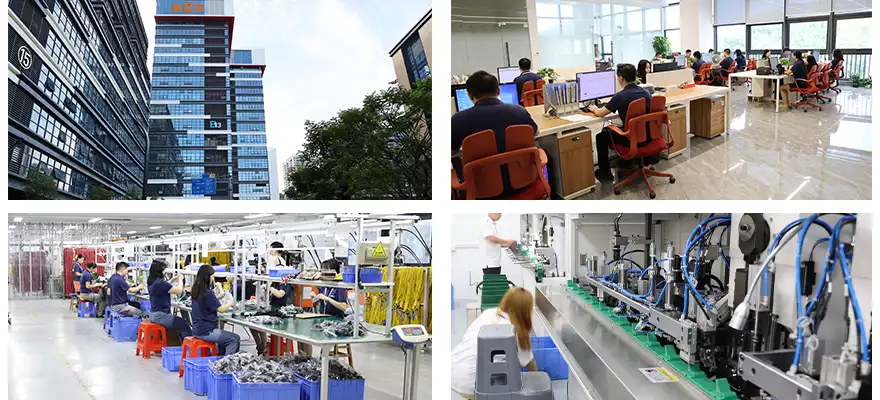
Kuncan Electronics has been making electronics for 17 years and has a wide range of certifications. They make professional-grade socket systems that meet all world safety standards. Our VDE-certified goods are built to withstand heat, have inline switching, and can have cord lengths that can be changed to fit a variety of industrial and business needs. We provide flexible OEM/ODM services, such as private labeling, custom packing, and specialized wire materials. These services are backed by strict quality control methods and 100% electrical testing. Our quick sampling (3–7 business days) and efficient production cycles (15–25 days) make us a good choice for procurement teams looking for reliable light bulb holder with cord suppliers. Get in touch with our technology experts at rhea@szkuncan.net to talk about big discounts, customizing specifications, and how our streamlined supply chain can help your business.
References
1. National Electrical Manufacturers Association (NEMA). ANSI C81.61: Specifications for Electric Lampholders. Rosslyn, VA: NEMA Standards Publication, 2019.
2. International Electrotechnical Commission. IEC 60238: Edison Screw Lampholders. Geneva: IEC Central Office, 2018.
3. Underwriters Laboratories. UL 496: Standard for Safety Lampholders. Northbrook, IL: UL Standards and Engagement, 2020.
4. European Committee for Electrotechnical Standardization. EN 60598-1: Luminaires - General Requirements and Tests. Brussels: CENELEC Management Centre, 2021.
5. American National Standards Institute. ANSI/IES LM-79-19: Approved Method for Electrical and Photometric Testing of Solid-State Lighting Products. New York: Illuminating Engineering Society, 2019.
6. Society of Automotive Engineers. SAE J1673: High Voltage Primary Cable. Warrendale, PA: SAE International, 2017.

USER EVALUATE
Here is the customer's evaluation of us