
Long-Distance Battery Charging with SAE Extension Cables
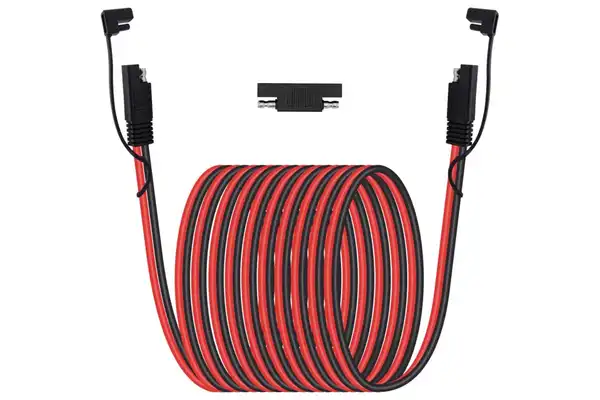
When your solar panel sits twenty feet from your RV battery bank or your motorcycle waits in the garage while the tender plugs in from across the room, you need a reliable power bridge. An SAE to SAE Extension Cable solves this distance challenge by extending battery charging connections without compromising efficiency or safety. Built with pure copper conductors and weatherproof connectors, these cables maintain stable voltage delivery across significant distances, enabling flexible installations for solar systems, powersports maintenance, and automotive applications where direct connections prove impractical.
Understanding SAE Extension Cables and Their Role in Long-Distance Battery Charging
What Makes SAE Connectors Industry Standard
A long time ago, the Society of Automotive Engineers (SAE) set standards for connectors so that all devices could use the same charging ports. These two-pin polarized plugs can be found on solar panels, battery packs, and powersports gear all over the world. The standard design keeps mistakes from happening with reverse polarity and makes sure that equipment from different makers has the same electrical contact.
For seventeen years, Kuncan Electronics has been making these connectors and has improved the contact geometry to get less than 5mΩ resistance. It's important to be accurate because every milliohm of resistance loses power and creates heat during charging processes.
Core Construction Elements
High-quality SAE to SAE Extension Cables have many carefully designed parts that work together. Copper conductors that don't contain oxygen reduce resistive losses. This is especially important for 10AWG and 12AWG types that handle 20–30 amp loads. The outer jacket is made of UV-stabilized PVC that won't crack in the desert sun or when it freezes and thaws in the winter. Moulded strain relief at each connection keeps wires from breaking when they are bent over and over again.
Nickel-plated metal terminals that don't rust in sea and outdoor settings are used in our manufacturing process. Each connector is pulled to a force of 50 pounds to make sure it is mechanically sound before it is used in the field, where wires may be pulled or strained by mistake.
Technical Specifications That Drive Performance
Ratings for voltage often go up to 300V, which is much higher than the 12V to 48V range of most battery systems. This extra space protects against power spikes caused by solar panels that aren't connected properly. Different wire gauges can handle different amounts of current. For example, 18AWG can handle 10 amps for light-duty uses, while 10AWG can handle 30 amps for high-power solar arrays.
Temperature levels range from -40°C to +85°C, so they can be used for everything from storing snowmobiles in the Arctic to parking RVs in Arizona. The cables stay flexible over this range, which is important for getting through small areas or coiling up to store between uses.
Key Technical Dimensions and Selection Criteria for SAE Extension Cables
Wire Gauge Selection and Voltage Drop Calculations
Picking the right wire thickness has a direct effect on how well it charges. A 25-foot run of 14AWG wire holding 15 amps drops about 1.5 volts, which is enough to make charging go much more slowly. That loss goes down to 0.9 volts when you upgrade to 12AWG and to 0.6 volts when you upgrade to 10AWG.
This is because of Ohm's Law, which says that voltage drop equals current times resistance. As expected, copper wire resistance goes up with length and down with cross-sectional area. For our business-to-business clients, we give them specific voltage drop charts that help engineers choose lines that keep at least 95% of the voltage delivery at full load.
When planning solar installs, you should think about both the SAE to SAE Extension Cable and the wiring that is already in the system. If wire losses add up to more than two volts, a solar charge controller that is expecting 18 volts from the panels may shut down because of low voltage. Frustrating field failures can be avoided by choosing the right gauge.
Environmental Protection Standards
Strong environmental sealing is needed for industrial and outdoor uses. Even though SAE connections don't have submersion ratings, the dust caps that are built in cover the terminals when the connector is not in use. Our SAE to SAE Extension Cables come with tethered caps that snap firmly over the ends. This keeps moisture out while the cables are being stored or not in use for a while.
Many people don't realise how important UV protection is. When left out in the sun all day, standard PVC jacketing breaks down. Within two years, it becomes brittle and cracks. The material for our jackets is made with UV stabilisers that have been shown to work through tests that simulate ten years of outdoor contact.
Connection Methods and System Integration
The great thing about SAE standardization is that it makes everything work together. You can use our SAE to SAE Extension Cables with battery tenders from well-known brands, aftermarket solar panels, and OEM charging harnesses for powersports. The keyed connection design makes sure that the polarity is correct; the bigger end always links to positive.
Adapter configurations can help with some applications. For straight access to the battery, we make SAE-to-alligator clip adapters. For permanent installs, we make SAE-to-ring terminal adapters. These mixed solutions make the system more adaptable while keeping the ease of being able to quickly disconnect at the SAE junction.
Comparing SAE Extension Cables with Alternative Solutions
Performance Against Standard Jumper Cables
Traditional jumper cables can start your car in an emergency, but they're not very good at charging from far away. Their clamps with springs quickly rust, making links with high resistance that waste power and heat. For permanent or semi-permanent installations, the thick, rigid conductors are a pain.
Through designed spring terminals inside each connection, SAE to SAE Extension Cables keep the contact pressure constant. The small profile makes it possible to route through vehicle body panels or RV compartments that would not be possible with bulky jumper cables. The polarised design is the most important part because it removes the risk of reversed connections, which can damage expensive electronic charging equipment.
Heavy-Duty Versus Standard Flexible Cables
Not every SAE to SAE Extension Cable is used for the same things. 16AWG and 18AWG cables are good for motorcycle tenders and other small portable power needs. Because they are thin and flexible, they are perfect for short-term connections that don't need more than 10 amps of current.
Heavy-duty 10AWG and 12AWG types are made for high-capacity battery systems and solar setups. The larger wires give up some flexibility but provide the necessary current-carrying ability for charging at 20 to 30 amps. When continuous duty cycles are more than four hours a day, we steer our OEM clients toward heavy-duty construction.
Fused Versus Non-Fused Configurations
Inline fuses protect against short circuits and broken equipment. A fuse that is properly rated—usually 125% of the highest predicted current—blows before the insulation on the cables melts or there is a risk of fire. This safety is useful for mobile apps where wires might get pinched by sharp edges or get damaged by accident.
SAE to SAE Extension Cables that aren't fused have fewer places where they could connect and fail. Getting rid of the fuse makes the system easier to use in controlled environments where upstream circuit protection is already present. We make both types, and we help procurement managers match the needs of the cables to the general design of the system safety.
Procurement Guide: How to Select and Purchase SAE Extension Cables for Your Business Needs
Volume Ordering and Customization Benefits
Buying in bulk has a lot of benefits besides lowering the cost per unit. When OEMs add SAE to SAE Extension Cables to product kits, their production plans are synchronised, which means they don't have to pay for extra inventory. Our minimum order numbers range from 100 pieces for basic configurations to 500 pieces for full custom requirements that include packaging and branding that are unique to your business.
There are many ways to customise something. Customising the length of the SAE to SAE Extension Cable to fit the needs of the placement is possible; we've made versions ranging from three feet for small uses to twenty-five feet for big solar arrays. Customers can choose the wire size, connector coating, and jacket colour that works best for them, and there are no extra costs when buying in bulk.
Supplier Evaluation Criteria
Compliance with certification is the basis of a supplier's dependability. For North American markets, our products are recognised by ETL, which means they meet UL safety standards. European customers depend on CE marking and RoHS compliance to make sure that environmental rules are followed. These certificates aren't just pieces of paper; they show that the design is correct and that quality is being maintained throughout production.
Warranty terms show how confident the manufacturer is. We guarantee that every SAE to SAE Extension Cable is free of production flaws for a year because our testing procedures find problems before they are sent out. We make sure that only goods that meet our specifications leave our building by pulling-testing every connector and checking the electricity at 300V.
Logistics and After-Sales Considerations
Lead times have a big effect on job plans. Standard setups usually ship in 15 business days, but special orders need 25 days to make the tools and make the product. We keep a buffer stock for customers who buy a lot, so we can send emergency shipments when demand goes up without warning.
Support after the sale is what sets strategic partners apart from basic providers. Our engineering team offers free technical advice while specifications are being made, which keeps customers from having to pay for expensive redesigns. Replacement parts, like connectors and dust caps, are always available for products, so field service operations can continue for years after the product was first bought.
Best Practices and Maintenance Tips to Maximize SAE Extension Cable Lifespan
Proper Installation Techniques
How SAE to SAE Extension Cables are routed has a huge effect on how long they last. When you make sharp bends, stress builds up in places where conductor threads finally break. Keep bend radii greater than ten times the diameter of the cable, which for 10AWG cables is about six inches. Place P-clips or wire ties every 18 inches to keep things from moving too much because of wind or shaking.
Put in safety grommets when running through walls or bulkheads to keep the insulation from chafing. The constant bending caused by moving vehicles or wind pulls away at exposed jacket material over time. This leaves conductors open to water and increases the risk of a short circuit.
Torque at the connection is more important than most people think. When SAE joints aren't tight enough, they make intermittent contact that burns the ends. When you fix something too much, the plastic housings or pins break. With moderate hand pressure, the connector should seat firmly; about five pounds of insertion force is the right amount of force to engage.
Preventive Maintenance Protocols
Problems are found before they lead to failures by inspecting every three months. Look for cracks in connector housings, especially where force builds up when the SAE polarized connector cord is bent. Make sure the dust caps are securely attached. If you lose them, the connections can corrode, which causes high resistance and voltage drop.
For a terminal inspection, the connection must be cut off. Check for discolouration that means the wire is getting too hot, which is usually caused by connections that aren't tight enough or wire gauges that are too small for the job. Green or white corrosion deposits on brass terminals show that moisture has gotten in, which means that the connector needs to be replaced instead of being cleaned, which rarely works to restore proper contact.
Insulation condition reveals environmental damage. Cracking, discolouration, or stiffness are all signs of damage from UV light or chemicals. If you see these signs on cables, you should replace them before the insulation fails and short circuits happen. The low cost of replacement is much less than the cost of fixing broken or burnt equipment.
Troubleshooting Common Issues
Most voltage drop complaints are caused by three things. Make sure that both the SAE to SAE Extension Cable junctions and the upstream/downstream connections show less than 0.1V drop under load. Loose connections cause resistance. Losses can't be avoided when the wire gauge is too small for the run length and power. Recalculate your needs and update if you need to. Corroded connections lose power through resistance, so it's better to replace them than to try to clean them.
Charging that comes and goes is often a sign of a loose connector. The SAE design depends on the tension of the spring to keep the contact pressure steady. Worn-out joints that don't fit together tightly need to be replaced. Trying to bend the pins tighter almost never works and could hurt the polarity keying features.
SAE to SAE Extension Cables that get too hot are a sign of big trouble. Disconnect right away and make sure the current draw matches the wire gauge capacity. No matter how good the cable is, a 14AWG cable carrying 25 amps will get too hot and melt. Check to see if any of the linked equipment has any short circuits. Replace any wire whose covering has been damaged by heat.
Real-World Application Case Study
A solar installation business that works with RVs came to us because they had problems with competitor SAE to SAE Extension Cables in the field. Voltage drops of more than three volts happened on the 15-foot runs that connected panels on the roof to charge controllers inside the house. This kept the batteries from fully charging.
An investigation showed that they were using 14AWG wires for a peak current of 18 amps. We suggested our 10AWG heavy-duty SAE to SAE Extension Cables and gave you voltage drop estimates that showed the change would cut losses to 0.7 volts. Their order was for 500 pieces, cut to 15-foot lengths.
Follow-up after installation season confirmed that the cables got rid of complaints about charging. After that, the RV maker included our SAE to SAE Extension Cables in their solar prep packages, showing that proper design can turn problems in the field into competitive benefits.

Conclusion
Long-distance battery charging only works with SAE to SAE Extension Cables that are properly sized and rated for their electrical performance, reliability in harsh environments, and compatibility with other systems. When built with pure copper conductors, the right wire sizes, and strong environmental protection, SAE to SAE Extension Cable options work well. If procurement experts know how to calculate voltage drop, set limits on current flow, and make sure connections are solid, they can choose goods that will work successfully in a wide range of demanding situations. Since Kuncan Electronics has been making things for seventeen years, we've gotten better at both designing products and helping customers. This means that your charging infrastructure will work well year after year with little maintenance.
FAQ
What maximum length works effectively for battery charging applications?
Practical length limits depend on wire gauge and current magnitude. A 10AWG cable handles 25 feet at 20 amperes with acceptable voltage drop below one volt. Longer runs require thicker conductors—8AWG extends to 40 feet for similar performance. Calculate specific applications using voltage drop charts matching your system voltage and charging current. Higher voltage systems like 24V or 48V tolerate greater absolute voltage drop than 12V systems.
Do dust caps provide adequate weather protection for outdoor use?
Dust caps protect disconnected terminals from rain, snow, and airborne contaminants but don't create submersion-proof seals. The caps prevent the corrosion and fouling that develops when moisture sits on exposed brass terminals. During connection, the mated connector pair achieves significant weather resistance through tight mechanical engagement. We've documented reliable performance in marine environments and desert conditions exceeding five years with proper dust cap usage during storage periods.
How do I select the correct wire gauge for my application?
Match wire gauge to both current magnitude and run length. Calculate voltage drop using the formula: drop equals current multiplied by wire resistance. Copper resistance at 20°C measures approximately 10.4 ohms per 1000 feet for 10AWG, 16.5 ohms for 12AWG, and 26.2 ohms for 14AWG. Target maximum voltage drop of 3% for acceptable charging efficiency. When calculations fall between standard gauges, select the heavier wire. Thermal considerations also apply—continuous duty cycles require derating current capacity by 20% compared to intermittent use specifications.
Partner with Kuncan Electronics for Premium SAE Extension Solutions
Upgrading your power distribution infrastructure requires a SAE to SAE Extension Cable supplier who understands both product engineering and application demands. Kuncan Electronics manufactures heavy-duty SAE to SAE Extension Cables with 100% pure copper conductors, customizable from 3 feet to 25 feet across 10-18AWG options. Our ISO-certified production facility has delivered reliable connectivity solutions for seventeen years, backed by comprehensive testing protocols and global certifications including ETL, CE, and RoHS compliance. Procurement managers and OEM engineers gain access to flexible customization, volume pricing advantages, and technical consultation that optimizes specifications before production begins. Contact our team at rhea@szkuncan.net to discuss your requirements and receive detailed technical documentation supporting confident purchasing decisions for your solar, automotive, or powersports applications.
References
1. Society of Automotive Engineers. "SAE J1773: Electric Vehicle Conductive Charge Coupler Standards." SAE International Standards Journal, 2018.
2. National Electrical Manufacturers Association. "Wire and Cable Technical Guidelines: Voltage Drop Calculations for DC Systems." NEMA Publications, 2020.
3. Underwriters Laboratories. "UL 817: Cord Sets and Power Supply Cords - Safety Requirements and Testing Protocols." UL Standards Catalog, 2019.
4. American Boat and Yacht Council. "E-11: AC and DC Electrical Systems on Boats - Marine Cable Specifications." ABYC Technical Standards, 2021.
5. Renewable Energy World. "Best Practices for Solar Installation Wiring: Minimizing Power Losses in Photovoltaic Systems." Solar Industry Technical Review, 2022.
6. Automotive Engineering International. "Battery Maintenance Systems for Powersports Vehicles: Connection Standards and Charging Infrastructure." SAE Automotive Journal, 2020.

USER EVALUATE
Here is the customer's evaluation of us
_1779502524805.webp)
_1778576596139.webp)