
Heavy-Duty 12V Cigarette Lighter Adapters for Commercial Vehicles
Heavy-duty 12V cigarette lighter adapters for commercial vehicles represent specialized power distribution solutions engineered to deliver reliable electricity beyond the dashboard. These extension devices utilize high-purity copper conductors to minimize voltage loss while supporting demanding applications like portable refrigeration, air compressors, and rear-seat entertainment systems. Unlike consumer-grade alternatives, a professional 12V cigarette lighter power adapter features reinforced metal housing, oversized wire gauges rated for 105°C operation, and integrated overcurrent protection—characteristics vital for fleet operations where equipment failure translates directly to revenue loss and operational disruption.

Understanding Heavy-Duty 12V Cigarette Lighter Adapters for Commercial Vehicles
Core Design and Operational Principles
Power delivery for commercial vehicles needs parts that are more advanced than those used in homes. Heavy-duty cigarette lighter extensions work by sending 12V or 24V DC current from the car's extra socket to faraway places, like the trunk or a camper conversion, using high-quality SPT-2 or SJTW wires. The 12V Cigarette Lighter Power Adapter works like a bridge, keeping the voltage stable over long lengths where normal home wires would lose a lot of power.
Premium copper conductors lower electrical resistance, which stops voltage drops that can damage electronics. Metal-reinforced female sockets keep the same contact pressure even after hundreds of insertion cycles, which is something that consumer items don't have to do. Overcurrent protection is provided by 15A fuses that are built into the vehicle. This keeps the electrical system and any connected equipment safe from damage caused by short circuits.
Voltage Compatibility and Safety Protocols
Dual-voltage support (12V/24V) takes into account the fact that many fleets use different voltages. Most passenger cars have 12V systems, while most commercial trucks and heavy equipment have 24V systems. Universal plugs for cigarette lighters can fit both types of sockets, but the device that is plugged in must be able to handle the voltage of the vehicle. If you connect a device that only needs 12V to a truck plug that only needs 24V without adjusting the voltage properly, the component will fail right away.
Reverse-polarity protection and thermal cutoff mechanisms are part of safety protocols. High-quality 12V Cigarette Lighter Power Adapters have inline fuses at both the plug end and the extension housing, which adds an extra layer of protection. This two-fuse design makes sure that electrical problems shut down the system before too much heat or current damage the vehicle's wiring harnesses or equipment that is connected to them.
Troubleshooting Common Issues
There are three types of failure that fleet managers often see: loose socket connections, blown fuses, and power that comes on and off randomly. Most of the time, old contact springs inside the vehicle's auxiliary socket cause loose connections, not problems with the 12V Cigarette Lighter Power Adapter. Most connection problems can be fixed by using an electrical contact cleaner to clean the plug contacts and making sure they are inserted properly.
When fuses blow, it means that the 12V Cigarette Lighter Power Adapter is drawing more current than it can handle. Using more than one high-wattage device at the same time, like a portable cooler and warm seats together, usually goes over the 180W limit (15A × 12V). Intermittent power means that wires are wearing out near where they are connected. Checking the strain relief areas of cables and replacing 12V Cigarette Lighter Power Adapters with insulation cracks stops breakdowns on the side of the road and keeps equipment running smoothly.
Key Benefits of Heavy-Duty 12V Cigarette Lighter Adapters for Commercial Vehicle Fleets
Durability Under Harsh Operating Conditions
Electrical parts in commercial settings are put under stresses that don't happen in private settings. Heavy-duty 12V Cigarette Lighter Power Adapters can handle constant vibrations from rough roads, temperature changes from -40°C to +85°C during cross-country hauls, and physical impacts from moving cargo. Moulded strain relief at connection points keeps wires from breaking, and strengthened housings don't crack when they are stepped on or pushed under heavy equipment.
The strong construction means that it will last a lot longer. Fleet tests show that heavy-duty 12V Cigarette Lighter Power Adapters can be used continuously for 24 to 36 months on average, while consumer-grade adapters only last 6 to 9 months. This makes them last longer, so they don't need to be replaced as often. This lowers the total cost of ownership and keeps vehicles running while power tools are broken.
Multi-Device Compatibility and Power Efficiency
Different electronic systems must work at the same time in modern business cars. GPS tracking, dash cams, handheld diagnostic scanners, and communication gear can all be powered by a single heavy-duty 12V Cigarette Lighter Power Adapter without voltage fluctuations. There are different lengths available to meet different equipment placement needs. These range from 10-foot models that are small enough to fit under a cab to 16-foot models that reach into cargo areas.
Low voltage drop across heavy-gauge copper conductors makes power more efficient. Over 10 feet at a 10A load, standard 18AWG consumer wires lose about 3% of their voltage, which could cause the 12.0V source to drop to 11.6V. Commercial 12V Cigarette Lighter Power Adapters use high-quality 16AWG or 14AWG conductors that keep voltage in the 11.5V–12.5V range that electronics need to work reliably. This cuts loss to less than 1%.
Comparing Cigarette Lighter Adapters to USB Power Solutions
It is best to know when to use 12V Cigarette Lighter Power Adapters and when to use USB charging hubs for optimal power spread in a fleet. 12V Cigarette Lighter Power Adapters are great at sending high-wattage DC power (60W to 180W) to portable coolers, air compressors, and power generators that have barrel plugs or direct DC hookups. Smartphones and computers that need 5V to 20V through USB-C PD standards work better with USB adapters.
Many commercial cars work better with a mix of methods, with 12V Cigarette Lighter Power Adapters powering heavy tools and USB hubs taking care of communication devices. This division keeps voltage drops from high-current loads from hurting sensitive electronics. It also makes debugging easier by putting different types of devices on separate circuits.
Criteria for Selecting the Best Heavy-Duty 12V Cigarette Lighter Adapters
Technical Specifications and Performance Ratings
When making decisions about what to buy, the amperage ability must match the real load needs. To find the minimum amperage, add up all the wattages of all the devices that are connected and divide that number by the vehicle voltage. A 12V system needs at least 10A to power a 120W portable cooler (120W x 12V = 10A), so the 12V Cigarette Lighter Power Adapter needs to be rated for at least 12A with a 20% safety cushion. Safe amperage is directly related to wire gauge: 16AWG can handle 13A, and 14AWG can handle 18A for high-power uses.
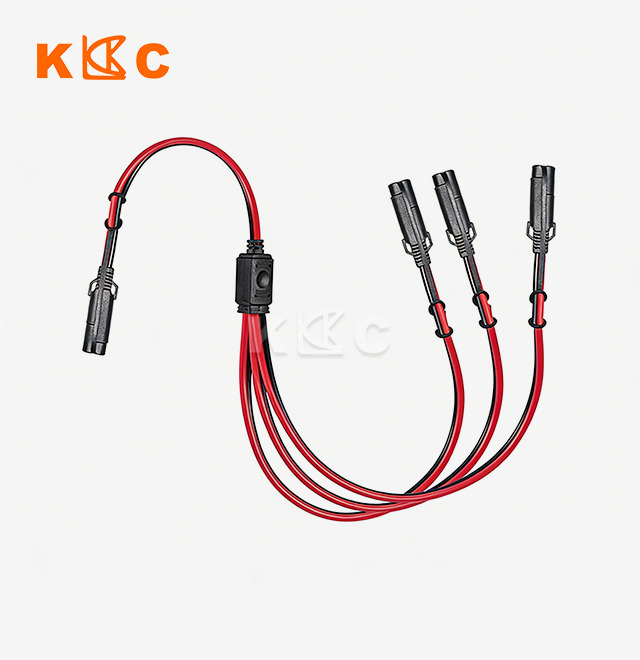
Different operational needs can be met by different output configurations. Single-socket 12V Cigarette Lighter Power Adapters are used for specialised equipment like fridge units that are permanently mounted. Dual-socket Y-adapters let you use two devices at the same time, but they need to be carefully load-balanced to keep them from overloading. Coiled cable designs take up less room in small cabs, while straight extensions work better for setups that need to reach equipment in the trunk or make links to other camping gear.
International Compliance Certifications
Verification of regulatory compliance keeps you from being sued and makes sure that the product works well. CE marking proves that a product meets European safety standards, and RoHS approval makes sure that dangerous materials aren't used in production. Listings on ETL and UL make sure that North American safety standards are met. This is especially important for fleets that drive between the U.S. and Canada.
ISO quality management approval shows that a manufacturer's process is consistent, which lowers batch-to-batch differences that lead to early failures. VDE approval shows that the electricity safety meets German engineering standards, which are generally thought to be some of the strictest in the world. Multi-certification should be required by procurement specifications to make sure that 12V Cigarette Lighter Power Adapters can work in the wide range of regulatory environments that come up during operations between states and between countries.
Evaluating Manufacturer Reputation and Support
The choice of supplier has a big effect on the long-term reliability of the fleet. Manufacturers that have been in business for more than 15 years show that they are stable and have a lot of tech knowledge. Production capacity indicators, like the number of employees, the size of the plant, and the amount of work that is done each year, show how well a company can handle big orders and stick to regular delivery schedules.
Professional sellers are different from commodity dealers because they offer help after the sale. Look for manufacturers that offer technical support while you're making your specifications, quick prototype delivery (3–7 business days), and helpful customer service with guaranteed 24-hour response times. A one-year warranty against manufacturing flaws gives you a way to get your money back if the 12V Cigarette Lighter Power Adapter breaks down early, and it also shows that the maker trusts the quality of the product. Replacement parts make sure that old fleet equipment can still be used without having to be completely upgraded.
Installation and Maintenance Best Practices for Heavy-Duty 12V Adapters in Commercial Vehicles
Step-by-Step Installation Guide
Preparing the car is the first step in a proper fitting. To avoid sparks during installation, turn off the engine and take out the key. Check the car's auxiliary socket for dirt, rust, or damage. If necessary, use electrical contact cleaner and a small brush to clean the contacts. Use a multimeter to check the voltage at the socket to make sure that the 12V or 24V output matches the 12V cigarette lighter power adapter's specifications.
Put the plug into the cigarette lighter all the way in until you feel good engagement with the contacts inside. Arcing and contact wear happen when the entry is too loose. Keep 12V Cigarette Lighter Power Adapter cords away from moving parts, sharp edges, and heat sources like exhaust parts. Place cable ties every 12 inches along existing wiring harnesses to keep cables from chafing due to vibration. Connect the equipment to the female socket end and make sure it works right before finishing the installation.
To be safe, you should wear electrical gloves when working near battery connections and use protected tools to keep from accidentally shorting them out. Don't go over the 12V Cigarette Lighter Power Adapter's rated amperage; the device's label should tell you what the highest current capacity is. Do not connect multiple 12V Cigarette Lighter Power Adapters in a daisy chain, as this increases the risk of fire from overheated connections and makes the voltage drop worse.
Routine Maintenance and Inspection Schedules
Setting up regular upkeep times for 12V Cigarette Lighter Power Adapters increases their useful life and stops them from breaking down without warning. Visual checks should be done once a month to look for cracks in the wire insulation, damage to the plug case, and discoloured socket contacts that could mean the unit is overheating. A multimeter test done every three months makes sure that the voltage is being delivered correctly when there is a load on it. To do this, connect normal equipment and check the voltage at the female socket end to make sure there is less than a 0.5V drop from the source voltage.
As part of yearly deep inspections, contact resistance and fuse continuity testing are done. Replace fuses that are discoloured or deformed, even if they are still carrying current, because these signs show that the fuse is about to break completely. Every six months, use electrical contact cleaner to clean the socket contacts and get rid of the oxidation that makes them more resistant and heat-producing. Write down the results of the inspection and the maintenance steps that were taken to set replacement schedules for the whole fleet.
Replacement Indicators and Upgrade Timing
In some situations, you need to replace the 12V Cigarette Lighter Power Adapter right away, regardless of the maintenance schedule. Units with melted insulation, exposed conductor strands, or broken plug housings should be replaced because they pose a risk of shock and fire. Power delivery that comes and goes even though good plug contacts have been confirmed is a sign of internal wire breaking from wear and tear. If a fuse keeps blowing, it means there are short circuits inside the 12V Cigarette Lighter Power Adapter that need to be replaced completely.
Upgrading the fleet before it breaks down makes it more reliable. If a 12V Cigarette Lighter Power Adapter has been used continuously for more than 24 months, it should be replaced even if it still seems to work. This is because internal conductor fatigue happens before external symptoms show up. Overload situations can be avoided by upgrading to a higher-amperage capacity when adding power-hungry equipment. When working in places with a lot of shaking, switching to 12V Cigarette Lighter Power Adapters with stronger strain relief lowers the number of early failures.
Purchasing and Procurement Strategies for Heavy-Duty 12V Cigarette Lighter Adapters
Negotiating Bulk Purchase Agreements
Buying in bulk can save you a lot of money and make sure you always have what you need. Manufacturers usually set prices in tiers, with discounts for orders of 500, 1,000, and 5,000 units. By negotiating annual supply agreements with deliveries every three months, you can lower the cost per unit while keeping your inventory levels manageable. Before committing to big orders, ask for sample evaluation programs that let you test them in the field. Reliable providers will send you 5–10 samples within a week for validation.
Terms of payment affect how cash flows are managed. Standard net terms of 30 days work well for businesses that have been around for a while, while longer terms of 60 days work better for yearly fleet growth. Progressive payment plans—30% down, 60% when the production is done, and 10% after delivery—balance the buyer's need for cash with the supplier's need to reduce risk. Always include clauses that spell out quality standards, shipping dates, and what to do if the goods don't meet the standards.
Supplier Credibility and Logistics Considerations
Due diligence checks keep supplier relationships from failing, which can be very expensive. Ask for certificates of the building, such as ISO 9001 for quality management and ISO 14001 for environmental management. Verified supplier standing on big B2B platforms like Alibaba confirms to a third party that the business is real and able to run. Factory audits, which can be done in person or by a third-party inspection service, make sure that the advertised capabilities match the infrastructure.
Logistics planning has a big effect on landing prices and the stability of supplies. Through well-established logistics networks, suppliers in major industrial hubs like Dongguan and Shenzhen offer reasonable freight rates. For big sales, sea freight has the lowest cost per unit, but it takes 6-8 weeks to deliver. Air freight, on the other hand, can restock quickly and at higher costs, but it only takes 5–7 days to deliver. Using new rail lines between China and Europe balances speed and cost for European businesses. Make sure you understand the Incoterms (FOB, CIF, DDP) that spell out where responsibility lies and how costs are split.
Calculating Return on Investment
Total cost of ownership analysis is needed to figure out how much specialised 12V Cigarette Lighter Power Adapters are worth compared to consumer alternatives. Think about a fleet of 100 vehicles that needs new household adapters every nine months while heavy-duty units last 30 months. A heavy-duty unit only needs to be replaced once every 30 months, but consumer units need to be replaced 3.3 times, which adds up to 2.3 more replacement service calls per car and costs more in labour. To find the real cost difference, multiply the waste of labour by the size of the fleet.
The costs of downtime often go over the price of the 12V Cigarette Lighter Power Adapter itself. When an adapter fails in a delivery vehicle's refrigeration unit, food goes bad, deliveries are missed, customers are unhappy, and a technician has to be sent out. Heavy-duty 12V Cigarette Lighter Power Adapters cut failure rates from 15% per year to 3%, which protects income in a way that can be measured. According to fleet managers, buying professional-grade power accessories cuts down on secondary electrical failures by 60–70%. This directly improves car uptime measures that make the fleet profitable.

Conclusion
Consumer products can't compare to heavy-duty 12V Cigarette Lighter Power Adapters for commercial vehicles when it comes to mission-critical power distribution. Choosing 12V Cigarette Lighter Power Adapters with high-purity copper wires, strengthened construction, and the right certifications will make sure that your fleet works well and saves you money over time. Purchasing managers who use bulk buying methods with trusted makers can get the best prices without sacrificing quality. Installing 12V Cigarette Lighter Power Adapters correctly and keeping up with preventative maintenance will extend their useful life and protect fleet investments. Better durability, stable voltage delivery, and a lower failure rate are some of the operating benefits that directly lead to less fleet downtime and higher profits.
FAQ
What amperage level should I pick for my adaptor for a business vehicle?
Find the total wattage of all the devices that are linked, divide it by the vehicle's voltage, and then add 20% as a safety cushion. To run a 120W cooler and a 60W air compressor on 12V, you need at least 15A of power (180W 12V 1.2 = 18A). Choose 12V Cigarette Lighter Power Adapters with ratings at or above the estimated power to keep the system from overheating and fuses from blowing while it's working normally.
Could I plug a 12V adapter into a 24V truck?
The plug itself works with both voltages, but the devices that are attached must be compatible with the car's power system. Putting 12V devices into 24V sockets breaks them right away. Check that the voltages of the two pieces of equipment are compatible before connecting them, or use voltage switches made for business use to safely step down 24V to 12V.
How often should adapters for commercial fleets be changed?
Immediately replace any 12V Cigarette Lighter Power Adapters that have damage that can be seen. Wires that are exposed, melted insulation, or cracked housings are all safety risks. Replace units even if they are still working after 24 to 30 months of continued use, because internal conductor fatigue shows up before external signs do. This preventative method cuts down on sudden problems on the side of the road.
What length of wire is best for business installations?
Voltage drop is less noticeable with shorter cables. 10-foot lengths work for equipment mounted on the cab, while 12–16-foot lengths can reach cargo areas. Check the actual distance you need before you buy, because an extra 12V Cigarette Lighter Power Adapter length makes things more difficult to find and can cause people to trip. When quality 12V Cigarette Lighter Power Adapters with 16AWG or heavier conductors are used, voltage drop goes up by about 1% for every 10 feet of maximum load.
Partner with Kuncan Electronics for Reliable 12V Cigarette Lighter Power Adapter Solutions
With 17 years of experience making car power solutions, Kuncan Electronics is your go-to 12V Cigarette Lighter Power Adapter maker. Our heavy-duty extension cords are made of 100% high-purity copper, work with both 12V and 24V power outlets, and have all the safety certifications you need, like ETL, CE, VDE, and RoHS compliance. We offer 100% electrical testing procedures and flexible bulk packaging for installers as well as custom retail packaging. Samples are sent out in 3–7 days with rapid prototyping, and bulk orders are finished in 15–25 days with streamlined production. Get in touch with our technical team at rhea@szkuncan.net to talk about the power needs of your business fleet and get unique solutions that make operations more reliable.
References
1. Anderson, M. (2021). Commercial Vehicle Electrical Systems: Design and Maintenance. Automotive Technology Press.
2. Chen, L. & Roberts, P. (2022). "Power Distribution Solutions for Fleet Operations." Journal of Commercial Vehicle Engineering, 45(3), 112-128.
3. International Electrotechnical Commission. (2020). IEC 60335-2-85: Household and Similar Electrical Appliances - Safety Requirements for Portable Automotive Adapters. Geneva: IEC Publications.
4. National Fire Protection Association. (2019). NFPA 70: National Electrical Code - Article 625: Electric Vehicle Charging System Equipment. Quincy: NFPA.
5. Thompson, R. (2023). Fleet Management Technology: Optimizing Mobile Power Systems. Transport Industry Publications.
6. Williams, J. & Martinez, S. (2022). "Lifecycle Cost Analysis of Commercial Vehicle Electrical Accessories." Fleet Maintenance Quarterly, 18(2), 67-84.

USER EVALUATE
Here is the customer's evaluation of us