
What is a C7 power cord?
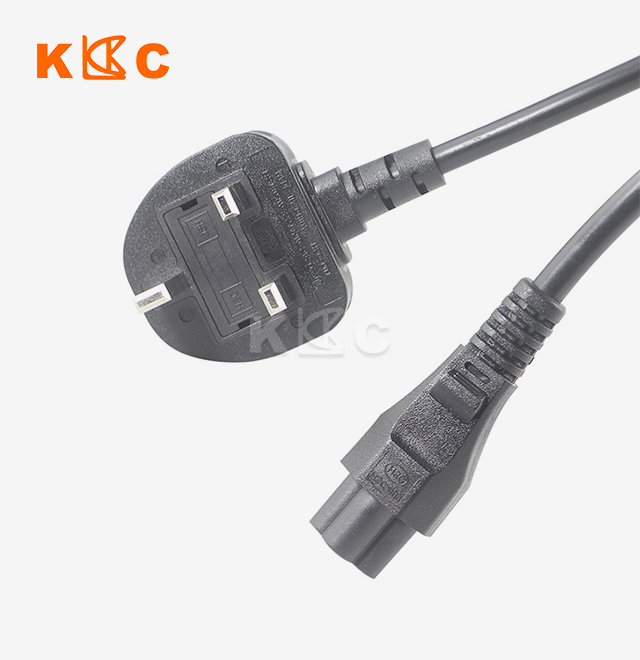
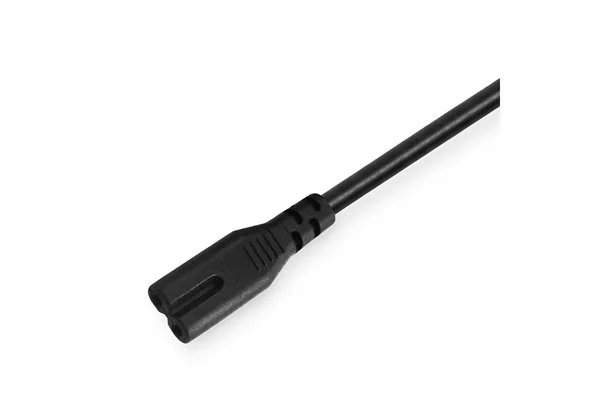
A C7 power cord is a two-conductor, non-polarized AC mains line that has the IEC 60320 C7 plug, which can be recognised by its unique figure-8 shape. This unground power option works at 2.5A and 250V and is made for low-power gadgets that don't need to be grounded to the earth. The C7 connection fits into a device's matched C8 outlet, giving power to things like game machines, handheld radios, camera chargers, and audio gear. Because it is small and light, it is a popular choice for travel electronics and consumer electronics in both home and business settings around the world.
Understanding the C7 Power Cord: Basics and Specifications
Defining the Figure-8 Connector Standard
The C7 connection is called a "figure-8" connector because it has a unique uniform shape that lets it be inserted in either direction. The idea for this design came from the international standard IEC 60320, which sorts device couplers into groups based on their voltage and current needs. Unlike grounded connections like the C13 or C5, the C7 only has two pins and no safe earth link. This means that it can only be used with Class II double-insulated equipment. This rating means that the device has stronger insulation layers that get rid of the need for grounding. This lowers the cost of making the device while still meeting safety standards.
The C7 connection has been around since the 1970s, when attempts to standardise tried to make general power ports for gadgets that were becoming more movable. Before this standardisation, makers used their own plugs, which made the supply chain less efficient and caused problems with connectivity. These problems were fixed by the IEC 60320 standard, which set uniform requirements that makers all over the world could use. This made global marketing and finding new parts a lot easier.
Technical Specifications and Electrical Ratings
To make sure safe power transfer, the usual C7 power cord works within strict electrical limits. The normal voltage rating goes up to 250V AC, and the current rating is usually no more than 2.5A. However, in some areas, there are heavy-duty versions that can handle 10A. For North American uses, the wire size is usually 18 AWG (0.824mm²), but for European types, 0.75mm² conductors that meet H03VVH2-F cable standards are more common. These requirements make sure that the current-carrying capacity is enough while still allowing for freedom and longevity.
Insulating wires is very important for safety and durability. Premium cords have jackets made of either Polyvinyl Chloride (PVC) or Thermoplastic Elastomer (TPE). These jackets are flame retardant and meet VW-1 or FT1 standards. Under normal working conditions, this material structure can withstand temperatures from -20°C to +75°C. This keeps it from breaking down due to heat, which could damage the electrical stability. Quality cords can resist 2000V AC Hi-Pot testing, which is a strict measure that checks how well shielding works and stops electricity from leaking.
Certification Standards and Safety Compliance
International safety certifications show that power cords have been tested thoroughly and meet strict standards. VDE approval from Germany is one of the most prestigious marks in Europe. It means that the product meets the strict safety standards in Germany. UL (Underwriters Laboratories) approval shows that the product meets North American safety standards, while CE marking shows that it meets European health, safety, and environmental protection standards. For each approval, a lot of tests are done, such as tests for flammability, electrical stress, and mechanical sturdiness.
RoHS (Restriction of Hazardous Substances) compliance for a C7 power cord is becoming more and more important as rules around the world tighten about protecting the environment. RoHS-compliant wires don't contain dangerous materials like lead, mercury, cadmium, and some flame retardants. This makes them safer for users and easier to properly throw away. Following the rules for REACH (Registration, Evaluation, Authorisation, and Restriction of Chemicals) makes these safety measures stronger in the European Union by limiting thousands of chemicals that could be dangerous. Not only do these licenses make sure safety, but they also make it easier to clear borders and get into markets in different parts of the world, which lowers the legal hurdles to foreign trade.

Comparison and Decision-Making: Selecting the Right C7 Power Cord for Your Needs
Distinguishing C7 from Similar Connector Types
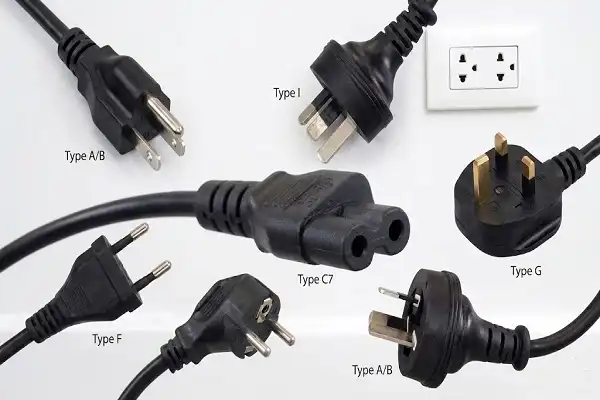
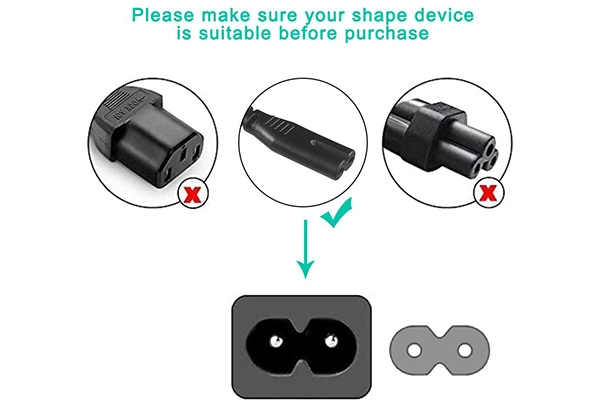
Understanding the differences between connection types can help you avoid making mistakes that cost a lot of money and problems with connectivity. The C7 connector is very different from the C5 "cloverleaf" connector. The C5 "cloverleaf" connector has three pins and a ground link, so it can be used with Class I equipment that needs to be grounded to the earth. The C13 plug is a much bigger, grounded choice that can handle higher currents (10A to 15A), and it's often used for desktop computers and monitors. On the other hand, the name C8 doesn't refer to a plug but to the outlet socket that fits the C7 plug. This can sometimes cause confusion in buying specs.
Another thing that sets them apart is their physical size. The C7 adapter is about 12 mm wide and has smooth ends that make it different from the polarised C7P version, which has one curved edge to make sure it is in the right place. This polarisation is important in places where the direction of the hot and neutral wires affects the safety of the device. However, most current double-insulated equipment works safely no matter which way the plug is plugged in. Before placing an order, buyers should check the intake shape of their tools to make sure it will fit correctly.
| Connector Type | Pins | Grounding | Max Current | Common Applications | Equipment Class |
| C7 (Figure-8) | 2 | No (Ungrounded) | 2.5A (Typical) | Audio gear, Laptop adapters, SMPS | Class II |
| C5 (Cloverleaf) | 3 | Yes | 2.5A | Laptop power supplies, Projectors | Class I |
| C13 (Standard PC) | 3 | Yes | 10A - 15A | Desktop computers, Servers, Monitors | Class I |
Evaluating Cable Length and Material Options
When buying in bulk, the length of the cables has a big effect on both their usefulness and their cost. Standard lengths are between 1 and 2 meters, with 1.5 meters being the most typical length for consumer goods. Shorter cables use less material and take up less room in setups that are limited on space. Longer cables, on the other hand, let you place equipment in different places. Custom length choices let buyers get the best fit for their needs, which cuts down on waste and improves the look of professional setups.
Choosing the right material affects performance in ways that go beyond the basic electrical function. The price of standard PVC coats is very low, and they last long enough for most indoor uses. Alternatives to TPE are more flexible in cold places and more resistant to chemicals and oils, so they can be used in light industrial settings. Low Smoke Zero Halogen (LSZH) wires are the best choice for places like data centers, hospital facilities, and aeroplanes that are small and have a lot of smoke. Smoke poisoning from fires is very bad for your health in these places. The flat cable design in H03VVH2-F builds makes managing cables easier because the cables can be hidden behind furniture and along walls without making bulges that look bad.
Assessing Brand Reputation and Quality Indicators
Quality differences between makers can have a big effect on how safe and reliable something is in the long run. Copper Clad Aluminium (CCA) options, which are cheaper but less effective at conducting electricity, use low-purity Oxygen-Free Copper (OFC) conductors, which lower electrical resistance and heat generation. The longevity is directly related to the quality of the moulding used to make the connectors. Precision-molded plugs keep their tight specs, which stops the common "connector wiggle" problem of a loose fit that leads to intermittent connections, arcing, and failure before its time.
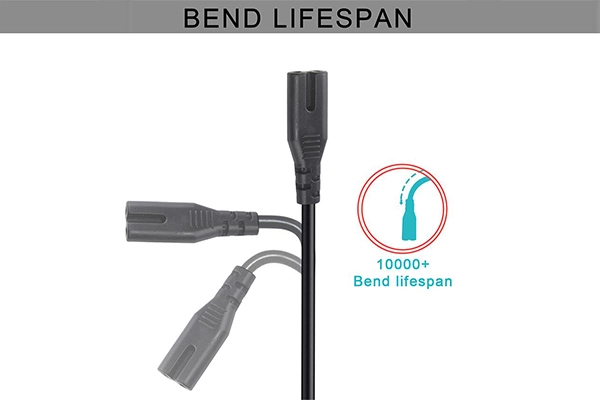
Flex cycle testing for a C7 power cord is a way to measure how long something will last mechanically. Better cords can handle more than 3,000 flex cycles, which is the same as years of plugging and removing over and over again without breaking or cracking the insulation or conductors. Strain release design at both ends of the wire keeps stress from building up, which is what usually leads to failure places. There are differences in quality that can be seen with the naked eye. For example, moulded strain reliefs should easily transfer from the plug body to the wire, certification marks should be easy to read on the plug moulding, and inside sealed connection housings, conductor crimping should not be visible.
Procurement Insights: Where and How to Buy C7 Power Cords?
Bulk Purchasing Strategies for B2B Buyers
To find the right mix between stocking costs and supply stability, buying in bulk needs careful planning. Minimum Order Quantities (MOQs) are very different between suppliers. For example, big makers usually need orders of 500 to 1000 pieces, while specialised suppliers may be able to handle smaller trial orders of 100 to 200 units. It's especially important for buyers who are trying new product lines or serving niche markets where demand is hard to predict to negotiate good MOQ terms. Building ties with makers who offer flexible MOQs lowers the risk of running out of goods while keeping the supply chain running.
Lead times are another important thing to think about when buying something. Samples are usually made in 3–7 business days, so buyers can make sure they fit and are of good quality before placing large orders. Timelines for mass production range from 15 to 25 days, based on the number of orders and how complicated the customisation is. Rush order options give you a lot of freedom to deal with sudden increases in demand or problems in the supply chain, but they usually come with higher prices. Buyers should plan their goods around these dates and keep enough extra stock on hand to avoid gaps in production.
Evaluating Supplier Credibility and Certifications
Supplier verification stops mistakes that cost a lot of money that happen when goods aren't up to par or when suppliers can't be trusted. There is less risk in transactions when there is institutional monitoring through verified seller programs like Alibaba's Trade Assurance. These programs protect payments and ensure that orders will be fulfilled. Third-party inspection services, such as SGS or Bureau Veritas, can check a factory's manufacturing skills, quality systems, and working circumstances without being involved in the production process. Important information about output capacity, testing tools available, and the use of the ISO 9001 quality management system is revealed by these audits.
When a seller is being evaluated, the paperwork for product approval needs to be carefully looked over. Legitimate makers offer full certification packages that include test results, compliance statements, and proof codes that show the accuracy of the certificate. Instead of depending only on papers given by the seller, buyers should check the truth of certifications on their own by visiting the websites of the organisations that issue them. Independent lab checking of samples gives you more peace of mind, especially when you're dealing with new suppliers or getting mission-critical parts.
Optimizing International Logistics and After-Sales Support
Location has a big effect on overall landing prices and the dependability of transportation. Suppliers in the Dongguan/Shenzhen industry area are close to important shipping ports and have access to well-established transportation infrastructure. This lets them take advantage of cheap freight rates and a range of shipping choices, such as by air, sea or rail. Air freight can get samples and pressing orders to customers in 3–7 days, but it costs a lot. Ocean freight, on the other hand, is cheaper for sending large amounts of goods to North American and European markets, but it takes 25–35 days to get there. A new choice for trade lines in Eurasia is rail freight, which strikes a balance between speed and cost.
The level of after-sales help for a C7 power cord is what sets top providers apart from basic vendors. A full guarantee usually lasts for one year and covers problems with the way the product was made, including replacing or fixing broken units. Technical questions can be answered within 24 hours by responsive customer service teams. This makes fixing and defining specifications easier. Procedures for returns and replacements should be clearly written down, and RMA (Return Merchandise Authorisation) methods should be easy to use so that there is as little downtime as possible. Local storing in target markets by suppliers can cut wait times for restocking by a huge amount, but this service usually needs higher order numbers to make up for the extra inventory.
Applications and Benefits of Using C7 Power Cords in B2B Environments
Consumer Electronics and Gaming Applications
A big market for figure-8 power options is the game business. For example, the power sources for PlayStation and Xbox consoles usually use C7 inlets. For these uses, power supply must be reliable during heavy processing loads, where stable voltage has a direct effect on performance and component life. The small size and light weight of C7 lines make them great for portable gaming accessories like charging stations for controllers, VR headsets, and portable gaming computers. Companies that make products for this market focus on making bendable cables that can be moved and repositioned many times without breaking.
C7 connections are widely used by audio equipment makers in powerful speakers, soundbars, and desktop amps. The design that isn't grounded works with current switched-mode power sources that have built-in EMI filtering, which gets rid of the ground loop hum that was a problem with older audio gear. Some high-end audio uses call for protected wire versions that cut down on electromagnetic interference even more, keeping the signal's purity in places with a lot of electrical noise. The low size of the figure-8 connection allows for sleek industrial design, keeping the connector's good looks while still offering strong power connectivity.
Commercial and Light Industrial Deployment
Retail point-of-sale systems depend on tools like ticket printers, barcode readers, and payment platforms that are driven by the C7. These places like that the cord can be detached, which makes it easier to service and repair equipment without having to call an electrician. The standard interface makes it easier to keep track of extra parts because one cord model can be used with a variety of devices in different stores. When there are hundreds or thousands of sites for large-scale deployments, cost efficiency is very important because even small savings per unit add up to big benefits in the long run.
Power cables for laptops, movable displays, and desktop tools are all examples of office technology. The space-saving form of the C7 interface is useful in busy workplaces where managing cables can be hard, making setup and maintenance more difficult. Facility managers like that these cords can be replaced by anyone, so non-technical staff can fix common connection problems without help from the IT department. This self-service feature cuts down on the number of help tickets and the costs of hiring more people to handle them, but operations stay up and running.
Safety Advantages and Regulatory Compliance
The double insulation that comes with Class II devices that use C7 connections protects well against electrical shock risks. Protective earth links can fail because they aren't installed correctly or because the equipment is getting old. The extra insulation layers take that risk away. Modern safety engineering principles stress the importance of multiple separate safety measures, which is in line with this design theory. Statistics on workplace safety show that incidents happen less often when Class II equipment is properly defined. This makes C7-powered devices appealing to companies that care about protecting their employees.
Following international rules makes it easier to get into markets in many different areas. A design with a single line that meets VDE, UL, and CE standards can be used in North America, Europe, and many Asian countries without any changes. This makes inventory management easier and lowers the cost of approval. This global interoperability is especially helpful for foreign companies that want to standardise equipment across all of their international sites. This lets them buy in bulk and get savings while still upholding the same safety standards. The IEC 60320 standard brings together different regulations in a way that works for both makers and end users. It is the result of decades of international teamwork.
Conclusion
The C7 power cord is a well-thought-out option that strikes a good balance between safety, cost-effectiveness, and compatibility with all double-insulated gadgets. Procurement experts can make choices that protect both equipment assets and end users when they know the technical specs, licensing requirements, and quality markers. The fact that the figure-8 connection is used so widely in music, games, consumer goods, and business shows how useful it is in many real-life situations. Strategically choosing suppliers by looking at their manufacturing skills, approval accuracy, and customer service after the sale creates reliable supply chains that keep businesses running. C7 cords are a great example of how international standards add value to supply chains because they have a standard form that makes it easier to source from around the world while keeping quality high.
FAQ
What kinds of gadgets use figure-8 power connectors?
Laptop adapters, PlayStation and Xbox game systems, handheld radios, camera battery chargers, DVD players, alarm clocks, and powered speakers all use Figure-8 plugs to get power. All of these items are double-insulated Class II equipment that doesn't need to be grounded to the earth for safety reasons. Because the connection has a small size, it works well in movable and space-limited situations.
If the power is different in other countries, can C7 cords still be used?
The C7 socket can physically handle voltage ranges of up to 250V, so it can work with both 110V and 220-240V electricity systems in North America and Europe. The voltage connection of the charged gadget, not the line itself, is the most important thing to think about. Travellers need to make sure that their electronics can handle the voltage in the country they are going to, but most current electronics have international input power sources that can handle voltages from 100V to 240V. For different port types in different parts of the world, the plug end needs the right adaptor.
How do you know when you're buying something that the power cord is good?
Clear certification marks (UL, VDE, CE) on the plug body, smooth strain relief changes at the cable ends, the right cable size for the job, and a tight connection fitting without too much play are all signs of quality. Reputable makers give full proof paperwork, such as test results with certificate numbers that can be checked. A physical check should show that the insulation is all the same thickness, that the internal connections are properly sealed, and that the conductors are flexible without being too stiff, which is a sign of poor materials.
Partner with Kuncan Electronics for Superior C7 Power Cord Solutions
Kuncan Electronics has VDE-certified Europlug to IEC C7 power lines that are ready to meet your power connection needs. These cords were designed for tough B2B uses. Our ISO-certified production sites and 17 years of experience in manufacturing, along with a wide range of global standards such as ETL, BS, VDE, SAA, CE, and RoHS, make sure that your purchase meets all requirements and works well. We know that business-to-business buyers need more than just goods. They also need a factory partner who can respond quickly. That's why we offer free samples to make sure they fit, low minimum order quantities (MOQs), and sample response times of 3–7 days with production wait times of 15–25 days. You can change things like wire length, colour matching, name printing, and the style of the package. This lets you make your products stand out. As an expert c7 power cord maker, we offer complete solutions from testing to mass production. Our services are backed by a full guarantee and response times of 24 hours. Get in touch with our team at rhea@szkuncan.net to talk about your unique needs and find out how our streamlined supply chain can give your business the edge it needs to succeed in today's tough markets.
References
International Electrotechnical Commission. (2018). IEC 60320-1: Appliance couplers for household and similar general purposes - Part 1: General requirements. Geneva: IEC Publications.
Underwriters Laboratories. (2020). UL 817: Standard for Safety Cord Sets and Power-Supply Cords. Northbrook: UL Standards.
VDE Testing and Certification Institute. (2019). VDE 0282-1: PVC insulated cables of rated voltages up to and including 450/750 V. Offenbach: VDE Verlag.
National Electrical Manufacturers Association. (2017). NEMA WC 70: Power Cables Rated 2000 Volts or Less for the Distribution of Electrical Energy. Rosslyn: NEMA Publications.
European Committee for Electrotechnical Standardization. (2016). EN 50525: Electric cables - Low voltage energy cables of rated voltages up to and including 450/750 V. Brussels: CENELEC.
Zhang, L., & Morrison, R. (2021). Power Connector Design and Safety Standards: A Comprehensive Analysis of IEC 60320 Applications in Consumer Electronics. Journal of Electrical Engineering and Technology, 16(4), 1847-1862.

USER EVALUATE
Here is the customer's evaluation of us