
Why C13 to 5-15P Cables Dominate North American IT?
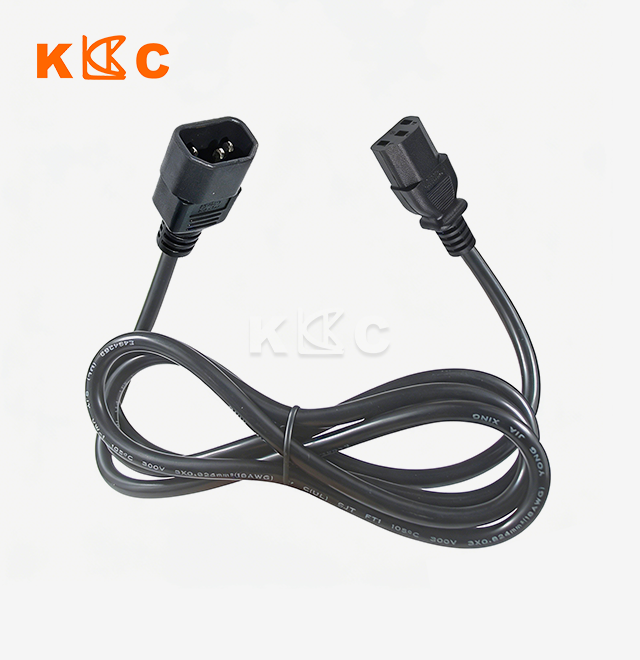
If you go to any data center, server room, or business IT building in North America, you'll notice one thing that is always the same: the black cables that connect devices to wall outlets. These aren't any power lines; they're C13 to 5-15P power cord assemblies, which are the hidden heroes of business infrastructure. Their power isn't by chance. This way of setting up cables has become the standard because it works with both North American electricity systems and foreign IT equipment standards. Standard three-prong outlets in the US can easily plug the NEMA 5-15P plug in, and the IEC C13 connection safely connects to servers, switches, and many other devices. The fact that these cords work with everything, have been tested for safety, and are built to last is why procurement professionals always choose them for mission-critical deployments.

Understanding C13 to 5-15P Power Cords: Specifications and Functionality
The technical layout of these power modules is the result of many years of improving electrical engineering. Our experience as a manufacturer at Kuncan Electronics shows us why certain design choices are important for large-scale deployments.
Core Electrical Parameters
The NEMA 5-15P plug has three metal pins: one for hot, one for neutral, and one for ground. This grounded setup is very important for keeping sensitive gadgets safe. Our lines can handle voltages from 110V to 125V AC, and they can handle currents from 10A to 15A, based on the wire gauge you choose. The 18AWG version works with normal office equipment, the 16AWG version handles heavier loads, and the 14AWG version is designed to keep voltage drop to a minimum over long wire runs in big data centers.
Material Engineering Matters
Copper wires that are very pure and don't contain any oxygen are the building blocks of reliable power transfer. This choice of material lowers the amount of electrical resistance and heat that is produced during long-term use. The flame-resistant PVC jacket meets strict UL 94 V-0 flammability standards, which means that if it comes into contact with flames, it goes out on its own in seconds. RoHS and REACH-compliant materials are used in our coats, so they don't contain dangerous chemicals like lead and cadmium that are bad for health and the environment.
Certification Landscape
UL and cUL approvals aren't just nice-to-have extras; they're required by law for business installations in the US and Canada. ETL marks offer the same kind of third-party approval. These certificates show that cable systems can survive tests with a dielectric voltage of 1500V to 2000V for one second. This makes sure that the insulation stays intact during surges. Before it is shipped, Kuncan tests every connection for 100% continuity to make sure that the wires are properly mapped between the NEMA plug and IEC socket.
Ratings for temperature are more important than many buying teams think. It comes in 60°C, 75°C, and 105°C versions. Higher temperature rates let them work in warmer places, like equipment rooms that don't have enough air flow, where the temperature may be higher than in a normal office.
Why C13 to 5-15P Power Cords Are the Preferred Choice in North American IT Environments?
This type of wire arrangement is the most popular on the market because it works so well with North American business infrastructure.
Regional Electrical Compatibility
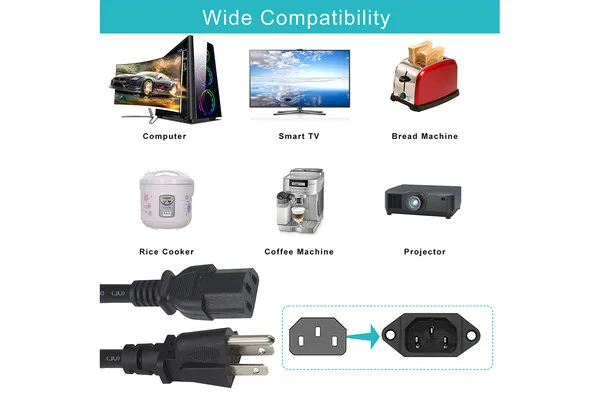
Most buildings in North America have NEMA 5-15R plugs, which are the normal three-prong outlets that provide 120V AC. At the same time, IEC 60320 connectors for equipment entry ports became common among IT makers around the world. This problem is neatly fixed by the C13 to 5-15P power cord, which gets rid of the need for bulky adapters or voltage converters. Plug-and-play compatibility cuts down on startup time and the chance of connection failures.
Proven Reliability in Demanding Environments
Conditions in data centers make it easy for bad wires to be seen right away. A lot of the time, equipment racks have dozens of computers that are making a lot of heat. Cable longevity is tested by vibrations from cooling fans, tension that builds up by mistake when techs move equipment, and thousands of connection cycles. Our improved strain relief design stops conductors from separating at termination places, which is how most cheap options fail. The molded design makes a unified plug-cable unit that can handle mechanical stress better than choices that are put together in the field.
Versatility Across Applications
These lines power more than just server rooms. They also power network switches, storage systems, PDUs (power distribution units), monitors, and lab equipment. The retention force standard for the IEC C13 link makes sure that connections are safe and won't come loose by chance. With lengths ranging from 3 feet to 15 feet and custom choices going even longer, procurement teams can get the most out of cable management while avoiding the mess that comes with too much extra cable.
Straight and curved C13 connections are two types. Right-angle versions are very useful in tight areas behind equipment racks because they let wires run smoothly without making sharp turns that put stress on the conductors. Shielded SJT jacket types cut down on electromagnetic and radio frequency radiation, which is very important in places where sensitive equipment is used, like audio production studios.
These normal connections are better from an economic point of view. Unit costs stay low even for expensive certified versions because of high volume production driven by global demand. Buying in bulk gives you even more cost savings, and the long service life—often more than five years in most installations—makes the total cost of ownership lower than cheaper options that need to be replaced more often.

Comparing C13 to 5-15P Power Cords: Which One Should You Choose?
To make choices about what to buy, you need to know the small changes between choosing the right cables and choosing the right ones.
Amperage and Wire Gauge Considerations
Physics sets the rules for the link between wire diameter and current capacity for C13 to 5-15P power cord. The electrical resistance per foot is higher for 18AWG wire that is thinner. 18AWG works well for wire runs shorter than six feet and equipment taking less than 10A. But over the same lengths, 14AWG server-grade wires lower voltage drop by about 60% compared to 18AWG cables. This is important for computers that use a lot of power, since even small drops in voltage can cause power supplies to work less efficiently or shut down without warning during peak loads.
Jacket Material Selection
Service Vacuum Thermoplastic (SVT) jackets are flexible and great for offices where wires need to go through open areas and looks are important. Service Junior Thermoplastic, or SJT, is a stronger material that protects against wear and tear. For installs near HVAC equipment where condensation might form, SJTW versions add water protection. SJTOW has oil resistance, which is useful for industrial settings where wires might come into touch with cleaners or lubricants.
Evaluating Supplier Credibility
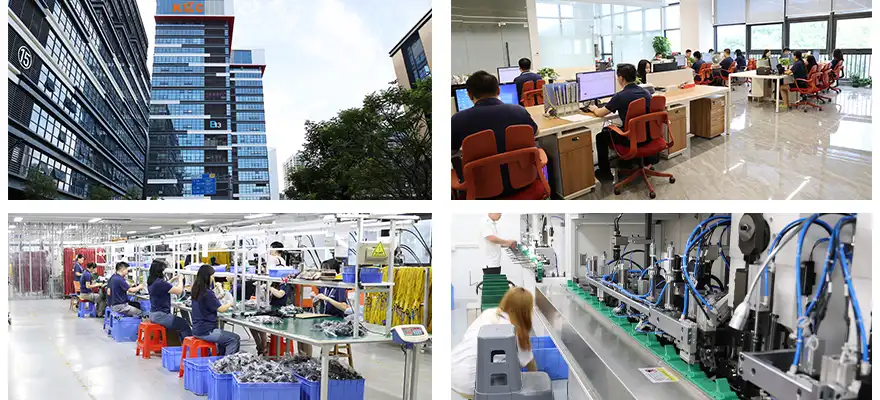
Product uniformity is strongly linked to a brand's image. Quality control is very strict for well-known brands because their images rest on it. But OEM makers with more experience, like Kuncan Electronics, can offer the same quality at lower prices by using more efficient supply lines and working directly with certified component sources. Our 17 years of experience making things shows that we are dedicated to high standards.
Some of the steps in the verification process are asking for proof of certification, checking sample units for quality of building, and making sure they meet area standards. Suppliers should make their guarantee terms clear and offer quick expert help. For big deployments, being able to change specs like jacket colors for color-coded infrastructure, custom lengths to cut down on waste, or branded printing for tracking assets is very useful.
Protocols for testing show how committed the maker is to quality. Dielectric withstand testing proves that the insulation is solid. Pull-force testing proves that the pressure reduction is good. Flexing tests are like bending processes that happen in real life. These aren't just extra steps; they keep expensive tools from breaking down in the field and stopping work.
Procurement Guide: How to Source the Best C13 to 5-15P Power Cord for Your Business Needs?
For strategic buying to work, technical needs, supplier skills, and long-term value must be carefully considered, not just the lowest unit price.
Defining Technical Requirements
Check out the current system for C13 to 5-15P power cord as a first step. Write down how much power each piece of equipment needs and measure the real current draw instead of just using the nameplate numbers. Find the external factors that affect the needed lengths, such as the temperature ranges, the amount of wetness or contaminants that the cables will be exposed to, and the routes that they can take. Regulatory standards change from place to place; for example, some cities and towns require certifications that go beyond the basic UL listing.
Supplier Evaluation Framework
How reliable deliveries are is affected by how much can be made. When infrastructure improvements need to be done quickly, suppliers with established production lines and a stock of raw materials can fill rush orders. Kuncan Electronics keeps popular configurations in stock and can also support custom orders. Sample production can be finished in three to seven days, and bulk production can be finished in fifteen to twenty-five days, based on the size of the order.
Many people don't understand how important geographic issues are. When project deadlines change, suppliers who offer a range of shipping choices, such as air freight for pressing orders, ocean freight for cost-effective bulk shipments, and rail options, are more flexible. Check that sellers keep their quality standards up to date, such as ISO 9001 for process management, which shows that they use systematic approaches to consistency instead of haphazard ways to make things.
Balancing Cost and Value
The unit price is only one part of the total cost. Think about the costs of shipping, possible customs taxes on foreign goods, and keeping an inventory on hand. Suppliers with flexible minimum order amounts keep capital from getting stuck in too much inventory and keep projects from being held up by stock-outs. The terms of a warranty transfer the risk; for example, complete coverage guards against problems with the product that are found after installation.
Sustainability issues are becoming more and more important to companies when they buy things. Durable connections that last through multiple device update processes cut down on electronic waste. RoHS compliance gets rid of harmful substances that make it harder to get rid of old electronics. Suppliers who keep records of their environmentally friendly and ethical buying methods are in line with companies' social responsibility promises.
Custom specs give you an edge over your competitors. Color-coded jackets make it easy to find things quickly in setups that aren't simple, which cuts down on the time it takes to fix problems. Custom lengths get rid of the extra cables that get in the way of movement in racks that are already crowded. Branded printing works with asset management systems, which is helpful for businesses that rent out tools or managed service providers who keep track of goods at multiple client sites.
Conclusion
The fact that C13 to 5-15P power cord connections are so common in North American IT infrastructure shows that they are the best choice for reliability, safety, and cost-effectiveness. These standard kits meet strict safety standards and connect a wide range of tools to local power grids. Long-term dependability and running costs are directly affected by technical factors such as wire gauge, jacket materials, and temperature rates. For strategic buying, you need to look at more than just unit price when considering suppliers. You should look at their manufacturing skills, certification paperwork, and ability to make changes as needed. As business infrastructure moves toward higher density and more efficient power use, choosing the right cords from reputable makers becomes more and more important for keeping equipment running and protecting it.
FAQ
What maximum amperage do standard cables support?
Standard 18AWG types can usually handle loads of 10A continuously at 125V AC. Heavy-duty 16AWG wires can handle 13A ratings, while server-grade 14AWG lines can handle 15A ratings. However, the amount of current a cable can carry relies on the temperature of the environment and how it is bundled. When multiple cables are connected together, they build up heat that lowers the safe amperage. Check the manufacturer's instructions and think about de-rating factors for certain setups.
How do I determine the appropriate cable for my equipment?
Look at the equipment's nameplates to see how much power it needs and write down the voltage and current requirements. The voltage grade of the cord should match the power source (125V is common in North America), and the wire gauge should match the amount of current being drawn. For equipment that needs more than 10A, the wires must be 14AWG or larger. Think about the length. For longer runs, thicker gauge helps keep the voltage drop as low as possible.
Can I request custom-certified cables for specialized applications?
Manufacturers with a good reputation will let you make changes, such as adding certifications for healthcare (hospital-grade with a green dot), industrial settings (oil and water proof jackets), and foreign markets (combining North American plugs with voltage ratings for global deployment). Custom orders usually have minimum quantities but give accurate details that match the needs of the particular infrastructure.
Partner with Kuncan Electronics for Enterprise-Grade Power Solutions
Kuncan Electronics is ready to help you set up your infrastructure by providing high-quality C13 to 5-15P power cord options backed by 17 years of manufacturing experience. As a trusted source and seasoned maker, we offer custom wire gauges ranging from 18AWG to 14AWG, jacket materials that meet a wide range of environmental needs, and lengths that are best for your projects. Our UL, cUL, and ETL-certified wires go through a lot of tests, such as 100% continuity checks, dielectric withstand tests, and mechanical stress checks.
Our engineering team is happy to help you with your design, whether you need standard configurations with fast shipping or custom requirements with brand printing and special jacket materials. Order numbers that are flexible can be used for both pilot projects and large-scale deployments, and samples can be made in three to seven days. You can talk to our buying experts at rhea@szkuncan.net about your needs, ask for technical information, or get cheap quotes. Find a reliable power cord provider that is dedicated to quality, safety, and quick service to make your infrastructure more reliable.
References
National Electrical Manufacturers Association. (2021). NEMA WD 6: Wiring Devices—Dimensional Specifications. Rosslyn, VA: NEMA Standards Publication.
International Electrotechnical Commission. (2018). IEC 60320-1: Appliance Couplers for Household and Similar General Purposes—Part 1: General Requirements. Geneva: IEC.
Underwriters Laboratories. (2020). UL 817: Standard for Safety Cord Sets and Power-Supply Cords. Northbrook, IL: UL Standards.
Rasmussen, N. (2019). Electrical Efficiency Measurement for Data Centers. Schneider Electric White Paper 154. West Kingston, RI: APC by Schneider Electric.
Canadian Standards Association. (2019). CSA C22.2 No. 21: Flexible Cord and Cable. Toronto, ON: CSA Group.
Telecommunications Industry Association. (2020). TIA-942-B: Telecommunications Infrastructure Standard for Data Centers. Arlington, VA: TIA.

USER EVALUATE
Here is the customer's evaluation of us
_1786083551823.webp)
_1785227726207.webp)
_1781165562395.webp)