


Why Does Extension Cord Wire Gauge Matter for Electrical Safety?
Wire gauge is one of the most consequential—yet routinely overlooked—specifications when sourcing an extension cord. The American Wire Gauge (AWG) system assigns a numerical value to conductor thickness, and that number directly governs how much current a cord can carry without overheating. Selecting the wrong gauge for a given load is a leading contributor to electrical fires in commercial and industrial facilities. Whether you are equipping a construction site, powering medical devices, or managing smart building infrastructure, matching the correct AWG rating to your application is non-negotiable for operational safety and regulatory compliance.
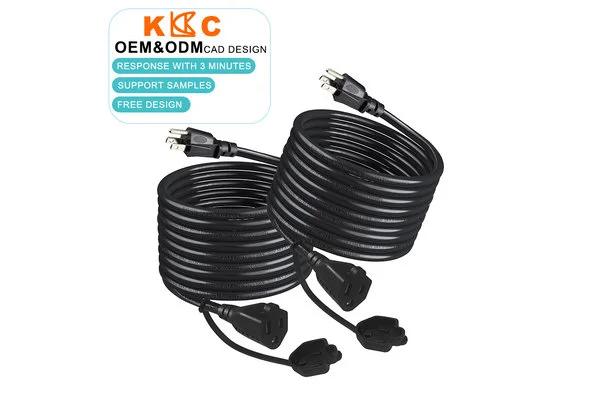
Understanding Extension Cord Wire Gauge and Its Role in Electrical Safety
What Does AWG Actually Mean—and Why Does the Number Direction Surprise People?
Most buyers think that a smaller number means a thinner conductor, but the AWG system works the opposite way. A 16 AWG wire is not nearly as thick as a 10 AWG wire, but it can carry a lot more power. Electrical resistance is lower in wires that are thicker, which means that less heat is produced when the circuit is loaded. The National Fire Protection Association (NFPA) says that about 44,000 home and building fires happen every year in the United States because of electrical fires. A lot of these fires are caused by extension cords that are not used properly or are not the right size.
When used in business and industry, the most common gauges are 10 AWG (heavy-duty, up to 30A) and 16 AWG (light-duty, good for low-wattage devices). The length of the cord changes the resistance equation. For example, a 10 AWG cord that can handle 30A at 25 feet might only be able to handle a lower current at 100 feet without causing voltage drop or heat buildup. If procurement professionals don't pay attention to this relationship, their companies could damage equipment or be sued for not following the rules.
Key Safety Risks Linked to Incorrect Extension Cord Wire Gauge
How Undersized Conductors Create Real-World Hazards
When you use a conductor that is too small for a high-draw application, it not only lowers efficiency; it also causes a thermal event. When electricity flows through a wire faster than its stated capacity, resistance heats the wire. Overheating that lasts for a long time damages insulation, causes arc faults, and in the worst cases, sets other materials on fire. According to OSHA 29 CFR 1910.305, extension cords must be approved for the job they're being used for, and NEC Article 400 sets the rules for flexible cord ampacity tables that show how to use them safely.
The less obvious danger is voltage drop. When thin wires carry heavy loads over long distances, they cause voltage sag that can be measured. This makes motors draw too much current to try to make up for it, which speeds up the wear on compressors, pumps, and CNC machines. Voltage instability can cause sensitive electronics in medical equipment to act in strange ways, which has effects that go far beyond the cost of the equipment itself.
When buying things, using cords that don't follow the rules can void equipment warranties, get businesses fined by OSHA, and put distributors at risk of product liability. Because of these risks, verifying gauges should be a first step in the buying process, not something that is done after the fact.
How to Choose the Right Extension Cord Wire Gauge for Your Business Needs
Matching AWG to Load, Distance, and Environment
There are three things that affect the choice process at the start: the amperage draw of the connected equipment, the length of the run that needs to be done, and the working surroundings. Here is a practical reference framework:
| AWG | Max Amperage | Typical Application | Max Recommended Length |
|---|---|---|---|
| 10 AWG | 30A | Heavy tools, engines, and RV shore power | 100ft |
| 12 AWG | 20A | Power tools and workshop equipment | 50–100ft |
| 14 AWG | 15A | General commercial appliances | 25–50ft |
| 16 AWG | 13A | Light-duty office equipment | Up to 25ft |
Cumulative resistance makes the useful current capacity go down as the run length goes up. According to a general rule in the industry, you should move up one gauge for every 50 feet of extra cord length over 25 feet.
The weather can also affect your choice of jacket for an extension cord. Jackets that are labeled SJTW or STW and provide UV protection, moisture resistance, and protection against mechanical damage are needed for outdoor use. An extension cord with these jacket ratings can provide better durability when exposed to changing weather conditions. Jackets with the SJT rating are generally intended for indoor use, where they offer flexibility and cost-effectiveness. An extension cord rated for temperatures as low as –40°C can remain flexible and maintain effective insulation in extremely cold environments, such as industrial automation settings or outdoor winter setups. This is important because standard PVC can become hard and crack under these conditions, reducing the durability and safety of the extension cord.
Comparing Wire Gauge Types and Materials: Copper vs. Aluminum
Why Conductor Material Is as Critical as Gauge Number
Every performance and safety measure that a gauge grade claims is based on the conductor material. Copper and aluminum are the two real choices, and there is a big difference in how well they work in real life.
| Criteria | Copper | Aluminum |
|---|---|---|
| Electrical Conductivity | ~60% higher than aluminum | Baseline reference |
| Heat Dissipation | Superior | Inferior under equal load |
| Oxidation Resistance | Excellent | Prone to surface oxidation |
| Mechanical Flexibility | High (Class K/M stranding) | More brittle, less flexible |
| Long-Term Reliability | Proven in industrial standards | Requires de-rating for safety |
| Cost | Higher upfront | Lower upfront |
A very misleading risk comes from copper-clad aluminum (CCA) conductors. CCA wires have a copper layer on top of an aluminum core. They are cheaper at first, but those savings are quickly lost when you consider that they have higher resistance, make more heat, and last less long. Only 100% bare stranded copper wires are used by reputable producers who care about real performance.
Every heavy-duty power extension cord that Kuncan Electronics ships is manufactured with 100% bare stranded copper conductors. Our 10 AWG extension cord products with a 30A rating are subjected to 100% electrical testing before shipment. We never use CCA conductors as a substitute, even when doing so could reduce production costs, because building long-term client trust is more important than maximizing short-term profits. By using high-quality copper conductors and strict testing procedures, Kuncan Electronics aims to provide every extension cord with reliable electrical performance, durability, and consistent quality for demanding applications.
Best Practices and Safety Tips for Handling and Purchasing Extension Cords
Criteria Every Procurement Manager Should Verify Before Signing a PO
Selecting a certified supplier with verifiable testing records matters as much as choosing the correct specification. Here are the core criteria that protect your procurement decisions:
- Certification Verification: Check the cord for UL, cUL, ETL, or CSA markings and ask for test records. Under the NEC and OSHA systems, certifications from groups that aren't recognized carry no enforcement weight. All of Kuncan Electronics' products are listed with UL, cUL, ETL, and CSA.
- Conductor Authenticity: Ask for material test reports confirming 100% copper content. CCA substitution is common in underpriced product tiers and is a primary source of field failures. Only materials that are RoHS- and REACH-compliant are used in our ISO-compliant facilities.
- Jacket Rating Alignment: Match the type of jacket to the operation area. SJTW and STW jackets handle UV rays, water, and temperatures as low as –40°C. SJT is suitable for indoor use only. Using an indoor-rated cord outside speeds up insulation loss and increases ground strike risk.
- Custom Length Procurement: Standard store lengths don't always work with industrial wire runs. By buying cords in application-specific lengths, you eliminate daisy-chaining—a practice that increases resistance, breaks ground consistency, and violates most workplace safety codes.
Together, these practices lower field incident rates, protect warranties on connected equipment, and simplify regulatory audit compliance. Kuncan Electronics supports custom lengths from 6ft to 100ft, vibrant jacket colors including Safety Orange and Safety Yellow, and logo printing for private-label distribution.
Conclusion
Choosing the right wire gauge is one of the most important parts of making sure that a power extension cord is safe and reliable. If you choose the wrong AWG, even for a short period, you run the risk of thermal problems, regulatory issues, and device damage that can build up over time. Selecting the correct gauge, using real copper conductors, choosing the right jacket rating, and verifying applicable certifications can turn a low-cost extension cord purchase into a long-term operational asset for your business. Every component of an extension cord is designed to help protect people and equipment while supporting reliable business continuity. By paying attention to these specifications, businesses can ensure that each extension cord delivers the safety, durability, and electrical performance required for long-term use.
FAQ
Can I use a thinner gauge cord for a short duration to power high-draw equipment?
Even a short time of heavy load use of a conductor that is too small creates too much heat. When there is a steady overcurrent, insulation can start to break down within minutes. Short-term use does not eliminate thermal risk—it simply compresses the timeline of potential failure.
How do I verify a cord's AWG is adequate for my equipment?
Find the equipment's nameplate and look for the wattage or amperage number. To find the amperage draw, divide the wattage by the voltage (120V in North America). Compare that draw to the AWG ampacity table, taking into account the length of the cord you need. Always select a gauge rated above your calculated load.
Are outdoor and indoor extension cords different in gauge requirements?
The AWG number reflects current capacity and applies equally indoors and outdoors. The main difference for outdoor use is the jacket type. SJTW or STW jackets offer UV protection, moisture barriers, and low-temperature flexibility that SJT indoor cords do not. Also, outdoor wire runs tend to be longer, which may warrant stepping up one gauge increment.
What does NEMA 5-15 mean on a cord specification?
NEMA 5-15 defines the plug and receptacle configuration: a grounded, 15A, 125V interface with two parallel blades and one ground pin. It is the standard North American household and commercial outlet format, ensuring broad compatibility with equipment designed for the U.S. market.
Partner with Kuncan Electronics for Certified Extension Cord Solutions
Kuncan Electronics brings 17 years of verified manufacturing expertise to every heavy-duty extension cord we produce. As a trusted extension cord manufacturer serving North American distributors and retailers, we deliver UL/cUL-certified, fully customizable power cords built to your exact specifications. Reach our team directly at rhea@szkuncan.net or visit nema5-15.com to request a custom quote or explore our full product catalog. Let's build a supply chain that performs.

References
1. National Fire Protection Association (NFPA). NFPA 70: National Electrical Code (NEC). 2023.
2. Occupational Safety and Health Administration (OSHA). 29 CFR 1910.305: Wiring Methods, Components, and Equipment for General Use. U.S. Department of Labor, 2022.
3. Underwriters Laboratories (UL). UL 817: Standard for Cord Sets and Power-Supply Cords. 2023.
4. National Fire Protection Association (NFPA). Home Structure Fires Report. NFPA Research, 2022.
5. American National Standards Institute (ANSI) / National Electrical Manufacturers Association (NEMA). ANSI/NEMA WD 6: Wiring Devices—Dimensional Requirements. 2021.
6. Consumer Product Safety Commission (CPSC). Extension Cords and Surge Protectors: Safety Information. U.S. CPSC Publication, 2021.

USER EVALUATE
Here is the customer's evaluation of us