
2-Way Cigarette Lighter Y Cable Splitter Uses and Safety Tips
Too many gadgets trying to use the same few power outlets is becoming a bigger problem in modern cars. A 2-way cigarette lighter splitter (Y-cable) solves this problem by using a flexible parallel circuit design to turn your car's single 12V power socket into two separate outlets. This simple but necessary add-on lets drivers, fleet managers, and business operators charge phones, dash cams, GPS units, and diagnostic tools all at the same time, without affecting their safety or usefulness. Knowing the right way to use it and following safety rules will make sure that it works well in automobile, industrial, and fleet settings and will also protect your car's electrical system.
What is a 2-Way Cigarette Lighter Y Cable Splitter and How Does It Work?
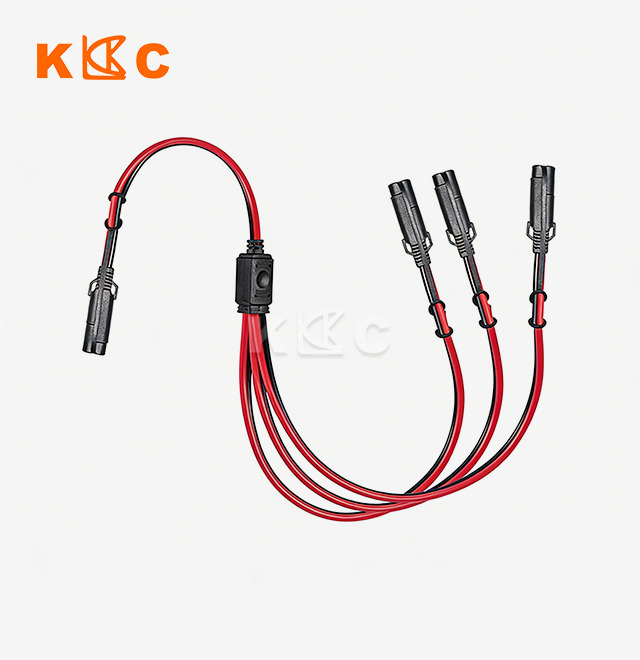
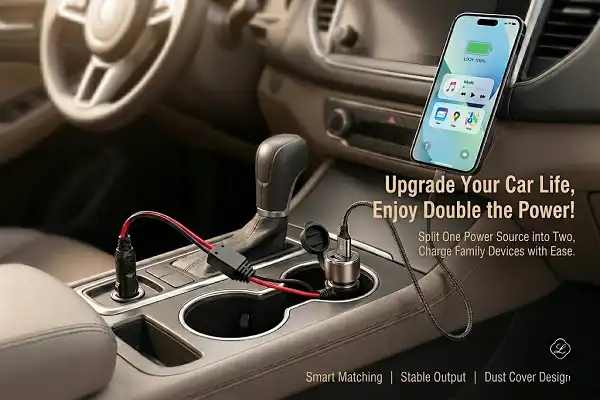
A 2-way cigarette lighter splitter (Y-cable) turns a single cigarette lighter plug into two working outlets, so that more than one device can be used at the same time. The 2-way cigarette lighter splitter (Y-cable) design allows for more fluid placement and less stress on your vehicle's main power port compared to rigid block-style adapters that make your panel more cluttered and put mechanical stress on it.
Internal Electrical Architecture
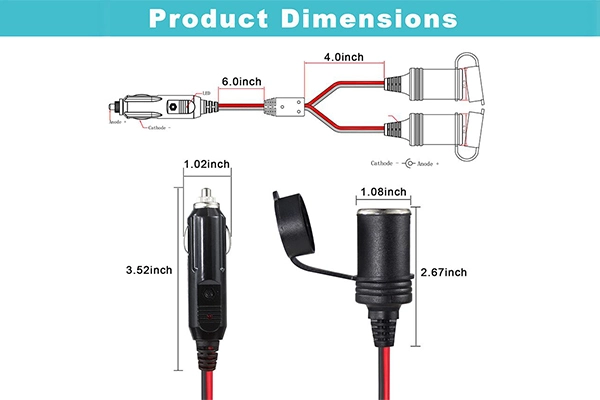
The 2-way cigarette lighter splitter (Y-cable) operates through a parallel circuit configuration where electrical current flows from the vehicle's 12V system through the male plug, splitting into two independent channels at the junction point. Each output socket gets the same voltage, so gadgets that are attached can all use power at the same time without any problems. High-quality 2-way cigarette lighter splitters (Y-cables) use 16AWG or 18AWG oxygen-free copper wire to keep voltage drops to a minimum. This way, power transmission stays steady even when the load is at its highest. Nickel-plated contacts keep conductivity stable over thousands of insertion cycles, which is important for business uses that need to be reliable for a long time.
Essential Safety Components
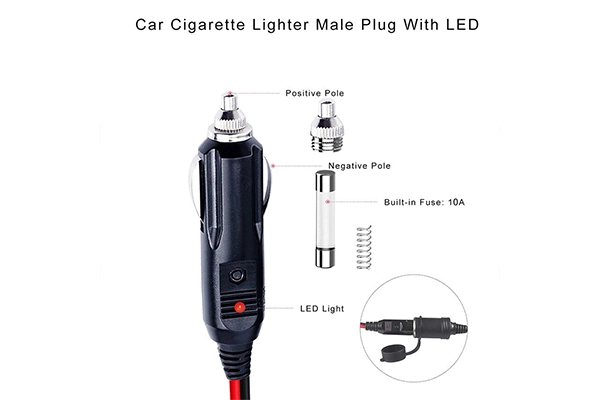
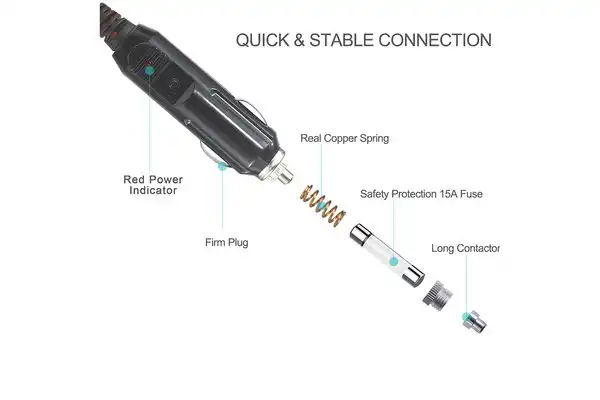
The right way to build a 2-way cigarette lighter splitter (Y-cable) includes several safety features. A fuse that can be changed inside the male plug is the main safety feature against overcurrent and short circuits. When the total amperage goes over the maximum capacity, which is usually 10A for normal car uses, the fuse stops the flow of power. This keeps the wire harness and devices attached to it from getting too hot and damaging them. With polarity signs and proper grounding connections, you can avoid reverse voltage situations that could harm sensitive electronics like GPS or smartphones.
Performance Advantages Over Single-Port Solutions
When it comes to operations, 2-way cigarette lighter splitters (Y-cables) are better than single-outlet designs. Fleet management procurement pros like that drivers don't have to switch devices during operations, which cuts down on driver distractions and speeds up work. The flexible cable design—which usually comes in 30cm or 50cm lengths—allows socket placement away from gear shifts, climate controls, and other panel elements, so the cable doesn't get disconnected by chance while the car is running. This design works especially well in business cars and other heavy machinery with small dashboards that need to meet rising power needs.
Practical Uses and Benefits of a 2-Way Cigarette Lighter Splitter
Knowing about different application cases helps procurement teams choose the right power distribution options for a range of operational needs.
Automotive and Fleet Applications
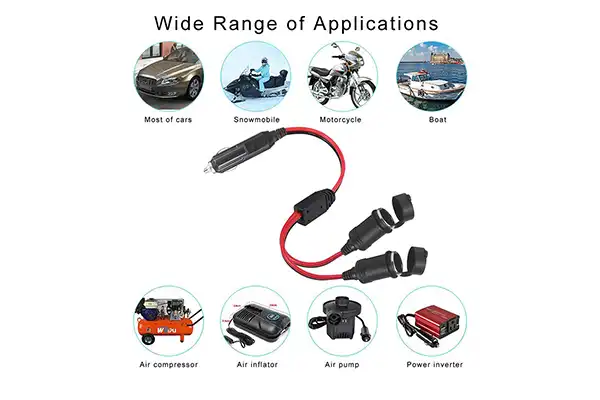
Commercial fleet owners use 2-way cigarette lighter splitters (Y-cables) to power Electronic Logging Devices (ELDs) that are required by Department of Transportation rules while also keeping driver contact devices charged. This setup gets rid of the need for pricey wiring installs, which lowers the initial costs and speeds up the installation process. Professional cab and rideshare drivers use high-definition dash cams for security recording and phone guidance apps to make sure they can keep providing service without worrying about the battery dying. The 2-way cigarette lighter splitter (Y-cable) takes both loads at the same time, with a total draw of 3 to 5A, which is well below the 10A rating.
Overlanding drivers and people who like to use recreational vehicles power portable freezers along with air fans or extra lighting systems. The flexible wire design is better at handling vibrations and rough terrain than rigid options, so links stay strong while traveling off-road. Corrosion-resistant contact materials are useful in marine applications because they let boaters connect fish finders and GPS units at the same time in wet saltwater settings.
Industrial and Diagnostic Equipment
Maintenance workers use 2-way cigarette lighter splitters (Y-cables) in vehicles to run diagnostic scan tools and charge tablets that show how to fix things. This two-in-one design makes work easier in service bays where normal AC outlets might require long cords that could be a trip danger. Heavy machinery workers in the farming and building industries charge mobile phones and communication radios at the same time. This way, they can stay connected on remote job sites without having to rely on equipment batteries that need to be replaced every so often.
Voltage and Amperage Compatibility Considerations
Most car electrical systems work at 12V DC, but the voltage can be anywhere from 11.8V to 14.4V based on how the engine is running and how much power the generator is putting out. Good 2-way cigarette lighter splitters (Y-cables) can handle this power range without losing any function. To plan for critical amperage, you need to know how much power each device uses. For example, smartphone chargers usually use 2 to 3A, dash cams use 1 to 2A when they're recording, and portable coolers may need 4 to 5A when the compressor is running. Managers of procurement must make sure that the total connected load stays below the 2-way cigarette lighter splitter (Y-cable) highest rated capacity. If it goes over this limit, the fuse will trip or, in poorly designed units, the heat could damage the wiring insulation and electrical parts of the car.
Most light passenger vehicles can handle up to 10A at the accessory socket. Heavy-duty cars and industrial vehicles, on the other hand, may be able to handle up to 15A, based on the circuit breaker's specs. Matching the 2-way cigarette lighter splitter (Y-cable) capacity to the capabilities of the car and the needs of the connected devices stops operating failures and increases the service life of parts across the fleet.
Safety Tips and Troubleshooting for 2-Way Cigarette Lighter Y Cable Splitters
In industrial and business settings, things need to work reliably, which means following safety rules and doing regular upkeep.
Critical Safety Guidelines
Choosing the right switch is the most important thing you can do to protect yourself from electrical dangers. Depending on the type of car and the manufacturer's instructions, utility circuits usually have 10A, 15A, or 20A fuses. The built-in fuse in the 2-way cigarette lighter splitter (Y-cable) should match or slightly exceed the total load that is expected while staying below the circuit capacity of the car. Putting in a fuse that is too big for the circuit breaks the overcurrent safety. This could let the wire insulation get too hot before the circuit is interrupted.
To avoid overloading, you need to figure out the total gadget amperage before you add multiple tools. As the total draw gets close to the rating limit, load-share between different car circuits or limit the number of devices that can be used at the same time. Cable insulation wears down over time from rubbing against panel parts or being exposed to high temperatures, especially in parking lots without shade where temperatures can reach over 140°F (60°C). If you see cracks in the insulation, uncovered copper wires, or discoloration that shows heat stress, you should replace the 2-way cigarette lighter splitters (Y-cables).
Common Operational Issues and Solutions
Contacts in the male plug or female sockets that have become damaged often cause power to cut out and on. Take off the 2-way cigarette lighter splitter (Y-cable) and use an electrical contact cleaner and a soft brush to clean the contact surfaces. This will get rid of the rust that raises resistance and voltage drop. If the center contacts are bent or twisted, they might not join properly. To fix this, carefully change the spring tension with needle-nose pliers.
Fuse failures are usually caused by either too much power or vibrations that cause the machine to break. Before changing the switch, make sure that the total amperage of all the devices that are attached stays within the limits. If the fuse keeps blowing, it means there are underlying electrical problems that need to be checked out by a professional on the vehicle's auxiliary circuit. It's important to make sure the male plug fits fully into the car socket until the spring-loaded retention device engages with a click. Loose connections cause heat buildup and voltage instability.
Installation and Maintenance Best Practices
Keep the wires away from parts that move, like the pedals, gear shift handles, and slide seat mechanisms. Instead of letting loops hang loosely, where they could catch on things or get in the way of the vehicle's operation, use sticky cable clips to secure any extra cable length. Don't run wires along the sharp sides of the dashboard or through door jambs, where the insulation will get damaged by repeated compression. Regular inspections—three times a year is suggested for business fleets—find problems as they start to happen before they become total failures that stop operations.
Taking care of connectors the right way greatly increases their service life. Instead of pulling on the wire, hold on to the plug body when inserting and removing it. This will keep the internal solder joints from getting stressed. Keep 2-way cigarette lighter splitters (Y-cables) that aren't being used in protective cases or sections that are out of direct sunlight and high temperatures. Both of these things break down insulation faster and make the parts less flexible.
How to Select and Purchase the Best 2-Way Cigarette Lighter Splitter for Your Business Needs?
Technical specs, quality certifications, and the total cost of ownership should all be taken into account when making a purchase choice.
Quality Evaluation Criteria
How the material is made has a direct effect on how long it lasts and how durable it is. When it comes to fire safety, heavy-duty PVC injection molding that meets UL94 V-0 standards is better than basic plastics housings. Reinforced strain relief at cable entry points, especially SR molding that encloses the joint between the housing and wire, stops the most common failure mode, in which the conductor breaks from repeated bends. The wire gauge determines how much current it can carry and how much voltage it drops. 16AWG copper wiring works better than 18AWG options in high-current situations and keeps the voltage stable under extended load.
The amperage values must match or go beyond what is expected to be used. Standard 10A 2-way cigarette lighter splitters (Y-cables) work well for light-duty tasks. For big machinery and industrial trucks, 15A or 20A rated units are better because they can handle devices with higher current needs, like portable power tools or extra heating elements. Safety certifications like UL, ETL, CE, and RoHS compliance show that electrical safety standards and environmental rules have been checked by a third party. This makes fleet owners and corporate buying departments less worried about liability.
Market Options and Brand Comparisons
Built-in fuse safety is common practice among good makers of 2-way cigarette lighter splitter (Y-cable), and it protects against overcurrent. Hybrid types that are USB-compatible have both car lighter plugs and USB ports, so you can charge your current devices without having to buy separate charging adapters. This freedom is useful in mixed-fleet situations where drivers use their own smartphones along with company-issued computers or other communication gear.
Brands that have been around for a while offer stable quality through improved production methods and strict testing procedures. Electrical performance validation tests include measuring voltage drop under full load, checking mechanical stability with thousands of joining cycles, and checking temperature rise during continuous maximum-current operation. These thorough test processes make sure that the system will work reliably in a wide range of situations, from cold starts in the Arctic to heat exposure in the desert.
Procurement Channels and OEM Customization
Industrial buyers and fleet managers can get better deals and private marking services from specialized car power accessory makers that offer volume discounts, custom wire lengths, and inline fuse choices. OEM partnerships make it possible to specify specific needs, such as using special wire materials like TPE for more flexibility or LSZH compounds to lower the release of harmful fumes in protected areas. Wholesale providers offer the technical help needed to match 2-way cigarette lighter splitter (Y-cable) specs to specific car platforms and practical needs. This cuts down on the costs of buying things by trial and error.
Buying in bulk can save you a lot of money and make sure that the standard of the products is the same across all of your fleet operations. Different manufacturers have different minimum order amounts, but specialized B2B suppliers can usually handle smaller initial orders so that you can see how well their products work before committing to larger inventory purchases. Setting up favorite vendor relationships makes it easier to reorder and makes sure that products are available during supply chain breakdowns that happen from time to time in the car accessory market.
Best Practices for Optimizing Performance and Ensuring Long-Term Reliability
To get the most out of your operations, you need to handle loads strategically and choose products that are right for the surroundings.
Power Load Distribution Strategies
Power should be evenly spread across all available channels in order for complex car electrical systems to work well. Instead of putting all of your extra loads on one 2-way cigarette lighter splitter (Y-cable), spread your high-draw devices across as many power outlets as you can in your car. This method keeps voltage levels at the best level for sensitive electronics, lowers the amount of voltage drop, and lowers the temperature stress on individual circuit components. Use the formula VD = (2 × L × I × R) / 1000 to find the voltage drop. Here, L is the length of the line in feet, I is the current in amps, and R is the resistance per 1000 feet for the wire size used. Keeping the voltage drop below 0.5V keeps devices compatible and stops problems with how they work.
Verifying device suitability stops operations from going wrong. Make sure that all of the items you connect work with 12V DC, and don't use normal 2-way cigarette lighter splitters (Y-cables) that don't have the right power conditioning to connect inverters or devices that need modified sine wave AC power. Sequencing device starting during engine operation instead of key-on/engine-off conditions lowers the inrush current demands on the vehicle battery. This is especially important for items that draw a lot of current, like portable coolers with motorized compressors.
Durability Considerations for Demanding Environments
For industrial uses that involve dust, moisture, high temperatures, and chemical fumes, safety standards need to be tightened. Standard automotive-grade 2-way cigarette lighter splitters (Y-cables) work effectively between -4°F and +80°C (-20°C to 176°F), which is warm enough for use in passenger vehicles. Industrial and outdoor gear may have to work in harsher conditions, so they need special units that can handle temperatures ranging from -40°C to +85°C (-40°F to 185°F) and have sealed ports that offer IP65 or IP67 protection against dust and water getting in.
The choice of covering material for cables affects how long they last in certain environments. PVC compounds work well for many things and are inexpensive. TPE compounds are more flexible at low temperatures and better at resisting oils and hydraulic fluids that are common in heavy machine settings. LSZH insulation lowers the release of harmful fumes during thermal events, which is useful for protected operator cabs and passenger cars where safety is the most important thing.
| Material | Characteristics & Benefits | Recommended Applications |
| Heavy-Duty PVC | Cost-effective, standard durability, UL94 V-0 flame retardant. | Standard passenger vehicles, light commercial fleets. |
| TPE | High low-temperature flexibility, excellent oil & hydraulic fluid resistance. | Heavy machinery, agricultural equipment, cold-weather operations. |
| LSZH | Low Smoke Zero Halogen, minimal toxic fumes during thermal events. | Enclosed operator cabs, passenger transit, confined industrial spaces. |
Emerging Technologies and Future-Proof Solutions
More and more current multi-port power solutions use USB-C Power Delivery technology, which supports fast-charging protocols up to 100W output. This makes them compatible with laptops, tablets, and smartphones that need more power than USB-A ports can provide. Intelligent current distribution in smart 2-way cigarette lighter splitters (Y-cables) distribute available amperage among linked devices instantly based on real-time demand. This prevents overloading and maximizes charging efficiency.
Connected power accessories that send usage data to central tracking systems, such as trends of power use, device link events, and electrical fault situations, are starting to work with fleet management platforms. This data lets predictive maintenance plans find worn-out parts before they completely stop working, which stops activities. When procurement teams are thinking about long-term strategies for electrifying vehicles, they should give more weight to vendors who can show innovation roadmaps that are in line with how automotive electrical designs are changing and making sure that their products will work with next-generation vehicle platforms and practical needs.
Conclusion
Problems with distributing power to vehicles need safe, reliable solutions that strike a mix between operating flexibility and electrical system protection. A 2-way cigarette lighter splitter (Y-cable) gives you two outlets, which is important for modern cars, fleets, and factories. It doesn't need any lasting electrical changes or complicated installation steps. If you choose the right one based on amperage ability, material quality, and safety standards, it will work reliably in a wide range of situations. Following safety rules, such as checking the fuse protection, figuring out the load, and doing regular repair checks, keeps electrical dangers away and extends the life of parts. More and more business and personal vehicles are equipped with electronics. To keep operations running smoothly and protect equipment, it's important to buy quality power distribution tools in a planned way.

FAQ
Can I safely use a dual-socket power splitter in heavy-duty trucks and commercial vehicles?
When compared to passenger cars, heavy-duty vehicles usually have more reliable electrical systems with higher amperage capacities at extra plugs. Check your car's cigarette lighter circuit rating, which can be found in the owner's manual or on the label of the fuse panel, and choose a 2-way cigarette lighter splitter (Y-cable) that can handle the right amount of power. When paired with the right rated 2-way cigarette lighter splitters (Y-cables), commercial cars may be able to handle 15-20A circuits, which means that higher-draw devices like portable power tools or extra heating elements can be used.
What maximum amperage can I safely draw through a standard automotive power splitter?
Most accessory plugs in cars can handle up to 10A, but the real current relies on the value of the car's circuit fuse. Good 2-way cigarette lighter splitters (Y-cables) have 10A internal fuses that cut power off automatically if the total draw of all the devices attached goes over safe limits. Find out each device's current, which is usually written on the label or in the user manual, and make sure the total load stays below the recommended limit to keep the fuse from blowing or the electrical system from getting damaged.
How do I verify device compatibility before connecting accessories to my splitter?
Make sure all of the gadgets you're looking at state they can work with 12V DC and list their power needs clearly. Don't connect AC-powered gadgets or transformers unless the 2-way cigarette lighter splitter (Y-cable) says it can handle them. Make sure the polarity of the connection fits the standards for cars, with the center contact being positive and the outer shell being ground. If you're not sure if two devices will work together, check the device's paperwork or call the manufacturer's technical support to avoid damaging the devices or putting yourself at risk of electrical shock.
Partner with a Trusted 2-Way Cigarette Lighter Splitter Manufacturer
Kuncan Electronics has been a specialist in car power connectivity solutions for 17 years and serves B2B clients around the world by proving their manufacturing quality. Our business-grade 2-way cigarette lighter splitters (Y-cables) come with 16AWG oxygen-free copper wire, strengthened SR strain relief, and thorough testing that includes more than 3,000 mating cycles and a 10kgf pull force. We have ETL, CE, RoHS, and other foreign standards that make sure our products are safe for use in all markets. Our engineering team offers free OEM customization, which includes choosing the right inline fuse and wire length and private marking that fits your brand's needs. We work as an extension of your procurement team by delivering samples in 3–7 days, letting you choose how to pay for bulk orders, and giving you personal technology support. You can email our solutions experts at rhea@szkuncan.net to talk about bulk pricing, custom specs, and how our focus on quality ensures measurable value for fleet operators and industrial producers who need reliable power distribution for vehicles.
References
National Highway Traffic Safety Administration. (2021). Vehicle Electrical System Safety Standards and Guidelines. U.S. Department of Transportation.
Society of Automotive Engineers International. (2020). SAE J563: 12 Volt Cigarette Lighter Accessory Receptacles. SAE Technical Standards Board.
Anderson, M. & Thompson, R. (2022). Automotive Electrical Systems: Design, Testing, and Safety Protocols. Industrial Press Inc.
International Electrotechnical Commission. (2019). IEC 60950-1: Safety of Information Technology Equipment Including Electrical Business Equipment. IEC Standards Publications.
Fleet Maintenance Magazine. (2023). Best Practices for Commercial Vehicle Electrical Accessory Management. Bobit Business Media.
Underwriters Laboratories. (2020). UL 2089: Standard for Safety for Vehicle Battery Adapters. UL Standards & Engagement.

USER EVALUATE
Here is the customer's evaluation of us
_1785227726207.webp)