
5 Essential Tips for Choosing the Right Europe Power Cord
It's not enough to just match the plug to the socket when choosing the right Europe power cord. It takes knowing the local electricity standards, making sure the safety certifications are correct, judging the sturdiness of the materials, figuring out how reliable the suppliers are, and planning how to get the things you need quickly and easily. These five important tips will help you make the right decisions when you're looking for extension cords for store sales, industrial machinery, or business office settings. This guide explains important safety features like VDE certification and IP44 weatherproofing, walks you through plug configurations like CEE 7/7 Schuko and Europlug, and gives you useful tips on choosing the right cord length, checking the quality of the conductors, and judging suppliers, so you can make confident and well-informed buying decisions.
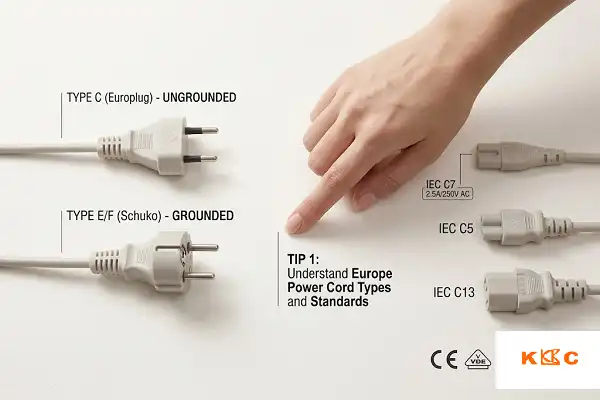
Tip 1 – Understand Europe Power Cord Types and Standards
Recognizing Common European Plug Configurations
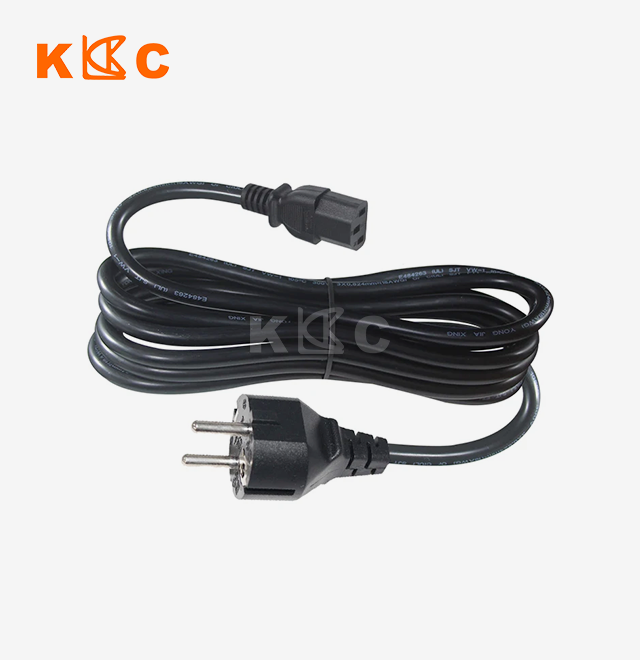
Several standard plug types are used for electrical connections in Europe. Each plug type is made for a different purpose and power need. In Germany, Austria, and nearby areas, the CEE 7/7 Schuko plug is the most common type for high-power uses. It has side grounding clips and a deep socket design. This sturdy setup can handle 16A at 250V, so it can be used for office tools, kitchen machines, and industrial tools. The CEE 7/16 Europlug has a thinner, two-pin form that is not grounded. It is rated for 2.5A and is usually used for low-power devices like phone charges and small gadgets. By knowing these differences, buying teams can avoid problems with consistency that could slow down projects or put people in danger.
Europe's Unified Voltage and Frequency Standards
The standard for electricity in continental Europe is 230V at 50Hz, which makes it easier to move equipment across borders. This level of regularity is very different from the 120V systems that are common in North America, which means that foreign equipment needs voltage adapters. When looking for power extension options, making sure that the cords you buy meet the 230V standard keeps your equipment from breaking and makes sure you're following the rules in your area. The frequency specification is just as important—devices made to work on 60Hz networks may not work as well or get too hot when used on 50Hz networks, so it's important to check the specifications carefully when buying something.
Comparing European, UK, and USA Power Cord Standards
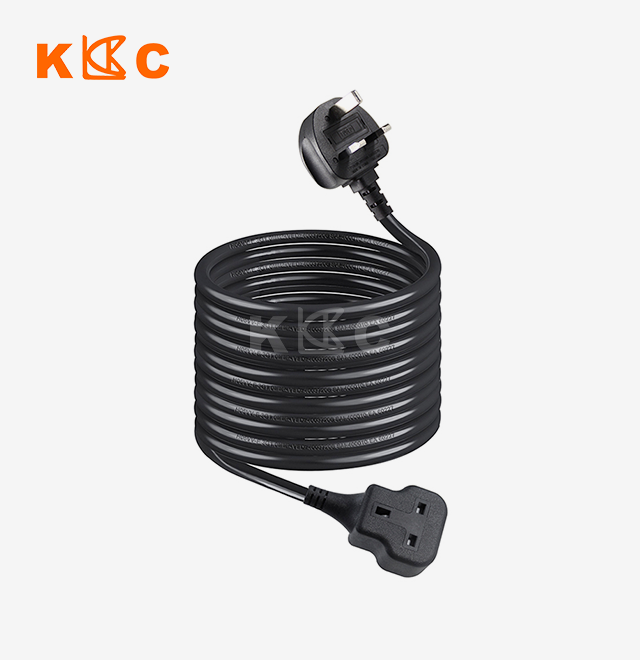
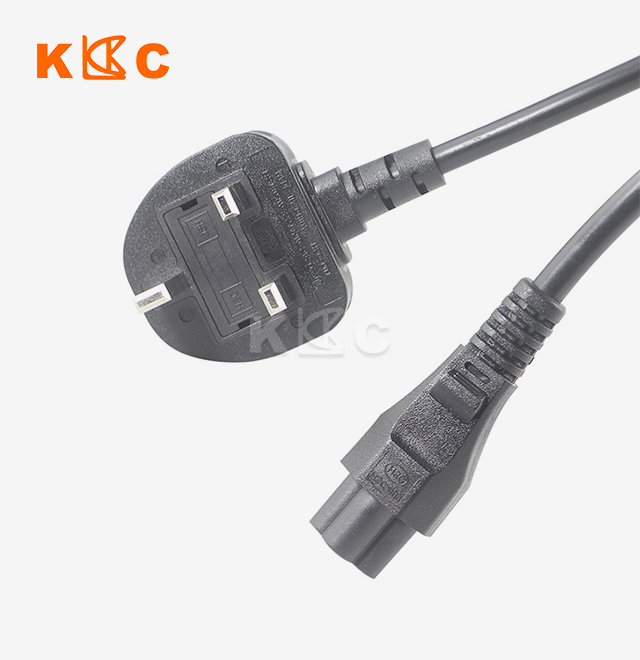
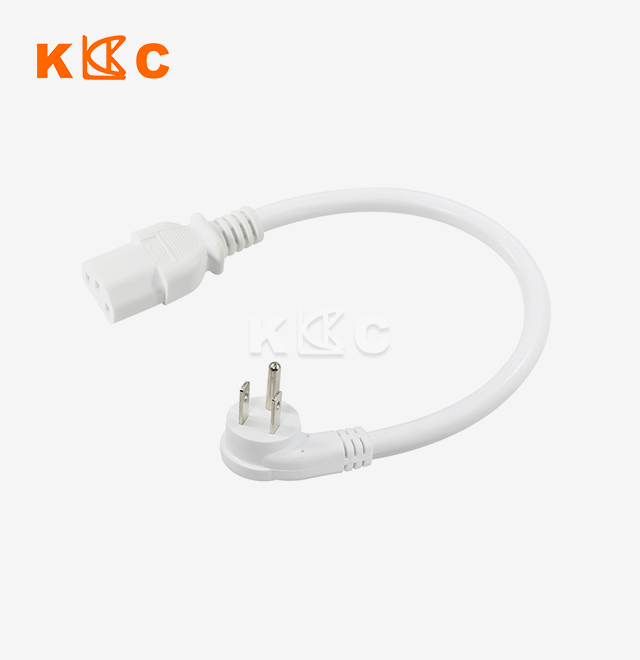
Not only do voltage levels vary by region, but so do plug shapes, grounding systems, and safety standards. UK power lines have a rectangular shape with three pins that is not suitable with plugs in Continental Europe, even though the voltage values are the same. For use in Europe, wires made in the USA have NEMA configurations that work at 120V, so they need to be physically adapted and the voltage must be changed. In the same way, safety standards are different. For example, cords in Europe need to be marked with CE and often VDE or GS certification, goods in the UK need to be approved by UKCA, and equipment in the US needs to be listed with UL. These differences make it harder for global companies to buy things, which shows how important it is to have buying methods that are tailored to each area.
The Importance of CE and VDE Certification
Having a CE mark on something means it meets EU standards for health, safety, and environmental protection. This is required by law before it can be sold in the EU. Verband der Elektrotechnik in Germany gives VDE approval, which means that the product has been tested by a third party to make sure it is safe to use electrically, lasts a long time mechanically, and works well in hot or cold conditions. The GS (Geprüfte Sicherheit) marks give you even more peace of mind because they show that the product has been tested independently against German safety standards. These licenses give buyers peace of mind that the products they're buying are safe, protect procurement teams from legal risks, and make sure that goods get through customs. When looking at European power extension options, it should be a must to check that the right approval paperwork is present.

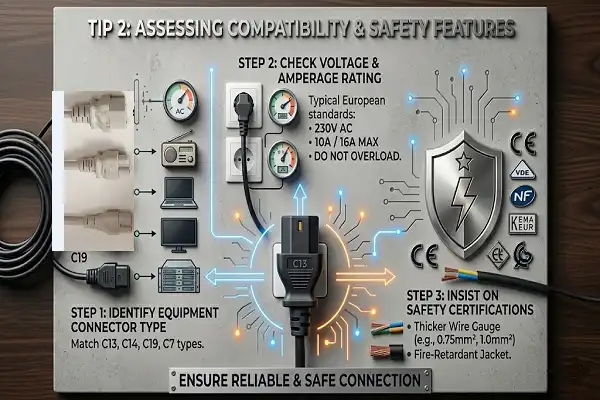
Tip 2 – Assess Compatibility and Safety Features
Matching Power Cords to Device Specifications
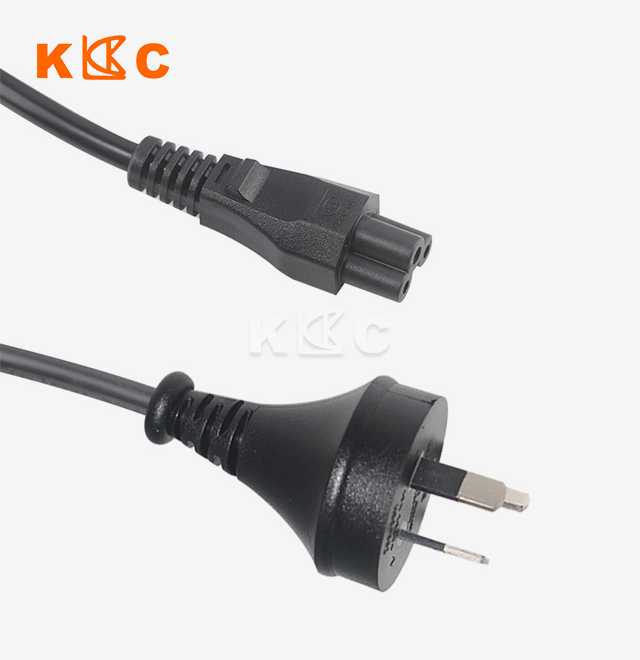
To choose the right Europe power cord, you should first do a thorough technical analysis of your tool needs. Check to see what kind of plug is needed, such as CEE 7/7 for grounded high-power devices or CEE 7/16 for low-power uses. Check the power number to make sure that your cord can safely handle the device's highest current draw. Check the power specs to make sure it works with 230V, and look over the appliance coupler standard (usually IEC 60320 C13 or C5) to make sure it fits right with your gear. Pay close attention to the grounding requirements. Class I devices with visible metal parts need to be connected to a grounded source, but Class II devices with double insulation can work safely with ungrounded Europlugs.
Essential Safety Features for Professional Applications
There are more safety features built into high-quality European extension cords than just basic protection. Overcurrent safety is provided by built-in breakers that cut off power instantly when the current goes over safe limits. High-quality insulation materials don't break down when heated, so they keep their insulating power even when they're under a constant load. Child safety guards in plug outlets keep kids from touching live wires by mistake, meeting safety standards for both public and private places. Weatherproof designs with an IP44 rating keep out water in outdoor settings, and thick jackets keep out wear and tear in harsh industrial settings.
Our VDE-certified extension options at Kuncan Electronics come with these important safety features built in as standard. Before being packed, every cord is put through a full set of electrical tests to make sure it works properly and is continuity, insulation resistance, and earth bonding. The H05VV-F indoor cables have PVC insulation that works well in controlled settings. The H07RN-F rubber cables, on the other hand, stay flexible and safe in tough outdoor circumstances. Additional child safety screens are available as an option and improve security in both store and home settings, meeting the safety needs of a wide range of market groups.
Real-World Consequences of Improper Selection
Compatibility problems in business-to-business (B2B) processes cause real risks and costs. Recently, workers at a European data center damaged equipment by plugging 16A-rated servers into 10A-rated extension cords. This caused the servers to overheat and the insulation to fail. Using indoor-rated PVC wires outside in the winter, when it was cold, led to accidents on construction sites because the jackets cracked and the conductors were uncovered. When medical facilities use cords that aren't made for medical use with patient care tools and don't meet strict leaking current standards, they are breaking the law. These examples show why every purchase choice needs to be based on a full technical review. This protects both the investments in tools and the safety of the people who use it.
Tip 3 – Choose Durable Materials and Optimal Length for Your Application
Understanding Conductor Quality and Wire Gauge
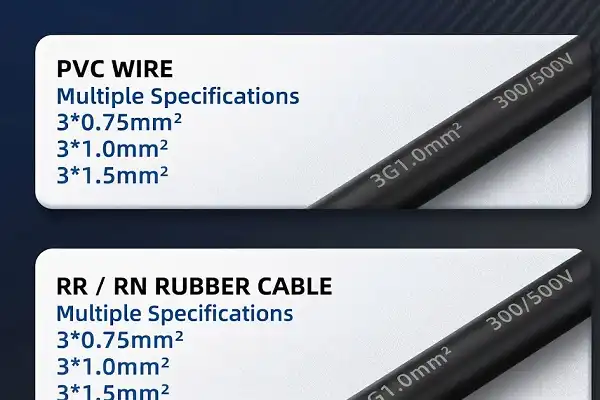
The quality of the copper wire has a direct effect on how well it works with electricity and how safe it is. High-purity copper (99.9% Cu) is the best conductor because it reduces resistance warmth while power is being sent. When choosing a wire gauge, you need to find a mix between flexibility, current capacity, and voltage drop. For example, 3G1.0mm² conductors are good for up to 10A loads, while 3G1.5mm² gauges can handle 16A loads with better safety limits. Stranded conductors are more flexible than solid wire, which makes installation easier and lowers the stress on the wire while it's being wound. Tinned copper strands don't oxidise in damp places, so they last longer in outdoor and industrial settings where rust is a constant problem.
Comparing Outer Sheath Materials
The material of the cable jacket for a Europe power cord affects how well it works in different environments and how long it lasts. PVC (with the code H05VV-F) is a cheap way to protect things inside because it doesn't wear down easily and keeps its insulating qualities in controlled temperature ranges. Rubber (H07RN-F) is very flexible at low temperatures—it stays flexible below freezing—and it is better at resisting oil and chemicals, making it useful in industrial settings. TPE materials are flexible and good for the earth because they don't use plasticisers like PVC does. LSZH (Low Smoke Zero Halogen) materials meet strict standards for public buildings and transportation, and they give off very few harmful chemicals when they catch fire. When choosing a material, you should think about the stresses that the surroundings will put on it.
Selecting Optimal Cord Length
The length of the cord affects both how well it works electrically and how useful it is. Longer lines have more resistance, which causes voltage drop that can affect the performance of sensitive equipment. For example, a 20-meter extension at 16A may experience a drop of 3–4V, which could affect the speed of a motor or the way electronics work. Choosing the right length of cable can make the workplace safer by getting rid of extra wire that can cause trips or needs to be wound up, which can cause more heat stress. Our production process can handle a range of length needs, with normal choices ranging from 2m for desktop use to 20m for workshop and event use. For more specialised setups, we can also make lengths just the way you want them.
Balancing Cost and Quality in Bulk Procurement
To do strategic buying, you need to know how unit cost, order number, and total lifecycle value are connected. Tiered price systems are usually unlocked by making a volume pledge, but lowering quality can wipe out savings by leading to more failures and guarantee claims. Total cost of ownership analysis takes into account things like expected service life, upkeep needs, and the cost of loss due to early breakdowns. Kuncan Electronics keeps its prices low by streamlining its supply lines and making its manufacturing processes more efficient. This means that quality standards are never compromised, even when prices are high for large orders. With our mixed-length buying options, you can get the most out of your inventory while still keeping the right amount of stock in all of your product lines.
Tip 4 – Evaluate Supplier Credibility and After-Sales Support
Verifying Industry Certifications and Quality Standards
Verification of approval is the first step in evaluating a supplier. Genuine makers keep up-to-date certifications from well-known testing organisations like VDE, TÜV, or DEKRA in Europe, along with CE marking paperwork that shows safety assessment. ISO 9001 certification shows that you handle quality in an organised way, and ISO 14001 certification shows that you care about the environment. When there are a lot of items to buy, ask for pictures of the certifications and check their accuracy through the records of the granting bodies. Experience in manufacturing is just as important as skill. Suppliers who have been in the business for a long time know how standards change over time and have improved production methods that younger businesses don't have.
Kuncan Electronics has been specialising in power communication solutions for 17 years and has a wide range of approvals, such as VDE, ETL, SAA, BS/UKCA, CE, FCC, and EMC. Our position as an Alibaba Verified Supplier is an independent proof that our business is real, that we can produce what we say we can, and that our quality system works. This base for approval makes sure that customs clearance goes smoothly and that rules are followed in all global markets.
Understanding OEM Versus Branded Options
OEM (Original Equipment Manufacturer) partnerships for a Europe power cord are good for businesses that sell their own brands because they let them make changes and offer competitive prices. Usually, these deals include unique packing, adding a name, and changing specifications to fit the needs of specific markets. Branded goods from well-known companies offer instant quality guarantee and may make purchasing easier by standardising specs, but they usually come at a higher cost. The best choice relies on where you stand in the market. Private label sellers and equipment makers usually do better with OEM relationships, while marketers who want to get into the market quickly may prefer well-known names.
Warranty Terms and Customer Service Responsiveness
Warranty coverage shows that the maker trusts the quality of the product and protects the money they spent on it. A full warranty should cover problems with the way the product was made, problems with the materials, and problems with how it works. There should also be clear steps for filing claims and getting a new product. Service timeliness is just as important. When pressing needs appear, providers who give 24-hour question answer and specialised account management are more useful. Check out the after-sales support options, such as expert advice, help with fixing problems, and the availability of new parts throughout the product's lifetime.
We stand behind every product with a one-year guarantee that covers problems with the way it was made and how well it works. This shows that we are confident in the quality of our production. Our 24-hour speed of response makes sure that pressing questions are answered right away, and our expert team helps with application advice throughout the buying process. We keep stock in the Dongguan/Shenzhen industrial hub so that we can quickly ship replacements and offer flexible transportation planning to meet project deadlines.
Advantages of Wholesale and Custom Solutions
For B2B clients, wholesale makers that offer unique solutions are a significant benefit. Custom colour choices let brands stand out. For example, high-visibility orange can be used in the yard and outdoors, professional black can be used in the office, or business colours can be used for branded product lines. Custom wire lengths get rid of the waste that comes from having too much material on hand while still meeting construction needs. Customising the packaging with barcodes, labels in multiple languages, and a display that's ready for sale makes shipping easier and lowers the cost of handling. Investing in private tooling protects secret designs and makes sure that production quality stays the same from one order to the next.
We can customise everything from the materials we use to the way they look to the way they are packaged. We accept orders of different lengths without a minimum number requirement. This gives wholesalers who serve a variety of markets inventory freedom. You can apply barcode stickers automatically, which makes your products ready for sale, cuts down on the work you have to do, and speeds up the time it takes to get your goods to market.
Tip 5 – Plan for Efficient Procurement and Logistics
Leveraging B2B Platforms and Supplier Networks
Digital B2B sites that connect buyers with recognised makers are becoming more and more important in modern buying. Alibaba foreign offers a wide range of tools for communicating with suppliers, verifying suppliers, and keeping transactions safe. These tools make foreign buying easier. ThomasNet is for business buying in North America, and Global Sources is for connecting Asian manufacturers. These sites let you compare suppliers, let customers leave reviews, and offer safe payment options that lower the risk of transactions. Connecting directly with manufacturers can often get you better prices and more customisation options that you can't get through distributors. This makes platform-facilitated links useful for building long-term supply partnerships.
Negotiation Tactics and Lead Time Management
Negotiating well for a Europe power cord involves more than just unit prices. It also involves payment terms, quality standards, and delivery dates. When you commit to a certain amount of goods, you usually get better prices, but make sure you can meet the delivery dates before you make a promise. Payment terms that combine the buyer's need for cash flow with the supplier's security, like 30% down payment and the rest due on delivery, make it easier for both parties to work together while keeping everyone safe. Clear lead times keep projects from being held up; ask for production schedules that include getting materials, making things, checking for quality, and shipping them. Adding extra time to project plans for things like clearing customs and delays that were not expected saves them from supply chain problems.
Samples are sent out within 3–7 business days, and large orders are finished in 15–25 days, depending on the number of items ordered and the level of customisation needed. You can choose from a variety of shipping choices, such as air freight for urgent packages and cheap sea transport for large amounts, so you can get the best price and time for your project.
CE Documentation for Cross-Border Trade
Shipments going across borders need a lot of paperwork to help with customs clearance and following the rules. The paperwork needed for CE marking includes a Declaration of Conformity that lists the relevant guidelines, a technical building file that explains the design and testing, and copies of certifications from informed bodies when a third-party review is needed. On commercial bills, goods must be correctly described, the place of origin must be stated, and the status of compliance must be shown. Customs handling is easier when packing lists include amounts, weights, and sizes. Documents that are missing or not correct can cause delays in clearance, holding fees, and even shipping refusal. Carefully preparing documents saves delivery plans and stops costs that were not expected.
With every package, we include all the necessary certification paperwork, such as CE certificates, VDE test reports, and RoHS/REACH compliance statements. Our export team makes sure that all the necessary paperwork for customs clearance is correct, and our knowledge of international shipping rules keeps problems to a minimum when moving goods across borders.
Planning for Replacement and Aftermarket Support
In addition to planning for the initial purchase, lifecycle planning also takes into account the availability of new parts and their continued compatibility. As technology changes, some connection designs may become useless, making it hard to get the supplies needed to keep installed equipment in good shape. Building ties with providers who offer a wide range of products and offer help for older equipment guarantees continuation over the lifecycles of the equipment. Keeping important extra parts on hand can help protect you from supply problems, especially for custom designs that take longer to make. Technical assistance after the sale of a product helps with problems, questions about connectivity, and changes to specifications as systems change.
Our wide range of products, which includes different plug standards, wire types, and lengths, makes sure that they can be used with new and changing needs. We keep production tools for well-known designs so that we can fill repair orders even as product lines get more established. You can get technical help with design updates and compatibility checks as your needs change throughout the span of a product.
Conclusion
To pick the best Europe power cord extension option, you need to weigh technical specs, safety certifications, material longevity, seller dependability, and the cost-effectiveness of the purchase. Learning about plug types like CEE 7/7 Schuko and CEE 7/16 Europlug, checking for VDE and CE certifications, choosing the right conductor grades and jacket materials, checking the credentials of suppliers, and planning comprehensive logistics are all parts of making procurement strategies that protect equipment, make sure regulations are followed, and support operational reliability. These five important tips will help you make smart choices that balance short-term cost concerns with long-term value and performance. Strategic relationships with skilled makers give you quality, freedom, and help for the whole duration of your products.
FAQ
What makes the wire codes H05VV-F and H07RN-F different?
The designation H05VV-F means a PVC-insulated, PVC-jacketed flexible wire that can handle 300/500V and is best used indoors in temperature-controlled areas. The H07RN-F standard calls for a build made of rubber insulation and a rubber jacket rated for 450/750V. This gives the cable better flexibility in cold weather, better oil resistance, and waterproof protection for use in factories and outside. The rubber construction stays flexible below freezing, while PVC gets hard and cracks easily.
What kind of European extension cord can I use in the UK?
UK plugs use the BS 1363 three-pin rectangle standard, but lines in Continental Europe use the CEE 7 round pin design, which means they can't be used directly. The voltage levels are the same (230V), but the plug shapes are very different. A travel adapter lets you connect low-power devices temporarily, but for long-term use, you need UK-standard plugs that meet BS 1363 standards and have the right UKCA or BS approval.
Do you need VDE approval to buy things from other businesses?
The VDE approval from the Association for Electrical, Electronic, and Information Technologies in Germany is an independent third-party check of the product's electrical safety, mechanical durability, and heat performance. Through this thorough testing process, insulation resistance, earth bonding stability, temperature rise under load, and mechanical stress tolerance are all checked. Importers are less likely to be sued when they use VDE marks, clearing customs is easier, and end users can be sure of the quality. The approval is often more important than a general CE self-declaration in the buying process because it is recognised by the European market.
Partner with Kuncan Electronics for Reliable European Power Solutions
Kuncan Electronics is ready to be your experienced Europe power cord provider. With 17 years of producing experience, they can help you with your buying needs. Our VDE-certified extension cords are safe, made of long-lasting materials, and can be easily customised to meet the needs of a wide range of retail, industrial, and business applications. We send samples within a week and finish full production in 15–25 days, so we can meet tight project deadlines without lowering our quality standards. Email our team at rhea@szkuncan.net to talk about your unique needs, get technical specs, or set up a free review. Our tech team can help you choose the best options for your tools and surroundings by giving you application advice. We have the dependability and speed that your supply chain needs, whether you need standard lengths for store sales or unique solutions for OEM integration.
References
International Electrotechnical Commission. (2018). IEC 60320-1: Appliance couplers for household and similar general purposes – Part 1: General requirements. Geneva: IEC Publications.
CENELEC. (2019). HD 22.4 S4: Harmonization Document – Rubber insulated and sheathed flexible cables of rated voltages up to and including 450/750 V. Brussels: European Committee for Electrotechnical Standardization.
VDE Verband der Elektrotechnik. (2020). VDE 0620-1: Plugs and socket-outlets for household and similar purposes – Part 1: General requirements. Frankfurt: VDE Publishing House.
European Commission. (2014). Directive 2014/35/EU of the European Parliament and of the Council on the harmonisation of the laws of the Member States relating to the making available on the market of electrical equipment designed for use within certain voltage limits. Official Journal of the European Union.
German Institute for Standardization. (2017). DIN VDE 0282-4: PVC insulated cables and flexible cords with a rated voltage up to and including 450/750 V – Part 4: Flexible cords (IEC 60227-4, modified). Berlin: DIN Standards.
British Standards Institution. (2016). BS 1363-1:2016+A1:2018 – 13 A plugs, socket-outlets, cable couplers and adaptors – Specification for rewirable and non-rewirable 13 A fused plugs. London: BSI Standards Limited.

USER EVALUATE
Here is the customer's evaluation of us