
A Guide to IEC Power Connectors: Common and Uncommon Types
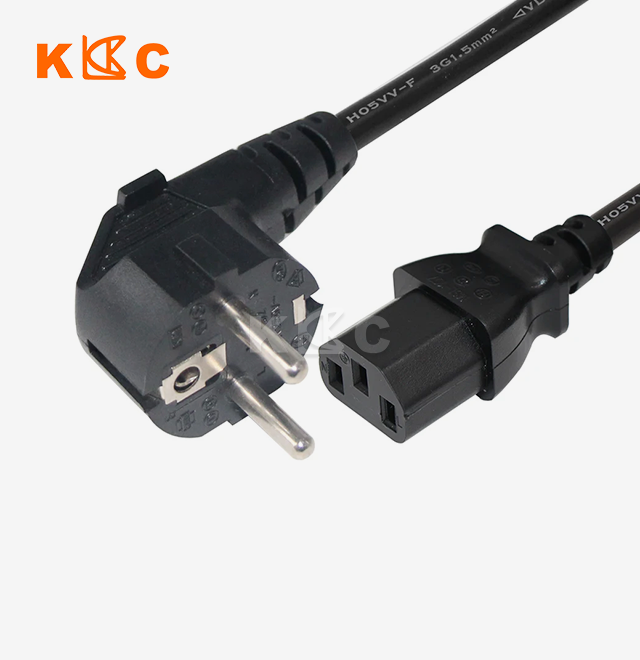
It is important to understand the details of IEC cord standards when looking for power connecting options for business, industry, or medicine. An IEC cord is a standard power connection assembly made to IEC 60320 standards. It is meant to provide safe, reliable electrical links between gadgets and power sources all over the world. These assemblies clear up misunderstanding about compatibility across countries, lower procurement risks, and make sure that regulations are followed. Procurement managers who work with global supply chains can't do their jobs without them. This guide shows you common and specific types of connectors so you can make choices that are good for performance, safety, and cost-effectiveness.
Understanding IEC Power Connectors: Specifications and Standards
What Makes IEC Connectors Different from Generic Power Cords?
Internationally agreed upon guidelines set the physical measurements, electrical ratings, and safety requirements for IEC connectors. Standardized kits make it possible for devices made in Germany to connect easily to devices in the United States or Australia, as long as the voltage and frequency are the same. This is in contrast to region-specific power cords, which have very different designs. The IEC 60320 standard controls utility couplers by laying out pin configurations, insertion forces, and temperature limits to keep electrical dangers at bay.
Key Specifications You Need to Know
Values for voltage are usually between 125V and 250V, and values for current run from 2.5A for small electronics to 20A for heavy machinery. The choice of wire gauge has a direct effect on performance. For example, 18AWG is best for low-power office equipment, while 14AWG or 12AWG is best for heavy-duty industrial loads. Different types of temperature ratings are important. Standard cords are safe up to 70°C, but some types, like C15/C16 connectors, can handle temperatures up to 120°C, making them perfect for business food equipment or server rooms with a lot of heat.
Decoding Connector Types: C13, C14, C5, and Beyond
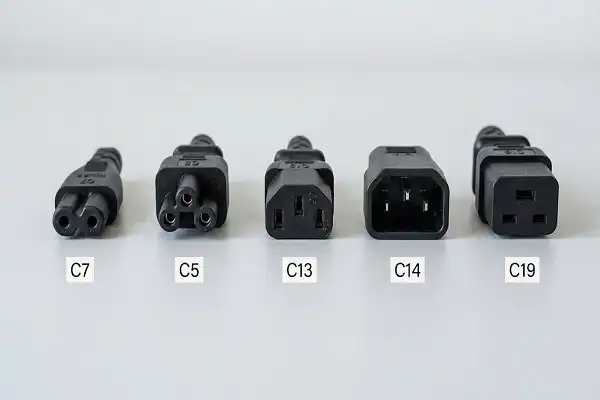
The C13/C14 pair is most common in data centers. The C13 female connection connects to server gear, and the C14 male outlet gets power from power distribution units. Because it takes up little space, the C5 "cloverleaf" connection is often found on laptop power bricks and projectors. C7 "figure-eight" plugs are used for radios, portable DVD players, and other devices that only need two wires and don't need to be grounded. Each type of connector has its own pin spacing and retention devices to keep the connections from coming apart by mistake while the machine is running.
Common and Uncommon IEC Cord Types: Features and Applications
Mainstream Connector Families for Everyday Use
C13 to C14 assemblies connect computers, network switches, and storage stacks to power distribution systems that are placed on racks. They are the workhorses of IT infrastructure. Most of the time, these lines have 14AWG or 16AWG wires that can handle 15A at 125V or 10A at 250V. C5 connectors work great with portable gadgets that need smaller form factors because of limited room. By not having a ground pin, C7 non-polarized connections make making consumer gadgets cheaper, but they don't offer the safety benefits of earthing.
Heavy-Duty and High-Temperature Variants
Ruggedized options for an IEC cord are needed in industrial settings. C19/C20 plugs can handle loads of up to 20A continuously, which means they can be used with blade server chassis and large-scale industrial equipment. The C15/C16 high-temperature family has a notched design that stops regular wires from being used in high-heat situations. This is an important safety feature. For business ovens or lab autoclaves, these assemblies are perfect because they use H05RR-F rubber sheathing or a special kind of heat-resistant PVC that keeps its dielectric integrity even when temperatures outside of the assembly reach 100°C.
Specialized Solutions for Niche Requirements
Versions that are waterproof and approved for outdoor use have sealed ports (IP67/IP68) and jackets that don't get damaged by UV light. Outdoor digital signs, security cameras, and building tools that are in the sun and rain use these systems. Medical-grade wires have Class II double insulation and strict leakage current requirements below 100µA. This is necessary for medical gadgets that connect to patients. Locking connectors use twist-lock or clip-retention devices to keep the connection tight while the equipment is running, so they don't break by accident in industrial settings that are prone to vibration.
The diversity of available configurations ensures that procurement teams can find the right ones for each process without having to over-engineer solutions or settle for low performance margins. If you know these differences, you can avoid expensive mistakes that cause damage to tools or safety violations.
Selecting the Right IEC Cord for Your Needs: A Decision Support Framework
Matching Equipment Categories to Connector Standards
Most desktop computers and TVs need C13 connections that can handle 10A. Servers and high-performance workstations usually choose between C13 and C19 based on how much power they need. For example, dual-processor units that use 800W or more must have C19 parts. Heavy-gauge wires may be needed for C19/C20 pairs in industrial control systems that need to handle DC motor loads. Medical testing equipment needs to be certified as hospital-grade and meet strict holding standards so that cords stay in place while patients are being examined.
Comparing IEC Standards with Regional Alternatives
IEC sockets are used to connect devices at the device level, while NEMA plugs are most common in North America. This difference lets companies ship products that work in all countries. The device's input stays the same, but line cords are made to fit the standards of each region's walls. In Europe, IEC C13 equipment inlets are often paired with CEE 7/7 "Schuko" wall plugs. In Australia, on the other hand, AS/NZS 3112 Type I plugs are used. This flexibility makes managing supplies easier and cuts down on the number of SKUs that are used.
Critical Selection Criteria for Procurement Success
To be safe, the current grade must be at least 20% higher than the device's highest draw. Length and wire diameter are directly related. For example, to keep voltage drop to a minimum, a 25-foot run needs larger conductors than a 3-foot patch cable. UL/cUL marks in North America, VDE marks in Germany, BSI marks in the UK, and SAA marks in Australia show that the standards have been met. The material of the conductor is very important. Copper that is 99.99% oxygen-free is better at conducting electricity and lasts longer than Copper Clad Aluminum, which oxidizes and becomes less conductive over time.
Custom length choices get rid of extra cables in rack setups that are already full, while still letting you get enough distance in the field. Overcurrent protection is built into the cord by integrated fuses. This adds an extra layer of safety when upstream circuit breakers are far from the device. Branded parts from well-known companies usually come with warranties and the ability to track batches. This makes them less vulnerable to risk than generic options that don't have any proof of quality.
Procurement and Supply Chain Considerations for IEC Cords
Identifying Reliable Sourcing Channels
When you work directly with a maker of IEC cord, you have the most customization choices and the best unit economics when you buy in bulk. Industrial wholesalers keep popular setups in stock so they can deliver quickly, but they charge more for the ease. Online business-to-business (B2B) platforms let you compare prices, but it's important to check certifications and do plant audits to avoid buying fake parts. No matter the medium, give priority to sellers who have ISO 9001 quality management certification and show open contact throughout the entire order lifecycle.
Understanding Pricing Models and Volume Economics
When you buy a lot of something, the unit cost goes down by a lot. Orders over 1,000 pieces often open tiered price structures. The length of the cable has a direct effect on the cost of materials, but the cost of casting the connectors stays the same for all production runs. For non-standard colors, private labeling, or custom jackets, for example, there are tooling fees that are spread out over bigger orders. Some suppliers have minimum order amounts that range from 100 to 500 units, based on how complicated the customization is. This means that early engagement is crucial for making accurate budget predictions.
OEM Customization and Lead Time Planning
Sample production usually ends within 3–7 business days, which gives engineers time to test the product before going to full production. Bulk manufacturing takes 20 to 30 days for normal materials, but it can take up to 45 days to get unique parts like high-temperature insulators or locking mechanisms. When you ship goods internationally, it takes an extra 7–14 days for air freight and 30–45 days for ocean containers. Regional certifications like CE, VDE, ETL, and SAA need to be planned ahead of time. Testing and paperwork can add 4 to 6 weeks to the start of a new product, but they can be used for later sales.
Production stops that cost a lot of money can be avoided by keeping extra inventory on hand to account for things like changing lead times, yearly changes in demand, and source capacity limits. Setting up dual-source plans for important assemblies helps keep the supply chain running smoothly, but making sure that all suppliers follow the same quality standards needs careful specification management and regular checks.
Maintenance, Safety, and Best Practices for IEC Cords
Routine Inspection Protocols for Industrial Environments
Visual checks on an IEC cord should be done every three months to look for damage to the jacket, exposed wires, or discolored connections that could mean the cable is too hot. Because they are bent over and over, flexible setups like portable tools need to be checked more often. Pull testing makes sure that retention clips keep a good grip on the links; they should be able to withstand light pulling without coming apart. Thermal imaging finds hot spots that could mean that the contact pressure is too low or the wires are too small before they break.
Safety Features That Matter
Integrated fuses protect against overcurrent and sacrifice themselves to keep other equipment from being damaged when there is a fault. Molded strain reliefs keep conductors from breaking at terminating places where mechanical stress builds up from repeated bends. If you want to be sure that molds are compliant, look for UL, cUL, VDE, or BSI symbols instead of just believing what the box says. In North America, hospital-grade parts have green dots that show they have higher holding force and grounding integrity, which are very important for patient safety.
Recognizing Replacement Indicators and Troubleshooting Common Issues
If you see cracked insulation, bent pins, or connections that don't fit tightly, you should replace the cords right away. These situations can cause arc flashes and damage to equipment. Power loss that comes and goes is often caused by old retention clips that can't keep enough contact pressure. If the wires are too small for the load or the internal terminations aren't good, the circuit will stay warm during operation. By measuring the voltage drop under load, problems with resistance can be found. Drops of more than 5% require replacement, no matter how they look.
A medical imaging center cut down on equipment downtime by 40% by checking the temperature of the C19 power modules that run MRI systems every three months. Replacing three lines that showed high temperatures before they broke kept planned procedures from being canceled and kept patient care going. This proactive method shows how following systematic maintenance routines can directly improve business efficiency and cut costs.
Conclusion
It's important to find the right IEC cord by combining technical specs, safety approvals, and supply chain issues. We've looked at how standardized assemblies clear up confusion about compatibility, different types of connectors, from common C13 types to specialized high-temperature versions, and set up selection frames that match equipment needs with the right specs. To be successful at procurement, you need to know about voltage levels, current capacities, conductor materials, and regional certification standards. You also need to keep working with sources you can trust to give you consistent quality. By following routine inspection procedures and spotting replacement signs, you can protect your equipment purchases and keep operations running smoothly. These insights help purchasing managers, engineers, and original equipment manufacturers (OEMs) choose power communication options that improve performance, meet regulations, and provide long-term dependability for a wide range of industrial uses.
FAQ
How Do I Determine the Correct IEC Cord Type for My Equipment?
Check the device's power input specifications. These are usually formed into the equipment's case or written down in the technical manual. Match the type of plug (C14, C6, C8, etc.) to the line connection that goes with it. Check the equipment's label to see if the IEC cord voltage and current values meet or go beyond what the device needs. If you're not sure what to do, call the equipment's manufacturer's expert help for clear instructions.
What Advantages Do Branded IEC Cords Offer Over Generic Options?
Branded parts from well-known companies usually go through strict quality control, use high-quality circuit materials like oxygen-free copper, and come with certifications that can be checked from trusted testing labs. These goods have guarantee coverage and batch tracking, which lowers your risk of liability and makes it easier to keep track of your compliance paperwork. In order to save money, generic options may use lower-quality materials like Copper Clad Aluminum, which over time makes it less resistant and more likely to catch fire.
Can I Request Custom Lengths and Connector Configurations?
Custom specs, such as non-standard lengths, specialized jacket materials (PVC, TPE, rubber, LSZH), and private marking, are commonplace for manufacturers. Minimum order amounts depend on how complicated the customization is. For example, simple changes to length may need a minimum of 100 pieces, while custom connector setups could need 500 or more. Before committing to bulk sales, sample production lets you make sure that the specs meet practical needs.
Partner with Kuncan Electronics for Certified IEC Cord Solutions
Kuncan Electronics has the accuracy, licenses, and customization options that global operations need, so procurement managers and engineers looking for a reliable IEC cord provider will find what they need. With 17 years of experience making things, we can guarantee that every unit has precision-molded connectors, 99.99% oxygen-free copper wires, and meets CE, VDE, ETL, and UL standards. We can work with currents from 10A to 20A and temperatures up to 105°C. You can also choose the length, wire size, and jacket material, among other things. We ship bulk orders 20 to 30 days after they are received, and samples get to you in 3 to 7 business days. We also offer a one-year guarantee against manufacturing flaws. Email our technical team at rhea@szkuncan.net to talk about your unique needs and get a free design advice that will help you make the best decisions about how to connect your power.
References
International Electrotechnical Commission. IEC 60320-1: Appliance Couplers for Household and Similar General Purposes - Part 1: General Requirements. Geneva: IEC, 2018.
Anderson, Michael T. Power Systems Engineering: Connector Standards and Safety Protocols. Boston: Technical Publishing Group, 2020.
National Electrical Manufacturers Association. NEMA WC 70: Power Cables Rated 2000 Volts or Less for the Distribution of Electrical Energy. Rosslyn: NEMA, 2019.
Davies, Sarah L., and Robert Chang. "Thermal Management in High-Density Data Centers: The Role of Power Distribution Components." Journal of Electrical Infrastructure 15, no. 3 (2021): 112-128.
Underwriters Laboratories. UL 817: Standard for Safety Cord Sets and Power-Supply Cords. Northbrook: UL, 2017.
Harrison, James P. Global Procurement Strategies for Electrical Components: Quality Assurance and Supply Chain Optimization. New York: Industrial Press, 2022.

USER EVALUATE
Here is the customer's evaluation of us
_1785227369395.webp)