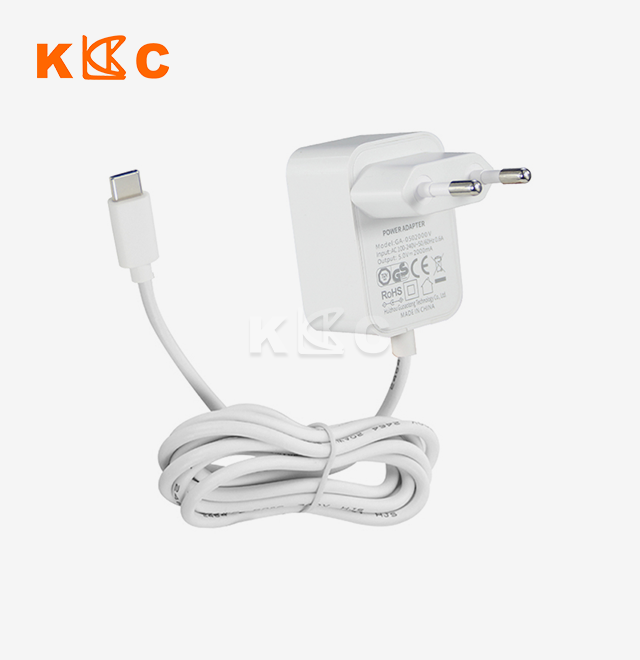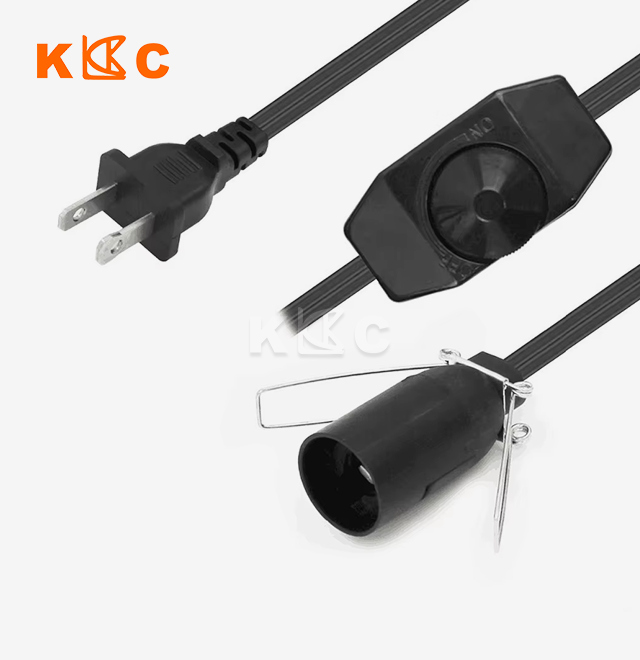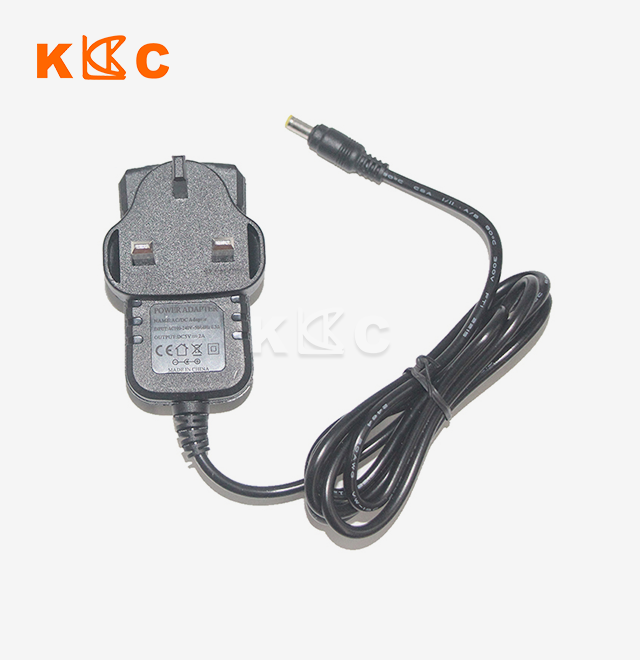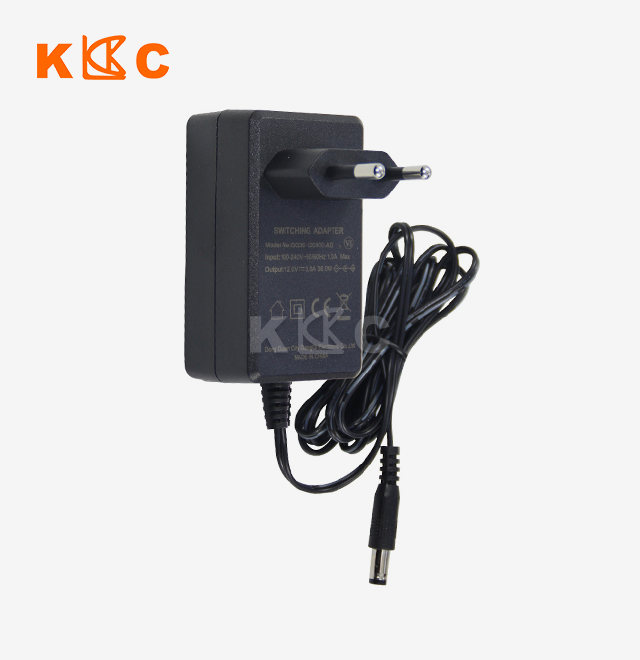

Power Cord Types and Standards Explained
A power cord cable is the important electrical link between your equipment and its power source. It has flexible wires, protective insulation, and standard plugs that send electricity safely to devices in all kinds of businesses. Knowing about different types of power cords, safety certifications, and application-specific needs helps procurement pros make smart choices that lower business risks, make sure they follow the rules, and get the best long-term performance from their tools. Choosing the right wire design has a direct effect on voltage stability, thermal management, mechanical durability, and access to global markets. These are all important factors for any business that wants to have a stable power infrastructure.
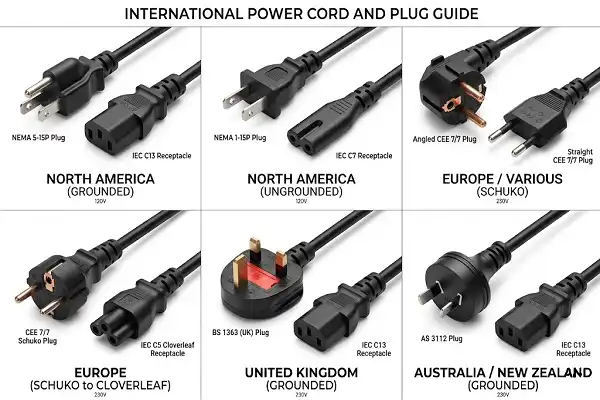
Understanding Power Cord Basics and Key Types
Power cords are the most important link between electrical supply systems and the tools that will use the electricity. They keep the voltage and current steady and keep you safe from electrical dangers. Over the past 17 years, Kuncan Electronics has seen how choosing the right cables can prevent costly downtime and safety issues in a wide range of businesses.
What Defines a Power Cord Cable?
A power cord cable has three main parts: conducting paths (usually made of copper), insulating materials (like rubber, PVC, or thermoplastic elastomers), and a protective sheath on the outside. The female connector, also called the terminal end, links to devices, while the male plug goes into wall outlets or power distribution units. Under constant mechanical stress, temperature changes, and exposure to the air, this system must keep its electrical integrity. To stop conductor fatigue and arcing, which is a typical way for cables to fail, high-quality cables have strain release devices at the termination places.
Common Power Cord Types for B2B Applications
Different work situations need different cable designs that are based on electricity loads, the surroundings, and safety standards.
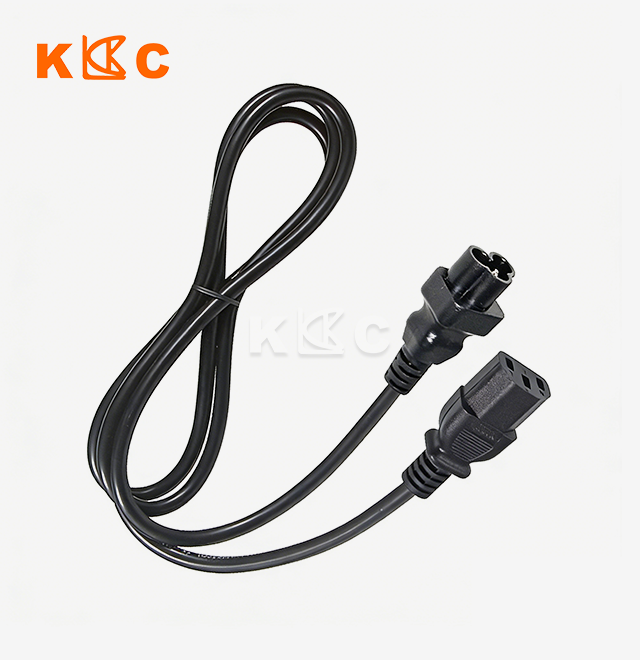
Standard Desktop and Office Cables typically use IEC 60320 C13 to C14 plugs, which can handle 10 to 15 amps of current at temperatures up to 70°C. In climate-controlled rooms, these wires run computers, monitors, and networking gear. When they are built, flexibility and saving room are more important than longevity.
- Heavy-Duty Industrial Cables are made with SOOW or H07RN-F constructions and have cross-sectional sizes between 1.5mm² and 4mm². It is important for workplace automation systems, CNC machines, and outdoor installs that these wires can handle oil, solvents, abrasion, and temperature changes from -40°C to +85°C. We make industrial-grade versions with jackets that are strengthened so they don't tear when they're dragged across concrete floors or exposed to chemicals.
- Medical-Grade Hospital Cables must have a leaking current of less than 100µA with Class II double insulation. The green dot (UL 817) mark means that the pins are made of solid brass and have better strain relief so they can handle being plugged in and out many times and high tension pulls in hospital settings. To support infection control measures, these wires are tested to make sure they can be sterilized.
- Waterproof and Outdoor-Rated Cables achieve IP67 or IP68 ingress protection through sealed connections and UV-resistant wrapping that prevent water and dust from getting in. Our outdoor-rated goods are used in places where water would destroy other systems, like security camera systems, smart lighting networks, and digital signage installs.
Application-specific tech, not general categories, is what makes the difference. Instead of going with general-purpose choices, procurement teams should match cable specifications to real-world working conditions.
Power Cords Versus Extension Cords
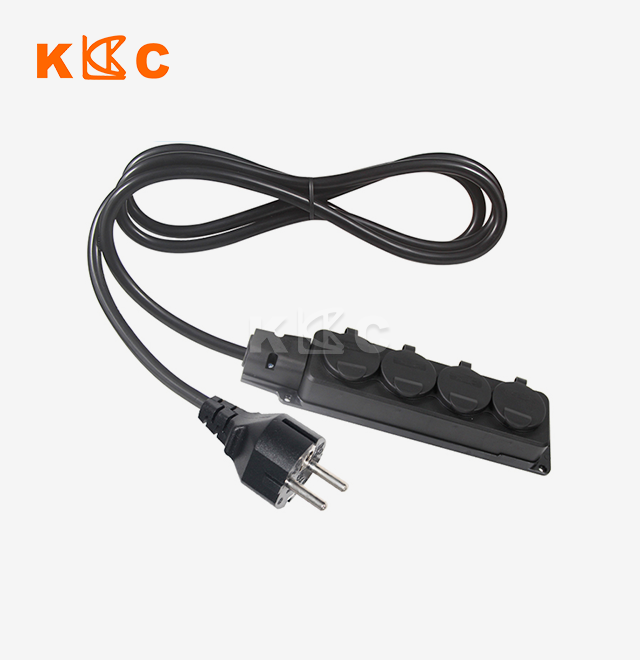
Both goods give electricity, but they have very different safety profiles and functions. Power lines firmly connect certain pieces of equipment to power sources that have the right voltage, amperage, and connector type. Extension cords, which often have more than one plug, briefly increase the distance between outlets and gadgets. Building codes and safety rules at work usually don't allow using extension cords as fixed wiring solutions because they can cause people to trip, overload, and the connectors to break down over time. If you choose the right power cord cable, you won't need any extra wires and can meet all of your installation needs because you can choose the exact length you need.
Key Standards and Safety Certifications for Power Cords
It's hard for global buying operations to figure out how to deal with the complicated world of international electricity standards. Follow-through on certification has a direct effect on product responsibility, market entry, and the safety of end users.
Major Certification Bodies and Their Significance
- UL (Underwriters Laboratories) controls most of the markets in North America. Their testing methods cover a wide range of areas, such as electrical safety, fire defense, and mechanical sturdiness. UL approval shows that the plug meets the standards of the National Electrical Code and NEMA plug configurations (5-15, 6-20, etc.). Our consumer goods and medical-grade products that are sold in the U.S. and Canada are still listed with UL.
- IEC (International Electrotechnical Commission) establishes globally recognized standards for connector configurations (IEC 60320 series), voltage ratings, and temperature classifications. IEC certification makes international operations easier by making sure that power systems in different regions can work together. Our industrial automation wires meet the requirements for flexible cords set by IEC 60227 and IEC 60245.
- VDE (Verband der Elektrotechnik) tests European markets thoroughly to make sure they meet EN standards and CE marking requirements. For VDE approval, glow-wire flammability testing is done to stop fires from spreading from overheating connectors, which is a very important thing to think about for setups with a lot of equipment.
- CSA (Canadian Standards Association) certification parallels UL recognition while addressing specific Canadian regulatory requirements. Many procurement specifications require dual UL/CSA listing to serve North American markets comprehensively.
Certification validity is still very important. Because fake certificates are so common in global supply lines, we suggest that you check seller certifications against government databases instead of taking documents at face value.
Voltage Ratings and Material Considerations
Voltage levels must be higher than what the equipment needs, with enough room for error. 125V (low voltage in North America), 250V (international standard), and 600V (industrial uses) are the usual versions. Conductor sizes are based on ampacity tables that take into account the temperature, how the wires are bundled, and whether the load is constant or intermittent.
Choice of material strikes a balance between cost, function, and compatibility with the surroundings. For indoor uses, PVC (polyvinyl chloride) insulation is a cheap option that is also flexible enough. Rubber mixtures (SJT, SOOW) work better in cold weather and don't get ruined by oil in industrial settings. Thermoplastic elastomers are flexible like rubber and easy to work with because they are made of PVC. When we make new products, we focus on using halogen-free, RoHS-compliant materials that meet mechanical performance standards and lower toxic fumes during fires.
Quality Assurance in Procurement
Effective supplier qualification includes more than just checking the supplier's certificates. It also includes checks of the manufacturing process, testing of arriving materials, and methods for sampling batches. We use three-step inspection processes: checking the arriving raw materials, trying the dimensions and electricity while the power cord cable is being made, and checking the final assembly. Each batch of products goes through hi-pot (high potential) testing to make sure the insulation is solid and continuous testing to make sure the conductor paths are clear. Clear acceptance standards should be set by procurement teams. These should include pull-force tests for strain relief, measurements of contact resistance, and paperwork needs that allow products to be tracked back to specific production lots. This organized method lowers the chance that low-quality parts will get into your supply chain.
How to Choose the Right Power Cord Cable for Your Business Needs?
To choose the best cable configurations, you can't just use general standards; you have to match technical specs to practical conditions. When making strategic procurement choices, it's important to weigh current cost concerns against overall lifecycle performance.
Defining Requirements by Equipment Type
Standard C13 to NEMA 5-15P connections rated for 10A at 125V are usually needed in offices to connect computers, monitors, and networking gear. When the temperature inside is managed, cheap PVC insulation can be used with little environmental protection. Custom length requirements get rid of cord clutter and fit workplace setups perfectly.
Heavy-duty constructions with wire sizes ranging from 14 AWG to 10 AWG are needed for industrial machines. The sizes depend on the motor loads and voltage drop figures. Control screens, sensors, and automatic assembly systems work all the time in places where the temperature changes, there is vibration, and there is contamination. In our industrial product line, we have SOOW jackets that are resistant to oils and solvents. These jackets have strain release glands at cabinet exits that keep conductors from getting worn out. Extreme temperature values from -40°C to +85°C make sure that the equipment works reliably in buildings that aren't heated and outside sites.
For medical devices, you need hospital-grade wires with a green dot logo that have leaking currents below 100µA and Class II insulation systems. Diagnostic imaging systems, tools used in operating rooms, and devices used to keep an eye on patients need wires that can withstand sterilization methods like autoclaving and chemical disinfection without losing their electrical qualities. We sell medical cables that are IEC-certified and meet international safety standards. These cables also support infection control measures that are very important in hospital settings.
Comparing Cable Variants and Advanced Features
Heavy-duty power cord cable variants have bigger conductor cross-sections (1.5mm² to 4mm²) and jackets that are stronger and less likely to tear or cut. These structures work well for moving tools, short-term installs, and places with a lot of vibration where regular wires break too soon. The investment in strong building cuts down on the number of replacements needed and gets rid of unexpected downtime.
There are different pros and cons to using braided or plastic connection housings. Braided designs are very flexible and have a small bend radius, which makes them perfect for equipment that needs to be moved around a lot. Molded connectors offer better security against water and damage and are stronger for long-term setups that are subject to external stress.
In important situations, advanced safety features increase the limits of safety. Integrated surge protection units keep sensitive gadgets safe from short-term power spikes. LED indicator lights make it easier to figure out what's wrong with complicated equipment groups by letting you see if power is available. Locking attachment devices (P-Lock, twist-lock) keep connections from being accidentally broken in high-availability systems where losing power can cause data loss or process failure. These improvements come with higher costs that are supported by specific operating risks rather than being used by everyone.
Custom Lengths and Regional Compatibility
Standard cable lengths (6 feet, 10 feet, and 15 feet) rarely match what is needed for installation. This means that there is either too much cable, which can cause tripping dangers, or not enough reach, which needs extension cords. Custom length specs improve both safety and looks while cutting down on material costs that aren't necessary. We can make unique cables from 1 meter to 30 meters, and there are no minimum order quantities. We can help with both developing prototypes and putting them into production.
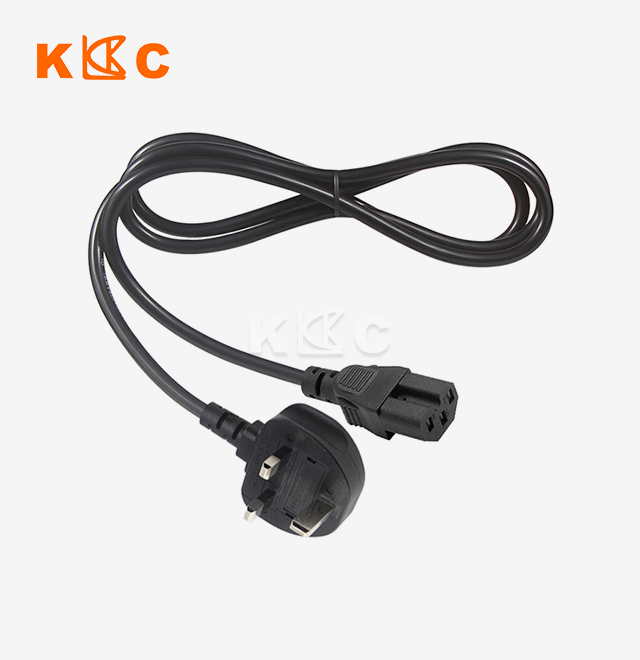
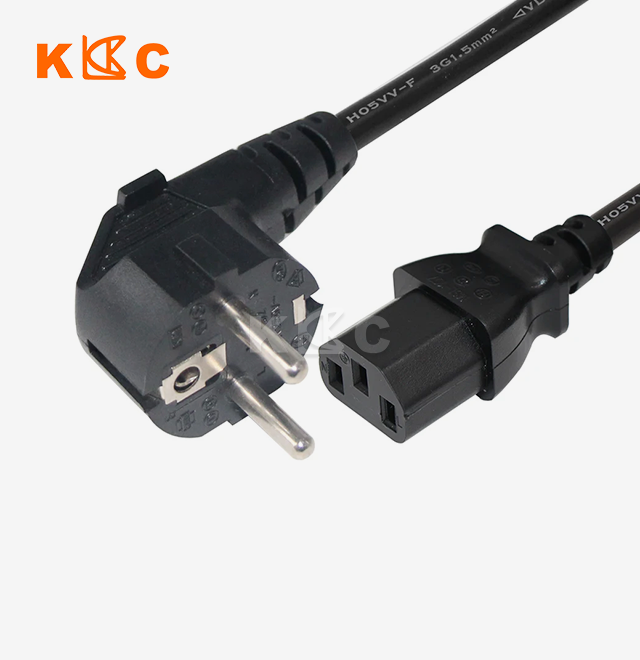
Electrical rules in different parts of the world are very different from one another. Plugs in North America (NEMA 5-15P, 5-20P, and 6-15P) are not the same as plugs in Europe (CEE 7/7), the UK (BS 1363), Australia (AS/NZS 3112), and China (GB 2099). Changes in voltage and frequency (120V/60Hz vs. 230V/50Hz) need the right insulation grades and wire sizes. Our engineering team helps with regional compliance testing, making sure that your equipment follows all safety and electricity rules in different countries where it is used.
Conclusion
When choosing the right power cord cable configurations, you have to weigh technical specs, safety standards, application-specific needs, and cost, as well as the stability of the provider. Knowing about basic cable types, foreign standards, and the best ways to buy things gives B2B buyers the power to make smart choices that improve device performance while lowering operational risks. Strategic relationships with suppliers provide long-term benefits by letting you customize products, ensuring quick delivery, and sharing technical knowledge that goes beyond single transactions. Kuncan Electronics has been making electronics for 17 years and is dedicated to quality control. This makes us a reliable partner for all of your power interface needs in smart buildings, medical devices, consumer electronics, and industrial automation.
FAQ
Which power cord cable works best with heavy machinery?
Heavy-duty constructions like SOOW or H07RN-F wires that can handle high temperatures (-40°C to +85°C) and don't react with oil or solvents are needed in industrial settings. Conductor sizes should be big enough to handle motor starting currents plus or minus 25%. For control systems, this means 14–12 AWG, and for high-power machinery, it needs 10 AWG or bigger. For outdoor installations, make sure the wires meet the IEC 60227 industry standards and have the right ingress protection grades (IP67/IP68).
Why do UL and CE certifications matter?
UL approval makes sure that a product meets North American electrical safety standards and the National Electrical Code. This lets the product be sold legally in the U.S. and Canada. CE label shows that the product meets European safety standards and is required for sending the product to other EU countries. For both certificates, independent testing labs must confirm the electrical safety, fire resistance, and mechanical durability. This keeps your business safe from liability claims and makes sure it follows the rules.
Can the same type of power cord cable be used for both medical and game devices?
For medical uses, hospital-grade wires with a leakage current of less than 100µA, Class II insulation, and sterilization compatibility are needed. For game devices, these standards are not needed. Standard 10A cords with basic safety ratings are usually needed for gaming devices. It costs more to use medical-grade cables for games than standard cables, and using standard cables in hospital settings is against the law and puts patients at risk. Choosing the right power cord cable for the job makes sure that safety margins are met and regulations are followed.
Partner with Kuncan Electronics for Certified Power Cord Solutions
Kuncan Electronics offers widely approved power cord cable options that are custom-made for your business. They have been making high-quality products for 17 years and are an Alibaba Verified Supplier. Our wide range of products includes household goods that can be charged quickly, industrial-grade cables for harsh conditions, medical-grade assemblies that meet IEC standards, and IP-rated outdoor options for smart building uses. As a provider of power cord cables with a lot of experience, we offer flexible OEM/ODM customization, which includes changing connectors, making cables of any length, color coding, and printing logos. We can turn your requirements into products that are ready for production. With rapid prototyping, samples can be sent within 3–7 days, and large orders can be shipped within 15–25 days with no minimum order number requirements. Each cable comes with ETL, VDE, CE, and RoHS certifications, as well as a one-year warranty and quick expert help for the life of your product. Get in touch with our team at rhea@szkuncan.net to talk about your power connection needs and get a quote that fits your budget and needs.
References
National Electrical Manufacturers Association (NEMA). NEMA WD 6: Wiring Devices—Dimensional Specifications. Rosslyn, VA: NEMA, 2017.
International Electrotechnical Commission. IEC 60320-1: Appliance Couplers for Household and Similar General Purposes—Part 1: General Requirements. Geneva: IEC, 2018.
Underwriters Laboratories. UL 817: Standard for Safety Cord Sets and Power-Supply Cords. Northbrook, IL: UL, 2019.
Institute of Electrical and Electronics Engineers. IEEE 1100: Recommended Practice for Powering and Grounding Electronic Equipment. Piscataway, NJ: IEEE, 2005.
Verband der Elektrotechnik. VDE 0250: Rubber Insulated Cables—Rated Voltages Up to and Including 450/750 V. Frankfurt: VDE, 2016.
Canadian Standards Association. CSA C22.2 No. 21: Appliance Couplers. Toronto: CSA Group, 2018.

USER EVALUATE
Here is the customer's evaluation of us