


Fused vs Non-Fused Cigarette Lighter Plugs Explained
When comparing fused and non-fused cigarette lighter male plugs, the primary difference lies in their built-in protection mechanisms. Fused plugs incorporate a replaceable glass or ceramic fuse directly into the plug housing, offering immediate overcurrent protection for both connected devices and vehicle electrical systems. Non-fused versions lack this integrated safety component and rely on external circuit protection. For B2B procurement professionals sourcing automotive power accessories, understanding this distinction is essential to balancing safety requirements, application environments, and cost considerations across your product lines.
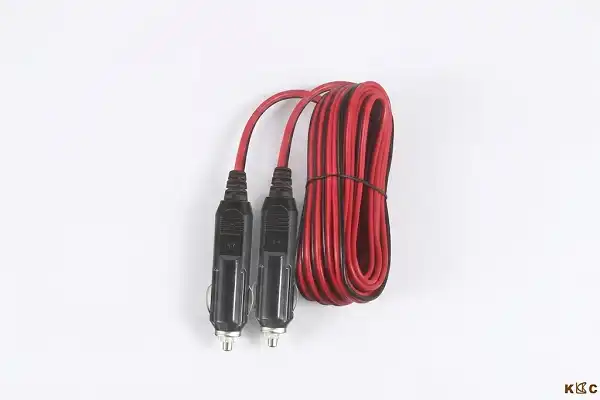
Understanding Cigarette Lighter Male Plugs: Fused vs Non-Fused
Cigarette Lighter Male Plugs are still the usual way to power car accessories, portable gear, and industrial machines from the 12V or 24V electrical systems in a vehicle. Standardized connectors with a positive terminal in the middle and a grounding shell on the outside work with sockets in cars, trucks, boats, and heavy machinery. A metal contact unit, an insulating housing material, and connection points for attaching wires make up the basic structure.
Basic Construction and Voltage Ratings
There are two common voltage platforms that cigarette lighter power adapters work on. 12V systems are used in most passenger cars, while 24V systems are used in commercial trucks, ships, and some industrial equipment. The plug's physical size stays the same for both voltages; it has a standard center pin and side contact design and is about 21 mm in diameter. However, the voltage level of the connected devices must match that of the car to avoid damage.
The choice of wire gauge has a big effect on the amount of current it can carry. To keep resistance and heat buildup to a minimum, heavy-duty applications need 12AWG to 16AWG wires with pure copper cores. Kuncan Electronics' automotive power lines have extra-thick copper conductors that can handle constant loads of 15A to 20A. This means that the power supply stays stable even when the load lasts for a long time.
Fused Plug Design and Protection Mechanisms
Fused Cigarette Lighter Male Plugs have a fuse element built right into the plug body, between the power input and output wires. This fuse element can be changed. This built-in fuse is a safety feature that melts and breaks the circuit when the current gets too high. 10A, 15A, and 20A are common fuse ratings. The right one is chosen based on the power needs of the connected device and the vehicle's electrical system.
Each version has a different place for the fuse. The fuse is in the tip assembly, close to the center contact, on some plugs. On others, it is in the area where the wire enters. Users can quickly find blown fuses through the clear casing of glass tube fuses, which allows for visual inspection. This immediate visual feedback makes it easier to figure out what's wrong when equipment breaks down.
Non-Fused Plug Applications and Limitations
Non-fused plugs don't have an internal fuse, so there is a straight path for electricity to flow from the car socket to the device that is plugged in. This simplified design lowers the cost of making them and makes them smaller, so they can be used in certain controlled environments. In factories with centralized circuit protection at the power distribution box, non-fused plugs may be chosen on purpose to avoid extra layers of protection.
Electrical problems are more likely to happen when there is no plug-level security. Too much current can flow without being stopped right away if there are short circuits, broken devices, or bad connections. This puts more stress on the safety devices upstream and could damage the wiring in the car. When buying non-fused plugs, you should carefully think about the protection infrastructure that is already in place and how much risk you are willing to take for the application.
Why Choose Fused Cigarette Lighter Plugs? — Safety and Reliability
Fused Cigarette Lighter Male Plugs for cars are very important for safety because they protect both connected equipment and the car's electrical systems from common failure modes. Overcurrent protection keeps wires from getting too hot, insulation from breaking down, and possible fire hazards when devices don't work right or have internal short circuits. The built-in fuse reacts faster than circuit breakers on the vehicle, so damage to specific parts is limited.
Preventing Common Electrical Failures
In vehicle settings, short circuits are one of the most dangerous types of electrical problems. When the positive and negative wires touch directly, the current rises to levels that are much higher than what is normally expected. If the power doesn't go out right away, the insulation around the wires melts, the joints join together, and materials nearby catch fire. Within milliseconds, a properly rated fuse breaks this circuit, stopping the fault before it spreads.
Overload conditions happen when devices that are connected draw too much current, above and beyond what their design specs allow. When used continuously at full capacity, portable air compressors, power inverters, and heating accessories often cause overload situations. Built-in fuses that are set to the right value for the device stop long-term overcurrents that wear down wire insulation and contact surfaces.
Selecting Appropriate Fuse Ratings
To choose the right fuse grade, you need to carefully look at how much power the connected gadget uses and how much current it needs to start up. The base estimate is based on steady-state current, but when motors and compressors start up, they draw 3 to 5 times their working current. The values on the fuses must be able to handle these short-lived spikes while also protecting against long-term overcurrent.
Kuncan Electronics' heavy-duty car wires have two fuses on each end, with glass tube fuses that are rated for certain amperage loads. This design of redundant security makes sure that electrical faults cause circuit interruptions no matter where the problem is. The design of the replaceable fuse lets repair be done in the field without replacing the cables. This lowers the long-term costs of ownership for fleet operators and equipment dealers.
Procurement Best Practices for Safety Compliance
When buying fused plugs in bulk to resell or incorporate into finished goods, business-to-business buyers should make sure that the certification meets local electrical safety standards. For sales in North America, car equipment must have a UL or ETL listing. To be sold in Europe, products must have the CE mark and be in line with the Low Voltage Directive. Our factory keeps up-to-date certifications like ETL, CE, VDE, SAA, and BS/UKCA, which makes sure that products meet the needs of global markets without having to go through extra testing.
There are more requirements for documentation than just certification marks. Technical datasheets should list the type of fuse, the voltage rating, the current rating, the wire gauge, the insulation materials, and the temperature ratings. This information makes it easier for customer service to answer questions and match applications correctly. To avoid problems, installation directions should make it clear what voltage to use, how to connect things, and how to change fuses.
When and Why to Use Non-Fused Cigarette Lighter Plugs
Non-fused Cigarette Lighter Male Plugs are used in certain situations where there is external circuit safety or where buying choices are based on minimising costs. Some installations, like industrial control panels with master circuit breakers, portable power stations with built-in protection circuits, and custom installations with upstream fusing, may choose plugs that aren't fused on purpose to avoid having extra protection parts.
Cost Considerations and Design Simplicity
The simpler design of non-fused plugs cuts down on the number of parts needed, the difficulty of assembly, and the cost of making them. This difference in costs affects how competitive store prices are for high-volume consumer uses where budgets are very tight. OEMs that add power cords to finished goods can choose designs that aren't fused as long as the host device has enough safety circuitry.
When space is limited, physical dimensions also favour designs that aren't fused. Getting rid of the fuse holder unit shortens the plug by 10 to 15 mm, which is important for fitting on dashboards with little room for error. The small profile makes it easier to route wires through tight areas in panel-mount systems and custom enclosures.
Risk Assessment and Warranty Implications
Before deciding to use non-fused plugs, you need to do a full risk analysis that looks at how likely failure is, how bad the consequences will be, and what other safety options are available. When equipment is used in supervised areas by trained staff, it poses different risks than when consumer goods are used in uncontrolled areas. Industrial sites that do regular electrical checks and upkeep may be willing to take on more risk than a store customer uses.
Warranty coverage for fused and non-fused goods is often different. When non-fused plugs are specified, manufacturers may not pay for damage claims caused by overcurrent events. This means that end users or system integrators are responsible. To avoid disagreements after the sale, procurement contracts should make it clear who is responsible for what and what kind of safety is needed.
Comparative Durability and Maintenance Requirements
Comparing durability goes beyond comparing the quality of the parts and includes looking at how they might fail. Fused plugs fail safely by cutting the circuit when a fault happens. This stops damage further down the line, but it costs money to replace the fuse. Plugs that aren't joined let fault current run until upstream protection kicks in, which could damage several system parts before the fault current stops.
Fused designs are better for field serviceability because they are easier to maintain. When fuses blow, it's easy to figure out what's wrong and fix it by replacing the fuse. Most of the time, non-fused plug failures are caused by contact degradation or wire damage that needs a whole new connection. Over a number of years, the extra costs of upkeep often cancel out the original price savings of designs that aren't fused.
How to Choose the Right Cigarette Lighter Male Plug for Your Business Needs
To choose the best Cigarette Lighter Male Plug, you need to carefully consider the needs of the application, the operating environment, the power requirements, and the budget you have available. A structured choice strategy makes sure that the parts you choose meet performance goals, safety standards, and cost goals across all of your products.
Application Segmentation and Power Requirements
When responding to emergencies, processes need to be as reliable as possible in the worst circumstances. 12V power accessories are used in ambulances, fire trucks, and police cars to power communication gear, portable lights, and medical devices. These mission-critical uses justify high-end parts with extra safety features and a history of lasting a long time. Kuncan Electronics makes heavy-duty cables with dual fuse protection and temperature resistance up to 105°C for emergency services around the world that need unwavering performance.
Vibration, extreme temperatures, and water exposure are some of the hard-weather problems that off-grid commercial users have to deal with. Ruggedized connectors with strain relief, materials that don't corrode, and sealed terminations are needed on construction sites, in mines, and in remote locations. Our Bakelite shell meets the UL94 V-0 flame retardancy standard and stays structurally sound from -40°C to +85°C, which is the temperature range that industrial automation equipment needs.
Recreational vehicles and marine applications need to meet both consumer expectations for ease of use and marine-grade durability standards. RV makers and sellers of boating accessories need low-cost options that can stand up to UV light, salt spray, and constant shaking. Our plug systems have nickel-plated brass contacts that keep them from oxidizing and keep the contact resistance below 50mΩ for the life of the product.
Material Selection and Environmental Factors
The choice of housing material has a direct effect on how well it handles heat, flames, and wear over time. Most standard plugs are made of ABS plastic, which doesn't hold up well to heat or UV light. For professional uses, the materials must be fire-resistant plastic or Bakelite that doesn't change shape when heated for a long time. Even when plugs hit 105°C during constant high-current operation, our Bakelite housings don't bend.
The reliability of the connection over thousands of insertion cycles is based on the contact material and plating treatments. Nickel plating stops oxidation and lowers friction when plugging in the wire. Brass is a good conductor of electricity and has good mechanical strength. Manganese steel spring-loaded center pins keep the contact pressure constant even when the socket wears out or the car shakes. The 48-hour corrosion resistance test with salt spray shows that it can be used in harsh sea and coastal environments.
Supply Chain Logistics and Customization Options
B2B procurement strategies weigh the costs of keeping inventory against the need for flexibility in lead times and customization. Standard catalogue items ship within days, but they don't offer much that makes them stand out for brand recognition. Custom OEM configurations with private logo embossing, custom wire lengths, and specialized terminations take longer to make, but they help position the product better and keep customers coming back.
Kuncan Electronics can support both types of purchases because its production processes are flexible. For standard items, models are sent out in 3 to 7 days, and full production takes 15 to 25 days, depending on how many are ordered. Our OEM customization services let you choose from wire gauges from 12AWG to 16AWG, custom lengths for specific uses, and materials like PVC, TPE, rubber, and LSZH compounds. For free, engineering help includes reviewing your plan and giving you technical advice on how to make it work best for your application.
Minimum order number rules have a big effect on planning supplies and managing cash flow. When suppliers demand large MOQs, customers are forced to keep extra inventory or give up the chance to customize. We get rid of minimum order quantities (MOQs) for standard products and let you choose from different batch sizes for custom configurations. This lets you use just-in-time inventory strategies that lower your need for working capital while keeping your supply going.
Installation and Maintenance Best Practices for Cigarette Lighter Plugs
The reliability of Cigarette Lighter Male Plugs is highest when they are installed correctly and maintained regularly. Safety risks are lowest when these steps are taken. Even high-quality parts break early if they are wired incorrectly, abused mechanically, or not properly maintained. Having everyone in your company follow the same set of rules cuts down on service claims and makes customers happier.
Step-by-Step Wiring Procedures
To get the wire ready, the conductors must be carefully stripped back to 8 to 10 mm of bare copper without damaging any individual strands. When a load is put on damaged strands, they form high-resistance places that create too much heat. To keep the uncovered strands from breaking while the terminals are being inserted, twist them tightly in a clockwise direction. Using electrical solder to tin the ends of wires increases the contact area and stops rust, but crimp connections usually handle vibrations better.
Verification of polarity keeps devices from breaking and keeps people safe. In vehicle sockets, the center pin is always positive, and the shell is always negative. However, if the wire is switched around at the plug, there are instant short circuits. Check the polarity of the sockets with a digital multimeter before putting them together for good, especially if you are working on a car you are not familiar with or a unique installation. For proper crimping technique, you need tools that are matched to the type of terminal, and you should make sure that the full conductor is inserted and that the crimp is compressed all the way around.
Common Installation Mistakes and How to Avoid Them
The most common way for aftermarket power cables and cigarette lighter male plugs to fail in the field is because they don't have enough strain relief. Copper conductors inside Cigarette Lighter Male Plugs get worn out when they are bent over and over at the point where the cable enters the plug housing. Eventually, a strand breaks, causing unstable connections, intermittent power delivery, or complete circuit failure. Heat-shrink tubes or moulded strain relief boots are used in professional Cigarette Lighter Male Plugs designs to spread bending stress over longer wire lengths. In our heavy-duty Cigarette Lighter Male Plugs solutions, strong strain relief is built into the housing assembly to protect wire terminations from mechanical stress in demanding automotive environments.
If you don't choose the right fuses for Cigarette Lighter Male Plugs, they can trip accidentally during regular operation or fail to provide enough protection during electrical faults. When selecting fuse ratings for Cigarette Lighter Male Plugs, you need to calculate the total connected load, including startup current surges from connected devices. To allow motors and inductive loads to start without false trips, the circuit design may require 150% to 200% of the steady-state current capacity. Properly rated Cigarette Lighter Male Plugs with reliable fuse protection, durable cable assemblies, and stable electrical contacts help improve safety, prevent overheating, and ensure dependable power delivery for automotive accessories, portable electronics, and vehicle charging applications. It is better to be safe than sorry when choosing protection components, but the maximum fuse rating must remain below vehicle circuit limits to ensure the entire electrical system works together properly.
Troubleshooting Techniques and Repair Procedures
Systematic troubleshooting quickly finds and fixes problems without having to change needless parts. First, look at the body of the plug to see if it has any cracks, melted plastic, or burn marks that could mean it was damaged by heat. Check the condition of the fuse by taking it off and looking for broken filaments or discoloured glass that could mean a long-lasting overcurrent. Using a milliohm meter, check the contact resistance between the plug ends. Readings above 100mΩ mean that the contact is wearing out and needs to be cleaned or replaced.
When you test for voltage drop under load, you can find connections with high resistance that slow things down. Hook up the gadget and check the voltage at both the plug output and the car socket while the gadget is fully loaded. If the voltage drops more than 0.5V across the plug assembly, it means that the contacts are too resistant because of oxidation, not enough spring pressure, or wires that are too thin. Cleaning the contact areas with electrical contact cleaner and fine grit paper can often get things working again without having to replace any parts.
The amount of use and the surroundings affect how often preventive repair needs to be done. Every three months, commercial fleet vehicles that are used every day get checks that look at the condition of the plugs, the status of the fuses, and the integrity of the connections. Recreational vehicles and seasonal equipment need to be inspected every year before the season starts to make sure they still work after being stored for a long time. Keep track of the results of inspections and new parts to find trends of repeated failures that could mean the design isn't good enough or the application isn't right.
Conclusion
When choosing between fused and non-fused Cigarette Lighter Male Plugs, you need to think about safety standards, application settings, and cost factors that are specific to your procurement goals. Fused designs offer better protection for consumer goods, mission-critical equipment, and uses where the small extra cost is worth it because of the risk of electrical faults. Alternatives that aren't fused work well in controlled settings with external protection systems and in cost-sensitive applications that are willing to take on more risk. Long-term dependability and total cost of ownership are based on the quality of the materials, whether they meet approval requirements, and the supplier's abilities. This guide gives you the technical information you need to make smart choices about where to get parts that meet the performance standards for car, industrial, and commercial uses.
FAQ
Can I add more safety by replacing a plug that isn't fused with one that is?
Yes, switching from Cigarette Lighter Male Plugs that aren't connected to ones that are improves electrical safety without changing the way the system works. Make sure that the fuse rating fits the amount of power and startup current that your device needs. For magnetic loads like air blowers, choose fuses that can handle 150% of the steady-state current. This improvement gives localized overcurrent security that is separate from the vehicle's circuit breakers. This lowers the risk of damage during electrical faults.
How do I figure out what fuse rating is right for my device?
To find the amperage, add up all the watts of power used and divide that number by the system voltage (12V or 24V). For steady resistance loads, add 25%. For magnetic loads with motors, add 50–100%. An 180W device on 12V needs a 20A fuse for motor starting spikes because 180W divided by 12V equals 15. Do not go over the current limit or car socket values that are written on the dashboard for the wire gauge.
Are there waterproof fused cigarette lighter plugs that can be used outside?
Marine-grade and outdoor-rated plugs have sealed housings, sealing seals, and conformal covering on the electrical parts to make them waterproof to IP67 or IP68 standards. These special designs can handle being submerged for a short time or being exposed to water all the time. Check the certification documents to make sure they back up the claims made in the marketing materials. Kuncan Electronics can make unique sealing solutions for harsh environments that need both fuse safety and water entry protection.
Partner with Kuncan Electronics for Your Automotive Power Solutions
Kuncan Electronics has been making industrial-grade Cigarette Lighter Male Plug assemblies for demanding applications for 17 years. They can meet your needs for automotive power connectors. Our heavy-duty cables have extra-thick pure copper cores that can handle continuous 15A to 20A operation. They also have heat-resistant Bakelite housings that are UL94 V-0 flame retardant and two fuses on each end of the cable. Following SAE J563 and ISO 4165 standards, all of our products are tested for electrical and thermal integrity. This makes sure that they work reliably in temperatures ranging from -40°C to +85°C.
We offer full OEM customization, including wire gauge selection (12-16AWG), custom lengths, private logo embossing, and material options (PVC, TPE, rubber, LSZH), whether you're a distributor of automotive accessories, a manufacturer of industrial equipment, or a procurement officer for emergency services. Our global certifications, including ETL, VDE, CE, SAA, and BS/UKCA, make it easy for our products to reach markets in North America, Europe, and the Asia-Pacific region. Standard setups don't have a minimum order size, and samples can be sent out within 3–7 days. Production wait times are 15–25 days. Get technical help and personalized quotes from a reliable manufacturer by emailing our team at rhea@szkuncan.net.

References
1. Society of Automotive Engineers, "SAE J563: 12 Volt Cigar Lighter Standard," SAE International Standards, 2018.
2. International Organization for Standardization, "ISO 4165: Road vehicles — Electrical and electronic equipment — Environmental conditions and testing," ISO Technical Committee, 2020.
3. National Fire Protection Association, "NFPA 70: National Electrical Code — Article 551: Recreational Vehicles," NFPA Standards Council, 2020.
4. Underwriters Laboratories, "UL 2089: Standard for Vehicle Battery Adapters," UL Safety Certification, 2019.
5. Institute of Electrical and Electronics Engineers, "IEEE 1188: Recommended Practice for Maintenance, Testing, and Replacement of Valve-Regulated Lead-Acid Batteries for Stationary Applications," IEEE Power Engineering Society, 2021.
6. American Boat and Yacht Council, "ABYC E-11: AC and DC Electrical Systems on Boats," ABYC Standards and Technical Information Reports, 2021.

USER EVALUATE
Here is the customer's evaluation of us
YOU MAY LIKE
_1785227726207.webp) VIEW MORESJT 16AWG NEMA 5-15P to Right-Angle C13 Power Cord
VIEW MORESJT 16AWG NEMA 5-15P to Right-Angle C13 Power Cord_1785227369395.webp) VIEW MORENEMA5-15P to 2-Way US Socket Power Splitter Cord
VIEW MORENEMA5-15P to 2-Way US Socket Power Splitter Cord_1778575304578.webp) VIEW MOREUS to IEC C5 Power Cord
VIEW MOREUS to IEC C5 Power Cord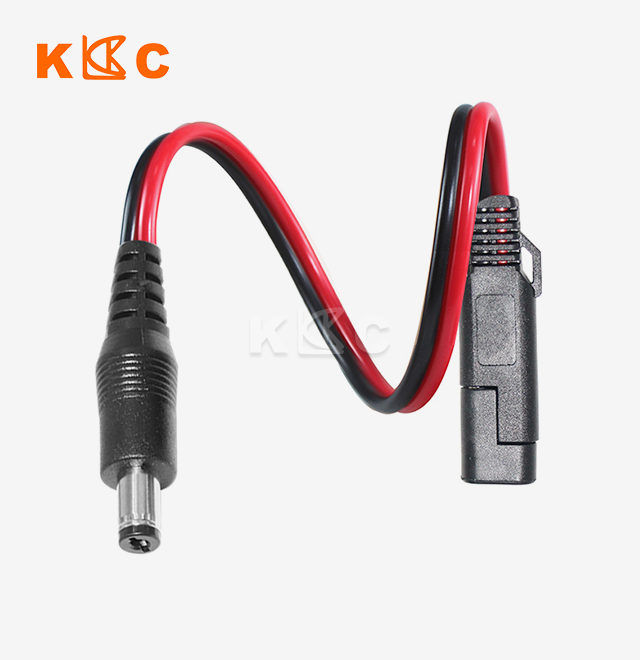 VIEW MORESAE to DC Adapter
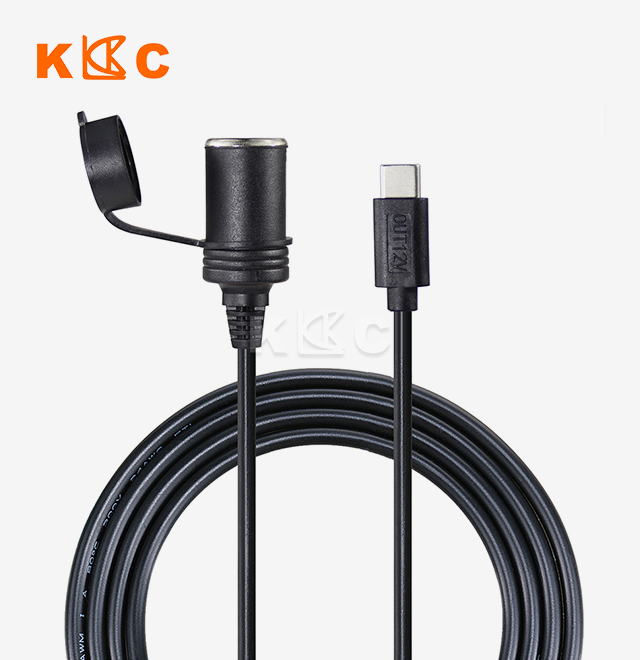 VIEW MOREUSB-C PD to 12V Cigarette Lighter Socket Cable
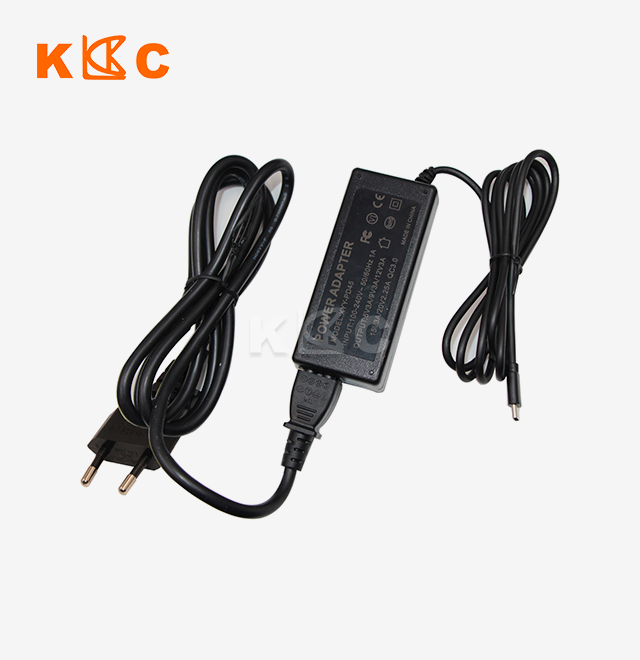 VIEW MOREuniversal laptop charger 65w
 VIEW MOREfigure 8 power plug
 VIEW MOREAS/NZS 3112 to IEC C5 Power Cord