


Common Mistakes When Buying Split Extension Cords for Office and Industrial Use
Buying the wrong split extension cord costs more than money — it costs uptime, safety compliance, and equipment lifespan. Whether you manage a corporate office or an industrial assembly line, the 1 in 2 NEMA1-15P to NEMA5-15R extension cord is one of the most frequently misspecified power accessories in B2B procurement. This Y-splitter configuration converts a single ungrounded two-prong outlet into two grounded three-prong receptacles, solving real outlet scarcity problems. Yet procurement errors remain widespread. This guide exposes the most critical mistakes and shows you exactly how to avoid them.
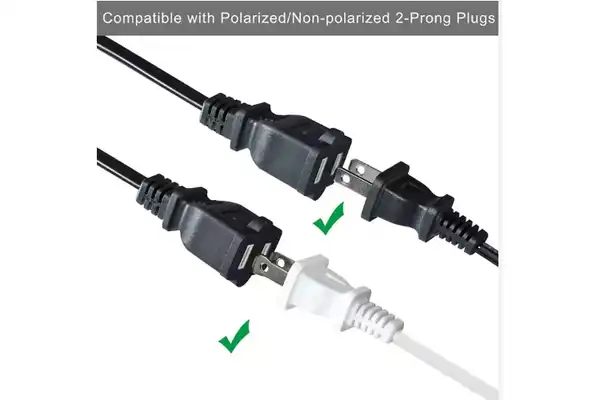
Understanding NEMA1-15P to NEMA5-15R Extension Cords: Basics and Common Misconceptions
What Do These Connector Designations Actually Mean?
The NEMA 1-15P plug has two flat blades that are parallel to each other and no ground pin. It can handle 125V and 15A circuits. In contrast, the NEMA 5-15R receptacle has three contact slots and can accept standard three-prong plugs. Modern grounded electronics can use old two-prong outlets to get power through a Y-splitter cord that combines these two interfaces. The 5-15R receptacle is the most popular type of 15-amp grounded plug in business buildings in North America, according to NEMA guidelines.
The most common false belief is that this cord adds a working ground route. It doesn't. The NEMA 1-15P plug is not grounded by design. The cord can physically fit three-prong plugs, but the ground wire in those plugs is still disconnected at the source outlet. When purchasing managers don't notice this difference, they put sensitive gadgets at risk of ground faults.
Common Mistakes in Choosing Split Extension Cords for Office and Industrial Use
It's common for procurement teams to make mistakes in specifications that don't seem like a big deal until something goes wrong or an accident happens. These are the worst mistakes we see a lot in both office and industrial settings:
- Ignoring amperage math across both outlets: The NEMA 1-15P input is rated for 15A total. When two devices share the Y-splitter, their combined draw cannot safely exceed that threshold. A common error is treating each NEMA 5-15R receptacle as independently rated at 15A. A 2019 CPSC report on extension cord-related fires identified overloading as the leading cause of electrical fires in commercial spaces, accounting for over 3,300 incidents annually in the US.
- Assuming the cord provides a true ground: As noted above, the ungrounded input does not establish a ground path. Using this splitter to power grounded medical devices, precision instruments, or sensitive AV equipment without understanding this limitation introduces safety and performance risk.
- Selecting undersized wire gauge: A 16 AWG conductor handles approximately 13A under continuous load conditions. Specifying an 18 AWG cord to reduce cost on a dual-outlet application running two sustained loads creates chronic voltage drop and thermal stress at the Y-junction — the mechanically weakest point of any splitter cable.
- Overlooking UL or ETL certification: Non-certified cords bypass mandatory dielectric withstand and polarity verification tests. UL 817 governs cord sets and power supply cords in the US market. Procuring uncertified cords to save cost creates liability exposure during facility audits and insurance reviews.
Over time, these mistakes get worse. Replacing broken cords in installations that are still working causes delays and extra labor costs that are higher than the initial savings of the 1 in 2 NEMA1-15P to NEMA5-15R extension cord.
Comparing NEMA1-15P to NEMA5-15R Extension Cords: Making the Right Choice
Some Y-splitter cords are better for some places than others. The table below shows an organized comparison that can help you make choices about specifications:
Our criteria include a standard consumer splitter and a heavy-duty industrial Y-splitter. The wire gauge can be 18 AWG or 14–16 AWG, and the jacket material can be light PVC or SJT/SVT industrial PVC. The Y-junction can be made of thin molded PVC or an oversized injection-molded block. The maximum rated current can be 7–10A or 13–15A, and the flame-retardant jacket is often missing or inconsistent. The product is certified by UL 94 V-0 and UL/ETL. It can be used in lamps, phone chargers, AV systems, test benches, and assembly lines.
| Criteria | Standard Consumer Splitter | Heavy-Duty Industrial Y-Splitter |
|---|---|---|
| Wire Gauge | 18 AWG | 14–16 AWG |
| Jacket Material | Light PVC | SJT/SVT Industrial PVC |
| Y-Junction Construction | Thin molded PVC | Oversized injection-molded block |
| Max Rated Current | 7–10A | 13–15A |
| Flame Retardant Jacket | Often absent | UL 94 V-0 compliant |
| Certified | Inconsistent | UL/ETL verified |
| Suitable Application | Lamps, phone chargers | AV systems, test benches, assembly lines |
When Should You Choose Heavy-Duty?
In industrial settings, cables are subject to wear and tear, mechanical bending, and long-term thermal load. An injection-molded Y-junction block relieves stress at the splitting point, stopping internal wire separation, which is the main way that commercial splitter cords fail. When you're setting up your system and running wires through wall channels, roof drops, or under raised floors, the jacket durability of an SJT-rated cord is very important.
What About Cord Length Selection?
The voltage drop gets bigger as you move away. When there is a 15A load on 25 feet of 16 AWG copper, the voltage drops by about 3.5%, which is close to the point where sensitive control electronics start to break down. When you choose 14 AWG for runs longer than 15 feet, the voltage stays stable for both devices that are connected to the 1 in 2 NEMA1-15P to NEMA5-15R extension cord.
Procurement Best Practices and Strategies for B2B Buyers
How Do You Verify a Supplier's Certification Claims?
It is possible to fake certifications. Reliable makers give buyers the real UL file number, which they can check on their own using UL's online Product iQ database. If you ask, a reliable factory will gladly give you the Hi-Pot test report and polarity verification data for every production batch.
When you buy in bulk, you have to think about more things. The cost per unit is affected by the wire gauge, the jacket rating, and the quality of the junction molding. Not the lowest price per unit, but the lowest overall cost of ownership, taking into account how often things need to be replaced, how much it costs to install, and the risk of not following the rules. A verified maker who offers a one-year warranty against production flaws greatly lowers that risk.
Supplier audits, even audits of documents done from afar, can show if a plant is in charge of its own molding and extrusion processes. When a manufacturer extrudes its own PVC jacket and molds its own plugs, this is called vertical integration. This eliminates the quality differences that happen when a final assembly operation gets parts from more than one sub-supplier.
Maintenance, Safety, and Future-Proofing Your Split Extension Cord Investments
What Inspection Routines Extend Service Life?
If you look at the Y-junction every three months for cracks, darkening, or warping, you can find thermal stress damage before it turns into a fault. Check to see if the molded strain relief on the NEMA 1-15P plug and the NEMA 5-15R sockets has come away from the jacket body. If there is a gap at that point, it means that the flex protection has been weakened.
As much as use, storage is important. When you coil extension cords under mechanical tension, the copper stranding inside gets stressed. Loose, wide coils keep conductors from getting worn out when they're not being used. When wires are stored near chemical solvents or oils in the workplace, they need jackets made of materials that can handle chemical contact.
In the future, NEC code changes will focus more and more on retrofitting ungrounded outlets in commercial buildings. When buildings are getting new electrical wiring, old two-prong outlets may be phased out completely. This can make it harder to plan for how NEMA 1-15P input cords will work with new wiring in the future. Teams in charge of buying things should keep an eye on these regulatory trends and plan their inventory cycles around them.
Conclusion
When you buy split extension cords without knowing about NEMA interface specifications, grounding limits, wire gauge requirements, and certification standards for the 1 in 2 NEMA1-15P to NEMA5-15R extension cord, you're adding to the risk in both office and industrial settings.
FAQ
Is the NEMA 1-15P to NEMA 5-15R cord considered a grounded extension cord?
No. The NEMA 1-15P plug is ungrounded. The cord physically accommodates three-prong plugs at the receptacle end, but no ground path exists at the source outlet. Do not use this configuration to power equipment that requires a functional equipment ground.
What is the maximum safe amperage for a dual-outlet Y-splitter cord?
The combined load across both NEMA 5-15R receptacles must not exceed the input plug rating. A 16 AWG cord is rated for approximately 13A total; a 14 AWG cord handles up to 15A. Both connected devices share that capacity — they do not each receive independent rated amperage.
Can this cord be used outdoors?
Standard SJT/SVT jacketed Y-splitter cords are rated for indoor use. Outdoor deployment requires an outdoor-grade jacket with UV and moisture resistance. Confirm the cord's environmental rating before routing through exterior conduit or exposed installations.
How do I verify that a cord is genuinely UL certified?
Request the UL file number from your supplier and cross-reference it in UL's Product iQ database at ul.com. Legitimate certification is traceable to a specific manufacturer and production scope — a file number that does not return results indicates a fraudulent claim.
Partner With Kuncan Electronics for Certified Y-Splitter Solutions
Kuncan Electronics brings 17 years of proven experience making things to every bulk order. As a reliable 1 in 2 NEMA1-15P to NEMA5-15R extension cord provider, we send UL- and RoHS-approved cords with full paperwork for Hi-Pot and polarity with every package. We are the best company for corporate and business buyers to buy from because we offer flexible OEM/ODM options, 15–25 day bulk lead times, and a 1-year manufacturing guarantee. To get samples or a bulk price right away, email our team at rhea@szkuncan.net or visit nema5-15.com.

References
1. U.S. Consumer Product Safety Commission (CPSC). Residential Electrical Fires and Related Hazards Annual Report. 2019.
2. National Fire Protection Association (NFPA). NFPA 70: National Electrical Code (NEC). 2023 Edition.
3. Underwriters Laboratories. UL 817: Standard for Cord Sets and Power-Supply Cords. 2022.
4. National Electrical Manufacturers Association (NEMA). NEMA WD 6: Wiring Devices — Dimensional Requirements. 2016.
5. Electrical Safety Foundation International (ESFI). Electrical Safety in the Workplace: Extension Cord Safety Guidelines. 2021.
6. International Electrotechnical Commission (IEC). IEC 60320: Appliance Couplers for Household and Similar General Purposes. 2021.

USER EVALUATE
Here is the customer's evaluation of us