
Deep Dive into DC and AC Cables: A Comprehensive Guide
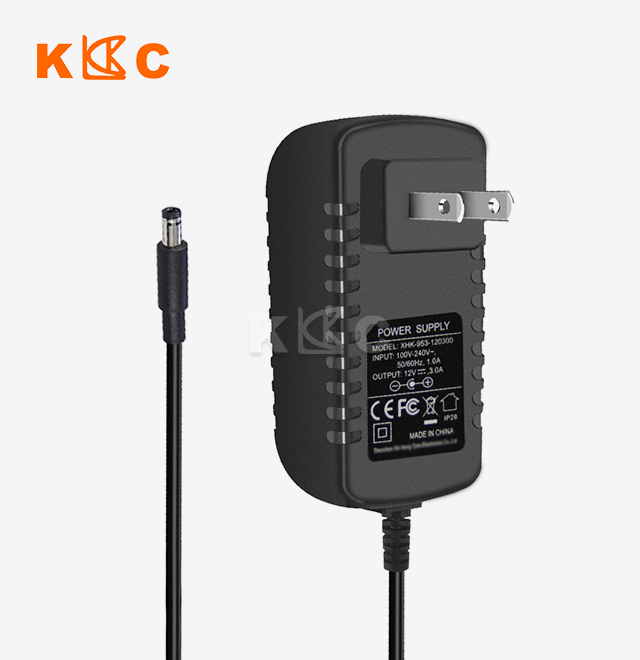
One question that comes up a lot when I talk to procurement managers about power options is what the real difference is between DC and AC power systems, and how do we pick the right cable? When you understand these basics, buying goes from being a guessing game to a strategic benefit. Most home and business electronics can be powered by normal wall outlets with an AC power cord, which sends alternating current (voltage that changes direction every so often). DC lines, on the other hand, send direct current in a single direction. These are often used in solar setups, battery-powered devices, and car systems. This difference affects everything in your supply chain, from the insulation materials to the design of the connectors. It also affects the safety, dependability, and running costs.


Understanding AC and DC Power Cables: Fundamentals and Differences
The Core Electrical Characteristics That Define Performance
Alternating current devices work by constantly switching the polarity, usually at 50Hz or 60Hz, based on the standards in the area. Because it oscillates, it's easy to use simple inductive ways to send signals over long distances and change voltages. Direct current keeps the voltage and polarity stable, which makes it perfect for tools that need stable power, charging batteries, and green energy systems where solar panels naturally make DC output.
Material composition differs significantly between these cable types. Most AC power cord solutions use bendable PVC or rubber insulation that can handle voltages between 300V and 750V. This is so they can handle the electromagnetic fields that are created by AC currents. DC cables have insulation that is designed to withstand constant voltage stress without polarity reversal. For outdoor solar systems, UV-resistant compounds are often used, and high-temperature silicone is used in car settings that work between -40°C and +125°C.
Safety Standards and Testing Protocols You Cannot Ignore
Different markets have very different certification standards. In North America and Europe, UL 62 and IEC 60227 have rules about how to build AC power cord variants. These rules say what the conductors must be sized, how thick the insulation must be, and how resistant the cord must be to fire. Medical-grade AC power cord products must meet IEC 60601-1 standards, which means they must have a leakage current of less than 100µA and two layers of insulation to keep patients safe from electrical dangers while diagnostic processes are being done or life-support equipment is being used.
When checking DC cables, different types of failure are looked at. Automotive-grade wires go through temperature cycle tests that mimic conditions inside an engine, vibration resistance tests according to ISO 16750, and chemical exposure tests with motor oil, brake fluid, and road salt. According to EN 50618, solar DC wires must show UV stability after 2000 hours of accelerated weathering. This makes sure that they can be used for 25 years, which is the same amount of time that photovoltaic panel guarantees cover.
Impact on System Reliability and Total Cost of Ownership
Picking the right cable technology has a direct effect on downtime and repair plans. DC control systems are better for industrial automation because they have less electromagnetic interference than AC systems. This means that fake sensor readings are less likely to happen in precision manufacturing. But AC distribution makes voltage change easier by getting rid of the need for complicated DC-DC converter circuits that add more places where things can go wrong in big buildings.
We've observed procurement teams cut yearly repair costs by 18–23% when they perfectly match cable specs to operating settings. Temperature ratings are very important. For example, wires marked for 60°C will break early in factories where the temperature regularly reaches 45°C, and over-specifying for 105°C uses up money without improving performance.
Comprehensive Types and Features of AC Power Cords for Business Applications
Standard Configurations for Office and Light Commercial Use
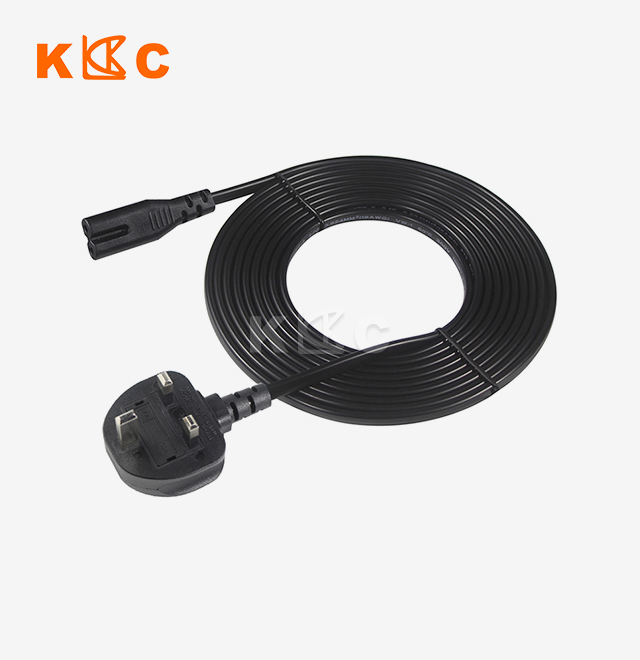
For North American markets, basic AC power cord options use three-wire grounded designs with NEMA 5-15P plugs that are rated at 15A and 125V. The label H05VV-F means that the cord is made of PVC and is insulated and wrapped in PVC. It is ideal for use indoors where there is little mechanical stress. These cords are used with desktop computers, monitors, printers, and other office equipment that doesn't get too hot or too wet (70°C or more).
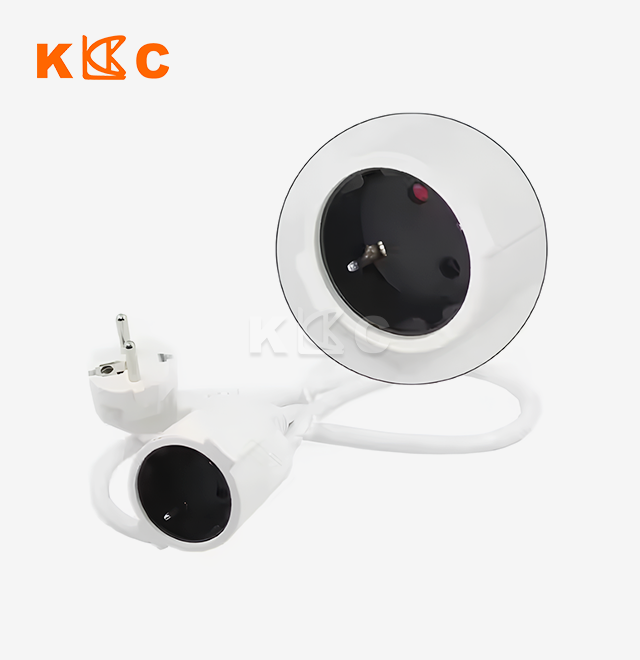
European rivals use CEE 7/7 plugs that are suitable with all continental markets. These plugs have round pins and side grounding clips. Heavy-duty rubber insulation rated for 450/750V is shown by the code H07RN-F. This type of insulation is more flexible in cold places and doesn't react with oils, so it's good for industrial workplaces and temporary outdoor installations during building projects.
Enhanced Protection Options for Demanding Environments
Here are specialized AC power cord variants addressing specific operational challenges:
- Surge-Protected Cords: Put metal oxide varistors (MOVs) right into the plug body to stop voltage spikes above 330V. This will keep sensitive electronics safe from lightning-caused transients and switching surges that happen a lot in factories with lots of motors. These cords are especially helpful in places where there are a lot of lightning strikes or where the grid infrastructure is getting old. In recorded case studies, they have been shown to extend the life of devices by 40 to 60 percent.
- Hospital-Grade Medical Cords: Have clear or green dots that show the system is complete, and nickel-plated brass blades that don't rust from being plugged in and out many times and being exposed to cleaning agents. The design includes 300% more strain relief than what is required by standard, which keeps the conductors from wearing out near the termination points, where movement concentrates stress. Even if the main insulation fails, the patient will still be safe with Class II insulation that has strengthened barriers.
- Waterproof Industrial Variants: Use IP67 or IP68 rated connectors with threaded locking collars and silicone seals for waterproof industrial variants. These allow submersion in wash-down settings or outdoor installs that get wet in the rain and snow. The wire jacket is made of chloroprene or thermoplastic elastomer materials that don't break down in UV light or crack when exposed to ozone. They also stay flexible at temperatures ranging from -40°C to +85°C. These protected designs are especially helpful for places that make food and wash cars.
- Nylon-Braided Reinforced Cords: Add an outer layer of protection to keep the wires from getting worn down in high-traffic areas where they cross stairs or are bent over and over again. The braiding also doesn't do much to keep rodents out of warehouses, but protected wires are better for places where pests are likely to be very common. These types can usually handle more than 50,000 flex cycles, while standard PVC-jacketed types can only handle 10,000.
Customization Capabilities for OEM and Private Label Programs
Our manufacturing infrastructure allows a wide range of custom choices that meet the specific needs of each piece of equipment. Color matching makes sure that the brand is consistent across all of its products. Pantone reference systems make sure that colors are the same from batch to batch, which is important for store displays and business installations. Custom length specs get rid of waste caused by over-coiling cables and make sure that the cables have enough reach without putting too much strain on the connections.
Interface changes allow connections to proprietary equipment, such as angled plugs for installations behind furniture that don't have a lot of room, locking mechanisms to keep connections from coming undone accidentally in transportation settings, and custom pin configurations for older equipment that doesn't have standard connectors. Custom packing and printing with logos help people recognize a brand while also giving end users information about the right voltage levels and safety warnings.
How to Choose the Right AC Power Cord: A Decision Support Framework for B2B Buyers?
Matching Cable Specifications to Operational Requirements
The standard compatibility filter is set by the voltage and current values. In North America, equipment that runs on 120V needs an AC power cord that is designed for at least 125V. This is to make sure that the insulation doesn't break down during short periods of overvoltage. In the same way, 15A devices need wires with circuit cross-sections that can handle steady loads without getting too hot, which means at least 14 AWG copper according to NEC rules.
Environmental factors have a big effect on the choice of materials. In warehouses where temperatures change, rubber-insulated lines keep their flexibility during winter cold storage. In climate-controlled data centers, on the other hand, cheaper PVC versions work just fine. Chemical exposure in the pharmaceutical industry requires special jacket compounds that can withstand harsh cleaning agents. On the other hand, outdoor digital signs setups need UV-stabilized materials that won't break down after years of being in the sun.
Certification Requirements and Compliance Verification
Following the rules keeps you from getting sued and lets you get into the market. ETL is an alternative mark that is just as well known as UL listing, which is still required for most business uses in the US. The European CE mark shows that a product meets the requirements of the Low Voltage Directive 2014/35/EU and the EMC Directive 2014/30/EU. However, country-specific marks, such as the VDE mark in Germany, are more highly regarded for quality assurance.
For medical jobs, you need special qualifications. IEC 60601-1 compliance makes sure that AC power cord products meet strict requirements for insulation coordination and leaking current limits, which keep patients safe during diagnostic and treatment procedures. When hospitals buy things, they usually look for green dot hospital-grade labels that show better assembly quality, reliability testing, and accelerated life testing that show how long something will last in clinical settings.
Evaluating Supplier Capabilities and Partnership Potential
The ability to support growth paths is based on manufacturing capabilities. Suppliers with production lines that are only used for certain types of cables usually have better quality control than facilities that are always changing their tools to make room for new products. We keep special tools for overmolding, automatic conductor insertion, and high-pot testing, which makes sure that every batch of output meets the limits set by the specifications.
Processes for quality assurance show that you care about being reliable. Inspection of incoming materials to check the purity of the conductors and the dielectric strength of the insulation, tracking of key dimensions during production, and final functional testing under load conditions are what set premium makers apart from commodity providers who put volume over consistency. Our three-step inspection process finds problems before they are shipped, which lowers the number of failures in the field to less than 0.1% per million units every year.
Procurement and Supply Chain Insights: Streamlining Your AC Power Cord Acquisition
Strategic Sourcing Models for Different Business Scales
Direct ties with manufacturers allow for the most flexibility and cost savings for businesses that know they will need a lot of products. Most of the time, the minimum order quantity for an AC power cord is between 1000 and 5000 pieces, but we can work with smaller amounts for medical or industrial types where the cost of the tools makes that possible. Lead times are between 15 and 25 days for normal specs and between 35 and 45 days for unique connectors that need custom tools.
Businesses that need a wide range of products or whose demand changes often can benefit from distribution partnerships. Official wholesalers keep a stock of popular combinations, so replacements can be ordered right away, and customers can get one bill for all of their different product categories. But customization choices are limited, and prices per unit go up 20–35% compared to buying directly from the maker.
Cost Optimization Without Compromising Quality Standards
Volume pledge plans let you get better prices. Manufacturers can plan their production more efficiently when they have annual buy deals with quarterly delivery schedules. This is because the costs per unit go down. We've set up plans that save you 12–18% compared to buying on the spot, and they include price protection terms in case the prices of raw materials go up or down.
Standardizing specifications lowers the cost of confusion. By focusing on a smaller number of cable types, you can make managing your inventory easier, lower the costs of quality control, and gain more bargaining power by buying more of each SKU. Engineers should check to see if practical needs really call for eight different types of cords, or if three standard specs would be enough for 95% of situations with only minor performance losses.
Quality Assurance and Compliance Verification Protocols
Independent evaluation by a third party verifies what the maker says. If you ask for test results from well-known labs like Intertek, TUV, or SGS, you can be sure that the voltage rates, current capacities, and resistance to fire meet published standards. We keep in touch with the main testing groups and can provide verified paperwork that meets the needs of both buying due diligence and regulatory audits.
Supplier audit programs check the quality processes and manufacturing skills of a company. On-site facility visits show how clean the production area is, how the testing equipment is calibrated, and how well the operators are trained—all of these things are strongly linked to consistent product quality. Our building is happy for customers to do audits because we know that being honest builds trust in long-term relationships.
Future Trends and Innovations in DC and AC Cable Technologies
Material Science Advancements Enhancing Performance and Sustainability
Halogen-free insulation materials for AC power cord stop the production of harmful gases during fires, which meets the needs of stricter building codes in public transportation and business construction. Mineral fillers and phosphorus-based chemicals give these materials the same level of flame resistance. However, they are a little less flexible, which means they need to be designed with that in mind for places that are very cold (below -25°C).
Bio-based polymer development claims to leave less of an impact on the world without sacrificing performance. New compounds made from sustainable materials like sugarcane and corn starch have similar dielectric properties and mechanical toughness to traditional AC power cord materials made from petroleum, but they have a carbon footprint that is about 40–50% smaller. Adoption is still limited by cost increases of 15-20%, but government pressure and business promises to sustainability are speeding up the time it takes to go commercial.
Smart Cable Technologies and IoT Integration
Predictive repair methods are possible with embedded sensor technologies. Temperature tracking built into industrial power distribution cables finds hot spots that are forming because of loose connections or overloading before the insulation gets damaged. This stops unexpected downtime. Current sensors can keep track of how much energy equipment uses at the circuit level, which lets cost sharing and efficiency improvement programs work more precisely.
RFID tags make it easier to keep track of assets and keep records of compliance throughout the duration of a product. Based on manufacturer-specified grades, procurement teams can see where cables are stored, when they were installed, and how much service life is left. Scanners on smartphones let maintenance teams view installation paperwork and certification records, getting rid of paper-based systems that are easy to lose or get jumbled.
Regulatory Evolution Shaping Product Development
Optimizing the size of drive conductors is required to save energy. Maximum resistive losses for power lines are set by California Title 20 and the European Ecodesign Directive. This means that heavier gauge wires are required than in the past. Even though these rules raise the prices of materials by 8–12%, they save money over the course of their lifetime because they use less energy for operations. This is especially important for data centers and big industrial facilities.
Recyclability and material recycling are important parts of the circular economy. Extended Producer Responsibility laws are becoming more common in European markets. They require makers to set up programs for collecting and returning used products at the end of their useful lives. This changes the way products are designed to use only one material, which makes them easier to take apart. We've started programs to accept old wires for copper recovery and polymer recycling, which is in line with how regulations are expected to change in North America.
Conclusion
To choose the right AC power cord options, you need to make sure that your procurement plan takes into account technical specifications, legal compliance, working environment factors, and supply chain considerations. AC and DC technologies are different in more ways than just the type of current they use. They also have very different needs for materials, safety tests, and applications that can be used with them. We've talked about how standard, surge-protected, medical-grade, and industrial versions all solve different operating problems. Long-term relationship success depends on certification standards and provider capabilities. New trends in eco-friendly materials, smart tracking technologies, and changing rules will continue to change how choices are made about what to buy. The best organizations take cable design as a strategic activity instead of just buying an item. They get technical help early on and build partnerships with makers that can meet both present needs and the acceptance of new technologies in the future.
FAQ
What is the difference between H05VV-F and H07RN-F in a european power cord?
The coding shows what type of wire it is. The 300/500V PVC insulation in the H05VV-F makes it suitable for use with consumer electronics inside. The H07RN-F has strong rubber insulation that is rated for 450/750V and is made for rough industrial settings with oil, water, and wear and tear.
Can a standard european power cord (Schuko) be used in the UK or Switzerland?
No right away. Swiss uses SEV 1011 (Type J), and the UK uses BS 1363 (Type G). A "Europlug" (Type C) can physically fit into Swiss sockets, but a grounded Schuko european power cord (Type F) needs an adapter or a dedicated localized AC power cord to function safely and legally.
Does a european power cord require VDE certification?
To enter the EU, a product must have a CE mark. In Germany and Europe, the VDE (Verband der Elektrotechnik) is the most important organization for independent safety testing. Buyers in the industrial sector strongly prefer VDE-certified lines as proof of high quality and to protect themselves from risk.
Partner with a Trusted AC Power Cord Manufacturer
Kuncan Electronics has been a specialist for 17 years in developing AC power cord connectivity solutions that make consumer electronics, industrial automation, medical devices, and new energy fields more reliable. Our ETL, VDE, CE, and RoHS certifications make sure that we comply with all global rules. We also offer flexible OEM/ODM services that let you turn your standards into custom goods through relationships in collaborative design. We send samples within 3–7 business days and finish bulk orders in 15–25 days. There are no minimum order numbers, so your goods can be used more quickly. Every product comes with a full guarantee and is backed by a variety of supply lines that make sure it is always available. Connect with our technical team at rhea@szkuncan.net to discuss how our certified AC power cord solutions and customization capabilities can address your specific operational challenges while maintaining competitive positioning in your target markets.
References
National Electrical Manufacturers Association (NEMA). "ANSI/NEMA WC 57: Standard for AC Power Cords and Cable Sets." Rosslyn, VA: NEMA Publications, 2021.
International Electrotechnical Commission. "IEC 60227: Polyvinyl Chloride Insulated Cables of Rated Voltages up to and including 450/750 V." Geneva: IEC Central Office, 2020.
Underwriters Laboratories. "UL 62: Flexible Cords and Cables - Standard for Safety." Northbrook, IL: UL Standards & Engagement, 2019.
European Committee for Electrotechnical Standardization. "EN 50525: Electric Cables - Low Voltage Energy Cables of Rated Voltages up to and including 450/750 V." Brussels: CENELEC Publications, 2022.
Institute of Electrical and Electronics Engineers. "IEEE 1725: Standard for Rechargeable Batteries for Portable Computing Devices - Cable and Connector Safety." Piscataway, NJ: IEEE Standards Association, 2021.
Occupational Safety and Health Administration. "OSHA 29 CFR 1910 Subpart S: Electrical Safety Standards - Flexible Cords and Cables." Washington, DC: US Department of Labor, 2020.

USER EVALUATE
Here is the customer's evaluation of us
_1781502912074.webp)