
Different Types of IEC Power Cords
It is important to know about the different types of IEC power cords when looking for solid power connectivity options for business or industry use. An IEC cord, which is made to meet the standards of the International Electrotechnical Commission, is a common way to connect electrical tools to mains power sources around the world. These cords solve important problems with compatibility by having interfaces that are recognized by all kinds of equipment, from servers in data centers to medical devices. They also follow strict safety rules for voltage ratings of up to 250V and temperature ranges that are suitable for a wide range of working conditions.
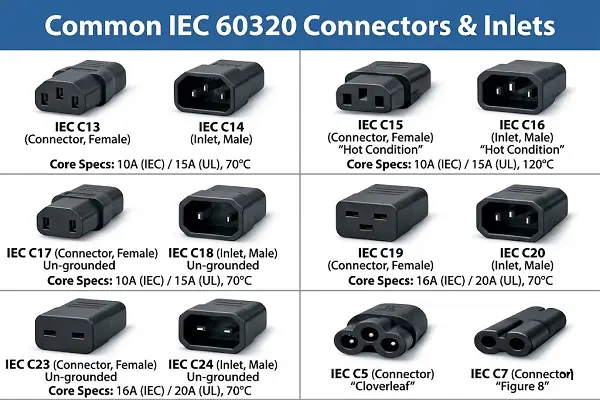
Understanding IEC Power Cords: Definitions and Core Specifications
What Makes IEC Power Cords Different from Standard Power Cables?
The IEC 60320 framework standardizes device couplers and connector geometries around the world. IEC power cords follow this framework. Instead of region-specific power cables with plugs that look very different, these cords have detachable connectors with pin layouts that stay the same no matter where your equipment works. This standardization solves a problem that has been bothering the industry for a long time: it lets companies ship the same types of equipment all over the world by just switching out the plug end of the power cord that works in each country. This saves them from having to rethink whole power supply units.
Key IEC Connector Types and Their Applications
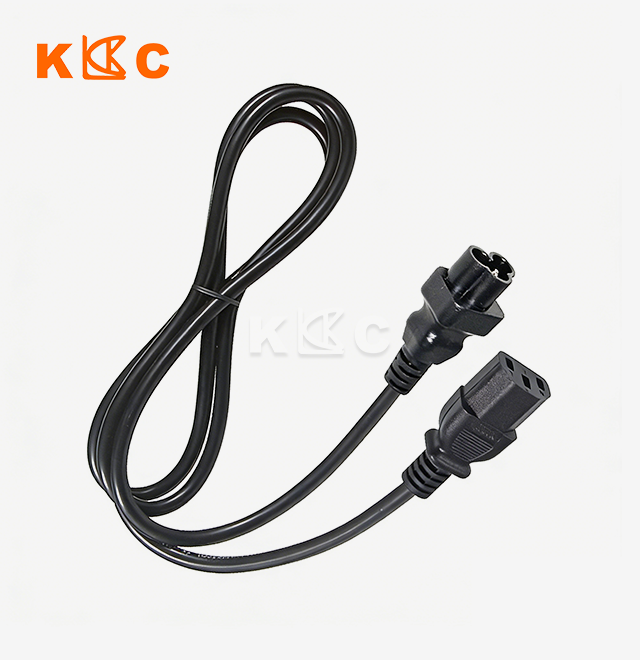
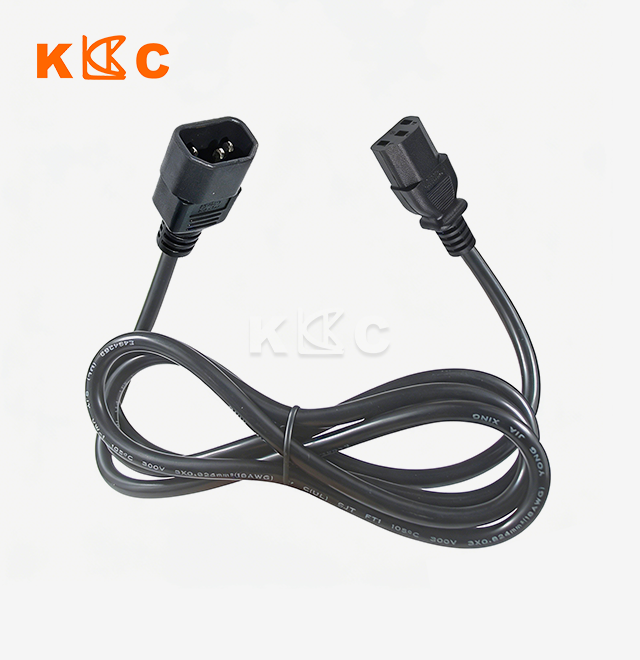
There are a number of common types of connectors, and each one meets a different power need. The C13 connector, which is sometimes called the "computer cord" connector, works with C14 inlets and can handle up to 10A worldwide (15A according to UL guidelines). These are in almost all desktop computers, monitors, and network switches. As the power level goes up, C19 and C20 connectors handle 16A globally (20A UL-rated), which makes them necessary for server racks and high-performance computers that need more power than normal office equipment. The C15 and C16 pair adds an important difference: a notched design that stops cords with lower temperature ratings from linking to high-heat devices like electric kettles or blade server chassis that get up to 120°C in the room.
Core Technical Specifications That Matter
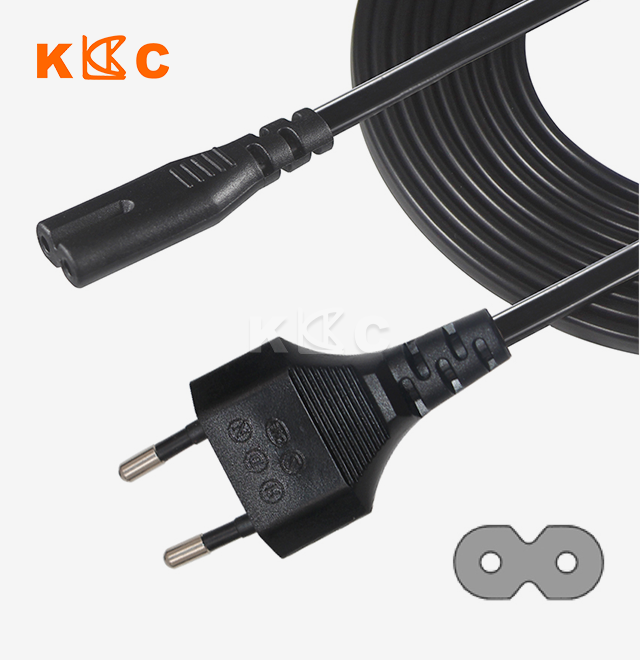
Depending on the electrical facilities in the area, voltage values are usually between 125V and 250V. The choice of wire gauge, which is shown in AWG (American Wire Gauge) or mm², has a direct effect on the amount of power it can carry and the voltage drop over distance. For short runs, a 16AWG conductor can handle mild loads just fine. For higher amperage or longer wire lengths than three meters, you'll need a 14AWG or 12AWG conductor. For Class I equipment safety, pin configurations include grounding mechanisms. However, for Class II double-insulated uses, some low-power devices use ungrounded C7/C8 "figure-eight" connectors.
Regional Safety Standards and Compliance Requirements
Different markets have very different certification standards, which makes things harder for foreign procurement teams. In North America, goods must have UL or ETL listings to make sure they meet NEMA safety rules for electricity. For deployments in Europe, you need VDE or CE marking that meets EN standards, and for deployments in the UK, you need BS approval. Australia and New Zealand require that the SAA be approved and that the RCM be marked. Our power cord assemblies at Kuncan Electronics are certified to comply with all major global standards, such as ETL, VDE, CE, SAA, and RoHS. This takes the guessing out of deploying in multiple regions and speeds up your time to market across foreign operations.
IEC Versus NEMA: Understanding the Functional Divide
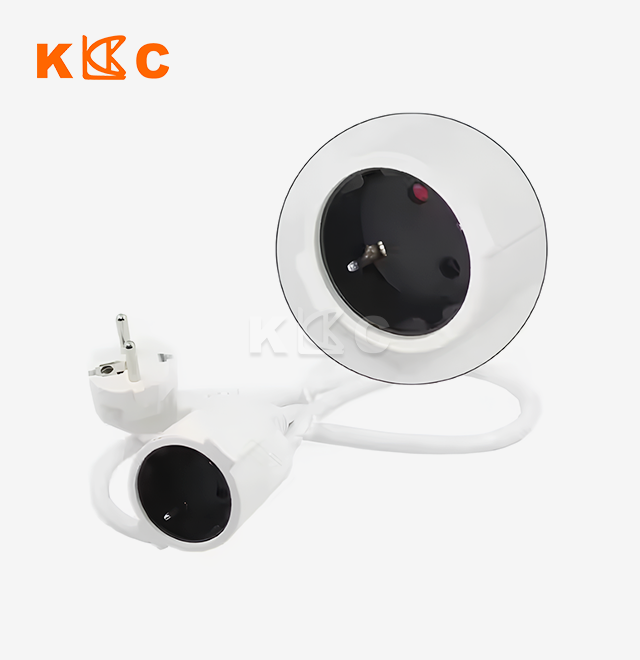
The link between the cord and the equipment is standardized by IEC cords. However, the plug end of the cord usually follows local standards, such as NEMA in North America or BS1363 in the UK. One end of a full power cord assembly might have a NEMA 5-15P plug, which is the normal three-prong plug in the US. The other end might have a C13 connector for connecting to equipment. This hybrid method solves the problem of the "last mile" power connection: your computer equipment uses standard C14 inlets around the world, but wall outlets are different in each country. Knowing this difference helps procurement teams choose the right cord setup for each deployment site so that equipment power sources don't have to be redesigned.
In-Depth Comparison of Different IEC Cord Types for B2B Applications
C13 and C14: The Workhorse of IT Infrastructure
The C13/C14 pairing is most common in business IT settings because it delivers enough power while keeping the connection size small. In the 2A to 10A range, these cords can handle most office equipment, from laser printers that need 6A to warm up to network-attached storage units that need 4A all the time. The connector's retention force standard makes sure that there is solid contact pressure without the need for locking devices. However, in high-vibration settings, accidental disconnection is still possible. When it comes to this, the choice of material is important. High-quality C13 connectors have housings made of high-impact polycarbonate that can handle being inserted and removed many times, while cheaper ones made of ABS plastic may break under stress.
C15 and C16: Engineered for High-Temperature Environments
High-performance computer groups and blade server setups put a lot of heat on the chassis, which regularly gets hotter than 70°C. Standard C13/C14 cords that are designed for pin temperatures of 70°C don't work well in these conditions, putting safety at risk by causing insulation to break down. The C15/C16 system solves this problem with better materials, like H05RR-F rubber insulation or special high-temperature PVC formulas. It also has a keying notch that stops lower-rated cords from going into high-temperature inlets. This mechanical disconnect makes it impossible for maintenance staff to connect the wrong cords by accident while repairing equipment.
C19 and C20: Heavy-Duty Power for Enterprise Equipment
When the label on your machine says 12A or more, you need a C19/C20. These strong connectors have more contact area and bigger pin spacing so they can safely handle high currents without getting too hot. Power distribution units in data centers often have C19 outlets that connect to dual-power-supply computers so that they can keep running even if one supply breaks. The bigger shape of the socket lets 12AWG or 10AWG wires fit, which is needed to keep voltage drop to a minimum over six-foot cable runs between the PDU and the equipment. Purchasing teams should make sure that the gauge of the wire fits the grade of the connection. For example, using a 16A-rated C19 connector with 16AWG wire will cause a thermal bottleneck that lowers safety limits.
Material Considerations: PVC, Rubber, and Specialized Insulations
Cords that are approved for indoor use usually have a PVC (polyvinyl chloride) jacket that is marked as SJT or H05VV-F, based on the standard in your area. At room temperature, PVC is flexible, and in controlled settings, it is very cost-effective. For outdoor use, rubber materials like SJTW or H05RN-F are needed that don't break down when exposed to water or UV light and stay flexible at temperatures ranging from -40°C to +60°C. Specialized settings might need LSZH (Low Smoke Zero Halogen) materials that stop toxic fumes from being released during fires. This is especially important in sealed areas like server rooms or hospitals where smoke poisoning makes it dangerous to leave. At Kuncan Electronics, we can make jacket compounds that are completely flexible to fit your specific working setting while still meeting all safety standards.
Selecting Appropriate Cord Length and Connector Configurations
Cable length of an IEC cord has a direct effect on both how well it works and how easily it can be installed. In high-density rack setups, where every inch of space is important, shorter cords (one to three feet) keep voltage drop to a minimum and make cable handling easier. Longer parts, from six feet to unique lengths longer than 25 feet, give you more options for moving equipment and making changes to old systems. Longer lengths, on the other hand, need bigger conductors to keep the voltage stable; for example, a 15-foot run at 10A needs at least 14AWG to keep the voltage from dropping by 3–5%, which breaks down equipment. Instead of defaulting to standard lengths, procurement specifications should match length to real installation needs. This way, there won't be too many IEC power cords or not enough reach, which causes daisy-chaining.
How to Choose the Best IEC Power Cord for Your Business Needs?
Matching Cords to Specific Business Scenarios
Standard C13 cords with 16AWG conductors and middling lengths work well in desktop computer settings. During normal use, the average business workstation pulls 3 to 5A, which is well within the range of what most cords can handle. When you set up a server rack, you have to deal with a lot of different issues, such as a lot of equipment, multiple power lines that need colored cords to tell the difference between the A and B feeds, and high temps because of cooling problems. In factory automation settings, vibration, dust, and possible chemical exposure can happen. In these situations, locking C13 connectors and industrial-grade jacketing are required, not just extra. For medical devices, the standards are even higher, and they have to meet hospital-grade standards like stronger holding force tests and being able to work with harsh disinfectant cleaning routines.
Critical Selection Criteria: Voltage, Amperage, and Environmental Factors
Start by looking at the nameplates of the tools to find out how much power it really needs. For safety reasons, a 120V, 8A device needs a cord rated for at least 10A. A 13A or 15A rating is better because it can handle the surge of current during startup. The voltage grade must match or be higher than your electrical system. For example, 250V-rated cords can be used anywhere, but 125V-rated parts can only be used in North America. The environment affects the choice of material: will the lines go through temperature-controlled areas or go through heat cycling? Is there moisture, chemical vapors, or physical harm in the work area? By answering these questions, you can avoid premature failure and safety issues that stop activities.
The Importance of Accurate Equipment Matching
Connector mismatch is a common way for buying to go wrong, and it costs a lot to fix. It seems like a no-brainer that you shouldn't order C13 cords for equipment with C19 inlets, but specification mistakes happen all the time when a lot of different types of equipment are ordered at once. Instead of guessing based on the category of the equipment, check the inlet types directly from the equipment paperwork. For example, some computers use C19 instead of normal C13 when they have high-performance graphics cards that use more power. When you try to use a C7 cord that isn't grounded with Class I equipment that needs a protective earth link, you create life-safety risks that your liability insurance doesn't cover.
Evaluating Suppliers: OEM Versus High-Quality Compatible Options
Original equipment maker cords are more expensive, which makes it hard for bulk buyers to explain, especially when they need to send hundreds or thousands of units. If you buy suitable high-quality alternatives from trusted companies that keep their certifications up to date and only use certain materials, they will work just as well and be just as safe. The most important difference is how the product is made: does the seller use 99.99% oxygen-free copper conductors or copper-clad aluminum that increases the risk of fire to save money? Are connection contact springs made to keep the right amount of entry force for more than 5,000 mating cycles? Kuncan Electronics has over 300 trained workers and has been specializing in production for 17 years. They offer certified compatibility that meets OEM performance at a price that keeps your project's profit margins safe.
Advantages of Bulk Purchasing and Custom Solutions
Buying in bulk has more strategic benefits than just lowering unit costs. Material continuity across multi-phase projects is ensured by consistent seller relationships. This stops the "mixed vendor" situation, in which cable jacket colors and flexibility change from shipment to shipment. Custom designs, like different lengths, color schemes, or connector types, are okay for bulk sales that aren't available for regular goods. Private labeling is another custom service that can be offered. This lets distributors build brand value through custom packing and image integration. Our fast production means that samples are ready in 3-7 days and big orders are finished in 20-30 days. We also have open MOQ policies that allow for both large launches and smaller replenishment orders without charging extra for an IEC cord.
Conclusion
To choose the right power cord assemblies, you have to weigh technical requirements against working needs and price limits. The types of connectors, material qualities, and licensing standards we've looked at help you make smart purchasing choices that protect your equipment investments and the safety of your employees. If you understand these basic concepts about power connectivity, you'll have less downtime, better safety compliance, and a lower total cost of ownership, whether you're setting up hundreds of computers, running mission-critical server infrastructure, or handling fleets of industrial equipment. Because IEC cord systems are standardized, they make global operations easier, and the wide range of setups makes sure that they are perfectly matched to your application needs.
FAQ
Can I Use a C13 Cord with C15 Equipment?
You can't safely use a normal C13 cord with equipment that has a C16 inlet because the C16 inlet has a notch that keeps lower-temperature-rated cords from going in. This automatic interlock stops people from using lines that aren't strong enough on high-temperature equipment. But C15 cords will directly connect to C14 inlets. This is too much detail, though, and it adds costs without being needed. Connector temperature values should always match what the machine needs.
How Do I Identify Cord Amperage Rating?
Amperage ratings can be found on the wire jacket, either stamped or written directly on it. Find words like "10A 250V" or "SJT 18AWG" close to the connection body. The wire size directly affects the amount of power it can carry: 18AWG can handle 10A, 16AWG can handle 13A, 14AWG can handle 15A, and 12AWG can handle 20A. When the marks have worn off, measure the wire gauge directly or get a new IEC cord so that you don't make connections that aren't rated correctly.
What Causes Cords to Feel Warm During Operation?
A little warmth when the load is put on the resistors is normal, but wires that are too warm to touch are a sign of trouble. One common reason is that the leads are too small for the load. For example, using 18AWG wire for a 12A draw causes too much resistance heating. High resistance causes localized warmth when there isn't enough contact pressure at the surfaces of connectors. The same effects happen when cables are too long without the right wire upsizing. Take care of warm wires right away by making sure that the load requirements match the cord specs and checking the connections to make sure they fit properly.
Partner with a Trusted IEC Cord Manufacturer for Your Power Connectivity Needs
Kuncan Electronics has enterprise-grade IEC cord options that are backed by full global certifications and are ready to meet your power communication needs. Our manufacturing know-how, honed over 17 years of serving foreign markets, gives your businesses the quality stability and technical performance they need. All of the cords we make are made with precision-molded fittings and 99.99% oxygen-free copper wires that meet strict IEC 60320 standards. This means that they will work reliably in a wide range of settings, from data centers to medical facilities. Our flexible OEM/ODM capabilities and streamlined supply chain give you a competitive edge that strengthens your market place, whether you need standard configurations sent quickly or solutions engineered to your exact specs. Talk to our technical team at rhea@szkuncan.net about your unique needs and find out how our certified product lines, customization skills, and quick support can help you get the best power connection.
References
International Electrotechnical Commission. (2018). IEC 60320-1: Appliance Couplers for Household and Similar General Purposes - Part 1: General Requirements. Geneva: IEC Publications.
Underwriters Laboratories. (2019). UL 817: Standard for Safety Cord Sets and Power-Supply Cords. Northbrook: UL Standards & Engagement.
National Electrical Manufacturers Association. (2020). NEMA WD 6: Wiring Devices - Dimensional Specifications. Rosslyn: NEMA Publications.
European Committee for Electrotechnical Standardization. (2017). EN 60320 Series: Appliance Couplers for Household and Similar Purposes. Brussels: CENELEC Standards.
Institute of Electrical and Electronics Engineers. (2021). IEEE 1789: Recommended Practices for Modulating Current in High-Brightness LEDs for Mitigating Health Risks to Viewers. New York: IEEE Press.
Standards Australia. (2019). AS/NZS 3112: Approval and Test Specification - Plugs and Socket-Outlets. Sydney: Standards Australia International.

USER EVALUATE
Here is the customer's evaluation of us