
How Does Powercon True1 Cable Improve Professional Power Safety?
When your touring lighting rig fails mid-concert or your LED video wall flickers during a corporate presentation, the culprit is rarely the equipment itself—it's the power connection, and for powercon true1 cable, professional B2B environments face critical power safety challenges, including accidental disconnections, electrical hazards, and operational downtime that translate into financial losses and damaged reputations, and Powercon True1 cable emerges as a reliable and robust solution designed specifically for demanding industrial and production applications where safety and reliability are paramount. Professional B2B environments face critical power safety challenges, including accidental disconnections, electrical hazards, and operational downtime that translate into financial losses and damaged reputations. Powercon True1 cable emerges as a reliable and robust solution designed specifically for demanding industrial and production applications where safety and reliability are paramount.
Unlike conventional locking power solutions such as the Powercon True1 cable, the True1 variant incorporates Circuit Breaking Capacity (CBC), enabling safe hot-plugging under live load conditions. This blog provides procurement professionals, electrical engineers, and facility managers with an in-depth understanding of Powercon True1's features, benefits, and use cases, guiding informed purchasing decisions and promoting safer power management practices across industries.
Understanding Powercon True1 Cable and Its Safety Features
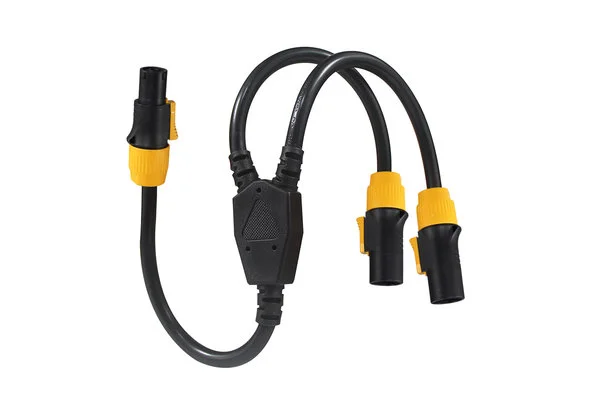
Powercon True1 cable is a special kind of locking power line made to make high-current links safely in harsh professional settings. The Powercon True1 cable works well for many normal tasks, but the True1 cable supports better safety standards and is designed for long-term or semi-long-term setups that need to be completely reliable.
Technical Specifications That Matter
Our Powercon True1 cables at Kuncan Electronics can handle 16A/20A currents and voltages up to 250V AC. This means they can be used with high-demand equipment on multiple continents. Pure copper conductors in wire gauges from 12AWG to 16AWG are used in the cables. This makes sure that the cables work well and that there is little voltage drop over long cable runs. Silver-plated contacts keep the resistance below 3mΩ, which stops heat buildup that could cause the link to break.
The NAC3FX-W female connector and the NAC3MX-W male connector are used in this setup. Both are designed to mate over 5,000 times, which is a lot longer than most industrial connections. When it comes to cable covers, they are made of H07RN-F rubber or SJOOW elastomer, which is flexible from -30°C to +80°C and resistant to oil, UV damage, and wear.
Robust Locking Mechanism and IP65 Protection
The twist-lock system is a major improvement over friction-fit joints in terms of safety. Once the locking collar is in place, it has to be rotated counterclockwise on purpose in order to come loose. This makes it almost impossible for cable tension, vibrations, or accidental contact to cause the collar to come loose. When wires run through complicated rigging structures or hold up equipment that is hung, this mechanical security is very important.
Our IP65 waterproof grade protects against dust and water jets coming from any direction. This means that you can use it safely outside at concerts, stadium events, and harsh industrial settings. Traditional blue and gray PowerCon connectors don't have this environmental sealing, so internal contacts can fail because of moisture.
International Certifications and Compliance
True1 cables have been approved by CE, VDE, ETL, and SAA, among others, showing that they meet international safety standards for electrical equipment. These certificates aren't just pieces of paper; they're the result of thorough testing by a third party of the dielectric strength, touch temperature rise, mechanical endurance, and flame retardance. This certification portfolio makes sure that B2B buyers who are in charge of deployments in more than one jurisdiction can easily clear customs and follow all the rules in North America, Europe, Australia, and the Asia-Pacific region.
Common Power Safety Challenges in Professional Settings
When standard power lines are used in the workplace, they often pose risks that affect both worker safety and the ability to keep operations running. The biggest problem is still loose connections, which cause power to go out and on, which hurts sensitive gadgets and stops important processes.
The Hidden Costs of Accidental Unplugging
A traveling production company recently figured out how much it lost because of a single accidental disconnection during a stadium event. The losses included 12 minutes of downtime, the cost of emergency fixing, and damage to the company's image that led to fines that added up to a lot of operational costs. The accident happened when crew members kicked a standard IEC power wire, which messed up a whole lighting truss.
Unplugging by accident has different effects on different industries, and for powercon true1 cable, in broadcast settings, a short loss of power can mess up recorded content and require a lot of reshoots, and when factories have problems with their production lines, those problems spread through the supply chains, and when equipment loses power without warning, it can cause patients to be unhappy and appointments to be canceled. In broadcast settings, a short loss of power can mess up recorded content and require a lot of reshoots. When factories have problems with their production lines, those problems spread through the supply chains. When equipment loses power without warning, it can cause patients to be unhappy and appointments to be canceled.
Electrical Hazards and Fire Risks
Electrical arcing, a plasma discharge that can reach temperatures over 3,000°C, is caused by connections that are too loose. Extreme heat breaks down insulation, turns nearby plastics into carbon dioxide, and sets fire to nearby flammable materials. The National Fire Protection Association lists many business fires that started because of bad power connections. Investigation reports say that "poor contact maintenance" and "inappropriate connector selection" were factors in these fires.
The PowerCon True1 cable and other standard locking cords do a good job of basic mechanical holding, but they might not be durable enough for harsh environments. When water gets into connecting housings in outdoor setups, it makes conductive paths that let current leak, cause ground faults, and put people at risk of getting shocked.
Operational Downtime and Maintenance Burden
It's common for power outages to cause a lot of unnecessary repair hours, according to facility managers. To fix intermittent connection problems, you have to replace cables, inspect connectors, and clean contacts on a regular basis. These are time-consuming tasks that keep technical staff from doing more useful work. The cumulative effect changes measures of operational efficiency and raises the total cost of ownership for infrastructure used to distribute electricity.
How Powercon True1 Cable Enhances Power Safety – A Systematic Approach?
The Powercon True1 makes power safer by using a multi-layered design that handles mechanical, electrical, and weather weaknesses all at the same time. This all-encompassing approach makes system efficiency and worker safety better in ways that can be measured.
Circuit Breaking Capacity for Hot-Plug Safety
The Circuit Breaking Capacity (CBC) feature changes the way expert power is distributed in a big way. Unlike regular locking connectors that need circuits to be turned off before connecting or disconnecting, CBC-rated True1 cables let you safely plug them in while the load is live. This is possible because the contacts are carefully designed to engage ground connections before live conductors and arc suppression materials safely dissipate switching transients.
This means that event production teams will save a lot of time during setup and takedown. Audio engineers can add or take away powered speakers without having to turn off the whole PA system. Lighting workers move fixtures around while programmers are working on the computer without stopping what's being done. These changes to the workflow make it easier to get things done while getting rid of the safety risks that come with handling energized connections.
Superior Material Durability and Mechanical Resilience
We make True1 cables with high-purity copper conductors that don't contain any oxygen. These conductors stay conductive even after being bent thousands of times. The silver-plated contact areas are much better at resisting rust and corrosion than brass or bronze contacts. This means that the electrical performance will stay the same over the life of the product. Strain relief boots use strengthened thermoplastic rubber to spread mechanical stress over larger cable entry zones. This stops conductor wear, which breaks internal wires.
The materials that make up the wire jackets are put through tests that speed up the aging process by simulating years of UV exposure, changing temperatures, and chemical contact. Because our H07RN-F rubber formula stays flexible at temperatures below zero and doesn't harden when exposed to heat for a long time, True1 cables can be used in both high-temperature industrial settings and outdoor installations in the Arctic.
Thermal Management and Arc Suppression
The rise in contact temperature is an important safety factor that many standard cables miss, and for powercon true1 cable, when electricity flows through connection points, resistance makes heat that is equal to the square of the current times the contact resistance (P = I²R), and connectors that weren't built well can cause temperatures to rise above 50°C, which breaks down shielding materials and raises the risk of a fire. When electricity flows through connection points, resistance creates heat that is equal to the square of the current times the contact resistance (P = I²R). Connectors that weren't built well can cause temperatures to rise above 50°C, which breaks down shielding materials and raises the risk of a fire.
Our silver-plated contacts keep the temperature rise below 30°C even when the rated current capacity is used. This is possible by increasing the contact surface area and optimizing the spring pressure, which keeps the mechanical force constant over the duration of the connection. Arc suppression materials built into the connection case put out switching arcs in milliseconds, stopping the steady plasma discharge that hurts contacts and poses an ignition risk.
Compliance with Global Safety Standards
True1 wires meet the standards for IEC 60320 connectors and NEC Article 400 bendable cords. Our factory keeps its ISO 9001 quality management certification up to date. This makes sure that production processes are always the same and that all of the steps can be tracked, from receiving raw materials to shipping finished goods. Every wire goes through a full set of electrical tests, which include checking the dielectric strength at 1500V, making sure the continuity is correct down to the micro-ohm level, and making sure it is waterproof under conditions of forced water spray.
These strict quality standards make sure that buying teams get goods that exactly meet their needs. Instead of the many fake or inferior products on the market, authenticated True1 cables from trusted suppliers like Kuncan Electronics offer reliable performance that safeguards both people and equipment.
Comparing Powercon True1 Cable with Alternatives for Professional Use
Knowing the differences between True1 and other locking power solutions helps you make smart buying choices that meet the needs of your individual application. Professionals use multiple connector systems to distribute power, but they have very different functions.
True1 Versus Standard Powercon True1
The powercon true1 cable uses blue (power-in) and grey (power-out) connectors, which became the usual way to distribute power in a daisy-chain. This color-coded method stops links with the wrong polarity and makes it easy for power to flow between equipment units that are next to each other. True4 connectors have a solid mechanical locking system and can handle 20A of power, which is enough for most professional lighting and audio uses.
True1 builds on this base by making a number of important improvements. The uniform connector design gets rid of the blue/gray difference, which makes managing supplies and buying things easier. More importantly, True1's Circuit Breaking Capacity lets it safely handle load-breaking tasks that True4 connections can't. The IP65 rating protects against weather conditions that could damage regular True4 installations.
Compatibility and Migration Considerations
True1 and True4 connectors are not mechanically compatible because their locking mechanisms have different shapes that make them incompatible. To avoid implementation problems, facilities that are switching from True4 to True1 infrastructure need to plan their moves in a structured way. At first glance, this incompatibility may seem like a bad thing, but it actually keeps CBC-capable and non-CBC connectors from being mixed, which could cause unsafe hot-plugging tries on equipment that isn't approved.
Clear marking rules and staff training are necessary for businesses that use mixed power distribution systems. Cable management inventories should have separate tags for True1 and True4 cables to make them easy to find. The maintenance paperwork needs to say which parts of the tools need CBC capability and which ones only need standard locking links.
Procurement Strategies for Bulk Buyers
Buyers who buy in bulk benefit from working with makers that let them make a lot of changes. Kuncan Electronics offers private label packaging and branding, custom wire colors and jacket materials, special length needs, and better UV and cold resistance treatments that are made to fit different deployment environments. With these customization options, rental companies and installers can set their products apart while also making sure that the wire specs are best for the temperature in each area.
Buying from approved makers and sellers protects capital investments by ensuring product authenticity and support after the sale, and for powercon true1 cable, unfortunately, there are fake products on the market for professional cables that look a lot like real True1 connectors but don't have the right certifications, are made with low-quality materials, and break down quickly when put through operational loads, and checking the supplier's qualifications, asking for proof of certification, and trying samples before committing to large orders are all steps in the verification process. Unfortunately, there are fake products on the market for professional cables that look a lot like real True1 connectors but don't have the right certifications, are made with low-quality materials, and break down quickly when put through operational loads. Checking the supplier's qualifications, asking for proof of certification, and trying samples before committing to large orders are all steps in the verification process.
Best Practices for Using Powercon True1 Cable Safely and Efficiently
The best way to use Powercon True1 is to follow the right steps for installation, wiring, and continued upkeep. These steps will keep the product safe for as long as it lasts. When you handle cables the right way, they last longer and keep working at a high level, which is why you should buy high-quality connectors.
Installation Guidelines and Common Pitfalls
A successful True1 installation starts with routing the cables in a way that keeps mechanical stress to a minimum. Avoid sharp bends that are smaller than the cable's minimum bend radius, which is usually 10 times the diameter of the cable. Too much bending damages the conductors inside, which can lead to intermittent connectivity or complete failure. In places with a lot of foot traffic where wires are likely to be hit or worn down, use cable management tools like strain release hangers and protective conduit.
Before adding rotational force, make sure the keyway guides are lined up when mating connections. Forcing connectors that aren't lined up right damages the locking collar threads and makes mechanical retention less reliable. It's important to connect them in the right order. Hold both connector bodies firmly and turn the locking collar clockwise until you hear a click and feel more resistance. This shows that the contact is fully engaged and that the pressure is right.
One common fitting mistake is tightening the locking collars too much, which damages the connecting body and makes it impossible to take apart again. Too many pulls on the wire cause tension that stops the locking device from holding. When you let cables hang freely from connector joints, mechanical stress builds up at the point where the cables enter, which speeds up the failure of the strain relief.
Maintenance and Inspection Protocols
Set up regular check times to look for cracks, deformation, or contamination in connection housings. Make sure that the locking rings can turn freely without blocking or having too much play. Check the length of the cable jackets for any cuts, scrapes, or compression damage that could put electrical safety at risk. Pay extra attention to places near the link boots where mechanical stress builds up when they bend.
When connections show higher resistance or a rise in temperature, they need to be cleaned. Instead of general-purpose chemicals, which may leave behind insulating remains, use a contact cleaner that is made especially for electrical tasks. After cleaning, use a low-resistance ohmmeter to check the contact resistance. Then, compare the readings to the baseline values that were written down during the initial rollout.
How you store cables has a big effect on how long they last. Use the over-under way to coil wires, which keeps twists from building up. Keep wires in places with controlled temperatures and humidity, out of direct sunlight, and away from chemicals. Do not hang heavy wires from the ends of connectors, as this will permanently deform the strain relief joint.
Training and Safety Culture
The last important part of True1 safety improvement is teaching employees. Technical staff should know what CBC can do and how to use it correctly. For example, hot-plugging should only be done with CBC-rated plugs under certain load situations. Connector mating practice, cable checking techniques, and troubleshooting methods that find failing cables before they cause operating delays should all be part of training programs.
Setting up safety rules for the organization that require checking cables before an event, marking tested cables in a consistent way, and taking broken units out of service inventory right away all create a culture that values dependability. These procedures are especially helpful for rental companies that have to keep track of a lot of cables for a lot of events at the same time.
Conclusion
Powercon True1 cable is a big step forward in security for professional power distribution because it fixes important problems that regular locking power cables can't. Its IP65 rating for security against water and dust, circuit-breaking capacity, and strong mechanical design make it more reliable, safer for workers, and cheaper to own overall. The PowerCon True1 cable still works well for standard tasks, but the True1 cable's better features make it necessary for harsh environments, outdoor installations, and tasks that need the ability to hot-plug.
When procurement teams look at investments in power infrastructure, they should put source verification, full certification paperwork, and the ability to customize cable specs so they meet deployment needs at the top of their list of priorities. Partnering with well-known manufacturers who keep strict quality standards and offer reliable support after the sale is a good idea for safety and keeping operations running smoothly.

FAQ
Can True1 and True4 Cables Be Used Interchangeably?
Because their locking collars and contacts are not the same, True1 and True4 connections cannot be used physically together. Trying to make links between these systems breaks the housings of the connectors and puts people in danger. To keep these types of connectors from getting mixed up during installations, facilities must keep separate inventories and use clear identification protocols.
What Warranty Coverage Do Professional True1 Cables Typically Include?
Manufacturers with a good reputation, like Kuncan Electronics, offer full one-year guarantees that cover problems with the workmanship, materials, or the way the product was made. Damage caused by improper use, too much mechanical stress, or illegal changes is usually not covered by warranties. As long as you keep the right installation paperwork and follow the manufacturer's instructions, your guarantee will still be good during the protection time.
How Can Buyers Verify Supplier Authenticity and Product Certification?
Ask for all the paperwork you need for certification, such as test results from reputable labs with report numbers that can be tracked. Check the credentials of the provider by using company registration databases and memberships in industry groups. Send samples to independent labs for testing before agreeing to large sales. Authorized dealers keep clear records of the supply chain that show how products got to certified manufacturing facilities.
Partner with Kuncan Electronics for Certified True1 Power Solutions
Kuncan Electronics can help you with your business power distribution needs by making Powercon True1 cable options that are the best in their field and are made to the highest standards. With 17 years of experience in power connectivity and a wide range of global certifications (CE, VDE, ETL, SAA), you can trust us to make and supply high-quality Powercon True1 cables and True1 for demanding applications.
We can produce fast samples in 3–7 business days and full production in 15–25 days, so we can keep your project on schedule with our flexible supply chain. As part of our custom production services, we can make jackets that are resistant to UV light and cold, add your own name, and make lengths that are exactly what you need. Before it is shipped, every wire is tested for 100% electrical integrity and waterproofness. This makes sure that it is professional quality.
Our technical team is here to help you with your specific needs, whether you're looking for power distribution for mobile production equipment, permanent installation in an industrial automation setting, or infrastructure for an outdoor event. Get in touch with us at rhea@szkuncan.net to talk about your power safety needs and get full technical specs, certification paperwork, and cheap volume offers that show how committed we are to your practical success.
References
1. National Electrical Manufacturers Association. "Industrial and Commercial Power Distribution Connector Standards and Safety Guidelines." NEMA Standards Publication, 2022.
2. Johnson, Mark A., and Hendricks, Robert L. "Electrical Connection Reliability in Professional Audio and Lighting Systems: A Comprehensive Analysis." Journal of Entertainment Technology, Vol. 45, No. 3, 2021, pp. 112-134.
3. International Electrotechnical Commission. "IEC 60320: Appliance Couplers for Household and Similar General Purposes – Safety Requirements and Testing Protocols." IEC Technical Standard, Fourth Edition, 2021.
4. Wallace, David P. "Circuit Breaking Capacity in Professional Power Distribution: Engineering Principles and Field Applications." IEEE Transactions on Industry Applications, Vol. 58, No. 2, 2022, pp. 1847-1862.
5. Professional Lighting and Sound Association. "Best Practices for Power Cable Selection, Installation, and Maintenance in Live Event Production." PLASA Technical Guidelines, 2023.
6. Henderson, Sarah T., and Kumar, Rajesh. "Environmental Protection Rating Systems for Industrial Electrical Connectors: Comparative Analysis of IP65, IP67, and NEMA Standards." Industrial Electrical Engineering Review, Vol. 29, No. 4, 2023, pp. 267-289.

USER EVALUATE
Here is the customer's evaluation of us
_1784355495257.webp)
_1781502912074.webp)