


How Fuse Protection Works in 12V Car Female Socket with Fuse and Eyelet Terminal?
When you're looking at buying a lot of vehicle power tools, you have to know how to protect the fuses. A 12V car female socket with fuse and eyelet terminal works as a built-in safety feature that cuts off the electricity flow instantly if there is an overload or a short circuit. When the current goes over its maximum capacity, which is usually between 10A and 20A, the inner fuse melts its internal wire element. This stops fires and damage to the equipment. The eyelet terminal connects directly to the battery posts, making a link that is strong and won't shake, which is important for harsh settings. This important mix protects expensive electrical systems in bikes, boats, RVs, and industrial equipment. This makes it a smart purchase choice for distributors and OEMs that put safety and uptime first.
Understanding the Basics of 12V Car Female Sockets with Fuse and Eyelet Terminal
What Defines This Power Distribution Component?
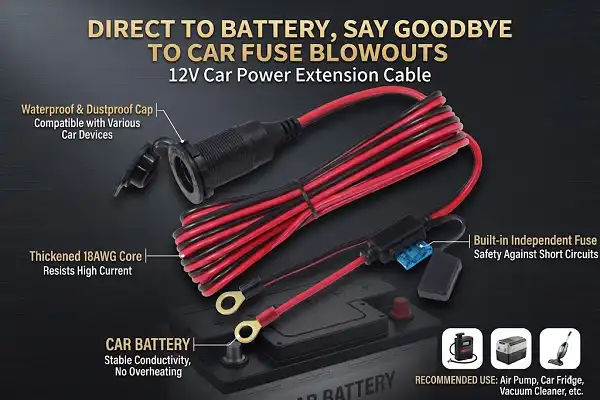
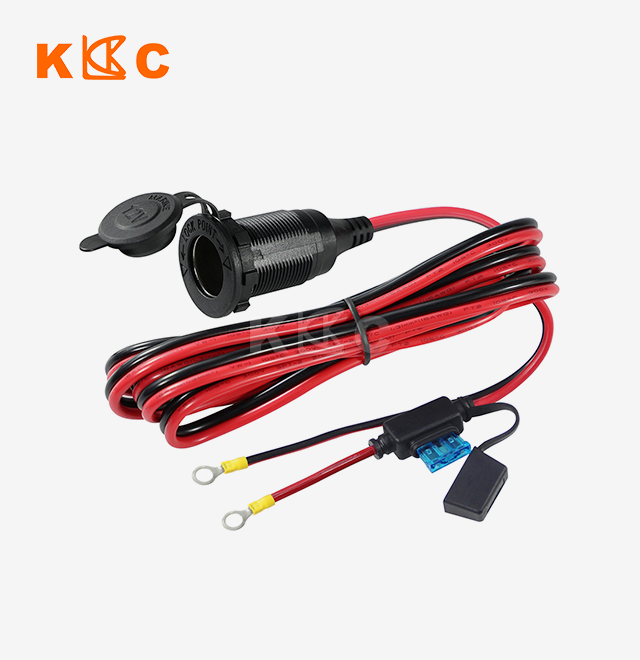
At its core, this thing is a heavy-duty power extender that is made to connect straight to the battery posts on a car. The design has two round eyelet terminals—red for positive and black for negative—that firmly connect to the battery terminals. The other end has a female socket that looks like a cigarette lighter. This setup makes a stable, constant power source that isn't connected to any ignition-switched circuits. This is important for keeping devices running when the engine is off.
Common Applications Across Industries
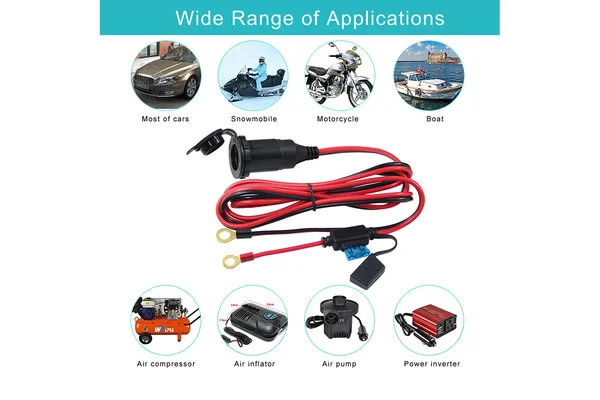
The most common use cases are in automotive and powersports. Motorcyclists connect GPS devices, heated gear, and phone chargers directly to power sources because many bikes don't come with factory utility ports. Mariners use these plugs to add 12V power points for navigation lights, depth finders, and bilge pumps to the gunwales or transoms. The ability to fight corrosion and the sealed dust caps are very important in saltwater environments where the dashboard wires can't be reached.
Adapters like these are used to connect deep-cycle battery banks with standard outputs for refrigeration units and power inverters in off-grid solar sites and camping sets. Powering control panels and sensors in building trucks is one use for industrial equipment. Vibration-resistant connections keep power from going out sometimes, which could stop activities.
How Fuse Protection Operates Within the System?
When the inline blade fuse holder is placed along the positive wire, it makes the circuit weaker on purpose. When there is more electrical current than the fuse can handle (because of a short circuit, a broken device, or a system that is overloaded), heat builds up inside the fuse element very quickly. At a certain temperature, the thin metal strip inside the fuse melts, literally breaking the circuit path before too much current gets to parts further down the line or the insulation on the wires.
This protective layer keeps the insulation on the wires from melting, the contacts on the battery from welding shut, and the devices that are joined from having terrible internal failures. When compared to circuit breakers, which can fail in locked positions or need to be changed, blade-style ATC or ATO fuses can be quickly replaced in the field without tools. This cuts down on downtime.
The Critical Role of Eyelet Terminals in Connection Integrity
Eyelet terminals, which are also called ring terminals, make links that are mechanically safe and don't come away when vibrations happen. The round shape spreads the binding force evenly around the battery posts' edges, stopping the stress points that lead to early failures. Tin-plated copper construction stops oxidation, which raises contact resistance over time. This means that even in tough conditions, the conductivity stays the same.
Different battery post sizes can be used in car, watercraft, and powersports uses with standard eyelet sizes (M6, M8, and M10) for a 12V car female socket with fuse and eyelet terminal. This standardization makes installation easier and makes sure that it works with OEM battery setups. During quality production processes, the crimped connection between the eyelet end and the wire conductor is tested for pull-force to make sure it is mechanically sound and won't come apart when the temperature or vibration of the car changes.
Key Features and Benefits of 12V Car Female Sockets with Fuse and Eyelet Terminal
Safety Mechanisms That Prevent Catastrophic Failures
Integrated fuse safety takes care of the main electrical risk that comes with direct battery connections: current flow that can't be stopped when there is a fault. Standard car fuse values of 10A, 15A, and 20A match the power needs of most accessories and keep 16AWG to 12AWG wire safe from thermal runaway. The waterproof fuse box keeps water out, which would otherwise cause corrosion or tracking currents. This means that the security stays reliable even when the temperature and humidity change.
Color-coded wiring—red for positive and black for negative—makes it easier to find the right polarity. This prevents installation mistakes that could send the wrong power to sensitive electronics. According to industry standards, the center pin of the female socket has a positive voltage. This means that it can be used with normal 12V devices without any changes.
Material Selection for Harsh Environment Durability
Copper wire that doesn't contain oxygen has the best conductivity and the least amount of voltage drop across cable lengths, which is very important for powering devices that need precise voltage control. The pure requirement (usually 99.9% copper) lowers the internal resistance that would make heat when the current is high. Injection-molded housings are made of heat-resistant plastics that can withstand temperatures from -20°C to +105°C. This means they can be used in cold weather for starting and near heat sources under the hood.
Marine-grade building includes extra safety features that aren't required by basic vehicle standards. Tin-plated copper eyelet connections don't rust like bare copper does in coastal areas because they are protected from salt spray rusting. When these systems are properly sealed with heat shrink tubing, they meet IP65 entry protection standards. This means that dust and water can't get in during washdown or submersion events. UV-resistant jacketing keeps insulation from breaking down in outdoor setups that are often found on boats and off-road vehicles.
Wire Gauge Selection and Current Capacity
The safe current-carrying ability and voltage drop are directly affected by the wire size choice. For 10A loads, premium assemblies usually use 16AWG wiring, 14AWG for 15A loads, and 12AWG for 20A constant service. When used for a long time, resistive heating is less of a problem with wires that are thicker (lower AWG numbers). This makes the insulation last longer and keeps it from failing.
If you know about ampacity grades, you can avoid making common buying mistakes like getting wires with the wrong size, which slows down the flow of power. A 16AWG cable holding a 20A fuse makes a dangerous mismatch because the wire could get too hot before the fuse opens. On the other hand, over-sized conductors raise the cost of materials without improving efficiency for low-current uses. Matching the wire gauge to the fuse grade and the predicted load patterns improves both safety and cost-effectiveness when buying in bulk.
Compatibility Considerations Across Applications
Socket compatibility for a 12V car female socket with fuse and eyelet terminal includes more than just voltage values. It also includes things like actual measurements and how the socket stays in place. As a result of rules set by the car industry decades ago, standard cigarette lighter plugs have a positive pin in the middle and a ground barrel on the outside. Good sockets have tight holding springs that keep the plug from vibrating or accidentally disconnecting, but they can still be removed by hand if necessary.
When developing purchase specifications, terminal size is very important. M6 eyelets fit battery posts that are popular on bikes and small boats, M8 eyelets fit standard automotive batteries, and M10 eyelets fit heavy-duty marine and commercial vehicle uses. Terminals of different sizes cause installation delays and changes in the field that slow down buying. Checking the OEM's specs before placing a large order helps keep a wide range of tools from not working with each other.
How to Install and Maintain 12V Car Female Sockets with Fuse and Eyelet Terminal?
Step-by-Step Installation Protocol
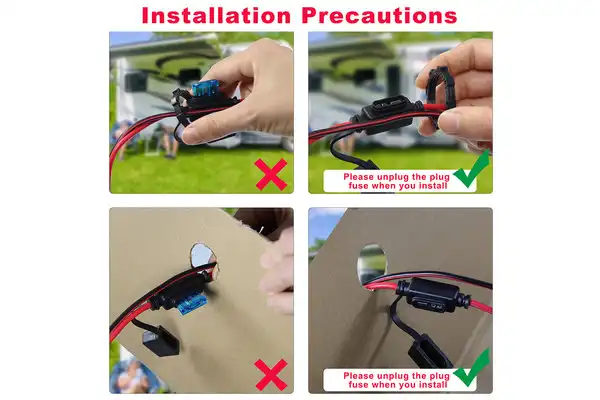
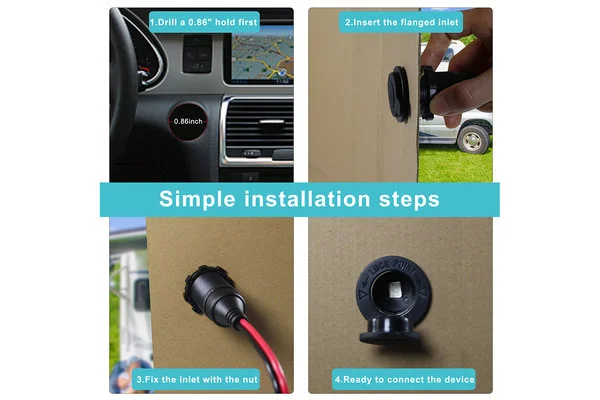
To avoid shock dangers and accidental short circuits during wiring, the installation process starts by disconnecting the battery. Before you start the installation job, disconnect the negative wire. Find the best places to put both the socket assembly and the fuse holder, keeping in mind how easy it will be to change the fuse in the future and how well they will be protected from damage or too much heat.
If you can, run the cable along existing wire lines. To keep it from rubbing against sharp edges, secure it every so often with zip ties or cable clamps. If you can help it, don't route near exhaust parts or moving parts that could damage the insulation. To keep the original connection preference, connect the red eyelet terminal to the positive battery post and place it below the OEM battery cable terminal. Connect the black eyelet connection to the negative post or a marked ground point, making sure the contact is made with bare metal that isn't covered in paint or rust.
Before turning on the circuit, use a tester to check the orientation. Check the voltage between the center pin of the socket and the outer barrel to make sure it's about 12.6V on a fully charged battery with the right polarity. Put in the fuse with the right rating based on the load that is predicted. Do not go over the ampacity rating of the wire size. Before moving wires and finishing the mounting, test the installation with a 12V device that you know works.
Routine Maintenance Practices for Longevity
The length of time between inspections depends on the job cycle and the surroundings. In marine applications, terminal links should be checked for corrosion every three months, while in car uses, checks may be done once a year. Watch out for oxidation layers that are green on copper connections, vibrations that cause terminal nuts to come free, and insulation cracking from heat or UV exposure.
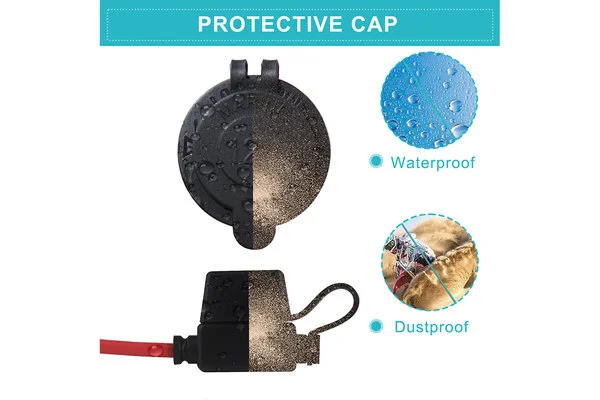
To stop rust from happening again, clean the terminal links once a year with a wire brush and dialectric grease. This simple repair step makes connections much more reliable in tough conditions. Check the caps on switch holders for cracks that could let water in. If any are found, replace the broken parts before the water gets inside and causes corrosion.
Diagnostic Procedures for Common Issues
When devices don't get power from the socket, thorough fixing quickly finds the source of the problem. First, make sure the fuses are still connected. You can tell if a fuse is blown by looking at it—a broken internal part can be seen through the clear plastic body. Replace with fuses that have the same amp rating; installing fuses with higher amp ratings takes away the protection and causes fire risks.
If the fuse looks like it's still in place, use a voltmeter to check the voltage at the plug while the battery is known to be good. If there is no power, it means that the link at the eyelet terminals has broken or that an internal wire has been cut. Make sure the terminals are tight and clean up any rust that you find. If there is voltage at the port but the device doesn't work, it means that the problem is with the plug or extension, not the adapter itself.
Most of the time, intermittent operation of a 12V car female socket with fuse and eyelet terminal is caused by vibrations that affect loose leads or corroded contacts that make links with high resistance. Usually, these problems can be fixed by re-tightening the connections and cleaning the contact areas. If the problems keep happening even after regular maintenance, it's likely that a wire strand is breaking within the cable, especially at flex places close to the ends. This is a failure mode that requires replacing the whole assembly.
Best Practices for Wire Sizing and Fuse Selection
Match fuse ratings to the needs of the linked load plus a safety gap. Never match fuse ratings to wire capacity alone. Find out how much current all the devices on the circuit are using together, and then choose the next common fuse level that is higher than that. A GPS unit that draws 2A and a phone charger that draws 3A both need at least a 5A fuse. A 10A fuse is enough to cover starting spikes.
The highest fuse value should be taken into account when choosing the wire gauge. For safe continued operation, a 20A switch needs at least 12AWG wire, no matter what the normal load profile is. This cautious method stops cases where fuse ratings are raised during troubleshooting in the field without matching wire upgrades, which could lead to hidden fire risks.
When running cables over longer distances, like in solar systems where lines may span several meters, you should figure out how much voltage will drop. When the voltage drops by more than 3%, it hurts the performance of the device and makes voltage-sensitive electronics break down early. You can use online tools or industry-standard charts to find the right wire gauge for a certain length and amperage mix. This makes sure that the socket spot gets enough voltage.
Procurement and Supplier Insights for 12V Car Female Sockets with Fuse and Eyelet Terminal
Sourcing Channels for Volume Purchasing
Established business-to-business (B2B) platforms give users access to verified makers with clear operating records. Trade assurance programs protect payment processes and quality promises on Alibaba and other markets like it. When you work directly with a maker, you don't have to pay markups to a distributor, and you can get engineering help for custom requirements, which is especially helpful when adapting standard goods to unique uses.
Regional trade shows and industry exhibitions let you see products in person and talk to suppliers in person. Events like SEMA (for the car aftermarket) and IBEX (for marine equipment) bring together all the important suppliers in one place, which makes it easier to compare prices and build relationships. Samples from trade shows can be tested in-house before committing to large amounts for production.
Key Procurement Evaluation Criteria
Prices vary a lot from one seller to the next, and as you buy more, the cost per unit goes down. For accurate comparisons of total landed costs, you should ask for full quote breakdowns that include tooling charges for special setups, unit prices at different order numbers, and freight costs. The minimum order quantity (MOQ) affects the cost of keeping inventory and cash flow. This is especially important for wholesalers that serve seasonal markets.
Lead times for a 12V car female socket with fuse and eyelet terminal have a direct effect on planning supplies and keeping promises to send goods to customers. Standard products that are in stock make it easy to restock quickly, but unique designs may need 15 to 25 days to make. When compared to companies that only buy parts when they get orders, companies that keep raw materials on hand show more supply chain stability.
Assessing Supplier Credibility and Support
Quality control methods are proven to work by manufacturing certifications. ISO 9001 certification means that process controls and methods for constant growth have been written down. Industry-specific certifications, such as ISO 13485 for medical equipment or IATF 16949 for car parts, show that a company can meet the needs of strict regulatory areas.
Warranty terms show that the company that made the product is confident in its longevity. Standard one-year guarantees against manufacturing flaws are what the industry expects, and longer terms mean that the quality control is better. Professional businesses are set apart from low-quality sellers who don't follow through on their promises after the sale by having clear warranty claim processes and quick customer service.
Documentation from testing gives clear proof of success. Manufacturers who do 100% electrical testing, dielectric withstand voltage testing (hi-pot), and salt spray rust testing can give certification results that prove the specs are correct. Testing by a third party adds trustworthiness, especially when it comes to meeting local electricity safety standards.
Emerging Technology Trends Affecting Long-Term Strategy
An emerging product area is smart fuse technology that uses LED lights or electronic trip tracking. These better safety devices let you know when something is wrong before it breaks completely. This lets you plan maintenance ahead of time, which cuts down on downtime. Even though they are expensive now, gadgets will become more popular as their prices go down and fleet managers see how useful they are for operations.
Wire gauge and terminal standards are getting stricter because devices that use a lot of power and uses that charge electric vehicles need higher amperage levels. When manufacturers put money into developing 10AWG and 8AWG products, they get ahead of how the market changes, especially as more electric and hybrid cars come out and need strong backup power distribution.
Environmental rules are getting stricter, and following RoHS rules is now required in more places than just the EU. Specifications for lead-free welding and halogen-free wiring make production more difficult, but they make sure that all global markets follow the rules. To avoid having to pay for redesigns in the future, procurement plans should give priority to sellers who can show they are environmentally friendly.
Conclusion
Fuse protection built into battery-direct power transfer systems is not an extra feature, it is a basic electrical safety practice. The pretty basic mechanism—a calculated sacrificial element that cuts off current when there is a fault—avoids fire risks and equipment damage, which can have very expensive and risky legal consequences. When coupled with mechanically secure eyelet terminals that make links that don't shake, these systems provide the dependability needed for tough automobile, marine, and industrial uses.
In this area, buying choices for a 12V car female socket with fuse and eyelet terminal depend on checking the details of the materials, the quality of the manufacturing, and the reliability of the seller. Professional-grade goods are different from regular ones because they have copper lines that don't contain oxygen, wire gauges that are properly rated and matched to fuse safety, and terminals that don't rust. When evaluating a supplier, you should focus on their licenses, testing records, and after-sale help skills that make sure the quality stays the same across production runs.
The small amount of money spent on good fuse-protected battery adapters pays off hugely in fewer warranty claims, fewer safety issues, and more reliable tools. When business-to-business buyers are looking for electrical parts for cars, putting an emphasis on built-in safety features is in line with both operational excellence and risk management best practices.
FAQ
What Fuse Rating Should I Specify for Different Applications?
The total linked load amperage plus a safety limit determines which fuse to use. GPS units and phone chargers usually draw 2 to 5A together, so 10A fuses are fine with room for starting spikes. Depending on how much power they are supposed to use, power transformers and refrigerators may need 15A or 20A safety. Find the total amperage of the devices and then choose the next common fuse number up from that. Never put fuses that are bigger than the wire size can handle. 16AWG wire can safely handle 10A, 14AWG can handle 15A, and 12AWG can safely handle 20A.
Can I Replace a Fused Socket with a Non-Fused Version?
When fused designs are replaced with non-fused ones, important overcurrent protection is lost, which can lead to fires during fault situations. When there is a short circuit, car batteries can deliver hundreds of amps, which can quickly melt wire insulation without any fuse safety stopping the flow of current. The small amount of money that non-fused plugs save can't be worth the safety risks and legal exposure they pose. When professionals install something, they always protect the battery-direct lines with fuses.
Why Choose Eyelet Terminals Over Other Connection Methods?
Eyelet terminals make connections that are mechanically safe and don't shake, which is important in nautical and vehicle settings. Alligator clips and quick-disconnects can come free when they are vibrated, but eyelet terminals that are properly torqued stay in touch even when they are under a lot of mechanical stress. The round shape spreads the clamping force out widely, stopping stress spots that lead to early failures. Copper that has been plated with tin avoids rust better than open contacts in other connection systems. This means that the system will work reliably for a long time, even in harsh settings.

Partner With a Trusted Manufacturer for Your Power Distribution Needs
Kuncan Electronics has been making electronics for 17 years and offers power connectivity options for cars and boats. Before they are sent out, our heavy-duty 12V car female socket with fuse and eyelet terminal assemblies are tested for 100% electrical integrity and waterproofness. This makes sure that global dealers can rely on them. We have certificates from ETL, CE, and RoHS that show our products meet world safety and environmental standards. Since we are an Alibaba Verified Supplier, our business is open and honest, and we guarantee quality throughout the whole buying process.
To meet your exact needs, our engineering team can customize OEM products by letting you choose the length of the wire, the size of the terminals (M6, M8, or M10), and the labels. Samples are sent out within 3–7 business days, and production takes 15–25 days, based on the amount. We don't have minimum order quantities for common configurations, which makes it easier to handle your supplies. Get in touch with our technical team at rhea@szkuncan.net to talk about your unique application needs and get full quotes for your next project.
References
Society of Automotive Engineers. Automotive Electrical Systems: Design and Safety Standards. SAE International Technical Publications, 2021.
Anderson, Michael R. Marine Electrical Installation Guide: Best Practices for Corrosion Prevention. Boat Owners Association Press, 2020.
National Fire Protection Association. NFPA 70: National Electrical Code Requirements for Vehicle Wiring. NFPA Standards Council, 2023.
Williams, Christopher J. Fuse Protection Technology in Mobile Power Applications. Journal of Automotive Engineering, Vol. 45, No. 3, 2022.
International Organization for Standardization. ISO 16750: Road Vehicles - Environmental Conditions and Testing for Electrical Equipment. ISO Technical Committee, 2021.
Thompson, Patricia L. Wire Gauge Selection and Ampacity Calculations for Automotive Systems. Electrical Engineering Handbook Series, McGraw-Hill Professional, 2019.

USER EVALUATE
Here is the customer's evaluation of us
YOU MAY LIKE
_1784355495257.webp) VIEW MORE1 in 3 NEMA1-15P to NEMA5-15R extension cord
VIEW MORE1 in 3 NEMA1-15P to NEMA5-15R extension cord_1781163912838.webp) VIEW MORENEMA 5-20P to T-Blade Receptacle Adapter Cord
VIEW MORENEMA 5-20P to T-Blade Receptacle Adapter Cord VIEW MOREfoot salt lamp
 VIEW MORE12V Car Female Socket with Fuse and Eyelet Terminal
 VIEW MORE18 watt usb c charger
 VIEW MOREpower supply 12v 5v
 VIEW MORE90w laptop charger
 VIEW MOREusa nema 1-15p to iec c7 power cord