
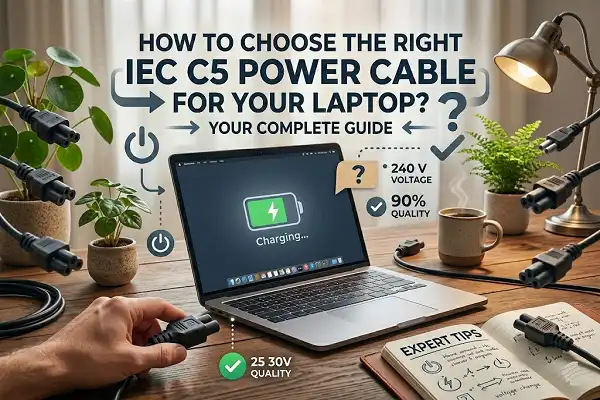
How to Choose the Right IEC C5 Power Cable for Your Laptop?
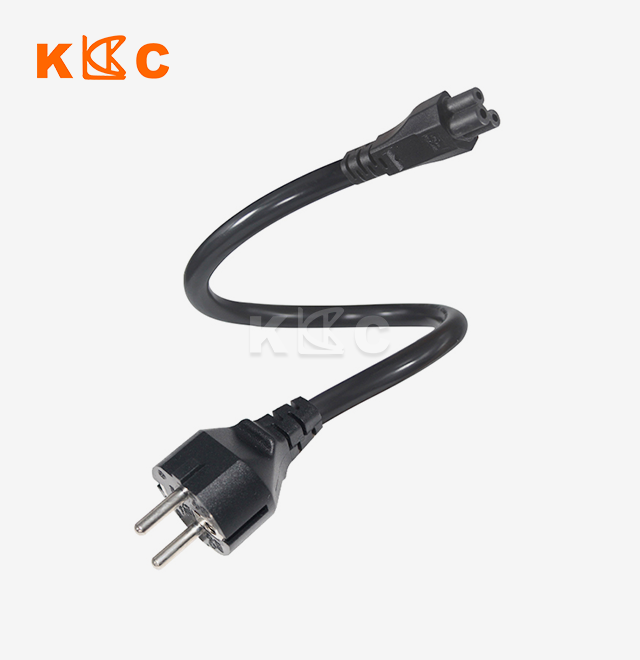
To choose the right IEC C5 power cable for your laptop, you need to know both the basic specs and the unique needs of the application. The unique cloverleaf connector, which can handle 2.5A 250V, links straight to the IEC C6 inlet on most laptop power adapters, portable displays, and small electronics. When procurement workers are looking at their choices, they should put VDE, CE, and UL-certified cables at the top of the list to make sure they meet area safety standards. Kuncan Electronics makes VDE-certified CEE 7/7 to IEC C5 power lines with high-purity copper conductors and lengths that can be customized. Our 17 years of experience making power products and strict electrical testing methods back up our reliable power solutions.
Understanding IEC C5 Power Cables: Specifications and Features
What Defines the IEC C5 Connector Standard?
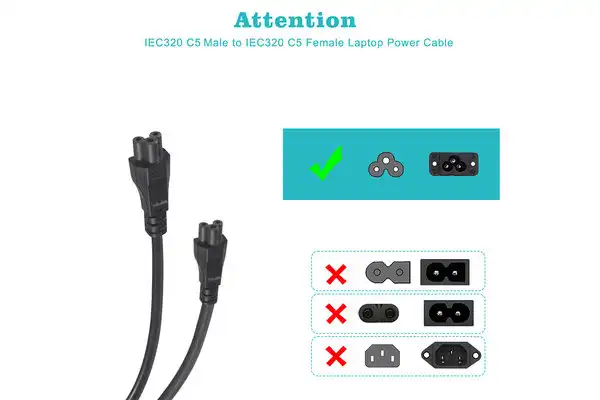
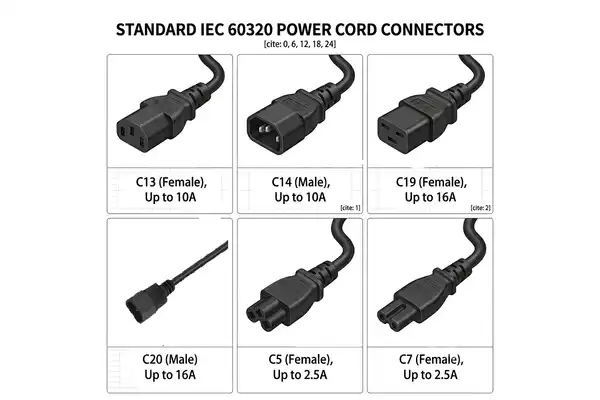
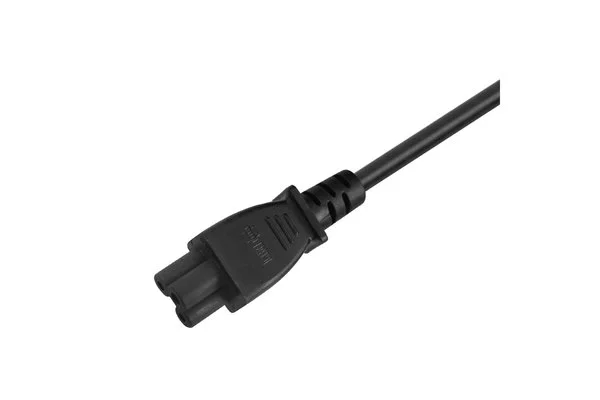
People usually know the IEC C5 connector by its three-circle cloverleaf form. It is a standard power interface made just for portable gadgets that need to connect to a ground. This connector only works with IEC C6 inlets. It makes a safe, polarized link that keeps the Line/Neutral alignment correct. Live, neutral, and earth wires make up the three-prong design, which protects Class I equipment by grounding it. The IEC C5 variant, unlike the C7 (figure-eight) or C13 (wider rectangular), has a small footprint that makes it perfect for uses with limited room while still providing full grounding, which is necessary in safety-critical settings.
Key Electrical and Material Specifications
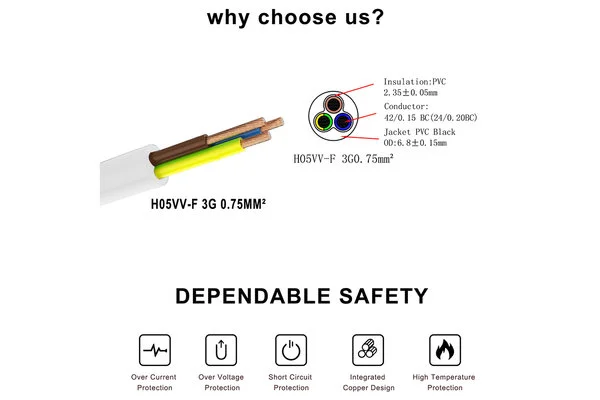
Knowing the specs of a wire helps you make smart decisions about what to buy. Most laptop power sources that draw between 45W and 65W can handle the 2.5A current rate at 250V AC that comes with standard IEC C5 power cables. The conductor layout usually has three cores (3C) and a wire gauge of 0.75 mm². It must meet H05VV-F European standards or SVT grades that are similar for North American markets. High-purity copper wires reduce electrical resistance and heat production while the cable is in use. This makes the cable last longer and keep the voltage supply steady.
Material choice has a big effect on how long something lasts and how safe it is. Professional cables have flame-resistant PVC jackets that meet RoHS and REACH environmental standards. These coats protect the wires from chemical exposure and mechanical stress. The molded strain relief design at both termination points keeps the conductors from wearing out from being bent over and over, which is very important for mobile computer settings. For standard uses, temperature ratings are usually between -10°C and +70°C. However, industrial versions can handle temperatures as high as -40°C to +85°C if they are made with the right insulation materials.
Certifications That Matter for Global Markets
Certification verification tells the difference between goods that are legal and those that aren't. VDE approval makes sure that wires meet strict German safety standards for electricity that are used all over Europe. CE marking means that the product meets EU safety, health, and environmental standards and can be sold in all EU member states. UL and ETL approvals make sure that wires meet North American safety standards by making sure they pass tests for dielectric strength, continuity, and flammability.
Instead of taking superficial marks, procurement teams should ask for proof that the license is real. Real certificates have information about the testing lab, individual product model numbers, and expiration dates. Fake wires that aren't properly certified can cause fires and put you at risk of being sued, which are much bigger problems than the initial cost saves.
Distinguishing C5 from Similar Connector Types
Misidentifying a connector is a common buying mistake that can have practical effects. The IEC C7 connection looks the same, but it can't connect to the ground because it only has two flat blades that can connect to Class II double-insulated equipment. The C13 connector has three prongs too, but it has a bigger, rectangular shape and can handle higher currents (10A to 15A). It's usually used for desktop computers and TVs instead of handheld devices.
The C15 version has a higher temperature rating (120°C compared to the C5's 70°C standard), and can be told apart from other C14 versions by its unique notched design that makes it impossible to put into normal C14 inlets. This design keeps standard-temperature wires from getting accidentally connected to equipment that makes too much heat, like electric kettles or lab equipment. Making sure that your laptop's power charger has a IEC C6 inlet (the socket that fits IEC C5 plugs) will help you avoid costly compatibility mistakes.
Evaluating IEC C5 Power Cable Options for Different Applications
Matching Cable Specifications to Laptop Power Requirements
Different types of laptops need different power delivery options. Business laptops usually use 45W to 65W from 19V power adapters, which is well below the 2.5A maximum of IEC C5 power cables when they are plugged into 250V AC. Mobile workstations and gaming computers may need 90W to 150W adapters, but most still use IEC C5 connections when plugging in power from the wall through separate AC/DC converters. The most important thing is to make sure that the cable's current rating fits or beats the adapter's input specifications, not the laptop's output wattage.
The length of the cable affects both how well it works and how convenient it is. Options from 1m to 3m can suit different desk layouts, but too much length makes it more likely that voltage will drop and electromagnetic interference will happen. Standard 1.8m cables work well for desktops because they have enough reach without being too tightly wound up. However, 3m cables may be needed for meeting room projectors that are placed on the roof. Custom lengths meet specific needs without causing trip risks or problems with how the wire looks when it's coiled.
Flexible vs. Rigid Cable Construction Considerations
The flexibility of a wire has a big effect on how long it lasts in mobile settings. Highly flexible PVC jackets can handle being wound and unwound many times, which is important for workers who move a lot because they keep the ideal bend radius without putting stress on the conductors. These designs use thinner copper wires and special plasticizers to make jackets that are flexible and won't kink. On the other hand, rigid construction is better for stationary setups where wires won't be moved, as it resists wear better and costs less.
Good companies like Kuncan Electronics use a molded strain relief design that makes the product last longer by spreading mechanical stress over a graduated transition zone instead of gathering force at the ends. This technical feature stops the most common way for something to go wrong—a conductor breaking at the plug junction—which happens a lot with cheap lines that don't have enough strain relief geometry.
EMI Filtering and Shielding for Sensitive Environments
When there are a lot of power sources close to each other in a technical setting, electromagnetic interference can be a problem. Standard IEC C5 power cables don't have built-in protection, so they depend on the power charger being designed correctly to stop both conducted and radiated waves. Putting ferrite cores near the ends of connectors can help places with sensitive instruments or recording equipment by stopping high-frequency noise from traveling along the wires.
A lot of electrical noise is made in industrial settings by things like variable frequency drives, servo controls, and high-power switching equipment. Standard IEC C5 power cables work fine for most laptop tasks, but procurement managers should ask for shielded versions when putting portable computers in places like factories or labs where electromagnetic interference (EMI) could damage data or make equipment stop working.
Procurement Considerations: How to Select and Buy IEC C5 Power Cables?
Compliance and Certification Requirements for International Markets
To do global buying, you need to know how the rules work in different regions. Along with CE marking, European markets require VDE or KEMA approval, which proves that the product meets the standards of the Low Voltage Directive (LVD) and the Electromagnetic Compatibility (EMC). For sale in North America, products must be recognized by UL or ETL, which checks that they meet NFPA 70 (National Electrical Code) standards. For Australian markets, you need SAA approval, while for sale in the UK after Brexit, you need BS certification.
Beyond simple safety approval, environmental compliance is becoming more and more important. RoHS rules limit the use of dangerous materials like lead, mercury, and some brominated flame retardants in electronics goods sold in the EU. REACH rules add to the safety of chemicals by requiring the listing and limiting of substances of very high concern (SVHC). Kuncan Electronics makes sure that all of our cables are fully compliant with RoHS and REACH, and we provide documents to back up our customers' regulatory responsibilities.
Technical Criteria for Specification Development
Creating detailed cable specifications stops misunderstandings and makes sure that goods received meet operations needs. Important factors include checking the type of connection (IEC C5 plug to the right mating connector), the length of the cable with tolerances, the conductor gauge meeting current standards with a safety limit, and choosing the right jacket material for the surroundings. Color coding helps handle assets in big deployments. You can use standard black or white colors, or you can make your own colors to match your company's name.
Specifications for temperature ratings for IEC C5 power cable become very important for lines that serve equipment in places that don't have climate control. Standard PVC coats work well in normal office temperatures ranging from -10°C to +70°C, but better materials are needed for stores, car interiors, or outdoor enclosures. Thermoplastic elastomer (TPE) or rubber materials make the range of applications bigger while still being flexible at high and low temperatures. The low smoke zero halogen (LSZH) materials help with fire safety issues in confined spaces like airplanes, ships, and underground buildings where harmful fumes from fires can be life-threatening.
Balancing Cost, Quality, and Supply Chain Reliability
To optimize procurement, you need to look at the total cost of ownership instead of just the unit price. Premium connections with pure copper conductors, strong strain relief, and real approval are a little more expensive than inferior options, but they don't need to be replaced as often, cause less downtime, and lower your safety risk exposure. The difference in price between quality-certified wires and options that don't meet standards is usually less than 15% of the unit cost, which isn't even worth thinking about when you think about what could happen if an electrical failure happens.
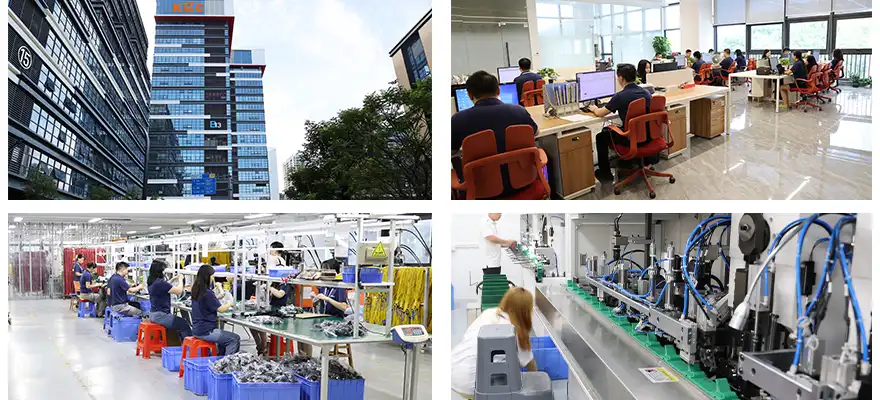
Supply chain dependability means looking at what manufacturers can do beyond just giving you a price. Kuncan Electronics is based in the Dongguan/Shenzhen industrial hub and has over 300 trained workers and 17 years of production experience. This makes sure that the standard of each production run is the same. Our quality control system makes sure that all of our units are inspected when they come in, tested while they are being made, and checked for electrical problems one last time before they are shipped. This three-step quality assurance process stops bad goods from getting to customers, which lowers the number of warranty claims and protects the brand's image.
Supplier Evaluation and Partnership Development
Checking out possible providers means looking at their manufacturing qualifications, service skills, and the authenticity of their certifications. Being an Alibaba Verified Supplier is a good way to make sure that a business is real and that transactions are safe, but you should still do more research. Ask for pictures of the facility, proof of its production ability, and customer references from companies in the same field. Manufacturers who offer open contact, expert help, and flexible customization services show that they want to build partnerships, not just business ties.
Minimum order amounts (MOQ) have a big effect on how flexible you can be when buying things. Large-scale wholesalers get better prices on container loads when they buy in bulk, while smaller businesses need suppliers who can handle small initial orders at fair prices. Kuncan Electronics accepts orders of all sizes and doesn't have any minimum order quantities that are too high. This lets customers try out the quality of the product before making big purchases. Our ability to deliver sample units within 3–7 business days speeds up the approval process and cuts down on the time it takes to get new products on the market.
Common Challenges When Choosing IEC C5 Cables and How to Avoid Them
Avoiding Connector Misidentification Errors
Connector misunderstanding can lead to problems with compatibility and even safety risks. Because the IEC C5, C7, and other IEC plugs look a lot alike, it can be hard to tell them apart, especially when looking at unclear product images or technical specs. Instead of just looking at photos, people in charge of procurement should check the types of connectors using detailed models that show the pin layout, spacing, and keying features. Asking for actual samples before placing a large order clears up any confusion and confirms that the new parts will work with the old ones.
Device makers sometimes make their own changes to standard ports, which can make it hard for off-the-shelf new connections to fit. By measuring the current wires and writing down any features that aren't standard, you can be sure that the replacements you buy will match the original requirements. When unsure, looking at the equipment's technical paperwork or calling the maker directly can help you figure out the right cable types and avoid making mistakes that cost a lot of money.
Certification Verification and Compliance Risks
There are a lot of fake approval marks for IEC C5 power cable in global supply chains, which is bad for safety and the law. Suppliers who aren't honest put certification logos on their products without trying them first, so the goods look like they meet safety standards but don't. Purchasing teams should ask for copies of certificates that show the name of the testing lab, specific test results, and product model numbers that match the items that were bought. By comparing the information of a certificate with databases kept by certification bodies, you can be sure that it is real and avoid getting fake documents.
Different places have different rules for how to apply them, but all of them punish goods that don't follow the rules when they are found through market tracking or an investigation into an incident. Companies that use cables that don't follow the rules can be sued in civil court if the wires cause damage to property or harm. When safety fails, the damage to a company's image often goes beyond the direct financial costs. This is why verifying certification is an important risk management practice and not just an administrative procedure.
Environmental Factors That Affect the Performance and Durability of Cables
The operating setting has a big effect on how long and reliably cables work. In temperature-controlled working areas, cables don't have to deal with much environmental stress. But in industrial settings, cables have to deal with temperature changes, chemical exposure, UV radiation, and mechanical abuse. Standard PVC jackets break down when they come into contact with oil-based goods, cutting fluids, or cleaning solvents that are popular in factories. Specifying chemical-resistant clothing materials keeps safety intact and stops insulation from failing too soon.
Physical stress from people walking on them, moving tools, or pinch points means that protective steps or better cable design are needed. Protective duct or cable management systems keep cables from getting crushed when they cross walkways. Instead, heavy-duty jacket designs with added strain relief can handle mechanical abuse better in setups that are out in the open. Checking the real-life rollout conditions while writing the specifications stops problems in the field and increases the service life.
Final Recommendations and Best Practices for Procurement Managers
Streamlined Selection Checklist for Procurement Success
Using a structured review method can lead to better buying results and fewer mistakes. First, make sure the devices can work together by checking the connector type and inspecting the port on the target equipment. Write down the voltage, current, and wattage needs for the equipment from its nameplates or technical guides. Figure out the right wire length by looking at the setup of the workspace and avoiding too long of a length that adds to costs and makes management harder.
Describe the environmental needs for IEC C5 power cable, such as the temperature range, the chance of chemical exposure, the level of flexibility needed for mobile or fixed use, and any specific safety needs, such as the need for LSZH materials in enclosed areas. Find out what certifications are needed based on the delivery areas and make sure that the cables have the right legal approvals. Check the supplier's qualifications, such as their producing experience, quality control methods, ability to customize, and responsive customer service.
Before making large purchases, ask for samples and try the fit with real tools. If testing is possible, do simple electrical verification as well. Check the warranty terms and after-sales support to make sure that the sellers stand behind the quality of their products with fair replacement policies and quick expert help.
Application-Specific Suggestions for Cables
VDE-certified CEE 7/7 to IEC C5 power cables in 1.8m lengths work best with standard business computers and portable projectors, matching ease of use with little extra. The 0.75mm² wire gauge can handle normal 2.5A loads with little voltage drop, and the bendable PVC jackets can handle a fair number of handling cycles. Users of gaming laptops get the same specs because the power comes from separate high-wattage AC/DC chargers and IEC C5 power cables, which only connect to the wall.
When industrial portable computers are used in harsh settings, they need better specs, such as jacket materials that can withstand higher temperatures, stronger strain relief, and maybe even shielded construction if EMI worries exist. Custom lengths can fit different construction shapes without having to deal with extra wire. Building connections with companies like Kuncan Electronics that offer custom solutions instead of catalog-only products is especially helpful for these uses.
Cultivating Strategic Supplier Partnerships
Long-term buying success depends on building ties with suppliers that go beyond just doing business. Manufacturers who offer technical help, the ability to customize products, and quick contact are useful partners in creating new products and solving problems. Kuncan Electronics offers full expert support during the entire design and production process, making sure that the wire specifications are best for each application while still meeting safety standards and cost goals.
Pricing based on volume, flexible payment terms, and priority ordering for output all help to reward loyal customers while lowering costs and making inventory management better. Our one-year guarantee against manufacturing flaws shows that we trust the quality of our products and lowers the risk for our customers. Strategic relationships allow for proactive rather than reactive buying, which increases the availability of inventory and lowers the costs of quickly replacing things that break down.
Conclusion
Finding the right IEC C5 power cables means finding a balance between technical standards, licensing needs, environmental issues, and the supplier's abilities. Knowing about connection standards stops mistakes in compatibility, and making sure that specifications are followed correctly makes sure that wires meet practical needs. Verification of certification shields against compliance risks and safety dangers, and caring for the environment makes the product last longer. Partnering with experienced makers that offer customization, quality guarantee, and quick service gives you long-term benefits over your competitors. Implementing systematic evaluation processes and building strategic relationships with suppliers are the best ways to get the best deals on buying. This ensures stable power supply that supports business operations in a wide range of markets and uses.
FAQ
How much current can C5 plugs handle at their highest level?
IEC C5 connectors can handle up to 2.5 Amps of current at 250 Volts AC, which means they can possibly connect to devices using up to 625 watts of power. However, in practice, they are rarely used at all near this level. Most laptop power adapters that connect to the wall via IEC C5 power cables use 45W to 90W at the wall input, even though they send higher wattages to devices by changing the voltage. Overloading the maximum current leads to too much heating, insulation degradation, and possible fire risks. This is why proper design is so important for safety.
How can I tell if my laptop has a C5 connector?
Find the three-hole opening on the power adapter, not the laptop itself, where the power line joins. There are three circle holes in a triangle pattern on the IEC C6 inlet, giving it a unique cloverleaf or "Mickey Mouse" shape. The figure-eight C8 inlet (two circles) or the bigger rectangular C14 inlet that is popular on desktop computers is not the same shape as this one. If you're not sure what kind of connector you have, you can check the equipment's paperwork or the manufacturer's specs.
Can I use different kinds of plugs with C5 cables?
Cable systems use certain kinds of plugs and IEC C5 connectors to make solutions that work in certain areas. Plugs for European countries are CEE 7/7 (Schuko) or CEE 7/17. Plugs for North American uses are NEMA 5-15P, and plugs for devices in the UK need to be BS 1363. The end of the IEC C5 connector stays the same around the world, but plug types vary by area. This means that the right cord must be chosen to meet the needs of both the device and the local electrical infrastructure.
Partner with Kuncan Electronics for Reliable IEC C5 Power Cable Solutions
Kuncan Electronics offers professional-grade power connections and has been making them well for 17 years. They also have a wide range of certifications that cover VDE, CE, UL, and SAA standards. Our VDE-certified CEE 7/7 to IEC C5 power lines have high-purity copper wires, can be made in lengths from 1 meter to 3 meters, and go through 100% electrical testing to make sure they work the same way every time. We have been making IEC C5 power cables for a long time and offer flexible OEM/ODM services, such as custom jacket colors, private label packing, and fast sampling within 3–7 business days. With lead times of 15 to 25 days, our Dongguan plant can handle both prototype development and large-scale production. Prices stay fixed, and quotes are clear. Get in touch with our team at rhea@szkuncan.net to talk about your unique needs and find out how our custom solutions, one-year warranty, and quick technical support can help your procurement processes in the long term.
References
International Electrotechnical Commission. "IEC 60320-1: Appliance Couplers for Household and Similar General Purposes - Part 1: General Requirements." Geneva: IEC Standards Publication, 2021.
Verband der Elektrotechnik. "VDE 0620-1: Plugs and Socket-Outlets for Household and Similar Purposes - Part 1: General Requirements." Berlin: VDE Verlag, 2019.
Underwriters Laboratories. "UL 817: Standard for Safety Cord Sets and Power-Supply Cords." Northbrook: UL Standards & Engagement, 2020.
National Electrical Manufacturers Association. "NEMA WC 70: Power Cables Rated 2000 Volts or Less for the Distribution of Electrical Energy." Rosslyn: NEMA Publications, 2018.
European Committee for Electrotechnical Standardization. "EN 50525-2-11: Electric Cables - Low Voltage Energy Cables of Rated Voltages up to and Including 450/750 V." Brussels: CENELEC Standards, 2017.
Institute of Electrical and Electronics Engineers. "IEEE 1100: Recommended Practice for Powering and Grounding Electronic Equipment." New York: IEEE Standards Association, 2019.

USER EVALUATE
Here is the customer's evaluation of us
_1784354535259.webp)
_1781502912074.webp)