
Light Bulb Holder with Cord Supports Custom Lamp Assembly Needs
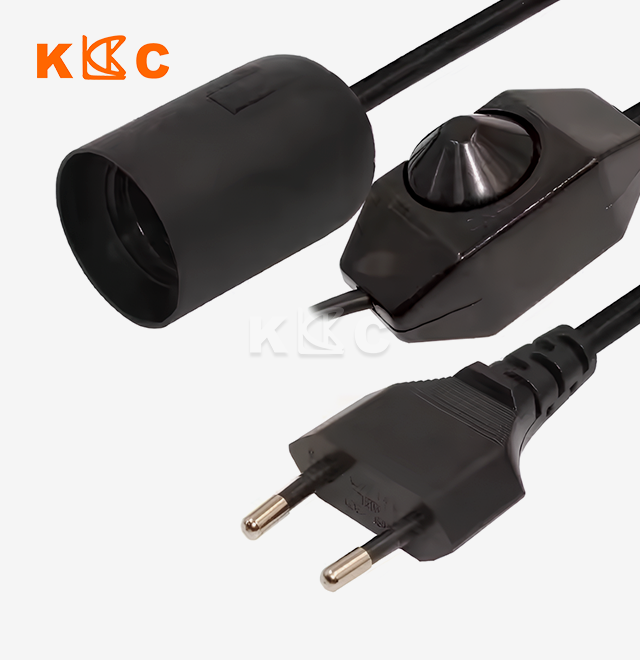
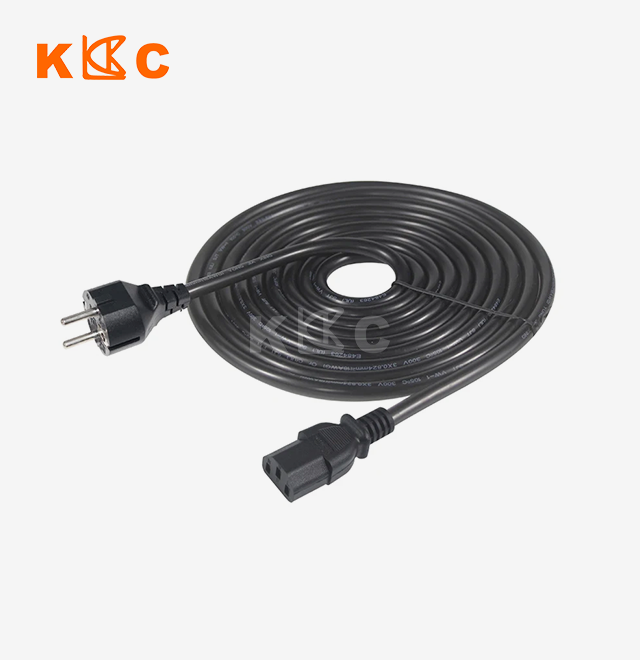
When you're sourcing components for custom lighting projects, a light bulb holder with cord serves as the essential foundation connecting the power supply to illumination. This pre-assembled unit combines the socket, electrical wiring, and often an inline switch into a single ready-to-install component, eliminating the complexity of separate wiring tasks. We've spent 17 years perfecting these assemblies at Kuncan Electronics, where every product undergoes rigorous testing to meet global safety standards. Our VDE-certified European power cords with heat-resistant E14 sockets rated at 105°C demonstrate the precision engineering required for reliable operation across diverse lighting applications.

Understanding Light Bulb Holders with Cord: Definition, Types, and Applications
Core Components and Functional Design
There are three important parts that make up a connected light bulb holder with cord assembly: the socket base (which can be E14, E27, or B22), the electrical cord with the right gauge wires, and the plug that connects to the socket. Instead of needing separate wiring like most sockets, these kits come pre-wired with standard links. In the socket part, there are contact terminals that keep constant pressure on the lamp bases. The cord itself has two conductors—usually 0.75mm² for European uses—enclosed in heat-resistant insulation that can handle constant working temperatures.
The inline switch system is a big plus in terms of ease. Our 303 inline switches can handle 2.5A at 250V, which means they can safely cut off electricity without changing the wall switch. This feature is especially helpful in retrofit situations where the control options are limited by the existing infrastructure.
Material Variations and Performance Characteristics
Socket body materials have a direct effect on how well they handle heat and how long they last. Ceramic materials work well in places with high temperatures and keep their shape when heated by electric or light bulbs that are hotter than 250°C. These materials don't easily bend, which could damage electrical contacts. On the other hand, thermoplastics made of PBT (polybutylene terephthalate) or PPS (polyphenylene sulfide) that are UL94 V-0 flame retardant work well for LED applications where less heat is generated, making the construction lighter and cheaper.
Metal parts, especially contact springs made of brass or phosphor bronze, make sure that the conductivity is reliable. The stress in the spring keeps the contact solid through thousands of rounds of thermal expansion. This keeps the links from breaking, which happens with poorly designed products. Our assemblies have nickel-plated contacts that don't oxidize, which is a common way for parts to fail in damp places or near the coast.
Application Environments Across Industries
Adjustable cord lengths from 1.5m to 1.8m make pendant lighting setups in homes and businesses more convenient. They let designers get exact drop heights without having to deal with too many cables. The built-in mounting hardware, like stainless steel butterfly clips, makes it easier to connect to the roof and safely spreads out mechanical loads.
The making of portable lamps is another important application area. Plug-and-play convenience is used by task lights in the workshop, reading lamps next to beds, and lights in display cases. In industrial settings, the rules are stricter. For example, greenhouse grow light systems have to be able to handle humidity, manure chemicals, and the corrosive effects of sulfur air. Our IP54-rated parts solve these problems with sealed construction and materials that don't rust.
Himalayan salt lamps and handmade light fixtures are examples of decorative uses that put both safety and good looks first. The notched E14 socket design fits decorative candelabra-style bulbs and keeps them in place mechanically. These goods meet the strict European market standards for both electrical safety and environmental responsibility because they are CE and RoHS compliant.
How to Choose the Right Light Bulb Holder with Cord for Your Procurement Needs?
Evaluation Framework for B2B Decision-Making
For procurement professionals, choosing a light bulb holder with cord needs to be done in a planned way. The durability criterion looks at the type of material used, the quality of the building of the terminal, and the testing methods used by the maker. For business use, socket assemblies should be able to withstand more than 10,000 insertion rounds and keep their contact resistance below 50 milliohms the whole time. Our automated production methods make sure that the wire stripping depth and terminal crimping force are always the same. This gets rid of the differences that come with putting things together by hand.
Compatibility rating is more than just matching plug types, and for light bulb holder with cord, the wattage rating must match the bulb's specifications, for example, a 2.5A rating at 250V can theoretically handle loads of up to 625W, but in practice, it's usually better to stay below 200W to avoid overheating, and when thinking about LED compatibility, there are some new things to think about, for example, while heat production goes down, some electronic drivers create harmonic currents that need strong neutral connections, and the choice of wire gauge has a direct effect on the voltage drop along the length of the cord. The wattage rating must match the bulb's specifications. For example, a 2.5A rating at 250V can theoretically handle loads of up to 625W, but in practice, it's usually better to stay below 200W to avoid overheating. When thinking about LED compatibility, there are some new things to think about. For example, while heat production goes down, some electronic drivers create harmonic currents that need strong neutral connections. The choice of wire gauge has a direct effect on the voltage drop along the length of the cord. For normal home cord lengths, 0.75mm² conductors keep the drop to a reasonable level, but for longer runs, you may need to upgrade to 1.0mm² or 1.5mm² wire.
Safety approval is an important factor in the buying process that can't be changed. VDE certification means that the product meets German electrical safety standards, which are widely accepted in all of Europe. The CE mark shows that a product meets EU rules for electromagnetic compatibility, low voltage equipment, and substances that aren't allowed. In North American markets, UL listing does the same thing. For these certificates, independent testing labs have to make sure that the insulation is solid, that it won't catch fire, and that it will protect against electric shock in both normal use and likely fault situations.
Comparative Analysis of Market Options
Different value propositions are made by major lighting component suppliers. Well-known international names offer a lot of information about their products, a worldwide network of distributors, and the ability to work with older fixture designs. Their technical support teams help you choose the right specifications, but the higher prices are due to the prestige of the brand and the length of their guarantee programs.
Specialized makers focus on being able to customize their products and providing quick service. Kuncan Electronics is a good example of this method because we can make samples in 3–7 business days, which lets you make quick prototypes of your own lamp designs. Our OEM/ODM services include customizing the length of the cables, packing that is ready for sale with header cards, and private label branding. This freedom speeds up the time it takes for lighting brands to bring new, unique products to market.
It's important to think carefully about trade-offs between cost and benefits. Entry-level assemblies might use cheaper contact materials that oxidize easily or wire insulation that isn't thick enough. These choices lead to low prices at first, but failures in the field hurt the brand's image and cause warranty claims. Through automated quality control and smart material selection, mid-level products strike a balance between low cost and reliable performance. Premium assemblies have extra safety features, higher temperature ratings, and full testing records that are appropriate for regulated industries.
Matching Specifications to Application Requirements
Standard-duty construction and basic environmental protection are fine for indoor decorative lighting. For outdoor use, IP65 grades or higher are needed to keep out water that could cause short circuits or rust. The UV-resistant cable jacketing keeps the insulation from breaking down after being in the sun for a long time, which is important for patio lights, yard installations, and outdoor advertising displays.
Extreme temperatures have a big effect on the choice of materials. Standard PVC insulation stays bendable and keeps its dielectric strength between -10°C and +70°C, making it good for climate-controlled inner spaces. Temperature changes of -40°C to +85°C can happen in industrial automation applications or lighting in warehouses that aren't heated or cooled. This means that special insulation compounds and socket materials are needed that can keep their shape over a wide range of temperatures.
Cord size and socket attachment design are affected by mechanical stress. When portable lamps are moved around a lot, the connections get worn out from bending. Both the plug and socket terminations have reinforced strain relief that spreads out bending forces and keeps the conductor from breaking. When installing something permanently, it's important to use strong fixing hardware that can hold the weight of both the socket unit and the bulb without sagging or coming loose over time.
Installation and Maintenance Best Practices for Light Bulb Holders with Cord
Step-by-Step Installation Protocol
Isolating the power is the first step in a proper light bulb holder with cord placement. Before any connections are made, the circuit breakers that serve the installation area must be turned off and checked with a non-contact voltage tester. Assembling things doesn't get you electrically shocked when you follow this basic safety step.
The mounting surface needs to be checked to make sure it is structurally sound. When installing a ceiling, it's better to use sturdy framing members instead of just wallpaper or plaster, especially for heavier fixtures. The stainless steel butterfly clip that comes with our kits spreads the load over a larger area than point-fastener systems do. This lowers the stress buildup that could cause the parts to fail at the joints.
When wiring, you need to stay away from sharp edges, heat sources, and pinch points, and for light bulb holder with cord, when lines go through holes in the ceiling or light covers, rubber grommets keep the insulation from wearing down on the metal edges, and enough service loop provision—usually 150 mm of extra cord—allows for future maintenance without having to completely reinstall, and the cord should hang in natural catenary shapes without being too tight, and tight installations put constant mechanical stress on the wires, which speeds up the failure due to fatigue. When lines go through holes in the ceiling or light covers, rubber grommets keep the insulation from wearing down on the metal edges. Enough service loop provision—usually 150 mm of extra cord—allows for future maintenance without having to completely reinstall. The cord should hang in natural catenary shapes without being too tight. Tight installations put constant mechanical stress on the wires, which speeds up the failure due to fatigue.
Putting in the bulb finishes the assembly process. Socket threads engage lamp bases by rotating them clockwise until you feel finger-tight resistance. Tightening them too much could damage the socket threads or crush the bulb base. Before the mechanical thread engagement is finished, the contact button in the middle of the socket should make hard contact with the center terminal of the bulb. This makes sure that the electrical connection process is correct.
Safety Protocols and Hazard Prevention
Common startup mistakes cause risks that can be avoided. When neutral and line conductors are switched around by accident, a reversed polarity connection happens. Modern appliances have built-in safeguards against this problem, but it still powers up fixture chassis that should stay at ground potential, which can cause shocks when bulbs are changed. This risk is lessened by polarized plugs that stop them from being put in the wrong way, but it's still a good idea to check with an outlet tester.
Installing lights with more power than the plug can handle, known as "overloading," creates too much heat that damages insulation, softens thermoplastic parts, and could start a fire in nearby flammable materials. On both the socket bodies and the labels that come with our assemblies, the maximum wattage ratings are written very clearly. The specs for the purchase should make sure that there are enough thermal margins between the rated capacity and the lamp power that is planned.
Exposure to moisture is another important type of risk. High humidity can damage electrical insulation even inside, especially near sinks, bathrooms, or doors that lead to the outside. Ground-fault circuit interrupter (GFCI) protection is very important for safety because it stops power within milliseconds of finding current leakage. For installations in damp places, specific moisture ratings are needed, and for installations in wet places, fully sealed, IP67-rated assemblies are needed.
Longevity Enhancement Through Routine Maintenance
Protocols for regular inspections greatly increase the life of a service. Visual checks every three months look for early warning signs. For example, cord insulation that is darkened or brittle means that it is losing its shape due to UV damage or heat degradation, and needs to be replaced before it fails. Socket threads that are worn or deformed lose the ability to hold the lamp in place securely. This lets vibrations cause the threads to open, which causes arcing and faster contact erosion.
Cleaning methods keep things working at their best and keep them from getting damaged. Incandescent bulbs leave behind dust and combustion residue that builds up inside the socket. These deposits can be removed with compressed air or soft-bristle brushes after the power is turned off. You should stay away from cleaners that are based on solvents because they damage plastic insulation and leave behind conductive residues. The outside of the cord can handle mild detergents that are applied with damp cloths, but it should not get too wet.
Systematic analysis is needed to figure out why something isn't working right. Flickering means there isn't enough contact between the socket and bulb or between the line ends. Rotating the bulb in the socket or gently bending the cord while it's plugged in (with the right amount of care) can help find the source of the problem. Using a milliohm meter to measure contact resistance gives you a numerical evaluation; results above 100 milliohms mean that the element needs to be cleaned or replaced. To tell the difference between upstream power loss and component failure, voltage must be tested at multiple points along the circuit.
Benefits of Using Light Bulb Holders with Cord in Custom Lamp Assembly
Design Flexibility and Customization Advantages
Custom lamp production processes are sped up by a huge amount when a light bulb holder with cord kit is pre-wired. Manufacturers skip the steps that require a lot of work, like measuring wire, removing insulation, making connections, and putting plug bodies together. Doing these things by hand takes a lot of time and can cause quality issues. Our standard assemblies come ready to be put together, which cuts down on the time it takes to put together each unit and makes sure that the quality of each run is higher.
Customizing the length of the cord lets designers make devices work best for their intended uses without sacrificing quality. Standard lengths of 1.5m and 1.8m work for most residential pendant applications, but special needs can be met with custom specifications. Longer cords are better for business setups with high ceilings, while shorter cords are better for small task lights because they cut down on extra wire. This ability to change sizes gets rid of the unsightly coiling or tensioning of cables that happens when standard parts don't match the design intent.
Different socket styles serve different visual goals. Traditional brass finishes go well with retro and industrial styles, while modern matte black or brushed nickel finishes look great in modern homes. The E14 candelabra base is best for artistic uses that want small, beautiful bulb shapes. On the other hand, the E27 medium base sockets can accept the biggest range of bulbs for practical lighting needs. B22 bayonet cap configurations serve markets with a history in British electricity, showing that designs can be used anywhere in the world.
Enhanced Safety Features and Operational Convenience
Heat resistance is an important safety feature that isn't always taken into account until something goes wrong. At constant working temperatures up to 105°C, our socket housings keep their structural integrity and dimensional stability. This gives them a large thermal range above normal operating conditions. This technical buffer can handle brief overheating situations, like too many lights on at once or not enough airflow, without failing right away. This lowers the risk of fire during abnormal conditions.
Adding an inline switch makes control easier without having to change the electrical box or add a wall switch. Users can control the light right where it's installed, which is helpful for bedside lamps, workshop task lights, and display lighting where accessing a wall switch would be inconvenient. The 303 inline switch mechanism can handle more than 10,000 switching cycles while keeping the low contact resistance that makes it safe for the normal life of a product.
In Class II settings where equipment grounding might not be present or may not work reliably, double shielding is an important safety feature. The wires with the numbers H03VVH2-F and H05VVH2-F have multi-layer insulation systems that keep the live line from being exposed even if the inner insulation breaks. These extra layers of protection are especially helpful for portable lamp uses where cord bending and harm risks are higher than in set installations.
Economic Efficiency in Volume Procurement
For producers who buy in bulk, methods for doing so lead to big drops in unit costs, and for light bulb holder with cord, our streamlined supply chain and 15–25-day production cycles help buyers keep less goods on hand while still knowing they will be restocked reliably, and because there are no minimum order quantities, the same supplier can handle both small runs of prototypes and large volumes of production. Our streamlined supply chain and 15–25-day production cycles help buyers keep less goods on hand while still knowing they will be restocked reliably. Because there are no minimum order quantities, the same supplier can handle both small runs of prototypes and large volumes of production.
When a product is compatible with LEDs, it saves money over its entire lifecycle. Today's LED bulbs use 80–90% less energy than their incandescent counterparts while giving off the same amount of light. This directly lowers the costs for end users. This edge in speed makes products more valuable in markets with lots of competition. Our plug designs work with both old incandescent bulbs and new LED bulbs. This means that lights will work with new bulb technologies in the future without having to change the hardware.
Quality assurance protocols built into our manufacturing processes cut down on the number of failures that happen in the field and cost money and hurt the brand's reputation. Before it is shipped, every unit goes through 100% electrical testing to make sure that the insulation is resistant, the contacts are continuous, and the switch works. This thorough screening stops faulty parts from getting into the distribution chain, protecting the interests of both the manufacturer and the end user through proven dependability.
Market Trends and Future Outlook for Light Bulb Holder with Cord Solutions
Material Innovation and Environmental Responsibility
Material science is still being improved in the lighting components business to improve the performance of every light bulb holder with cord while lowering environmental impact. Bio-based thermoplastics made from renewable feedstocks are now being made. They have the same mechanical qualities as polymers made from oil, but they leave less of a carbon impact. These materials keep the flame resistance and electrical protection needed for socket uses, which lets them be sourced in a way that doesn't hurt performance.
Halogen-free wire protection is another important step forward in progress. Traditional PVC products have chlorine in them, which releases harmful gases when it burns. Newer compounds made from polyolefins get rid of this risk while also being more flexible at low temperatures and more resistant to chemicals. RoHS compliance drives the use of these new materials, as European markets expect parts that are free of lead, mercury, and halogens throughout the duration of a product.
Improvements to the facilities for recycling are affecting design choices in the engineering process. Using modular building methods separates different types of materials, making it easier to take things apart and reuse them when they're no longer needed. When it's possible, our socket assemblies use mechanical fastening instead of permanent adhesives. This makes it easy for recyclers to separate copper conductors, steel mounting hardware, and thermoplastic housings into separate streams of materials that can be used again.
Evolving Client Expectations and Product Development
Commercial lighting specifiers want more and more detailed proof to back up claims of sustainability. Environmental Product Declarations (EPDs) list how much carbon dioxide, water, and resources are used during the manufacturing process. This helps builders and planners make decisions that are in line with the standards for green building certification. Companies that are open about this gain a competitive edge in institutional and business markets where buying rules require them to think about the environment.
Adding smart lights is changing the requirements for parts. Traditional socket kits only let you turn things on and off, but new uses are adding sensors, wireless controls, and the ability to monitor power. Socket assemblies with built-in occupancy monitors change the output based on how the room is being used, and sun harvesting systems turn down the lights based on how much natural light is present. These technologies need more conductors and data communication protocols than just power delivery, which is changing the way sockets are made.
As lighting moves from a purely functional good to a prominent design element, the demand for aesthetic customization keeps growing. Customers want their goods to stand out in busy markets by having unique mixtures of cord colors, finish choices, and decorative hardware. Our OEM/ODM services address this trend by providing flexible production systems that allow for inexpensive short runs of customized versions. This lets brands offer carefully chosen collections without the inventory risk that comes with having too many SKUs.
Strategic Procurement Considerations
After recent global problems, supply chain resilience has become a very important procurement issue. Diversified sourcing methods find a good mix between lowering costs and being vulnerable to being dependent on a single source. More and more, buyers want suppliers to keep a safety stock, offer flexible production schedules, and show that they are financially stable to ensure a long-term partnership. Our 17-year history of business and status as an Alibaba Verified Supplier show that our company is stable and dedicated to customer success.
As regulations change, they need to be actively monitored and adjusted. Global requirements for energy saving are getting stricter, and safety standards are taking into account lessons learned from mistakes in the field and new information about hazards. Having relationships with makers that keep their certifications up to date and take part in developing standards lowers the risk of not following the rules and makes it easier to get into the market as the rules change.
Total cost of ownership research is becoming more and more important than the original purchase price as a choice factor. This full evaluation looks at not only the cost of the parts, but also the cost of installation, warranty claims, energy use, and disposal. Despite costing more at purchase, premium parts that last longer, need less upkeep, and use less energy often end up being more cost-effective over the life of a product. Our thorough testing methods and warranty support show that we are confident in the long-term performance of our products.

Conclusion
The success of custom lamp assembly relies on how reliable the parts are, how well they meet safety standards, and how flexible the designs can be, and for light bulb holder with cord, quality wired socket kits make fitting easier and make sure that the sockets work the same way in all kinds of situations, and new developments in material engineering keep making it better at managing heat, protecting the environment, and lasting a long time, and systematic evaluation systems that look at durability, compatibility, and total ownership costs instead of just original price can help with purchasing choices. Quality wired socket kits make fitting easier and make sure that the sockets work the same way in all kinds of situations. New developments in material engineering keep making it better at managing heat, protecting the environment, and lasting a long time. Systematic evaluation systems that look at durability, compatibility, and total ownership costs instead of just original price can help with purchasing choices. Product specs and supplier relationships are changing because of market trends toward smart integration, aesthetic customization, and full environmental paperwork. Lighting brands can stay competitive in markets that are always changing by forming strategic relationships with well-known companies that offer approved parts, flexible customization services, and reliable supply chains.
FAQ
Can outdoor installations safely use standard light bulb holders with cord?
For outdoor use, environmental laws go beyond what is required for indoor use. Socket systems that are meant to be used outside must have an ingress protection grade of IP65 or higher to keep water out. UV-resistant cable jacketing keeps insulation from breaking down too quickly when it's exposed to sunlight. For decorative outdoor uses, our kits include these features while still looking good enough for placements that people can see.
What is the highest power that should be used to choose a socket for an LED application?
LED bulbs usually use 10 to 15W, but they give off as much light as 60 to 75W incandescent bulbs. Sockets with power levels of 60W or more can easily handle LED technology with large thermal reserves. Compared to incandescent or fluorescent uses, the sockets last a lot longer because they produce less heat. People who are buying LEDs should make sure that they work with electronic driver circuits because some LED designs create harmonic currents that need strong neutral connections.
Are custom cord lengths and materials available for bulk orders?
Customization is one of Kuncan Electronics' main production skills. We can meet specific length needs for everything from small task lighting to long commercial installations. Standard PVC is one choice for uses that need to be as cheap as possible. TPE (thermoplastic elastomer) offers more freedom, and LSZH (low-smoke, zero-halogen) versions are available for installs where fire safety rules require lower toxic gas emissions. Contact our technical team at rhea@szkuncan.net for project-specific quotes and a feasibility estimate. Minimum order amounts depend on how complicated the customization is.
Partner with a Trusted Light Bulb Holder with Cord Supplier
Kuncan Electronics makes enterprise-level socket systems and has been making them for 17 years and has all the necessary world certifications, and for light bulb holder with cord, our VDE-certified European power lines have heat-resistant E14 plugs, inline switches that can withstand 10,000 cycles or more, and lengths that can be changed to meet different design needs, and we offer quick sample production in 3–7 business days, followed by scalable manufacturing with lead times of 15–25 days and flexible order numbers that can be used for both concept development and large-scale production. Our VDE-certified European power lines have heat-resistant E14 plugs, inline switches that can withstand 10,000 cycles or more, and lengths that can be changed to meet different design needs. We offer quick sample production in 3–7 business days, followed by scalable manufacturing with lead times of 15–25 days and flexible order numbers that can be used for both concept development and large-scale production. Every assembly is electrically tested to make sure the quality is always the same, and our OEM/ODM services provide custom cable lengths, special materials, and packaging that is ready for retail. Email our engineering team at rhea@szkuncan.net to talk about your custom lamp assembly needs and get personalized technical advice that will help your project succeed.
References
1. International Electrotechnical Commission. (2018). IEC 60238: Edison Screw Lampholders - Safety Specifications. Geneva: IEC Publications.
2. Underwriters Laboratories. (2020). UL 496: Standard for Safety for Lampholders. Northbrook, IL: UL Standards & Engagement.
3. National Electrical Manufacturers Association. (2019). ANSI C136.41: American National Standard for Roadway and Area Lighting Equipment - Standardization of Dimensions and Ratings. Rosslyn, VA: NEMA.
4. European Committee for Electrotechnical Standardization. (2017). EN 60598-1: Luminaires - Part 1: General Requirements and Tests. Brussels: CENELEC.
5. Illuminating Engineering Society. (2021). The Lighting Handbook: Reference and Application. New York: IES Publications.
6. Miller, G.R. & Thompson, L.K. (2022). Electrical Safety in Commercial and Industrial Environments: Best Practices for Component Selection. Boston: Technical Press International.

USER EVALUATE
Here is the customer's evaluation of us
_1781163912838.webp)
_1778576596139.webp)